

No, shaving over a fully healed tattoo will not make it fade. A razor blade removes hair and the outermost layer of dead skin cells. Your tattoo ink sits in the dermis, the deeper layer of skin below that surface. The blade never gets close to it. The fading concern is understandable, but it's not how skin or razors work.
The one scenario where shaving does cause real damage is shaving over a tattoo that isn't fully healed yet. That's a different situation with real consequences. Here's the full breakdown.
In this article
- Why shaving a healed tattoo is safe
- When shaving causes damage
- How to shave over a tattoo properly
- Frequently asked questions
Why Shaving a Healed Tattoo Is Safe
Your skin has two layers that matter here. The epidermis is the outer layer: what you see, touch, and shave. Its outermost surface is made up of dead skin cells that shed constantly. Below that is the dermis, the deeper, stable layer where tattoo ink is deposited and where it stays permanently.
A razor glides along the surface of the epidermis. That's where it stays. It removes hair and a small amount of dead surface cells, but it has no mechanism for reaching the dermis. The ink in a healed tattoo is completely out of reach.
If anything, a clean shave tends to make a tattoo look better rather than worse. The dead surface cells that accumulate between shaves give the skin a slightly dull, flat appearance. Shaving clears that layer and removes hair that can obscure fine line detail. Colors tend to look more vivid and line work appears sharper immediately after a shave. It's the same principle as keeping skin moisturized: better-conditioned skin makes the ink above it look better.
When Shaving Causes Damage
Shaving over a tattoo that is still healing is a real problem. A fresh tattoo is an open wound. The skin is actively repairing itself for the first two to four weeks, and in that state a razor can do several things you don't want:
It can drag across healing scabs or peeling skin and pull them off before the tissue underneath is ready. Those scabs contain ink that hasn't fully settled yet. Pulling them prematurely takes ink with them and leaves patchy spots that may not fill back in evenly.
It can introduce bacteria into an open wound. A fresh tattoo has no complete skin barrier. Running a blade across it creates pathways for contamination, and infection during healing is one of the cleaner ways to ruin a tattoo permanently.
It can irritate the new skin surface and cause inflammation that slows healing and affects how the final tattoo looks.
The surface of a healing tattoo may look healed before it is. The outer skin closes faster than the deeper layers finish repairing. A good test: if the skin still feels tight, shiny, or slightly raised over the tattooed area, it isn't done yet. Wait until the texture matches the surrounding skin completely. For most tattoos on most people, that's two to four weeks. For dense color packing, large pieces, or high-movement placements, it can be longer. For a detailed breakdown of what's happening at each stage, the tattoo healing process guide covers it week by week.
How to Shave Over a Tattoo Properly
Once the tattoo is fully healed, there's no special technique required. A few basic practices make a difference:
Use a fresh blade. A dull razor drags and pulls at the skin rather than cutting cleanly. On tattooed skin this means more friction, more irritation, and more redness that makes the tattoo look worse after the shave rather than better. A new blade is the single most impactful change most people can make to their shaving routine.
Use a shaving gel or cream. Never dry shave over tattooed skin. The lubrication layer is what allows the razor to glide without friction. Without it, you're dragging metal across skin rather than cutting hair cleanly.
Light strokes, no pressure. The blade does the work. Pressing harder doesn't cut closer; it just increases irritation. Especially on bony or uneven areas where tattoos often sit (shins, ankles, knees, collarbone), let the razor find its own angle.
Moisturize immediately after. Shaving exfoliates the skin surface and leaves it temporarily more vulnerable to moisture loss. Applying a nourishing balm right after locks in hydration, reduces any post-shave irritation, and keeps the skin in the condition that makes tattooed skin look its best.

Shea butter balm that absorbs into the skin rather than sitting on top of it. Soothes post-shave irritation, keeps tattooed skin hydrated, and helps colors stay vivid long after healing.
Frequently asked questions
Can you shave over a tattoo?
Yes, once it's fully healed. A razor operates on the surface of the epidermis and cannot reach the dermis where tattoo ink is deposited. Shaving a healed tattoo is safe and typically makes the ink look sharper and more vivid by clearing dead surface cells and hair. The rule is to wait until the skin texture has completely returned to normal, which is usually two to four weeks after your session.
How long after a tattoo can you shave?
Wait until the tattoo is fully healed. The surface skin closes in one to two weeks, but the deeper layers take longer. The reliable test is texture: when the tattooed skin feels identical to the surrounding skin, with no tightness, shininess, or raised texture, it's healed. For most people that's two to four weeks. Larger pieces, dense color packing, and high-movement placements take longer. If you're unsure, wait another week.
Will shaving make a tattoo fade?
No. A razor blade removes hair and dead epidermal cells. Tattoo ink is in the dermis, below that surface layer. The blade has no mechanism for reaching it. Long-term tattoo fading comes from UV exposure, poor initial healing, and skin condition over time. For a full breakdown of what actually affects how long your tattoo stays sharp, the tattoo fading guide covers each factor.
Can you shave before a tattoo appointment?
Yes, and most artists prefer it. Your artist will shave the area if needed before starting, but arriving pre-shaved saves time and means less razor irritation on fresh skin right before needlework. If you shave the day before, the skin has time to settle. Shaving the morning of is also fine. Don't shave within an hour of sitting down if you can avoid it, as freshly shaved skin can be slightly more reactive.
What happens if you shave a new tattoo too soon?
You risk pulling off healing scabs and peeling skin, which takes ink with it and can leave permanently patchy spots. You also open up the wound barrier to bacteria, which raises infection risk. And the mechanical irritation can cause inflammation that disrupts the healing process. None of these are catastrophic if it was an accident, but any ink lost to premature shaving won't grow back. The only fix for patchy areas from early shaving is a touch-up.
Does shaving over a tattoo make it look better?
In most cases, yes. Removing hair that sits on top of the design restores the full visual impact of the linework and shading. Shaving also removes the layer of dead epidermal cells that accumulates over time and gives the skin a slightly dull appearance. Immediately after a clean shave with proper moisturizing, most tattoos look crisper and more vivid than they did with a few weeks of hair growth over them.
Keep the Skin Your Tattoo Sits In Healthy
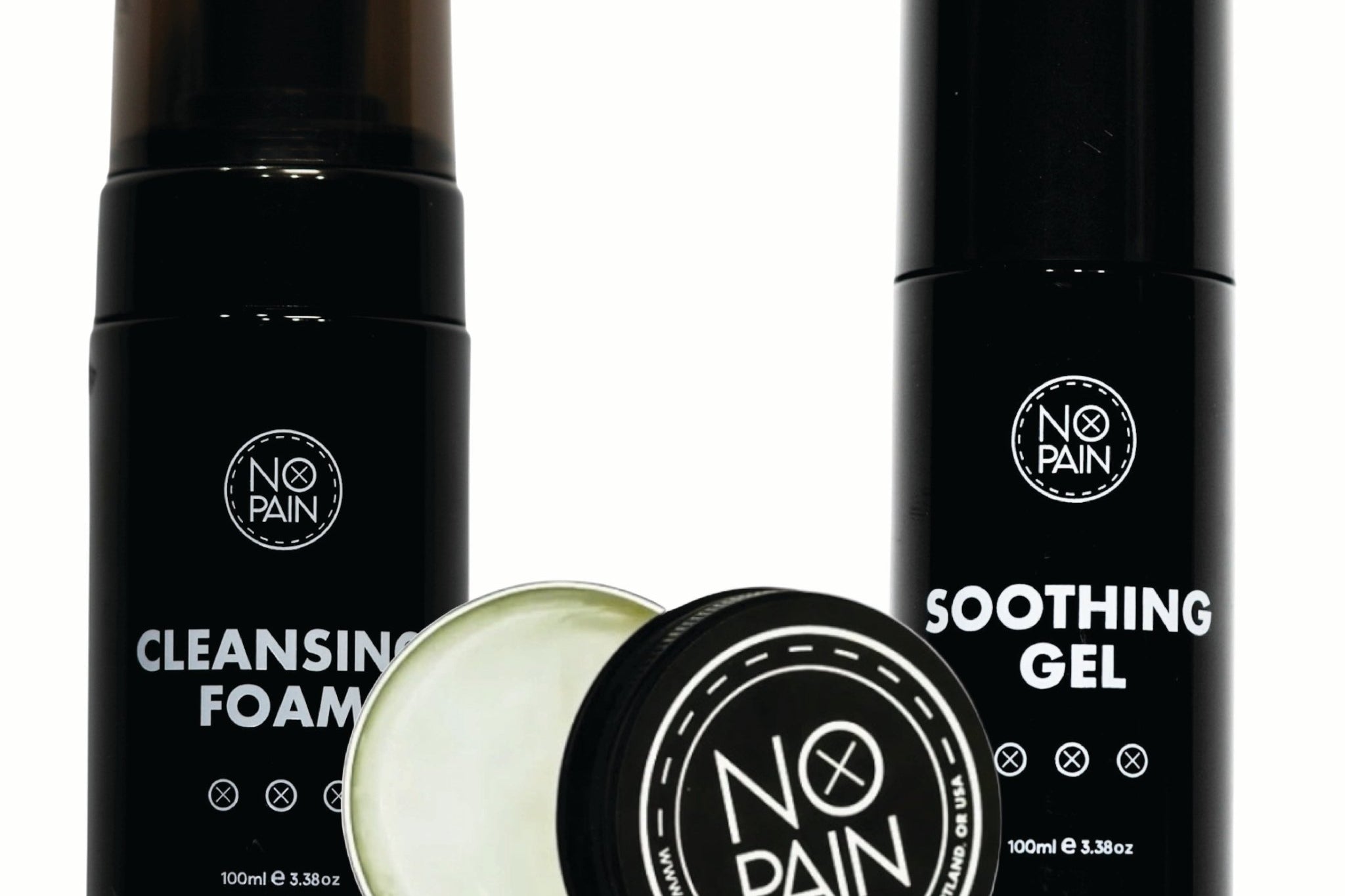
Cleansing foam, soothing gel, and aftercare balm for every stage of healing. The balm doubles as an ongoing moisturizer for tattooed skin long after you've healed.
Shop the Aftercare Bundle →Formulated at Historic Tattoo in Portland, Oregon. 100% money-back guarantee.