


You're in love with the look of a black and grey realism tattoo. You're amazed by the smooth, soft, photorealistic shading that creates a sense of depth and dimension. But as you look closer, you realize it's not just black ink and empty skin. There are countless shades of grey in between. This leads to a common and technical question: How do artists create a "grey wash?"
Understanding this fundamental technique is key to appreciating the incredible skill that goes into a black and grey tattoo. This is your insider's guide to the art and science of the grey wash.
What is a Grey Wash?
A grey wash is a tattooing technique where an artist creates a spectrum of grey tones by diluting black ink. It is the foundational technique for all black and grey style tattoos, from soft realism to classic Chicano art. It is the tool an artist uses to create shadows, depth, and smooth gradients, turning a flat line drawing into a three-dimensional piece of art.
The Process: The Art of Dilution
Contrary to what some might think, a tattoo artist does not use grey ink. They create their own custom palette of grey tones on the spot.
-
The Ingredients: The process is surprisingly simple. An artist starts with two things: their preferred black tattoo ink and a bottle of sterile distilled water.
-
The "Wash" Set: The artist will set up a row of small, clean ink caps. They will put a different number of drops of black ink into each cap and then fill the rest of the cap with distilled water. For example:
-
One cap might have a high concentration of black ink for the darkest shadows.
-
The next might be a 50/50 mix for a mid-tone.
-
Another might have just a single drop of black for the lightest, most subtle shading.
-
This allows the artist to create a full gradient of grey "washes" that they can use to build up the layers of the tattoo, just like a painter uses a palette.
The Sensation and Aftercare
What does getting a tattoo feel like with a grey wash? The process of applying soft shading is often described as a less sharp, but more abrasive, "burning" sensation compared to the initial outline.
How to care for a new tattoo with a lot of delicate grey wash is absolutely critical. The subtle, light tones are the most vulnerable part of the tattoo during the tattoo healing stages.
-
The Risk: Heavy scabbing can easily pull out the delicate grey tones, leaving a patchy, inconsistent heal.
-
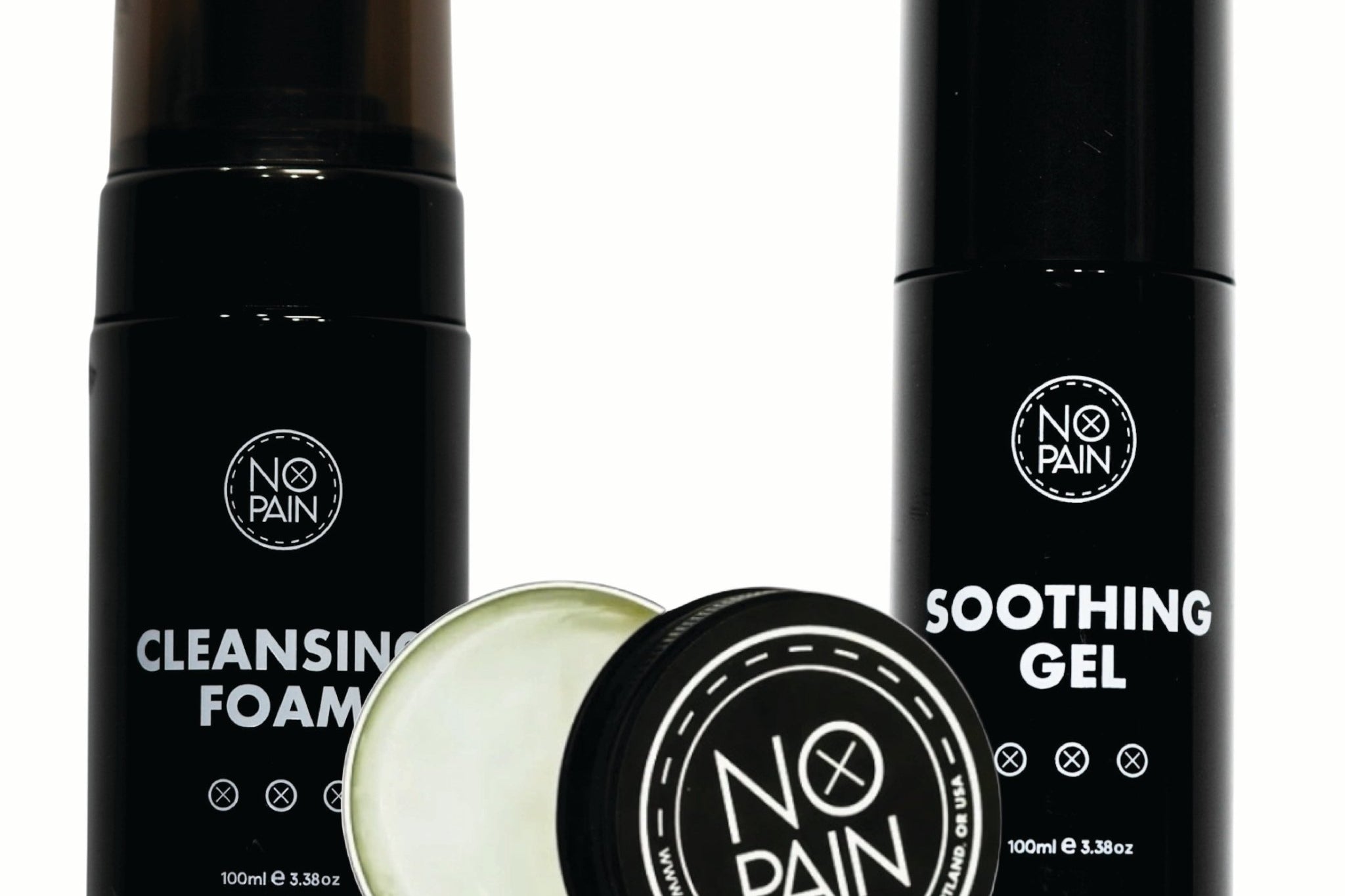
The Solution: A flawless aftercare routine is your only defense. Our No Pain Tattoo Aftercare Bundle provides the complete system you need. The gentle No Pain Tattoo Cleansing Foam keeps the area clean, while the breathable No Pain Tattoo Aftercare Balm provides the essential moisture needed to prevent scabbing and lock in every subtle, beautiful detail.
The Verdict: The art of the grey wash is the secret behind every stunning black and grey tattoo. It's a testament to the artist's skill and their deep understanding of tone and value. By understanding this process, you can gain a whole new appreciation for the incredible artistry that goes into creating your tattoo.