

Placement is everything. Not the size of the tattoo, not the needle gauge, not how experienced your artist is. Where you put it determines more about how the session feels than anything else you can control.
The outer thigh and the ribcage are both tattoos. But they're not remotely the same experience. One of them, most people describe as almost relaxing. The other shows up at the top of every honest pain list, every time.
Here's a full breakdown of every major placement, rated 1 to 10, with an explanation of what's actually happening under the skin.
In this article
- Why placement determines pain
- The pain chart
- Most painful placements (8 to 10 out of 10)
- Moderately painful placements (5 to 7 out of 10)
- Least painful placements (1 to 4 out of 10)
- What else affects your pain level
- How to reduce pain with numbing cream
- Frequently asked questions
Why Placement Determines Pain
Three things drive tattoo pain: skin thickness, bone proximity, and nerve density. That's it. Every placement on this list is where it is because of some combination of those three factors.
Thin skin over bone is the worst combination. There's no tissue to absorb the needle impact, so the vibration from the machine goes straight into the skeletal structure. You feel it deep. The ribs, spine, ankles, and face all work this way - thin skin, bone right there, nothing in between.
Heavy muscle underneath is what makes a spot comfortable. The outer thigh, shoulder, and calf all have substantial tissue between the surface and any bone. The needle's working through padding. That changes everything.
Nerve density adds another layer. Some areas have dense nerve supplies regardless of how much tissue sits above them - the hands, feet, inner arms, groin, armpits. These spots hurt more than their anatomy alone would predict.
The Pain Chart
Every major placement, mapped by pain level. Ratings reflect the consistent patterns across a huge range of client experiences - your session may land higher or lower depending on your tolerance, your prep, and what your artist is doing at any given moment.

Most Painful Placements (8 to 10 out of 10)
Ribs (9 to 10 out of 10)
The ribs are the worst spot on this list. It's not particularly close.
The skin is thin. There's almost no fat. The bone sits right underneath. And every breath you take during the session moves the ribcage against the needle - there's no settling in, no moment where your body adjusts and the pain backs off. People who've gotten both ribs and spine work done almost always say the ribs were harder. If you're planning a rib piece, plan your pain management around it seriously.
Spine (8 to 10 out of 10)
The vertebrae sit just below a thin layer of skin along the entire length of the back. And the spinal column isn't just a bone - it's the central trunk of the nervous system. Nerve roots branch out from it at every vertebral level. So when the needle vibrates against the spine, a lot of people feel it radiating outward rather than staying localized. Into the hips. Down the sides. The tailbone section is the worst; the mid-back is usually the most tolerable part of a full-spine piece.
Armpits (9 to 10 out of 10)
Most people don't encounter this one unless a sleeve or chest piece extends into the area. Those who do encounter it don't forget it. The armpit is one of the most nerve-dense spots on the body. Thin, soft skin, and a stinging sharp sensation rather than the bone-deep vibration of the spine. Most artists budget extra break time when working through the armpit section.
Head, face, and neck (8 to 9 out of 10)
Very little tissue over bone, and dense cranial nerve networks throughout. The temple and forehead are brutal. Areas near the jawline rank among the most painful spots anywhere on the body. Neck placements vary - the sides are slightly more forgiving than the throat or back of the neck - but all of them are high-pain because of the thin skin and the concentration of nerves running through the cervical area.
Sternum and chest (8 to 9 out of 10)
The breastbone is close to the surface with minimal padding. Needle vibration goes straight into it. A sternum piece that stays on the center bone is solidly in the 8-to-9 range; as the design moves toward the side ribs or underbust, it gets worse. Chest tattoos that extend onto the pectoral muscle are a different story - that muscle provides cushioning the sternum itself can't offer.
Hands, fingers, and feet (8 to 10 out of 10)
Thin skin. A dense network of small bones, tendons, and ligaments. Very little fat. And hands are among the most nerve-dense areas of the body - which is exactly why we can feel fine texture through them. Tattoos in these areas are intense, and they also heal inconsistently because the skin moves constantly. Feet land in the same category: thin skin, bony structure, dense nerve supply across the top.
Ankles and lower shin (8 to 9 out of 10)
The ankle has almost no cushioning over bone. The inner ankle is particularly bad because the bone is so close and the skin is so thin. Outer ankle gives you a bit more tolerance but it's still firmly high-pain. The shin reads similarly - bone near the surface, thin skin above it, not much muscle between them. Upper shin is usually worse than lower because of the bone prominence.
Inner bicep (7 to 9 out of 10)
The inner arm is softer and thinner than the outer arm, and it runs along a bundle of nerves going down the inside of the limb. People who find the outer bicep easy are often surprised by how different the inner bicep feels. Sharper. More stinging. Designs that push up into the armpit area from the inner bicep are consistently the hardest part of any arm piece.
Behind the knee - knee ditch (8 to 9 out of 10)
Thin skin. A nerve running directly through the crease. And the fold moves constantly just from sitting or shifting position. Most people who've tattooed the knee ditch rank it in their top five most painful spots. It also heals slowly because the skin flexes with every step.
Elbow ditch and elbow point (9 to 10 out of 10)
The elbow ditch - the crease on the inside - is thin-skinned with nerves running through the fold. The outer point of the elbow, the olecranon, is worse: no tissue between skin and bone at all. Both are among the most painful spots on the arm. People who sail through the tricep and outer forearm frequently find the elbow a jarring shift in experience.
Moderately Painful Placements (5 to 7 out of 10)
Inner thigh (6 to 8 out of 10)
Softer, thinner skin than the outer thigh, with higher nerve density. The sensation is sharp and stinging rather than the duller pressure you get on a well-muscled area. The upper inner thigh near the groin pushes higher because nerve density increases toward the groin. Mid-inner thigh is slightly more manageable, but it's above average for discomfort throughout.
Stomach and abdomen (5 to 8 out of 10)
This one varies more than almost any other placement, because body composition matters here more than it does elsewhere. More abdominal muscle means more cushion. The sides of the abdomen and the area near the navel are more sensitive than the center. The skin can also shift and bunch slightly during the session, which affects how the work lands and adds to the client's discomfort.
Back of neck and nape (7 to 9 out of 10)
The cervical spine is right there below thin skin. Many people describe the nape specifically as having a vibration that travels up into the skull. It's a high-pain placement despite being a small canvas - and it surprises people who thought a small tattoo would mean a short, easy session.
Collarbone (6 to 8 out of 10)
The clavicle is close to the surface. Designs that run directly along the bone face the same thin-skin-over-bone problem as any other bony placement. Work placed above or below the bone, onto the chest muscle, is noticeably more comfortable.
Wrist and inner forearm (5 to 7 out of 10)
The inner wrist is thin-skinned with tendons and veins close to the surface. Sharper than the outer forearm. The inner forearm is more forgiving than the wrist, but still more sensitive than the outer forearm. Most people find both manageable for small-to-medium pieces - just don't go in expecting it to feel like the outer arm.
Upper and lower back (5 to 7 out of 10)
Good muscle padding on either side of the spine puts most back work in the moderate range. Designs that stay on the trapezius and shoulder blade area sit over substantial muscle. The exception is anything that moves onto the spine itself - that's a different experience entirely. The lower back is similar: comfortable off the spine, and considerably worse on it or near the sacrum.
Knees and kneecaps (7 to 8 out of 10)
Directly on the kneecap, it's bone-close and the pain reflects that. The sides of the knee, where the design extends onto muscle, are much more manageable. Any piece that includes the front of the knee needs the kneecap section planned for carefully.
Least Painful Placements (1 to 4 out of 10)
Outer thigh (3 to 5 out of 10)
The most consistently comfortable spot on the body. Substantial muscle and fat between skin and bone, a large stable canvas, and relatively low nerve density. A lot of people describe it as almost relaxing compared to other placements they've tried. It's a good first tattoo. It's a good spot for a large piece. It's the placement for anyone who wants the session to be as manageable as possible.
Outer arm and forearm (3 to 5 out of 10)
The outer bicep and outer forearm are two of the most popular placements and two of the most comfortable. Stable skin, muscle underneath, low nerve density. The outer forearm is slightly more sensitive than the outer bicep because the skin's thinner, but both are firmly low-pain for most people. Standard starting points for first tattoos.
Outer shoulder and upper arm (3 to 5 out of 10)
Thick skin, a substantial deltoid, away from bone. Most people rate the outer shoulder as very manageable. The rear deltoid and back of shoulder are similarly comfortable. It's a reliable low-stress area for large pieces.
Calf (3 to 5 out of 10)
The calf muscle provides solid cushioning and the skin is stable. Rates similarly to the outer thigh for most people. The shin side of the lower leg is a completely different story - but the calf itself is one of the more comfortable lower-body options. Just don't let the piece drift toward the back of the knee.
Outer hip (3 to 6 out of 10)
The outer hip and fleshy upper thigh are well-padded and comfortable. The hip bone itself is a different situation - as a design moves onto the iliac crest, the bony ridge of the pelvis, it gets harder because the bone is close to the surface. Designs that stay on the soft outer hip, away from the bone, keep the experience in the low-to-moderate range.
Upper back, shoulder blade region (4 to 5 out of 10)
The scapula has more tissue over it than the spine does, and the trapezius muscle adds additional cushioning. Work on and around the shoulder blades is generally more comfortable than work on the spine. Most people find the upper back a manageable choice for medium and large pieces.
What Else Affects Your Pain Level
Placement is the biggest variable. But it's not the only one.
Session length changes things. The first hour is usually the easiest - skin is fresh, adrenaline's still working. By hour two or three, that changes. The skin's fatigued, the adrenaline's gone, and the same needle pressure that felt manageable at the start feels more intense. A spot that rates 6 out of 10 for a 45-minute session can feel like an 8 by hour three of a long piece.
Sleep and food matter more than people think. A tired or hungry body handles pain worse than a rested, fed one. Blood sugar drops during long sessions are one of the most common reasons people start to feel lightheaded or more reactive. Eat a full meal beforehand. Bring a snack for anything running over two hours.
Stress amplifies pain. A tense body in an environment you're not comfortable in handles the needle worse than a relaxed one. Who you choose as your artist and how you feel in that shop on that day is part of your pain management, not separate from it.
Hormonal cycles affect sensitivity. Some people find their tolerance noticeably lower in the days around their period. If that's you and you have flexibility on timing, it's worth factoring in when you book.
How to Reduce Pain with Numbing Cream
For high-pain placements, maximum strength numbing cream applied before your session is the most practical tool you have. It reduces the surface sting and takes the edge off the bone-deep vibration - it doesn't eliminate sensation, but it makes the first two to three hours of a session considerably more manageable.
Application: thick layer over the full area, 60 to 90 minutes before your appointment, covered with plastic wrap. You want the numbing fully built up before the needle touches your skin. Not during. Before.

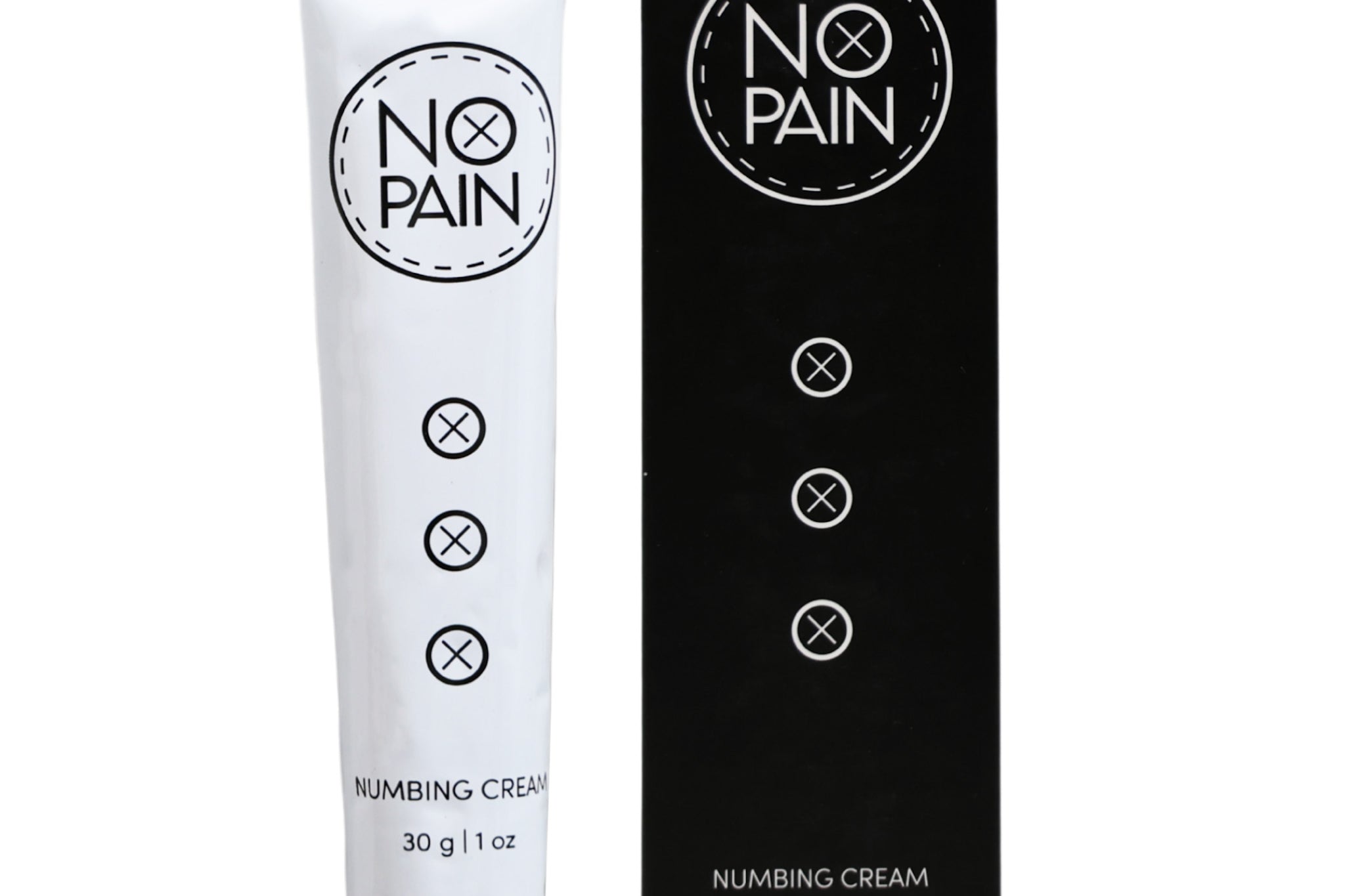
Maximum strength formula in a thick, slow-absorbing base that stays active longer than thin creams that burn through in the first hour. Apply 60 to 90 minutes before your session, cover with plastic wrap, and arrive with the numbing already built up. Makes high-pain placements like the ribs, spine, and ankle noticeably more manageable. Formulated at Historic Tattoo in Portland.
For sessions longer than two to three hours, the pre-session window ends while you're still in the chair. That's where a secondary numbing agent comes in - something your artist applies directly to the broken skin mid-session to extend the comfort through the later hours. Pre-session cream alone can't cover that. It's the piece most people don't think about until they need it.

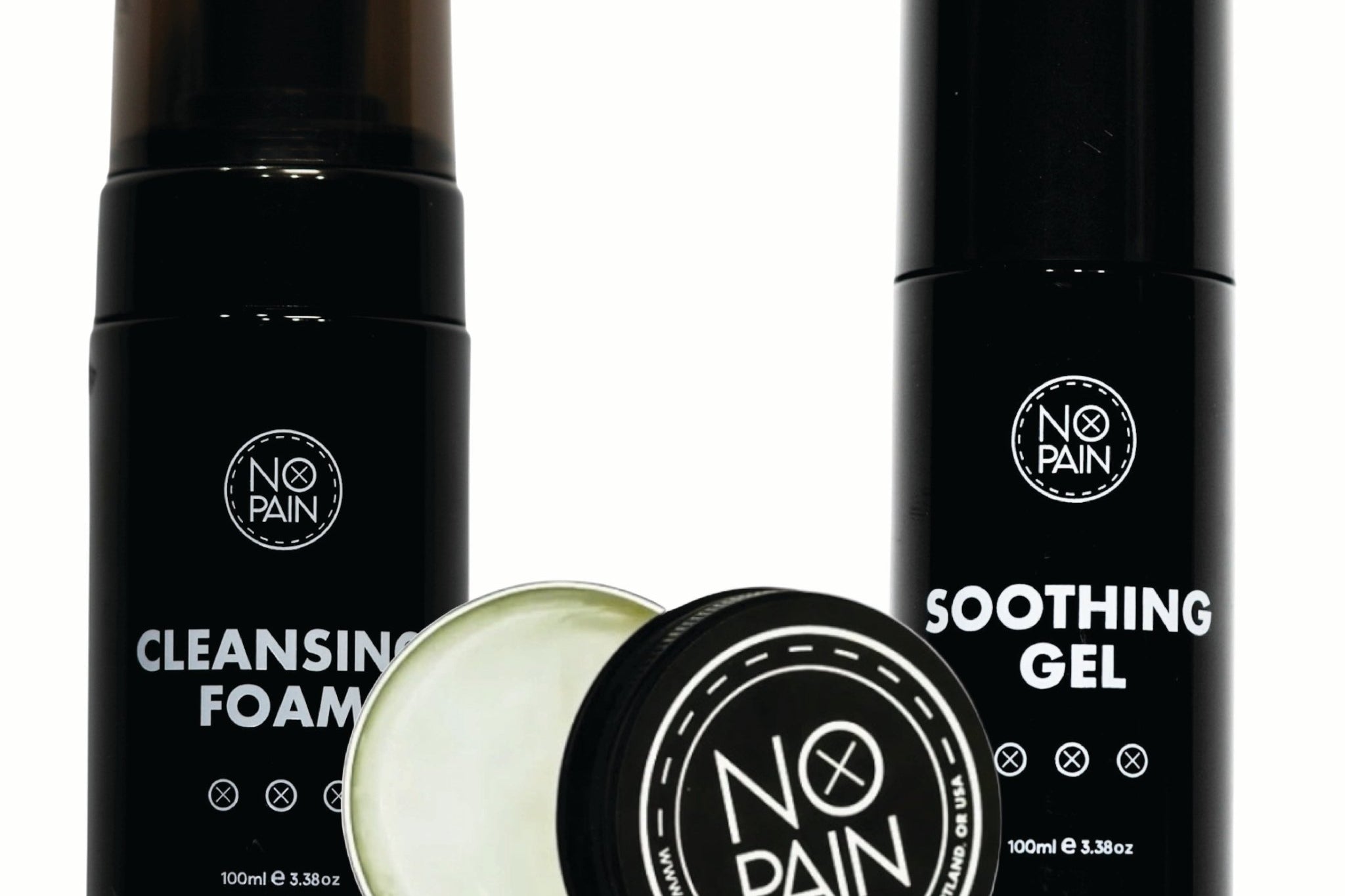
Pre-session numbing cream plus secondary numbing gel for your artist to apply mid-session on broken skin. Together they cover a multi-hour session from the first pass to the last. Bring both to your appointment. Formulated at Historic Tattoo in Portland.
Frequently asked questions
What is the most painful place to get a tattoo?
The ribs and armpits come up most often. Both have thin skin with no muscle or fat underneath to absorb the needle impact. The ribs are worse than most people expect because your breathing never stops - the ribcage is moving against the needle throughout the session, which removes any chance for your body to adjust. Close contenders include the elbow ditch, the spine, the back of the knee, and the inner wrist. The exact order shifts between individuals, but those spots appear at the top consistently.
What is the least painful place to get a tattoo?
The outer thigh, consistently. Heavy muscle, decent fat, low nerve density, large stable canvas. It's where most artists recommend people start if pain tolerance is a concern. The outer arm and outer shoulder are in the same category - all three are reliable low-pain placements that still accommodate large, visible pieces.
Are there differences in pain between men and women?
The research is limited, but hormonal differences do seem to affect pain sensitivity somewhat - pain tolerance fluctuates across the menstrual cycle for some people. Body composition plays a role too, since areas with more natural fat cushioning tend to hurt less, and fat distribution differs between people. In practice, the anatomical factors dominate. Bone proximity, skin thickness, nerve density - those matter more than sex for any given placement, and individual variation within groups is larger than the average difference between them.
Does a second tattoo hurt less than the first?
It depends almost entirely on where you put it. If your first was on the outer forearm and your second is on the ribs, the second will hurt more. Within the same placement, some people find the experience more manageable the second time simply because they're less anxious and know what's coming. Anxiety amplifies pain, so calmer clients often report sessions feeling easier as they accumulate experience - even when the physical sensation is identical.
How much does numbing cream actually help?
Applied correctly - thick layer, 60 to 90 minutes, covered with plastic wrap - it reduces surface sensation significantly for most people. It doesn't block everything. The pressure and vibration from the machine are still present, and bone-deep sensations are reduced rather than eliminated. Most people who use it correctly describe taking a 9-out-of-10 placement down to around a 4 or 5 for the first couple of hours. The effect fades during long sessions, which is why having a secondary mid-session product matters if you're going long.
Does tattoo placement affect healing as well as pain?
Yes - and significantly. High-movement areas like the elbow ditch, knee ditch, hands, feet, and wrists take longer to heal and lose more ink in the process because the skin folds and stretches constantly. Bony placements can also be slower to surface-heal because thin skin takes more trauma per pass. And placements that stay covered by clothing tend to heal cleaner than exposed areas like the outer forearm or ankle, which get more sun and friction during the healing window.
Don't Let the Pain Chart Stop You
The ribs, spine, and armpit are painful for a reason - but they're also some of the most striking placements out there. Maximum strength numbing cream before the session, secondary gel mid-session for long pieces. Both in the Comfort Bundle.
Shop the Comfort Bundle →Formulated at Historic Tattoo in Portland, Oregon.