

How to Tell if Your Tattoo Artist Went Too Deep
If your healing tattoo looks blurry, has raised or ropy lines, or the inflammation seems far worse than expected, you may be dealing with the effects of a needle that went too deep. This is called a tattoo blowout, and it is one of the most common technical errors in tattooing.
This guide explains what "too deep" actually means, the specific signs to look for, and what your options are once the tattoo is healed.
What "Too Deep" Actually Means
A correctly executed tattoo deposits ink into the dermis: the dense, stable middle layer of skin that sits below the epidermis (the outer layer you can see and touch). The dermis holds ink in place for decades because it is structurally stable.
When a needle goes too deep, it passes through the dermis and into the hypodermis: the loose layer of fat and connective tissue beneath. Ink deposited here behaves very differently. Instead of staying put in a structured environment, it disperses through the loose fatty tissue. The result is a blurry, spreading halo around the lines where the ink has migrated beyond its intended boundaries.
This happens because of what artists call a "heavy hand": applying more pressure than needed, which drives the needle deeper than the dermis. It can also happen on areas where the skin is very thin and the dermis is close to the surface (inner arm, wrist, foot), where a standard needle depth reaches the hypodermis more easily.
The Signs Your Tattoo Was Applied Too Deeply
A Blurry or Bruised Halo Around the Lines
This is the defining sign of a tattoo blowout. A fuzzy, blurry, or bruised-looking shadow spreads outward from the tattoo lines into the surrounding skin. This is the ink having migrated through the hypodermis. A blowout can be visible immediately after the session, but it often becomes clearer after two to four days once the initial redness and swelling subside and you can see the actual ink distribution.
Unusually Severe Swelling and Bruising
Every new tattoo produces some swelling and soreness. When the needle has gone too deep, the inflammatory response is considerably more intense and lasts longer. The area will be more swollen than expected for the placement, may bruise noticeably, and the pain level will be higher than what the location typically produces. If the swelling is still pronounced after four or five days, that is beyond normal.
Raised, Bumpy, or Ropy Lines After Healing
Once the tattoo is fully healed (six to eight weeks post-session), the lines may feel permanently raised and hard to the touch. This texture, sometimes described as ropy or rope-like, indicates that the excessive trauma from the needle penetrating past the dermis has caused the body to produce scar tissue (hypertrophic scarring). A correctly healed tattoo should sit flush with the surrounding skin and be smooth to the touch.
Excessive Scabbing During Healing
Overworked skin produces thicker, heavier scabs than normal. If your tattoo developed scabs that felt like armor rather than thin, flexible peeling, and if those scabs were slow to resolve, this can be a sign that the skin below was more traumatized than a standard tattoo session produces.
Blowout vs. Normal Healing: How to Tell the Difference
Some blurriness and softness in a healing tattoo is normal. The milky phase (days 10 to 21) makes tattoos look cloudy and undefined as the outer layers of skin regenerate. This is not a blowout.
The distinction: normal healing blurriness resolves as the skin clears. A blowout does not resolve. The halo remains after healing is complete. If your tattoo looked sharp immediately after the session but became blurry over the following days, that blurriness settling in during healing is more likely normal. If the blurry shadow was there from the start or grew more pronounced in the first week, that is more consistent with ink migration from a blowout.
Location also provides context. Fine line tattoos on the inner wrist or the crease of the elbow are at higher blowout risk than bold linework on the outer arm. If you have a delicate placement and notice soft, spreading lines, that is worth monitoring carefully.
Aftercare When the Skin Has Been Overworked
You cannot reverse a blowout through aftercare. But your approach during healing still matters, because overworked skin is more prone to heavy scabbing, scarring, and secondary complications. The goal is to give the traumatized skin the best possible environment to heal, which minimizes the chance of additional problems on top of the blowout.

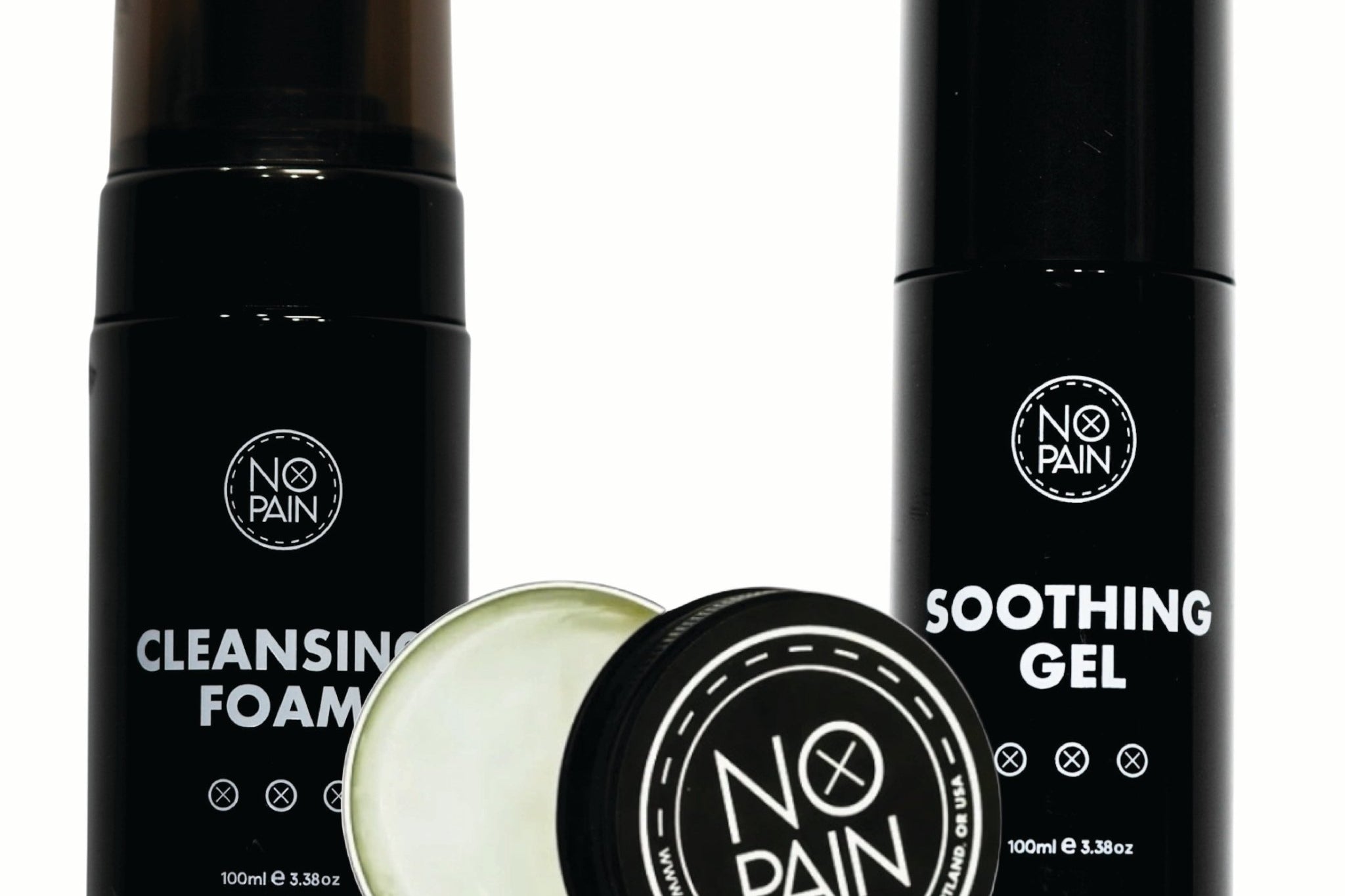
Keep the area clean with a gentle, fragrance-free soap twice per day. Apply a soothing gel for the first three days to reduce inflammation. From day three onward, switch to a nourishing balm to keep the skin pliable and prevent the thick, hard scabbing that overworked skin tends to produce. Do not pick scabs under any circumstances here. Pulling a scab from already-damaged skin increases the chance of scarring.

Your Options Once It Has Healed
Wait until the tattoo is fully healed before making any decisions. The six to eight week mark is the minimum; some settling continues to twelve weeks. Assess the result only after this point.
If a blowout is confirmed, two options exist. Laser removal targeting the blurred areas can fade the migrated ink and restore some definition to the lines. This typically requires multiple sessions and does not guarantee full correction. The other option is a cover-up or rework by a skilled artist who can incorporate the blurry areas into a redesigned piece. Many experienced artists are skilled at working around existing blowouts.
Talk to your original artist first if you have a good relationship with them. Some blowouts can be addressed with strategic additions or heavier linework that absorbs the hazy edges. If you are not comfortable returning to that artist, seek a second opinion from someone with a strong portfolio of coverup and rework.
How to Avoid This in the Future
The best way to prevent a blowout is to choose an artist whose healed portfolio shows clean, crisp lines with no blurry halos. Request to see healed work specifically, not just fresh tattoos. Fresh lines can look sharp even when poorly executed; healed work reveals whether the ink stayed where it was placed.
For placements with thin skin (inner arm, wrist, finger, foot, inner thigh), mention this to your artist before the session. An experienced artist adjusts their needle depth and pressure for thin-skin areas. Ask about their approach to these placements directly.
Frequently Asked Questions
What does a tattoo blowout look like?
A blowout appears as a blurry, fuzzy, or bruised-looking shadow spreading outward from the tattoo lines. The lines lose their crisp edges and the ink looks like it has been smudged into the surrounding skin. It can be subtle or pronounced depending on how deep the needle went and how loose the underlying tissue is. Blowouts are most obvious on fine line work and geometric tattoos where sharp definition is expected.
Can a tattoo blowout heal on its own?
No. A blowout is caused by ink that has permanently migrated into the hypodermis. That ink does not move back. The blurry halo will not resolve as the tattoo heals. What can change is how severe it looks over time: some blowouts become more obvious as the skin settles, while others become less pronounced as the migrated ink breaks down partially over years. But the fundamental issue does not self-correct.
How soon can you tell if a tattoo has blown out?
Sometimes immediately after the session, though the redness and swelling of a fresh tattoo can mask it. The clearest view comes between days three and seven, after the initial inflammation has subsided but before the milky healing phase makes the tattoo look temporarily cloudy. If there is a blurry halo present at this stage, it is almost certainly a blowout rather than normal healing variation.
Does a blowout mean the artist did a bad job?
Not always. Blowouts are more common on certain placements regardless of artist skill. The inner arm, wrist creases, fingers, and feet all have very thin skin where the dermis-to-hypodermis boundary is shallow. Even experienced artists occasionally produce blowouts on these placements. That said, a pattern of blowouts across an artist's portfolio is a red flag worth noting when choosing someone for future work.
Will laser removal fix a tattoo blowout?
Laser removal can fade the migrated ink in a blowout, which may restore some definition to the lines. It cannot guarantee complete correction, and the results vary depending on ink color and depth. Multiple sessions are typically required. For severe blowouts on dark ink, laser fading followed by an artist rework is often a better approach than laser alone.
What is the difference between a blowout and overworked skin?
They are related but distinct. Overworked skin refers to skin that has been tattooed over multiple times in the same session, causing excessive trauma to the dermis. The result is heavy scabbing, longer healing, and potential scarring, but the ink may still be correctly placed. A blowout specifically means ink has migrated below the dermis into the hypodermis and spread. It is possible to have both: a session where the skin was overworked AND the needle went too deep in some areas.