
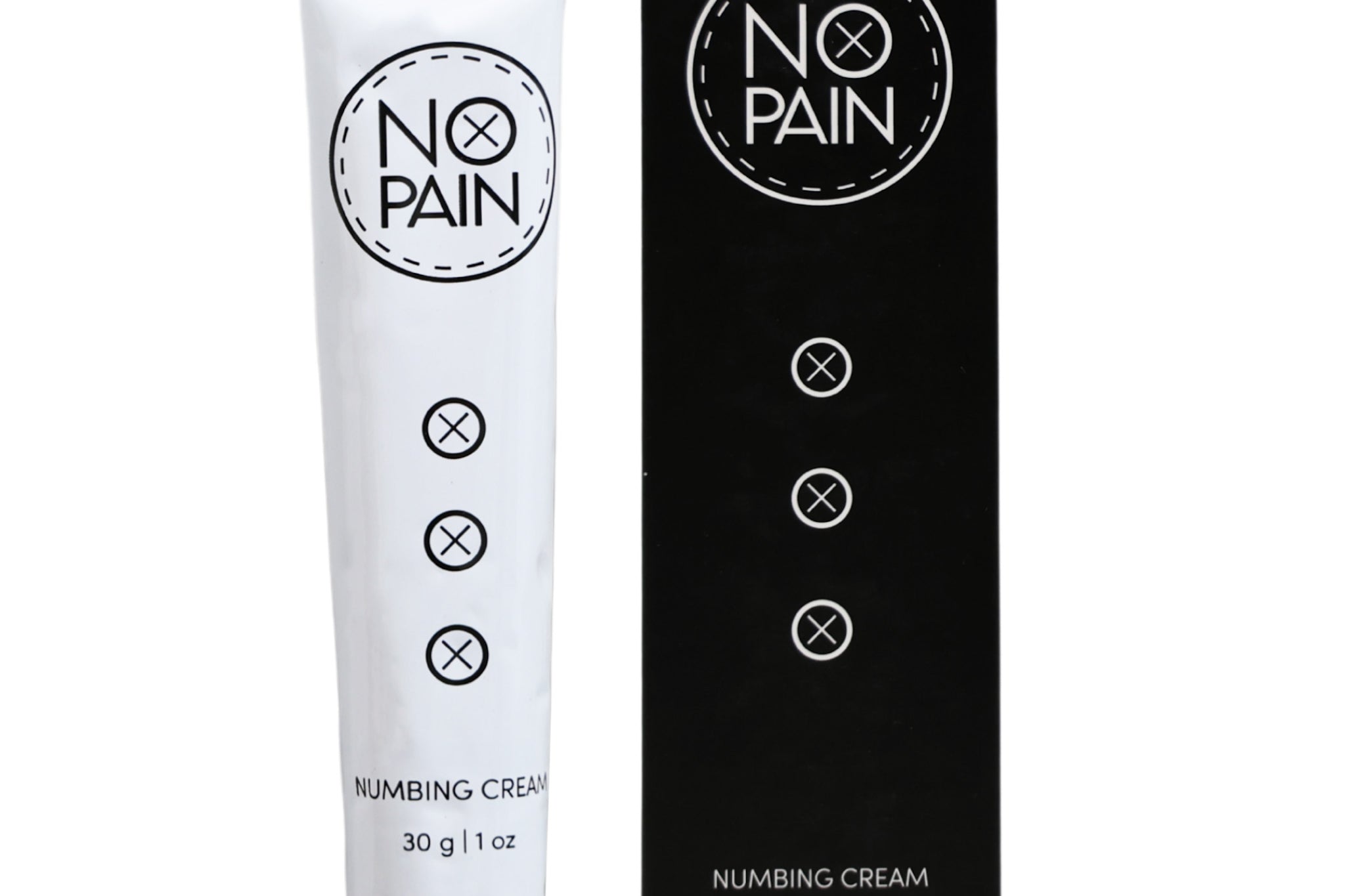



You can't control what your client did at home. You can control what happens once they're in your chair. The clients who walk in pre-numbed and start jumping at hour two weren't using bad cream - they were using cream designed to run out. Pre-session numbing lasts two to four hours from the point the wrap comes off. For a long session, that's a starting point, not a full plan.
The full system: client applies maximum strength numbing cream at home 90 to 120 minutes before the session. You have a numbing spray ready mid-session - one formulated for broken skin - and you apply it during a natural break when their coverage starts to thin. That's how you hold a still client from the first outline to the last pass.
In this article
- Understanding the two products
- The one-pass method
- How to apply mid-session spray
- Reading the signs and timing the break
- Setting clients up for success before they arrive
- When to split the session
- Frequently asked questions
Understanding the Two Products
Pre-session numbing cream and mid-session numbing spray are not versions of the same thing. They solve different problems at different moments, and one doesn't replace the other.
Numbing cream is applied to intact skin before the session. It needs 90 to 120 minutes under cling film to drive the lidocaine deep enough to block tattoo pain. The thick, slow-absorbing base releases gradually across that window and produces two to four hours of coverage from the moment the wrap comes off. It's a pre-session product only - once you've broken the skin, the mechanism changes.
Numbing spray is for broken skin - skin you've already been through with the needle. Once the outer skin barrier is disrupted, lidocaine absorbs much faster than it can through intact skin. The spray also contains Epinephrine, which constricts blood vessels, reduces bleeding and swelling, and extends how long each application lasts. On the first application, cover with plastic wrap for 12 minutes, then wipe and continue - you get 20 to 30 minutes of renewed coverage. On every reapplication after that, spray and continue immediately with no wait. No cling film required for top-ups.
The two-product setup - client brings the cream for pre-session, spray is ready for mid-session - is how long sessions stay manageable from start to finish.

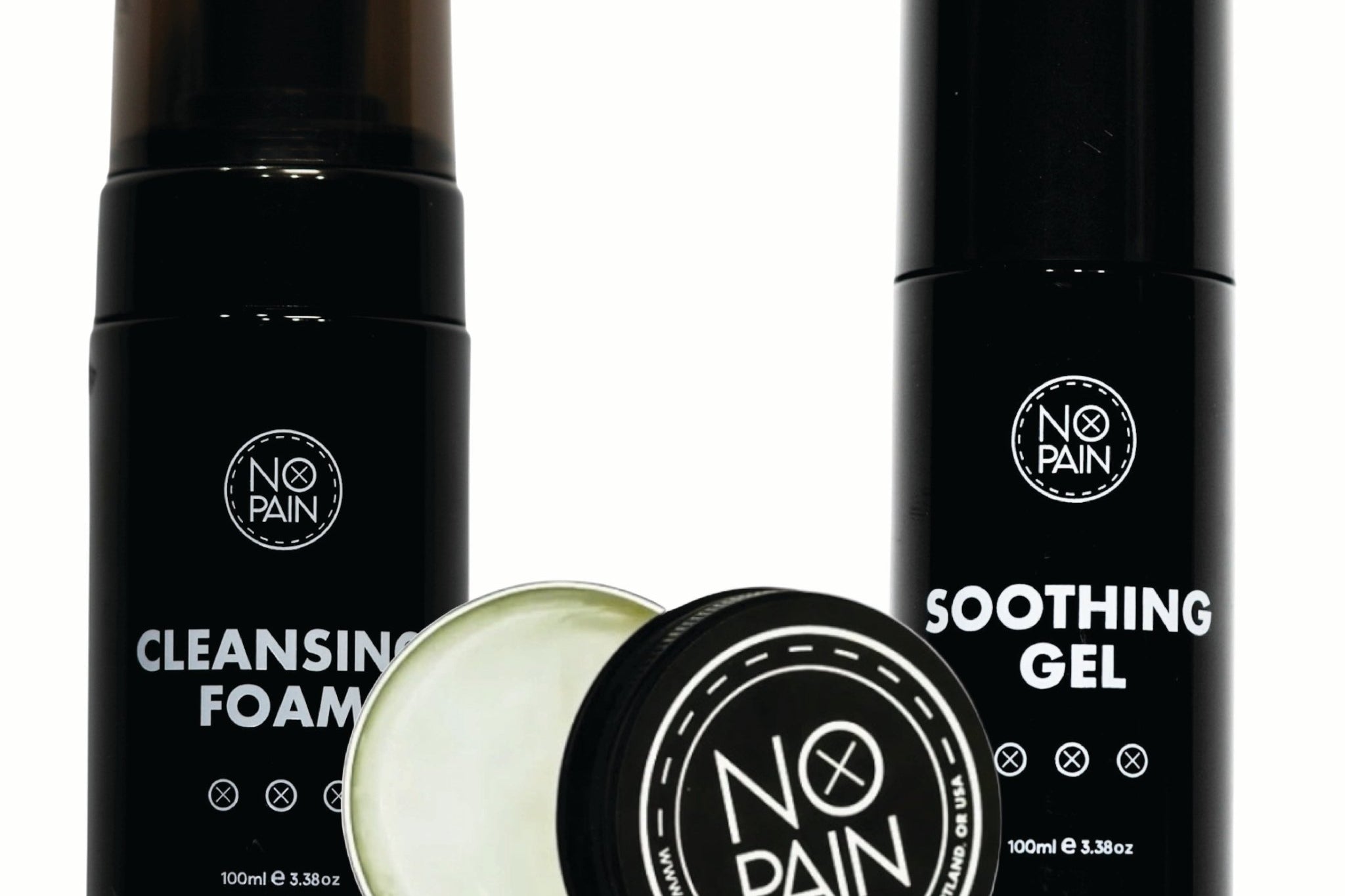
Pre-session cream plus mid-session spray for broken skin. The full two-product setup for any session running longer than two hours - cream at home, spray in your station.
The One-Pass Method
The most effective way to work with a pre-numbed client is to complete each section before moving on. Don't rough in the outline across the whole piece and then come back to shade. Finish one zone completely - linework, shading, color - before moving to the next.
Here's why this matters: the cream's effectiveness isn't uniform across the session. Coverage peaks in the first hour and fades gradually from there. If you outline the whole piece first and then start shading areas you hit an hour ago, you're working on the most sensitized skin with the least numbing left. The client who was completely still during the outline will start shifting the moment you return to those early sections.
Pick a direction and commit. Top-to-bottom, center-outward, left-to-right - whatever makes sense for the design. Finish each zone completely before crossing into the next one. You're working with the cream's timing rather than against it.
This approach also keeps the session moving. Clients who understand they're getting through one zone at a time find it easier to hold position. Breaking the piece into visible chunks gives them something to track - and a reason to stay still until the next natural stopping point.
How to Apply Mid-Session Spray
When the pre-session cream starts to thin and there's still work left to do, the spray is your next move. The application takes about 15 minutes total.
Stop at a natural break. Don't wait until the client is already in pain. Apply the spray when they're starting to feel it come back - when the coverage is thinning, not gone. A client who's already hit the wall is harder to settle than one who caught it on the fade.
Clean the area. Wipe down the skin with a sterile solution to remove blood and excess ink. The skin needs to be clean before the spray goes on.
Apply the spray directly to the open skin. Even coverage over the area you're working.
Cover with plastic wrap for the first application - 12 minutes minimum. Use this time to clean up your station, check your needles, give the client water. When the window is up, wipe the area and continue.
The renewed window is 20 to 30 minutes. That's the realistic range for any topical on broken skin. Twenty to thirty minutes is usually enough to reach a good stopping point.
If you need to reapply, no wrap needed. On every application after the first, spray directly onto the skin and continue working immediately. No waiting. The skin is already open and the lidocaine absorbs on contact. This is the feature that makes the spray practical mid-session - top up on the fly without stopping the work.
Reading the Signs and Timing the Break
The spray works best when applied before the client is fully out of numbing, not after. Learn to read the signs early.
Watch for small position shifts - the client moving their arm slightly, adjusting their breathing, tensing the muscle you're working over. These happen before they say anything. The moment you notice those micro-movements is the right time to suggest a break and reach for the spray.
Placement matters for timing. Fleshier spots - outer arm, thigh, upper back - tend to hold the cream longer. Thin-skinned, bony placements like ribs, the elbow ditch, the shin, and the inner arm thin out faster. If you're working one of those spots, plan for the spray break earlier - around the 90-minute to two-hour mark rather than waiting to see if it's needed.
Color packing and heavy shading over already-outlined skin hits harder than the first pass. Even clients who were completely still during the outline can start to struggle when you return to pack in color on the same skin. That's the moment where the spray pays for itself.
Setting Clients Up for Success Before They Arrive
Most of the problems you deal with mid-session start with what the client did - or didn't do - before they walked in. A conversation at the consultation protects both of you.
Tell them to apply the cream 90 to 120 minutes before their session. Not in the car on the way over. Not 30 minutes before. At home, on clean dry skin, two coats - thin first coat rubbed in gently, thick second coat left sitting on the surface like frosting - wrapped with cling film. The wrap stays on until you remove it at the start of the session.
Confirm they're using a maximum strength cream formulated for tattooing. Generic topical anesthetics from the pharmacy are a different category - lower concentration, thinner formula, faster to peak and faster to wear off. A properly formulated cream in a thick, slow-absorbing base is what produces two to four hours of coverage. A pharmacy numbing cream might give them 30 to 45 minutes of light effect.
For longer sessions, recommend the Comfort Bundle. It pairs the cream with the spray - they apply the cream at home, and you have the spray ready in your station when you need it. No scrambling for a product halfway through a four-hour back piece.

Maximum strength lidocaine in a thick, slow-absorbing base. Two to four hours of pre-session coverage when applied correctly. Formulated at Historic Tattoo in Portland, Oregon.
When to Split the Session
Sometimes the right call is to stop. A client who has hit the wall - tapping out, shaking, unable to hold position - isn't going to give you the canvas you need to finish cleanly. Pushing through produces worse work and a worse experience. Neither outcome serves you or the client.
Signs it's time to call it: the client can no longer hold the position the design requires, you're fighting muscle tension rather than working with relaxed skin, the spray has already been applied and worn off, and there's still substantial work left. At that point, a clean stopping point and a follow-up appointment is the right move.
Most clients who've had a well-managed session - one-pass method, spray applied before they hit the wall, clear communication at every break - don't reach this point. Splitting is the exception, not the standard outcome of a long session with a properly set-up client.
Frequently asked questions
Can I apply numbing spray to a client mid-session without them having used cream beforehand?
Yes, though the result is more limited. The spray works on broken skin regardless of whether cream was used beforehand - it absorbs quickly through the open skin barrier and delivers 20 to 30 minutes of relief. Without the pre-session cream foundation, however, that 20 to 30 minute window is all you have, and the baseline pain level before the spray is higher. The full system - cream pre-session, spray mid-session - produces a much better client experience than spray alone.
How do I tell a client their numbing cream didn't work well enough?
Most of the time, it's an application issue rather than a product failure. Ask whether they wrapped it, how long they left it on, and whether they used two coats. A thin smear without cling film gives 20 to 30 minutes of surface numbing at best. If they did everything correctly and it still wore off early, the base formula matters - thin, pharmacy-grade creams peak and burn off faster than a thicker formulation designed for tattooing. Point them to a better product for next time, and use the spray to get through this session.
Is it safe to apply numbing spray to freshly tattooed skin?
Yes. Lidocaine on open skin is standard in professional and clinical settings. The spray is formulated specifically for this application - it absorbs through the disrupted skin barrier, reaches the nerve layer, and wipes away cleanly before you continue. It doesn't affect how the ink settles or how the tattoo heals.
How long should I wait after applying the spray before continuing?
On the first application, cover with plastic wrap for at least 12 minutes, then wipe and continue. On every application after that, no waiting needed - spray directly onto the skin and keep working immediately. The skin is already open, so the lidocaine absorbs on contact. That's the feature that makes mid-session top-ups practical without breaking the rhythm of the session.
Can I reapply the spray more than once in a session?
Yes, as many times as needed. After the first application, just spray and continue immediately - no wrap, no wait. Each application gives 20 to 30 minutes of renewed coverage. Most sessions only need one or two top-ups, but there's no limit on reapplication.
What should I stock at my station for long sessions?
The Comfort Bundle covers the full system: maximum strength pre-session cream for the client to apply at home, and mid-session spray for you to apply during the session. Recommend the bundle to clients booking sessions over two hours. Keep the spray in your station. The cream comes home with the client for application - you're responsible for the spray side of the equation once the session starts.
The Full System for Long Sessions
Cream at home, spray in your station. That's the setup that keeps clients still from the first line to the last pass - and lets you focus on the work instead of managing their pain threshold.
Shop the Comfort Bundle →Formulated at Historic Tattoo in Portland, Oregon. 100% money-back guarantee.