


Use a fragrance-free, gentle liquid soap or a dedicated tattoo cleansing foam. No bar soap, no scented body wash, no scrubs. That's the short answer. Below is the full breakdown: what to avoid and why, what to look for, how to actually wash without damaging the tattoo, and what to do after.
In this article
- What not to use
- What to look for in a cleanser
- How to wash a new tattoo (step by step)
- How often to wash
- What to do after washing
- Frequently asked questions
What Not to Use
Bar soap. Bar soap sits in a puddle of water between uses, which makes it a reliable home for bacteria. It also tends to have a higher pH than liquid soap, which means it strips the skin's moisture barrier more aggressively. On a healing tattoo, that's two problems at once: bacteria risk and over-drying.
Fragranced body wash. The fragrance compounds that make a body wash smell like "ocean breeze" or "coconut lime" are among the most common skin irritants there are. On unbroken skin, your body tolerates them. On a fresh wound, they cause redness, burning, and sometimes allergic reactions that look a lot like infection. Any soap with a strong scent stays out of the rotation for at least two weeks.
Exfoliating scrubs. Anything with beads, salt, sugar, or acids (glycolic, salicylic, lactic) physically or chemically removes the surface skin layer. That's exactly what you do not want on healing skin. Scrubs can pull ink, disrupt scab formation, and create scarring. They should never go near a healing tattoo.
Antibacterial hand soaps with high alcohol content. These are too harsh. The alcohol is drying, and the antibacterial agents in many pump soaps are more aggressive than a healing wound needs. A gentle, fragrance-free liquid soap does the antimicrobial job without the side effects.
Your regular bath towel. Not a soap, but worth saying here: bath towels harbor bacteria and shed fibers that can stick to a healing wound. Paper towels for drying only, at least for the first two weeks.
What to Look for in a Cleanser
A good cleanser for a new tattoo checks four boxes: fragrance-free, gentle pH, some antimicrobial action, and easy to rinse off completely. Liquid formulations work better than bar soap because they don't sit in standing water between uses and typically have a lower, more skin-compatible pH.
For a detailed comparison of specific drugstore options (Dial, Dove, Dr. Bronner's, Cetaphil, and dedicated tattoo foam), see the best soap guide. That article breaks down each one by ingredient profile and what the tradeoffs are.
A foam cleanser formulated specifically for tattoo aftercare is the easiest path: it's designed to meet all four criteria, applies without rubbing, and rinses completely clean. If you're using a drugstore option, plain fragrance-free Dove or a fragrance-free liquid castile soap are the most defensible choices.
How to Wash a New Tattoo (Step by Step)
Step 1: Wash your hands first. Before you touch the tattoo, wash your hands thoroughly with soap and water. Your hands carry bacteria that can introduce infection to an open wound. Do not skip this.
Step 2: Wet the tattoo with lukewarm water. Not hot, not cold. Hot water increases inflammation and can be painful. Very cold water constricts blood vessels and is harder to rinse soap from. Lukewarm is the target, comfortable but not warm.
Step 3: Apply cleanser with your fingertips only. Dispense a small amount of foam or liquid soap into your clean hand and use only your fingertips to apply it in gentle circular motions over the tattoo. No washcloth, no loofah, no sponge. These all harbor bacteria and create friction that damages healing skin. Fingertips only.
Step 4: Rinse thoroughly. Let lukewarm water run over the tattoo until all soap has cleared. Any soap residue left on the skin can cause irritation and prolong the healing process. Take an extra few seconds to be sure it's gone.
Step 5: Pat dry with a clean paper towel. Gently pat, don't rub. Bath towels should not touch a healing tattoo during the first two weeks. They pick up bacteria, and their texture creates friction that can damage fragile healing skin. Paper towels are disposable, low-bacteria, and gentler on the surface.
Step 6: Let it air dry for a minute or two. Before applying any aftercare product, let the surface finish drying in the air. Applying gel or balm to a still-damp surface dilutes the product and creates more occlusion than you want. A minute is enough.
How Often to Wash
Twice a day for the first two weeks. Once in the morning, once in the evening before bed. That's enough to clear bacteria, remove dried plasma, and keep the surface clean without over-washing.
Over-washing is a real problem. Washing three or four times a day strips the skin's natural moisture balance, dries the healing surface, and can lead to heavier scabbing, which pulls ink. Twice a day is the right cadence.
The exception: if your tattoo gets visibly dirty (gym, outdoor work, physical contact), wash it at that point regardless of where you are in the daily schedule. Cleanliness after contamination takes priority over routine timing.
What to Do After Washing
Washing is the first step, not the whole routine. Once the tattoo is clean and fully dry, apply a thin layer of aftercare product to keep the surface hydrated. This prevents the skin from drying out too much between washes, which is the primary driver of thick scab formation. Thick scabs pull ink when they separate, which is the main way tattoos lose color and definition during healing. For more on this, see the scabbing guide.
In the first week, a lightweight gel is the right aftercare product. You want something that keeps the surface moist without creating a heavy occlusive seal over the still-raw wound. Apply a thin layer with clean fingertips, enough to cover the surface without any shine or tackiness.

Lightweight cooling gel for the raw first week. Apply a thin layer after each wash to keep the surface hydrated without trapping heat or blocking airflow over the wound.
Starting around day seven, as the peeling begins, switch to a richer aftercare balm. The skin has closed and needs more nourishment than a gel provides. Continue washing twice a day and applying balm afterward through the peeling phase. For the full week-by-week breakdown of what's happening in the skin and what it needs at each stage, see the tattoo healing process guide.
Frequently asked questions
What should you wash a new tattoo with?
A fragrance-free, gentle liquid soap or a dedicated tattoo cleansing foam. The soap needs to be antimicrobial enough to prevent infection but gentle enough not to strip the skin or cause irritation. No bar soap (bacteria risk, high pH), no fragranced body wash (irritant risk), no scrubs (damage risk). Plain fragrance-free Dove, a fragrance-free liquid castile soap, or a foam specifically formulated for tattoos all work. For a comparison of specific options, see the best soap guide.
Can you use regular soap on a new tattoo?
Depends on the soap. A fragrance-free, gentle liquid soap: yes, that's fine. Your standard scented shower gel, bar soap, or anything with a long ingredient list of additives: no. The issue isn't soap in general, it's fragrance, harsh pH, and anything physically or chemically exfoliating. If the soap would irritate reactive skin, it will cause problems on a healing tattoo.
How many times a day should you wash a new tattoo?
Twice a day, once in the morning and once at night, for the first two weeks. That's enough to keep the surface clean without over-washing. Washing more than twice strips the skin's moisture balance and leads to more drying, which can cause heavier scabbing. The exception is if the tattoo gets visibly dirty or contaminated: wash it immediately in that case regardless of timing.
Can you use Dawn dish soap on a new tattoo?
Not recommended. Dawn is formulated to cut through grease and oils, which makes it too stripping for healing skin. It removes natural oils that the skin needs to heal, and it's drying enough to cause discomfort on an open wound. Its fragrance-free versions are better than the original, but there are gentler options available that are more appropriate for a healing tattoo.
What temperature water should you use to wash a new tattoo?
Lukewarm. Hot water increases inflammation, can cause pain on tender skin, and opens the blood vessels in the area, which is not what you want during healing. Very cold water is uncomfortable and harder to rinse soap from completely. Lukewarm, around the temperature you'd use to wash your face, is the target for every wash for the first two weeks.
Should you use a washcloth to wash a new tattoo?
No. Washcloths harbor bacteria between uses and create friction on healing skin. Use only your clean fingertips to apply and work in the cleanser. For drying, use a clean disposable paper towel and pat gently, never rub. Bath towels are also off the table for the first two weeks because of the same bacteria and friction concerns.
Everything Your Skin Needs to Heal Right
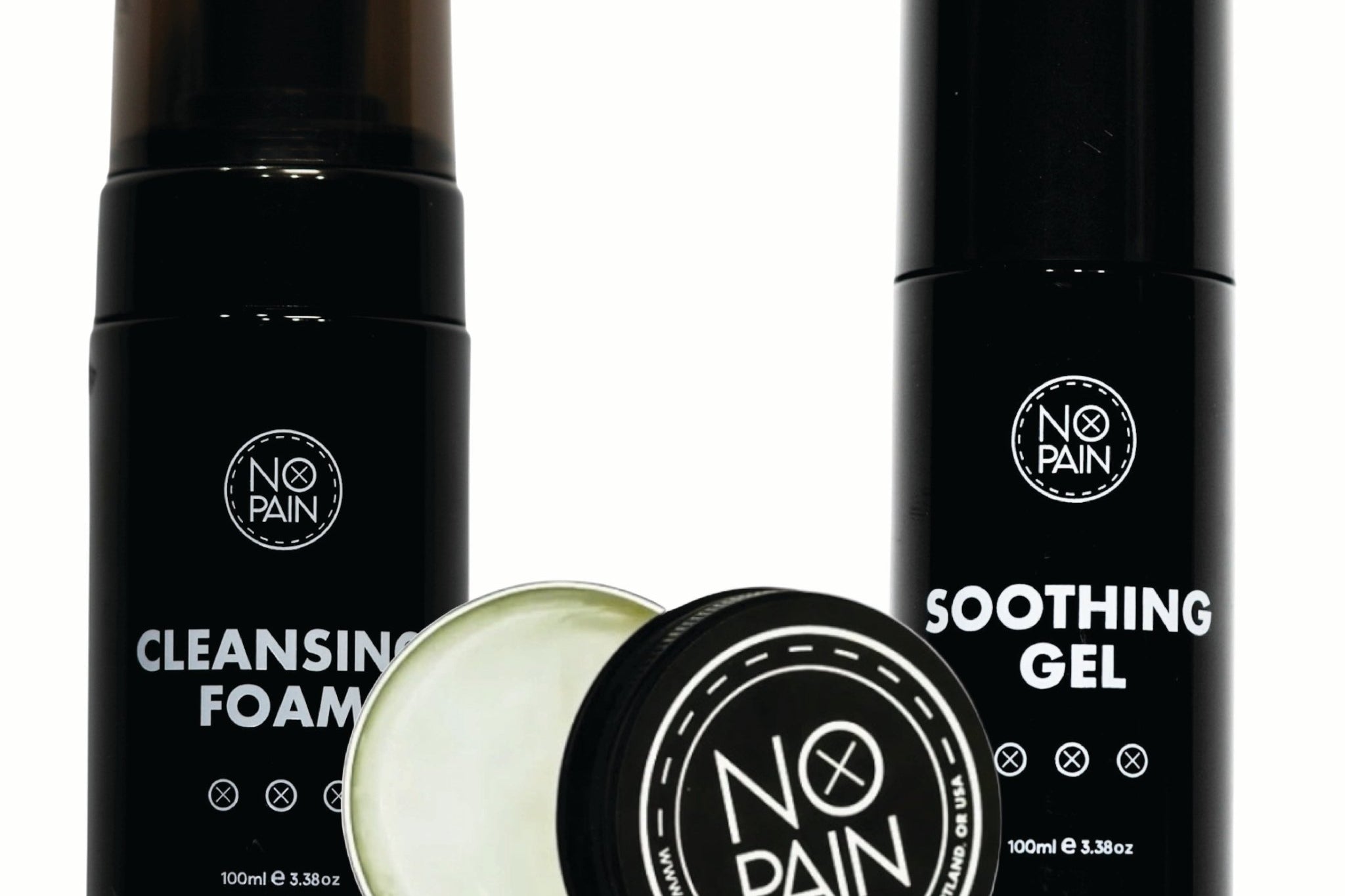
Cleansing foam, soothing gel, and aftercare balm. Each product covers the stage it's designed for, from day one through the end of the milky phase and beyond.
Shop the Aftercare Bundle →Formulated at Historic Tattoo in Portland, Oregon. 100% money-back guarantee.