


Black tattoos fade in a specific and predictable way. Fresh-session black slowly softens to a deep charcoal, then to grey, then to a foggy shadow of the original. Some fading is simply time. But a significant amount of it is caused by choices that are entirely within your control.
If you understand what drives fading, you can slow it down dramatically.
The initial heal is where you set the foundation
The first month after your session matters more than any other period for long-term ink retention. What happens during the heal determines how much of that deep, saturated black actually stays in your skin permanently.
The main enemy during this phase is heavy scabbing. When a thick scab forms and eventually falls off, it takes embedded ink with it—leaving behind a patch that's noticeably lighter than the surrounding tattoo. The way to prevent heavy scabbing is to keep the tattoo in an appropriate moisture balance: hydrated enough that it doesn't dry out and crust, but not so saturated that fluid builds up under the surface.
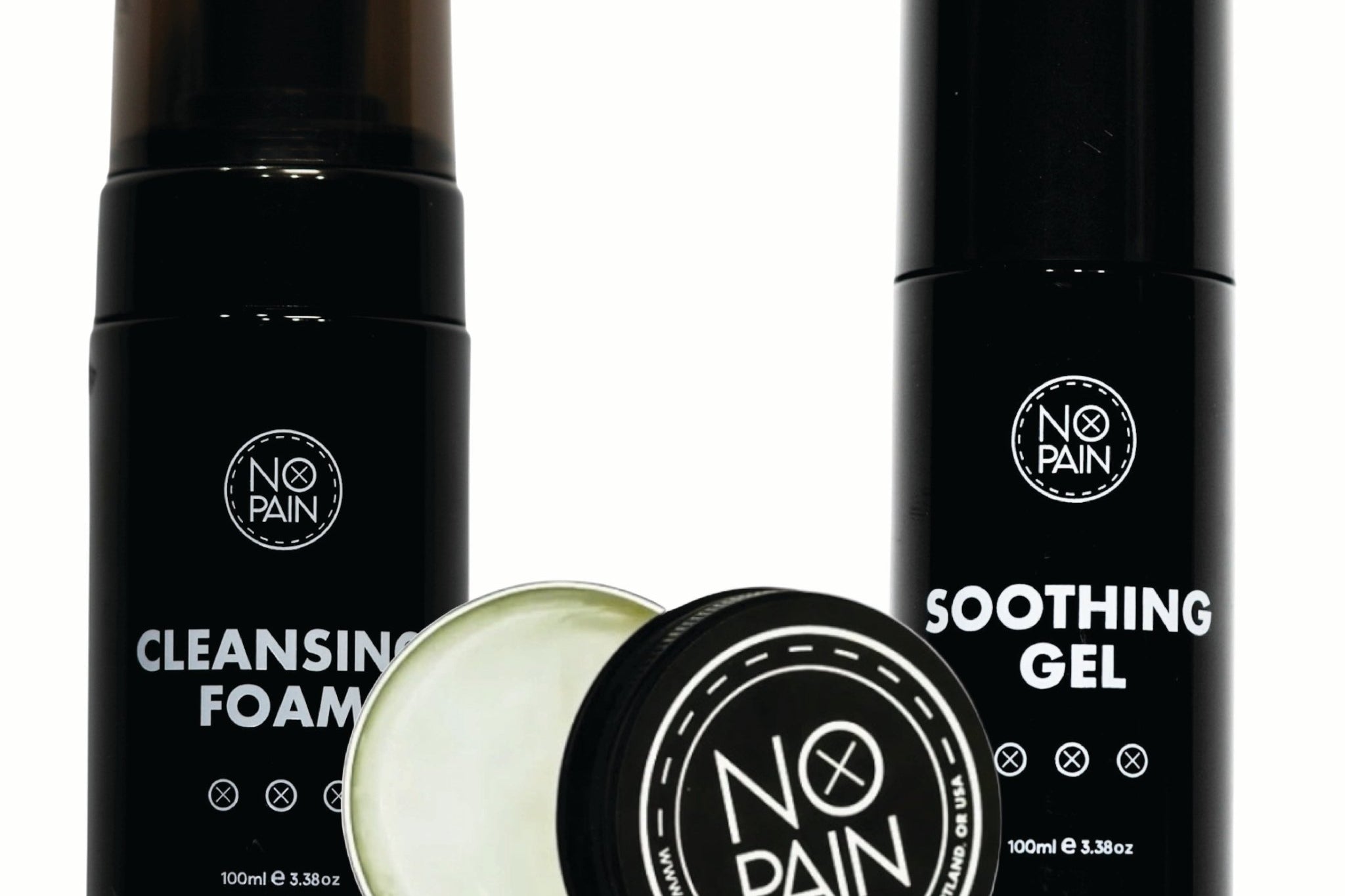
The No Pain Tattoo Aftercare Bundle is designed around this balance. The Cleansing Foam keeps the wound clean without stripping it, and the Balm provides the breathable moisture layer that prevents the excessive drying that leads to thick scabs. Getting this right in the first four weeks pays dividends for years.
Sun exposure is the primary long-term threat
UV radiation is the mechanism behind most long-term tattoo fading. UV rays penetrate into the dermis and physically break down the large ink particles your body can't easily flush—shearing them into smaller fragments that your immune system can remove. Each sun exposure chips away at the density of the ink, which is why tattoos on frequently sun-exposed areas tend to age faster than tattoos that spend most of their time under clothing.
The intervention is simple but requires consistency: sunscreen, applied every time that tattoo is going outside. SPF 30 or higher, broad-spectrum. Apply it over fully healed tattoos before any outdoor exposure, reapply if you're out for extended periods. This single habit does more for the long-term appearance of a black tattoo than any other maintenance step.
Daily moisturizing: the habit most people skip
The second biggest driver of faded-looking black tattoos isn't actual fading at all—it's dry skin. When the skin over a tattoo is ashy and dehydrated, even dense black ink looks muted and grey through it. Hydrating the skin doesn't restore ink that's been lost, but it reveals the ink that's still there.
A consistent daily moisturizing habit makes a visible difference. Apply the No Pain Tattoo Aftercare Balm once a day to healed tattoos—right after a shower is ideal, when the skin is already slightly warm and open. The difference between a hydrated and a dehydrated black tattoo can look like years of aging.
Touch-ups are part of the long-term plan
No matter how diligent you are about aftercare and sun protection, most black tattoos benefit from a touch-up at some point. The timing depends on placement (high-friction areas like hands and elbows need it sooner), style (fine line work fades faster than bold traditional), and how well your skin holds ink generally.
A skilled artist doing a touch-up on a solid black tattoo can restore incredible depth with minimal additional work. If you're in doubt about whether yours needs one, visiting the original artist five years post-session for an assessment is a reasonable rule of thumb. Some pieces will need nothing; others will benefit from a session that takes an hour and makes a dramatic difference.
The formula isn't complicated: a perfect initial heal, consistent sun protection, daily hydration as a habit, and a touch-up when the piece genuinely calls for it. The collectors who invest in these habits are the ones with bold, deep black tattoos that turn heads twenty years later.