


Wait at least 4 to 6 weeks before booking a tattoo touch up. For complex pieces, large-scale color work, or photorealism, your artist will often ask you to wait 3 months. That's not a suggestion. Here's why the wait matters and what happens if you go back too soon.
In this article
- The minimum wait time
- Why you have to wait
- What a touch up is (and isn't) for
- Free touch ups: how they usually work
- How good aftercare prevents touch ups
- Frequently asked questions
The Minimum Wait Time
Four to six weeks is the floor. At that point, the surface of the skin has closed and the peeling phase is done, but your artist can't do reliable work on a tattoo until the deeper layers have fully stabilized.
For simpler designs, black linework, or smaller pieces, the 4-to-6-week window is often sufficient. For anything complex, color-heavy, or photorealistic, most experienced artists want to see the tattoo at the 3-month mark. The reason: color work takes longer to fully settle, and what looks like a faded spot at six weeks may clarify on its own by three months.
If your artist specifies a timeframe, follow it. They know how their work heals.
Why You Have to Wait
You're not seeing the final result yet. A tattoo that looks faded or patchy at two or three weeks is often still going through the milky phase, a period when a new translucent layer of epidermis is forming over the ink and temporarily muting its vibrancy. This can last several weeks. What looks like ink loss at week three can look completely different at week eight as that new skin layer clears. For a full explanation of what's happening, see the milky phase guide.
The dermis is still repairing. The surface peeling you can see is not the full picture. Under the epidermis, the dermis, where the ink actually sits, is still going through cellular repair for weeks after the surface looks healed. Tattooing over skin that hasn't finished this deeper recovery is more painful, causes more swelling, and produces a worse result. The ink doesn't settle as cleanly into skin that's still in repair mode.
Your artist needs a settled canvas to match anything. Matching the saturation of a black area, the exact tone of a color, or the density of a shaded section requires the tattoo to be fully resolved. An artist working on a still-settling tattoo is guessing at what they're matching against. Wait until it's stable, and they can actually see what needs adjusting.
Going too soon risks making it worse. Tattooing over skin that isn't fully healed can cause the new ink to spread unevenly, create scar tissue, or produce a muddier result than the original. The goal of a touch up is to improve the tattoo. Rushing it achieves the opposite.
What a Touch Up Is (and Isn't) For
A touch up is for small technical imperfections that developed during healing: a tiny spot where ink didn't hold (often called a holiday), a small section of color that healed slightly lighter than the surrounding area, or a short segment of linework that lost some definition.
These things happen. Even with excellent technique and perfect aftercare, ink occasionally doesn't take on the first pass. It's not a sign of bad work. It's a known variable in tattooing.
A touch up is not for redesigning elements, adding new content, or fixing something you're aesthetically unhappy with. Those are reworks or additions, which are separate sessions with separate pricing. A touch up is specifically for restoring what was already there.
If you're looking at your healing tattoo and thinking about adding something, changing a line, or adjusting the layout, that conversation is different from a touch up conversation. Have it with your artist at the 3-month mark when the piece has fully resolved.
Free Touch Ups: How They Usually Work
Many artists offer a free touch up within a set window, often six months from the appointment date. But this is artist-dependent, not universal. Some shops include it as standard, some charge for touch ups regardless, and some offer it conditionally.
The most common condition: the free touch up applies only if you followed the aftercare instructions properly. If the artist believes the ink loss was caused by picking, excessive sun exposure, soaking, or skipped aftercare, they may charge for the correction. That's a fair position. Ink loss from healing failure is different from ink loss caused by technique.
Ask about your artist's touch up policy at the time of booking if you're not sure. Get clarity before the appointment, not after.
How Good Aftercare Prevents Touch Ups
The most common cause of needing a touch up is healing failure, not artist error. Thick scabbing pulls ink out when scabs separate. Picking speeds that process up. Infection disrupts the dermis and can permanently damage a section of the tattoo. Poor moisture management leads to cracking that tears through healing skin.
The best tattoo touch up is the one you never need. A consistent two-phase aftercare routine addresses the main causes of healing failure from day one.
In the first few days, the skin is an open wound. A lightweight gel keeps it hydrated without smothering it, which prevents the excessive drying that leads to thick scabs. Thick scabs pull ink. Thin, controlled flaking doesn't. For more on the scabbing mechanism, see the scabbing guide.

Lightweight gel for the raw first few days. Keeps the wound hydrated and reduces the risk of thick scab formation, which is the leading cause of ink loss during healing.
Starting around day three, as the surface closes and peeling begins, the skin needs a richer product to nourish it through the peeling and milky phase. A shea butter-based balm applied twice a day keeps the new skin layer supple, reduces cracking risk, and supports the clearest possible healed result. For a full week-by-week breakdown of what the skin is doing and what it needs at each stage, see the healing process guide.

Shea butter balm for the peeling and milky phase. Nourishes the new skin as it forms and helps the surface clarify so the ink heals at its best.
Frequently asked questions
How long should you wait to get a tattoo touched up?
At minimum, 4 to 6 weeks. For complex work, color-heavy pieces, or photorealism, wait 3 months. The reason is that a tattoo that looks like it needs a touch up at three to four weeks may look completely different by two to three months as the milky phase resolves and the deeper skin layers finish healing. Booking a touch up before the tattoo has fully settled means your artist is working on a moving target and potentially tattooing over skin that can't yet hold ink reliably.
Can I get a touch up at 4 weeks?
Four weeks is the minimum, not the target. If the surface healing is clean, the milky phase has mostly passed, and your artist agrees the piece has settled enough to assess, a 4-week touch up can work for simple black linework. For color, shading, or any complex work, four weeks is too soon to accurately judge what actually needs fixing. Most artists prefer 6 to 8 weeks as the practical minimum, with 3 months as the standard for detailed work. Follow your artist's specific guidance over any general timeline.
What happens if you get a touch up too soon?
Several problems. The dermis is still in repair mode, so the new ink doesn't settle cleanly. The session is more painful because the skin is still sensitive. The area may swell more than usual. And the healed result of the touch up may be patchy or uneven because the artist was working on a surface that wasn't stable. In some cases, tattooing over skin that isn't fully healed can create scar tissue that permanently affects that section of the tattoo. There's no upside to going early.
Are touch ups free?
It depends on the artist and shop. Many artists offer one free touch up within a set window, often six months, as a standard part of the service. Others charge for touch ups regardless. When they are offered for free, the usual condition is that the ink loss resulted from normal healing variation, not from aftercare failure on the client's part. If your artist believes the issue was caused by picking, sun damage, soaking, or not following aftercare instructions, they may decline to do the touch up for free. Ask about the policy at booking.
How do I know if my tattoo actually needs a touch up?
Wait until the 3-month mark before making that call. At that point, the milky phase has fully resolved, the deeper layers have healed, and the tattoo has settled into its long-term state. If there are genuine holidays (small spots where ink didn't hold), sections that healed noticeably lighter than the surrounding area, or line segments that lost definition, those are legitimate touch up candidates. If the tattoo looks slightly softer than it did when it was fresh, that's normal. Fresh tattoos always look bolder than fully healed ones. That's not a touch up situation.
What's the difference between a touch up and a new session?
A touch up corrects small healing-related imperfections in an existing finished tattoo: a holiday, a light patch, a short section of a line. It's typically brief and targeted. A new session adds to or substantially reworks a piece. If you want to extend the design, change elements, or add new content, that's a separate appointment and is usually a paid session regardless of any touch up policy. For planning timing around multi-session work on a large piece, see the guide on how long to wait between tattoo sessions.
Give Your Ink the Best Chance to Heal Right
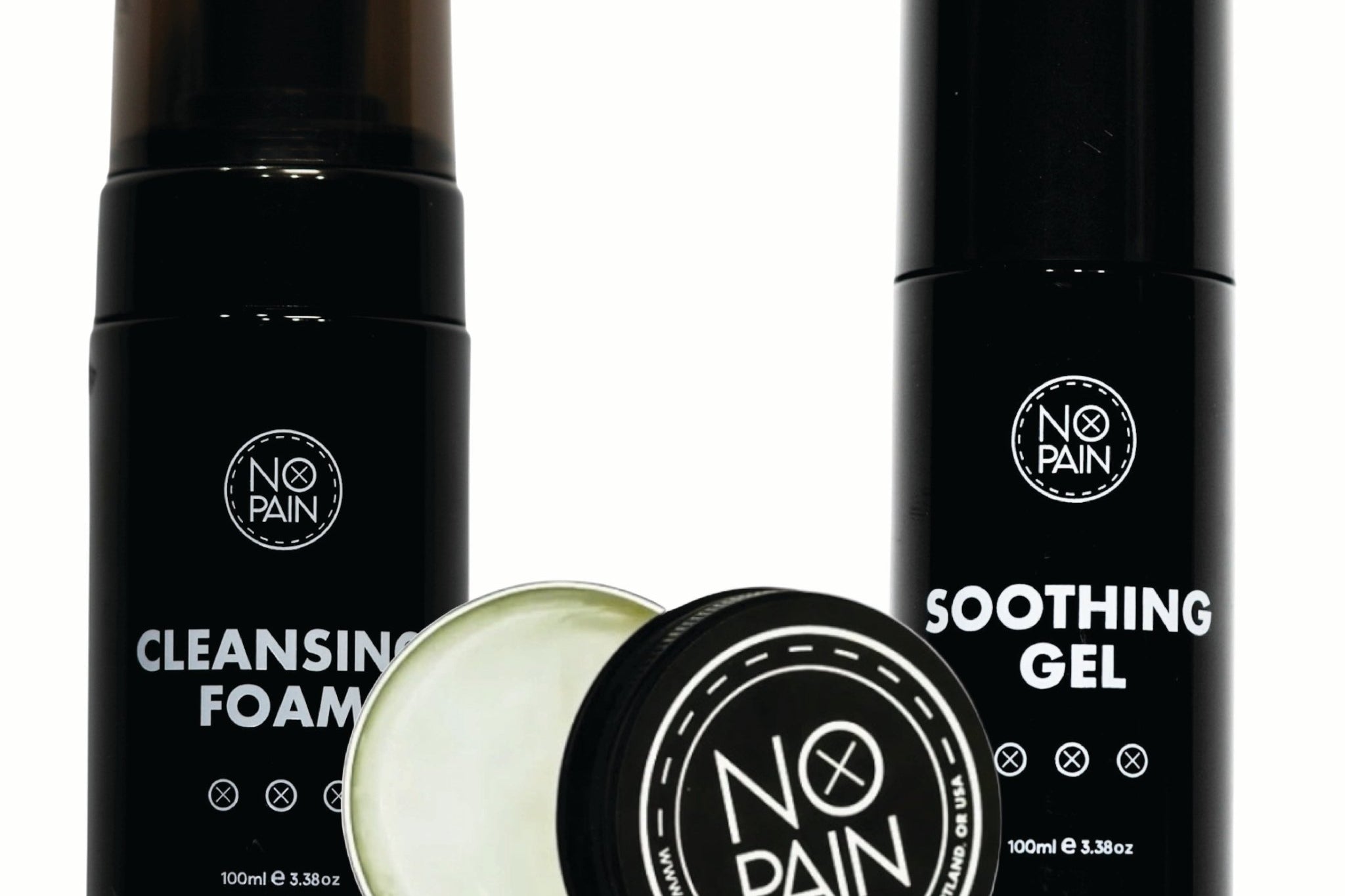
Cleansing foam, soothing gel, and aftercare balm. Each product covers the stage it's designed for, from day one through the end of the milky phase.
Shop the Aftercare Bundle →Formulated at Historic Tattoo in Portland, Oregon. 100% money-back guarantee.