


How to Heal a Tattoo in the Elbow Ditch: A Complete Guide
The elbow ditch is one of the hardest placements on the body to heal. The combination of thin skin, constant movement, and crease-on-crease friction creates a healing environment unlike almost anywhere else. Ink loss, cracking scabs, and touch-up requirements are all more common here than at any other standard placement.
This guide covers exactly why the elbow ditch heals the way it does, what to expect at each stage, and how to come through it with your ink intact.
Why the Elbow Ditch Is So Hard to Heal
Three anatomical factors combine to make elbow ditch healing uniquely difficult.
Constant Mechanical Stress
You bend your arm dozens of times per hour. Every bend stretches the healing skin in the ditch, and every extension compresses it. This cycle of tension and release is relentless. A scab that forms overnight faces immediate mechanical challenge the moment you reach for your phone in the morning. No other commonly tattooed area endures this level of repeated stress during the healing period.
Crease-on-Crease Friction
When you bend your elbow, the skin inside the ditch folds against itself. During healing the fresh tattoo is directly rubbing against the skin of the inner forearm. This friction can lift the forming scab prematurely, pull ink out, and create a surface so irritated it refuses to heal cleanly. This is distinct from the clothing friction that affects other placements: skin-on-skin, unavoidable, and continuous.
Thin Skin with Poor Resilience
The skin in the elbow ditch is among the thinnest on the arm. It has minimal subcutaneous fat to cushion needle impact, which is why the area hurts so much to tattoo. During healing, this same thinness means the skin dries out faster and cracks more readily than on thicker-skinned placements. A thick, rich moisturizer applied frequently is not optional here. It is the primary tool keeping your tattoo intact.
The Elbow Ditch Healing Timeline
Days 1 to 3: Swelling and Weeping
Expect more swelling here than at other placements. The elbow joint is a complex structure and the body sends significant inflammatory resources to the area. The tattoo will weep plasma and may feel hot and tight. Keep it clean and lightly wrapped when possible. Avoid bending the arm deeply during these early days when the wound is most vulnerable.
Days 4 to 10: Scab Formation: The Critical Window
This is the stage that determines your outcome. As the wound closes, a scab forms. At the elbow ditch, this scab is under mechanical tension every time you bend your arm. If the scab is allowed to dry out and harden, it becomes brittle. The next time you flex your arm, it cracks. A cracked scab exposes the healing dermis, pulls ink up with it, and leaves a gap or lighter patch in the finished piece.
The goal during this window is to keep the scab soft and pliable at all times. A supple scab bends with your arm. A hard, dry scab does not.
Days 10 to 21: Peeling and Second Skin
As the scab begins to break down, the area will peel. This stage is itchy and the temptation to pick is strong. Do not. Allow the peeling to happen on its own. Picking at this stage is especially likely to pull ink because the skin is still thinner than at comparable placements. Continue applying moisturizer through this stage.
Weeks 3 to 6: Surface Healing Complete, Depth Continues
The surface will appear healed but the deeper dermis is still consolidating. The tattoo may look dull or cloudy during this period. Continue sun protection and moisturizing. Final ink settlement takes longer here than at most other placements. Do not judge the outcome until at least six weeks post-session.
The Cracking Problem: How to Prevent It
Cracking is the defining failure mode of elbow ditch tattoos. Understanding why it happens is the key to preventing it.
A scab cracks when the skin under it is too dry to flex. The crack opens the wound, which then needs to heal a second time. Each healing cycle carries the same risk of ink loss. Multiple cracks across the same area during the healing period can leave the finished tattoo looking patchy, faded in sections, or with obvious gaps where the scab pulled ink on its way out.
Prevention has two components. First, apply a soothing gel immediately after each wash during the first three days to maintain moisture from the earliest stage. Second, transition to a richer, more occlusive balm from day three onward and apply it more frequently than you would for other placements: three to four times per day rather than twice. The goal is to never let the scab dry out completely between applications.

Aftercare Routine for the Elbow Ditch
The routine here is the same as for other placements in structure, but the frequency and product richness need to be higher.
Wash gently with a fragrance-free liquid soap twice per day. Pat dry with a paper towel. Never rub. Apply your aftercare product immediately after each wash. Do not let the tattoo air-dry for extended periods in this location; the thin skin loses moisture fast.
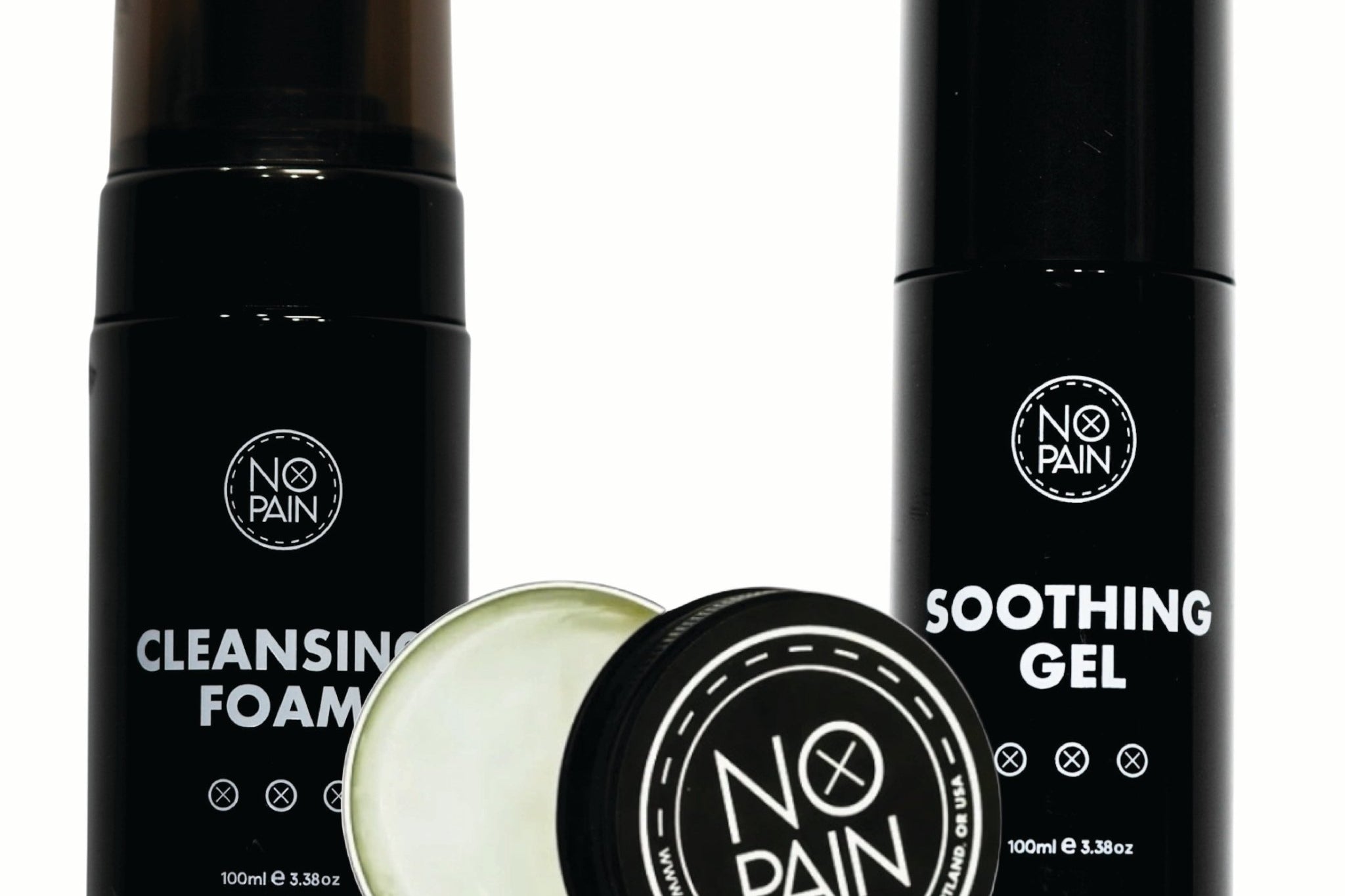
For the first three days, use a lightweight soothing gel to reduce inflammation and keep the fresh wound moist. From day three onward, switch to a richer balm. The balm creates a more protective moisture barrier than a gel, which is what the scab needs as it thickens and becomes more vulnerable to cracking from movement.

The Full Elbow Ditch Heal Kit
Gel for Days 1 to 3, balm from Day 3 Onward. The Aftercare Bundle covers both phases and saves 20% versus buying separately.
Shop Aftercare Bundle →Managing Movement During the Heal
You cannot stop bending your arm, but you can reduce how often you bend it fully. During the first two weeks, be conscious of unnecessary deep flexion. Reaching across your body, carrying heavy bags with a bent arm, and sleeping with the arm tightly bent against your chest all place extra stress on the healing ditch. These are not worth worrying about obsessively, but being aware of them reduces cumulative mechanical stress over the critical first ten days.
Sleep position is worth deliberate thought. If you normally sleep with your arm curled against you, the elbow is in a deeply flexed position for hours. This extended-duration bend on a freshly healing ditch is a reliable way to crack a scab. Sleeping on your back with the arm extended, or using a pillow to prop the arm straight, makes a meaningful difference.
Clothing also matters. Long sleeves with tight cuffs that press against the ditch area create both friction and moisture trapping. Loose, breathable cotton sleeves are the better option during the healing period.
Why Touch-Ups Are Common Here
Touch-ups after elbow ditch tattoos are not a sign that your artist made a mistake. They are a well-understood consequence of the placement. Even with careful aftercare, the mechanical stress of this location means that some ink loss during healing is more likely than at other spots. Fine lines may soften. Solid fills may develop light patches. Shading gradients may lose evenness.
Most artists who regularly tattoo this area will schedule a touch-up as part of the process rather than something extra. If your artist mentioned a follow-up appointment, this is why. Wait at least six to eight weeks before assessing the final result and booking any touch-up work. The skin needs to fully settle before accurate evaluation is possible.
Frequently Asked Questions
How long does an elbow ditch tattoo take to heal?
Surface healing typically takes three to four weeks. Full dermal healing, where the deeper layers have consolidated and the ink has settled into its final appearance, takes six to eight weeks or longer. The elbow ditch heals more slowly than most placements because of the constant mechanical disruption. Do not book a touch-up before the six-week mark.
Why is my elbow ditch tattoo cracking?
Cracking happens when the forming scab dries out and loses flexibility. Every time you bend your arm, it puts tension on a rigid, dry scab that cannot bend with the skin. The solution is to keep the scab hydrated with a rich balm applied three to four times per day. A soft scab flexes. A hard, dry scab cracks and pulls ink out when it does.
Can I straighten my arm during healing?
Yes, and keeping your arm as straight as possible is beneficial, especially during the first two weeks. Full extension puts the ditch skin under less stress than a deeply bent position. When resting or sleeping, try to keep the arm extended rather than curled. You do not need to immobilize the arm (normal activity is fine), but minimizing unnecessary deep flexion helps the scab form and hold.
Is it normal for an elbow ditch tattoo to need a touch-up?
Yes, and it is more common here than at almost any other placement. Ink loss during healing is a known characteristic of the elbow ditch. Most experienced artists factor this in and either price the touch-up into the original session or schedule a follow-up as standard practice. A touch-up at this location is not a reflection of poor artistry or poor aftercare. It is often simply the biology of the placement.
Can I shower normally with an elbow ditch tattoo?
Yes, but avoid letting the arm hang in direct stream pressure from the shower head. Let water run over it gently. Do not soak the area. Brief, gentle exposure is fine; standing in the shower with the ditch pointed at a high-pressure stream for extended periods is not. Soaking in baths or pools should be avoided for the full first three weeks.
What happens if my elbow ditch tattoo scab falls off early?
If a scab comes off before the skin beneath is ready, the area may look pink, raw, or uneven. This is the point where the risk of ink loss is highest. Keep the area clean and well moisturized, avoid any further mechanical disruption, and let the skin close naturally. If the area looks wet or weeping rather than dry and pink, treat it as a fresh wound: clean, apply gel, and protect it. If you see any signs of infection (expanding redness, pus, fever), contact a healthcare provider.