


Aquaphor does not pull ink out of tattoos. The ink sits in your dermis, the second layer of skin, and a topical ointment has no mechanism to reach it. What looks like ink coming out when you wipe off Aquaphor is the normal weeping fluid your tattoo produces for the first day or two. That would happen with any product, or with nothing at all.
The ink-pulling myth is settled. The separate question of whether Aquaphor is actually a good choice for healing is not. It isn't, and the reasons are worth understanding if you care about how your tattoo heals and looks.
In this article
- The ink-pulling myth, explained
- The real problems with Aquaphor on tattoos
- When Aquaphor is acceptable
- What to use instead
- Frequently asked questions
The Ink-Pulling Myth, Explained
Tattoo ink is deposited into the dermis by the needle. The dermis is below the epidermis (the outer layer), which is what any product you apply to your skin actually touches. A petroleum-based ointment sitting on the surface of your skin cannot reach the dermis. It can't pull out ink any more than lotion can pull out your capillaries.
What people see and misinterpret: a fresh tattoo weeps plasma and a small amount of excess ink for the first 24 to 48 hours. This fluid sits near the surface. When you apply a thick ointment like Aquaphor and then wipe it off, the fluid mixes with the ointment and the result looks inky and colored. That's surface weeping, not ink loss. The same thing would happen if you wiped your tattoo with a clean paper towel and no product at all.
The ink that's actually inside your skin is not going anywhere from Aquaphor. Ink does get lost during healing, but it comes from thick scabs forming and pulling away from the skin as they separate, not from topical products drawing it out. The scabbing guide covers how that process works and how to prevent it.
The Real Problems with Aquaphor on Tattoos
The fact that Aquaphor doesn't pull ink doesn't mean it's the right product. It has two real problems when applied to a healing tattoo.
It's occlusive, and that's the problem
The primary ingredient in Aquaphor is petrolatum, which is petroleum jelly. Petrolatum is an occlusive: it sits on top of the skin and forms a barrier that prevents moisture from escaping. That's useful for dry skin maintenance and minor scrapes. For a healing tattoo, it creates a problem.
A healing tattoo needs to breathe. It's an active wound that weeps fluid and needs airflow to heal cleanly. A thick, non-breathable layer of petroleum jelly over a fresh tattoo traps heat and moisture against the wound. That warm, wet, sealed environment is exactly what bacteria prefer. It doesn't mean every tattoo healed with Aquaphor gets infected, but it does mean the product is working against the basic requirements of wound healing rather than supporting them.
It clogs pores and causes breakouts
Aquaphor is not non-comedogenic, meaning it can clog pores. On a healing tattoo, this produces a specific and frustrating result: clusters of small, whitehead-style bumps on and around the tattoo, a condition called milia.
Our founder experienced this firsthand. For years, every time he used a petroleum-based product during healing, he'd get breakouts directly on top of his new tattoo. The milia themselves weren't dangerous, but they sat over freshly healed skin and looked terrible during the most sensitive stage of healing. That experience was what pushed him to develop an aftercare line specifically formulated to moisturize without blocking the skin. He wanted a product that actually behaved the way a healing tattoo needs it to.
When Aquaphor Is Acceptable
There are situations where Aquaphor on a tattoo isn't a disaster:
In the first two to four hours, if you have nothing else. Before a proper aftercare product is available, a thin application of Aquaphor can protect the fresh wound from friction and contamination in transit home from the studio. Thin is the word: not a thick coat. The goal is a light barrier, not a seal. Remove it as soon as you can wash the tattoo and start using the right product.
On a fully healed tattoo for dry skin maintenance. Once the surface is fully healed, usually around week four, petrolatum poses much less risk. It won't interfere with wound healing because there's no wound. That said, there are better moisturizing options for long-term tattoo maintenance than petroleum jelly.
For everything between those two scenarios, meaning the entire two-to-four-week active healing window, Aquaphor is a poor choice. See the Vaseline and Aquaphor guide for a broader breakdown of why petroleum products underperform during this window.
What to Use Instead
The healing window has two distinct phases that benefit from different products.
In the first two to three days, the tattoo is an active wound. The goal is light hydration and clean skin, not a heavy barrier. A lightweight gel keeps the surface from drying out, which prevents thick scab formation, without trapping heat or blocking pores. For a detailed breakdown of what's happening to your skin in each stage, the tattoo healing process guide covers it week by week.

Lightweight cooling gel for the active wound phase. Keeps the skin hydrated and breathing without the occlusive barrier that traps heat and leads to breakouts.
From around day three through the end of the peeling phase, the wound is closing and the skin needs more nourishment. A shea butter-based balm provides what petroleum jelly can't: actual emollient nourishment that absorbs into the skin and supports the new surface layer as it finishes forming.

Nourishing shea butter balm for the peeling stage. Absorbs into the skin to support the new surface layer, not a petroleum barrier that sits on top of it.
Frequently asked questions
Does Aquaphor pull ink out of tattoos?
No. Tattoo ink sits in the dermis, below the skin's surface. No topical product can reach it. What looks like ink in the ointment when you wipe it off is plasma and surface weeping from the fresh wound, which happens regardless of what product you use. Ink loss during healing comes from thick scabs pulling away from the skin, not from anything you apply topically.
Can you use Aquaphor on a new tattoo?
You can, but it's not the best choice for the full healing period. Aquaphor is a petroleum-based occlusive, meaning it creates a non-breathable barrier on the skin. For a wound that needs airflow to heal cleanly, that barrier can trap heat and moisture and block pores. A short application in the first few hours is fine if nothing else is available. For the full two-to-four-week healing window, a purpose-built aftercare product performs better.
How long can you use Aquaphor on a tattoo?
If you use it at all, short-term use in the first day is the least problematic. The longer you use it, the more likely you are to experience clogged pores, milia, or a wound that heals more slowly because it can't breathe. Most tattoo artists who still recommend Aquaphor say to use a very thin layer for only the first two to three days, then switch to a lighter moisturizer. A better approach is to skip the petroleum product altogether and start with a gel or non-comedogenic balm from day one.
Does Aquaphor fade tattoos?
Not directly. It doesn't interact with the ink in your dermis. Where it can indirectly affect tattoo appearance is by contributing to the conditions that cause uneven healing: if it clogs pores and causes milia, or if the occlusive barrier creates an environment that promotes thicker scabbing, you can end up with patchy ink loss in those areas. The tattoo doesn't fade from the Aquaphor itself, but poor healing conditions affect the final result.
Is Aquaphor or Vaseline better for a tattoo?
Neither is ideal. Vaseline is even more occlusive than Aquaphor and is generally considered the worse option of the two. Aquaphor at least contains some humectants alongside the petrolatum, which gives it slightly more moisturizing benefit. But the comparison is a bit like asking whether a wool sweater or a vinyl raincoat is better for exercising in the summer: neither is right for the job, even if one is marginally less wrong. Both are petroleum products not formulated for wound care on large areas of skin.
What happens if you use too much Aquaphor on a tattoo?
The most common outcome is milia: small, white, hard bumps that form when pores are blocked. They can appear directly on the tattoo and look like whiteheads. Milia aren't dangerous and will resolve, but they can make the tattoo look uneven while they're present. Overuse of Aquaphor can also trap heat, slow the weeping process that clears excess ink from the surface, and leave the skin looking dull and greasy during healing. If you've already applied a heavy coat, wash it off gently with a fragrance-free cleanser and switch to a lighter product.
Built for Healing, Not Borrowed from the Medicine Cabinet
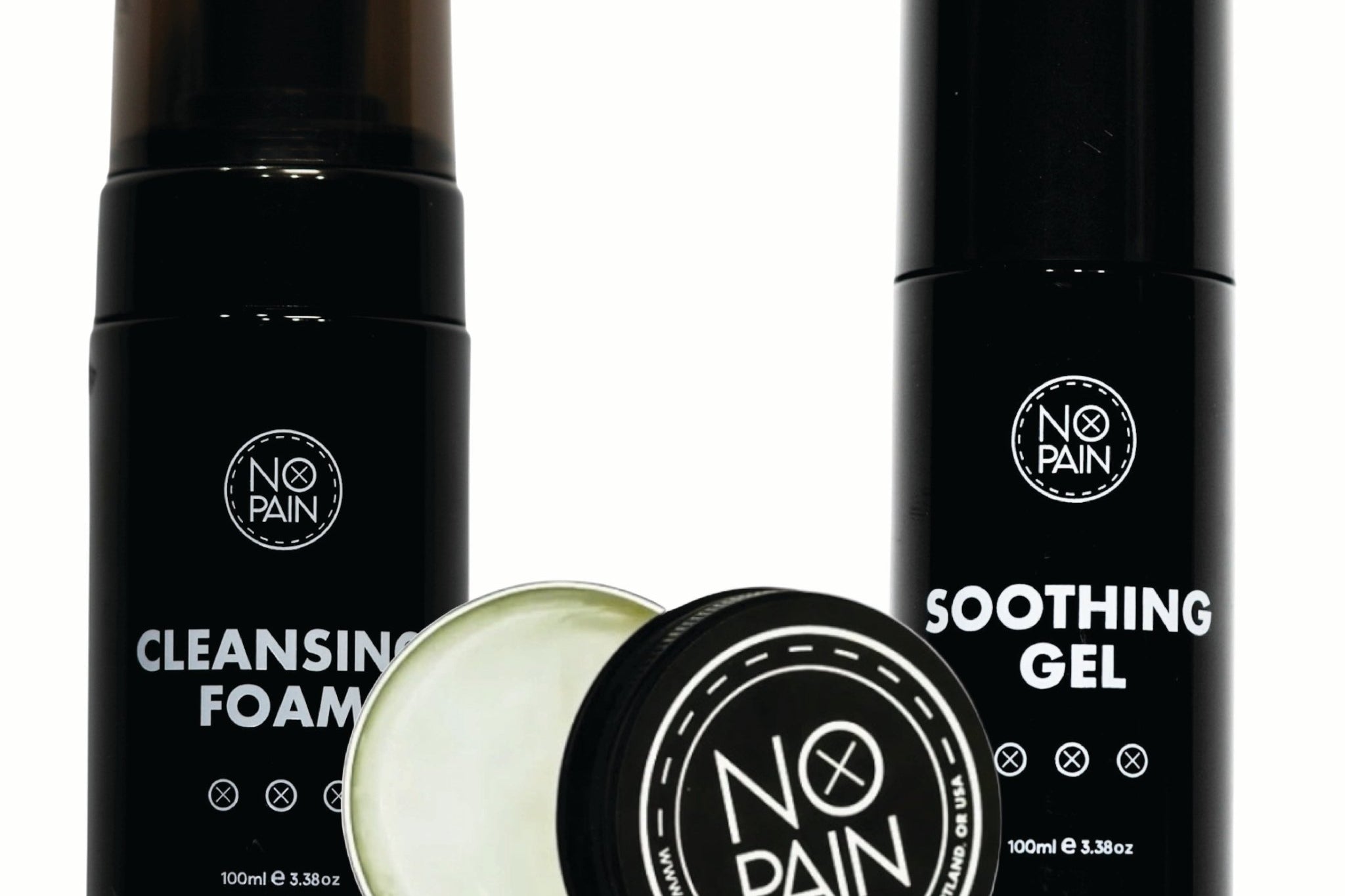
Cleansing foam, soothing gel, and aftercare balm. Each product formulated specifically for the stage it covers, from day one through the final weeks of healing.
Shop the Aftercare Bundle →Formulated at Historic Tattoo in Portland, Oregon. 100% money-back guarantee.