

A Guide to Healing Tattoos with Dry vs. Oily Skin
Dry skin and oily skin heal tattoos differently, and the aftercare adjustments that work for one can cause problems for the other. The biology of each skin type affects how the wound surface behaves, how fast scabs form and shed, and what product choices support the best outcome.
How Dry Skin Affects Tattoo Healing
Dry skin produces less sebum than normal skin and has a compromised moisture barrier. For tattoo healing, this means the wound surface loses moisture faster than it should. The plasma that weeps from a fresh tattoo, rather than staying moist and forming a thin, pliable protective layer, evaporates and dries into a thick, rigid crust more quickly in dry skin types.
The consequences of this rapid drying include heavier scabbing, increased risk of the scab cracking during movement, and a higher rate of ink loss when the scab eventually detaches. Dry-skinned people who do not compensate with more frequent moisture maintenance are more likely to need touch-ups after healing.
Dry skin also means the new skin forming beneath the scab has less natural lubrication, so the scab adheres more tenaciously and takes longer to shed. This extends the healing timeline compared to normal skin types.
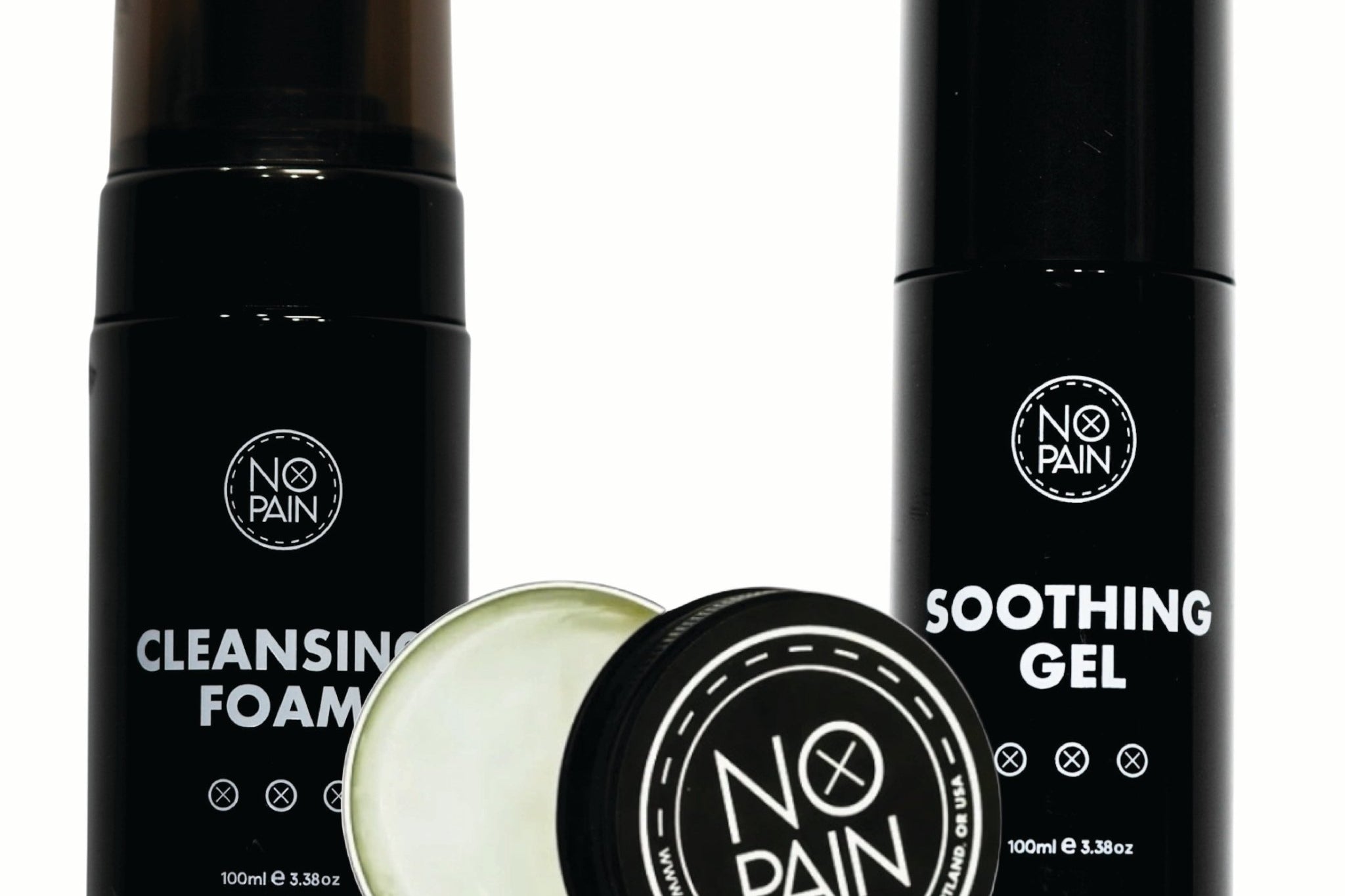
The fix is consistent, proactive moisture maintenance starting from the first wash. For dry skin types, applying a soothing gel after every wash (not just once or twice per day) in the first three days is worthwhile. The gel provides an external moisture layer that compensates for what the skin cannot produce on its own.

From day three onward, dry skin types benefit from more frequent balm applications than the standard two to three times per day. If the tattoo feels tight or the scab looks dry and cracked between applications, the frequency needs to increase. The goal is a scab that looks slightly shiny and pliable, not one that looks matte and rigid.

How Oily Skin Affects Tattoo Healing
Oily skin produces more sebum than average and has a naturally more robust moisture barrier. For tattoo healing, this means the wound surface retains moisture more easily. The plasma from a fresh tattoo is less likely to dry into a heavy crust, and the scab that forms is often naturally thinner and more pliable without as much intervention.
The risks for oily skin types are different from those for dry skin. Excess sebum in the first days of healing can mix with weeping plasma and create a wet, slightly greasy environment. This is not inherently dangerous, but it can attract more lint and debris from clothing and bed linen. It can also create the conditions for bacterial growth if the area is not washed and maintained properly.
The more specific risk for oily skin is over-moisturizing. Because the skin is already producing moisture, adding a heavy layer of product on top can occlude the wound unnecessarily, trapping bacteria and slowing the formation of the new skin layer. Oily skin types often need less product, not more, and lighter formulations work better than rich, occlusive ones.
Product Choices by Skin Type
For dry skin, choose products with higher moisture content and occlusive ingredients. Balms with shea butter, beeswax, or plant-based oils provide both moisture and a barrier to prevent evaporation. Apply slightly more generously than the standard instruction and check the tattoo more frequently to ensure dryness is not building between applications.
For oily skin, choose lighter products. Gel formulations are often better tolerated than heavy balms in the first few days, as they provide moisture without the occlusive layer that oily skin does not need. Apply in the thinnest possible layer: barely visible, absorbed within a minute. If the product is sitting visibly on the skin five minutes after application, use less.
Both skin types benefit from fragrance-free products. The skin is more reactive during healing regardless of skin type, and fragrances are a consistent irritant that causes unnecessary complications.
Adjusting the Aftercare Routine
Dry skin types should wash twice per day as standard but apply aftercare product more frequently. If the tattoo feels tight at any point during the day, that is a signal to apply balm, not to wait for the scheduled application. The two-to-three-times-per-day guideline is a floor for dry skin, not a ceiling.
Oily skin types can usually follow the standard twice-daily wash and two-to-three-times-daily product schedule without modification in the first week. If the tattoo looks wet or weepy beyond the first two days, reduce the product quantity rather than the frequency. An excess of sebum combined with applied product can create the saturated surface that delays healing.
For both skin types, the standard transition from gel to balm at the three-day mark applies. The adjustment is in the quantity applied and the frequency between applications, not in the sequence.
Long-Term Maintenance by Skin Type
Dry skin types need ongoing daily moisturizing for the long-term appearance of their tattoos. Because dry skin provides less natural lubrication to the skin surface, the tattoo will look duller and more faded between moisturizing applications than it would on skin with a more active sebaceous gland. A daily application of fragrance-free balm or body lotion is worth making a consistent habit.
Oily skin types often find that their tattoos stay looking vivid with minimal ongoing maintenance, as the skin is already producing the moisture that keeps the surface clear. The main long-term maintenance concern for oily skin types is sun protection: apply SPF to exposed tattoos regardless of skin type.
Frequently Asked Questions
How do I know if I have dry or oily skin?
Dry skin feels tight after washing, may have visible flaking in cold or dry weather, and absorbs moisturizer quickly. Oily skin has a visible shine within hours of washing, particularly on the face, and may leave a slight residue on a tissue if pressed against the skin. Combination skin is oily in some areas (typically the T-zone of the face) and normal or dry in others. For tattoo purposes, assess the skin type in the placement area specifically, as body skin can differ from facial skin.
My skin is oily but the tattoo is drying out. Why?
The tattooing process temporarily disrupts the skin in the placement area. The sebaceous glands that produce sebum are in the dermis, and the tattooing needle passes through this layer repeatedly. This can temporarily reduce sebum production in the tattooed area while the skin heals, meaning the placement may behave more like dry skin than your skin type would suggest. Treat it based on what you are seeing (is the scab drying out?) rather than your general skin type.
Can I use my regular face moisturizer on a healing tattoo?
Only if it is fragrance-free and does not contain active ingredients like retinol, AHAs, or BHAs. Most face moisturizers contain some combination of fragrance and active ingredients that are inappropriate for a healing wound. A dedicated aftercare product or a basic fragrance-free body lotion is a safer choice for the healing period.
I have eczema. How does that affect healing?
Eczema involves both a compromised moisture barrier (similar to dry skin) and an overactive immune response that can cause the skin to react more strongly to the tattooing trauma. Healing times may be longer, and the skin in the tattooed area may flare during the inflammatory phase. Using the gentlest possible aftercare products (fragrance-free, minimal ingredients) and working with a dermatologist if needed is advisable. Discuss your skin condition with your artist before booking the session.
Does skin type affect how the finished tattoo looks?
Yes, over time. Dry skin that is well-maintained looks comparable to normal or oily skin in the finished tattoo. Dry skin that is consistently neglected shows its condition in the tattoo: duller, less saturated, and aging faster. The ink itself is in the dermis regardless of skin type, but the surface condition of the skin above it determines how clearly it shows through. Good skin maintenance benefits tattooed skin regardless of type.
Should I tell my artist my skin type before the session?
It is worth mentioning if you have notably dry skin, eczema, psoriasis, or any skin condition that affects the placement area. Some artists adjust their technique for skin that is more fragile or reactive, and knowing in advance allows them to use a lighter hand or adjust needle depth. Oily skin rarely requires a special approach from the artist side, but very dry or condition-affected skin can warrant a technique adjustment.