
Not everyone reaches for a numbing cream before a tattoo. Some people can't use one for various reasons. Some just want to know what else is in the toolkit. Either way, there are real, practical things you can do to make a session more manageable, and they work better than most people expect.
Before Your Session
Eat a proper meal
Blood sugar drops make everything worse. When your glucose is low, your body is already under stress, and pain signals register harder. Eat a full meal within two hours of your appointment. Something with protein, fat, and complex carbs. Not just a banana. Your nervous system needs fuel to handle what's coming.
Get a good night's sleep
Sleep deprivation lowers your pain threshold significantly. Research on sleep and pain consistently shows that even one bad night makes you more sensitive to discomfort. If nerves are keeping you up, limit screens before bed, keep your room cool, and avoid alcohol. Seven hours won't make the session painless, but it makes it more tolerable.
Hydrate the day before
Dehydrated skin is more sensitive and harder to tattoo. Drink water consistently in the 24 hours before your appointment. Skip alcohol the night before, not just because it dehydrates you, but because it thins your blood and makes you bleed more, which makes your artist's job harder and the result worse.
Go easy on caffeine if you're anxious
Caffeine amplifies anxiety, and anxiety amplifies pain. If you normally drink coffee, stick to your usual amount. Don't load up thinking it'll help you power through. For people who are already nervous about the session, a lighter caffeine day is worth considering.
During the Session
Control your breathing
This is the most effective and most underused technique. Slow, deliberate breathing activates your parasympathetic nervous system, which actively reduces how intensely you register pain. The method: inhale for 4 counts, hold for 4, exhale for 6. The longer exhale is what does the work. Use it continuously through the harder parts of the session, not just when you notice you've stopped breathing.
Use distraction actively
Passive suffering is worse than active distraction. Bring headphones. Queue up a podcast or audiobook you've actually been wanting to get through. Your brain has limited bandwidth, and you can redirect a real chunk of it away from the needle. People consistently report sessions as less painful when they're genuinely absorbed in something else, not just tolerating background music.
Ask for breaks before you need them
Good artists build in breaks for longer sessions, but you can ask for them proactively. A 5-minute pause, some water, a sugar snack, and a change of position resets the nervous system. Sessions where people silently white-knuckle it past their limit almost always end worse than sessions with regular short breaks. Your artist would rather pause twice than have you tap out early.
Release the tension you're holding
Most people brace reflexively during painful sections without noticing. Clenched jaw, tight shoulders, fists. Muscle tension makes the sensation register more intensely. Every few minutes, do a quick check: deliberately relax your shoulders, unclench your jaw, open your hands. It sounds simple, and it is, but it makes a real difference across a long session.
For Painful Placements
Some spots hit differently regardless of preparation: ribs, hands, feet, the spine, the ditch of the elbow. On these placements, the techniques above still help, but they have a ceiling. The honest answer for reliably difficult spots is that a lidocaine-based numbing cream does what breathing and music can't.

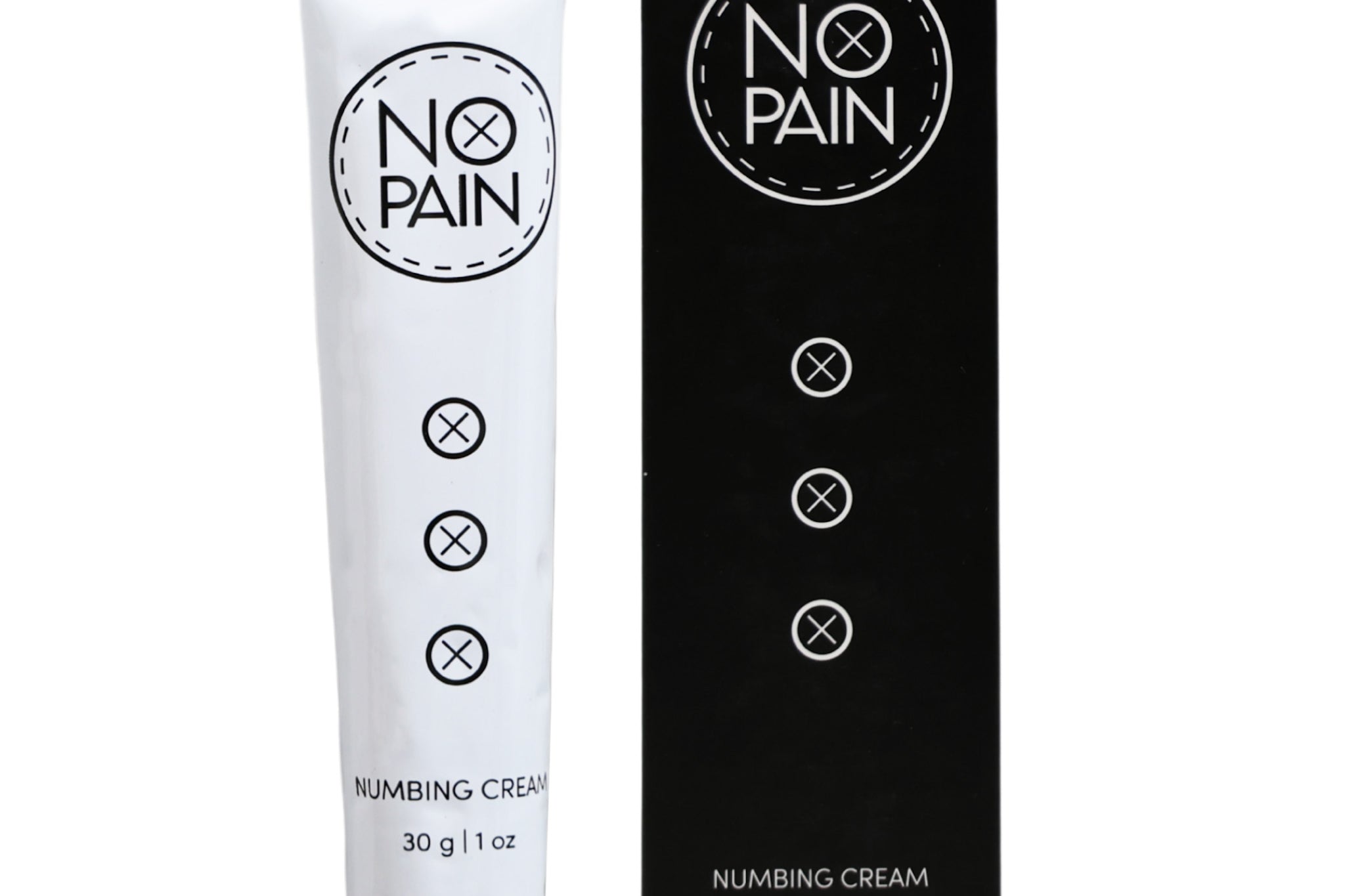
No Pain Tattoo Numbing Cream
Apply 45 minutes before your session for up to 90 minutes of relief. Works cleanly with the ink.
Shop Numbing Cream →What Doesn't Actually Help
A few myths worth clearing up. Alcohol doesn't reduce tattoo pain. It thins your blood, makes you bleed more, and makes the session harder for everyone. Ice on the skin beforehand can numb slightly but also tightens the skin and can work against clean linework. Ibuprofen has minimal effect on tattoo-specific pain and also thins blood. If you want a meaningful reduction in pain, the preparation and technique strategies above will do more than any of these.
The Bottom Line
You can meaningfully reduce tattoo pain with the right preparation and technique. Eat, sleep, hydrate, breathe deliberately, distract yourself, and take breaks before you need them. For placements that are inherently tough, pair those strategies with a numbing cream. The goal is a session comfortable enough to sit through and get great work done, and with the right approach, most people can get there.