


You're somewhere in the middle of your tattoo's healing process — the initial soreness has faded, the skin is starting to peel, and you feel essentially fine. You want to get back to the gym. The tattoo seems mostly healed. How bad can it be?
The answer depends on how you approach it. Working out during the peeling phase isn't automatically off the table, but it carries specific risks that can permanently affect your tattoo if you don't manage them carefully. Understanding what those risks are makes the difference between a safe return to training and a session that costs you ink.
What's Actually Happening During the Peel
Peeling is the final visible stage of tattoo healing, but visible doesn't mean finished. The flaking skin on the surface is still attached to the new, delicate epidermal layer forming underneath, and the ink in the dermis is still in the process of fully settling. The tattoo is not healed just because it no longer looks like a fresh wound.
The peeling skin is fragile and, in some places, only loosely attached. If you apply friction or physical stress to it — through clothing rubbing, skin stretching, or excessive sweat — you can tear those flakes off before they're ready. When a peeling flake is removed prematurely, it takes a portion of the underlying, still-unsettled ink with it. The result is a pale or blank spot in the design that won't fill back in on its own.
The Three Specific Risks
Friction is the biggest concern. Workout clothing — especially compression gear, tight shorts, or any fabric that presses repeatedly against the skin — can rub the peeling surface aggressively enough to cause mechanical damage during a normal training session. This is particularly relevant for tattoos on high-movement areas: thighs, calves, upper arms, and torso.
Sweat is the second issue. Sweat soaks into the peeling skin, softening the delicate flakes in a way that makes them even more vulnerable to being disturbed. A sweaty environment is also one where bacteria thrive, and introducing bacteria to a tattoo that's still in the final stages of healing is how infections develop.
Stretching creates a third category of risk. Exercises that involve significant range of motion across a tattooed area — squats and lunges over a new leg tattoo, pull-ups over a new back piece, chest press over a fresh chest tattoo — cause the healing skin to stretch and pull repeatedly. This can crack and tear the peeling layer, creating the same premature ink loss as friction.
How to Work Out Safely
The most practical approach is to choose workouts that don't involve the tattooed area directly. A new back piece is a fine reason to have a leg day. A healing forearm tattoo is compatible with running. Temporarily avoiding the specific movements that stress the tattooed area is the simplest way to minimize risk without cutting out training entirely.
If you can't avoid using the area, wear the loosest clothing possible over it — soft, breathable, non-compressive fabric that covers but doesn't cling. Avoid anything designed for compression or technical moisture-wicking, which tends to create a tight, repeatedly rubbing surface against the healing skin.
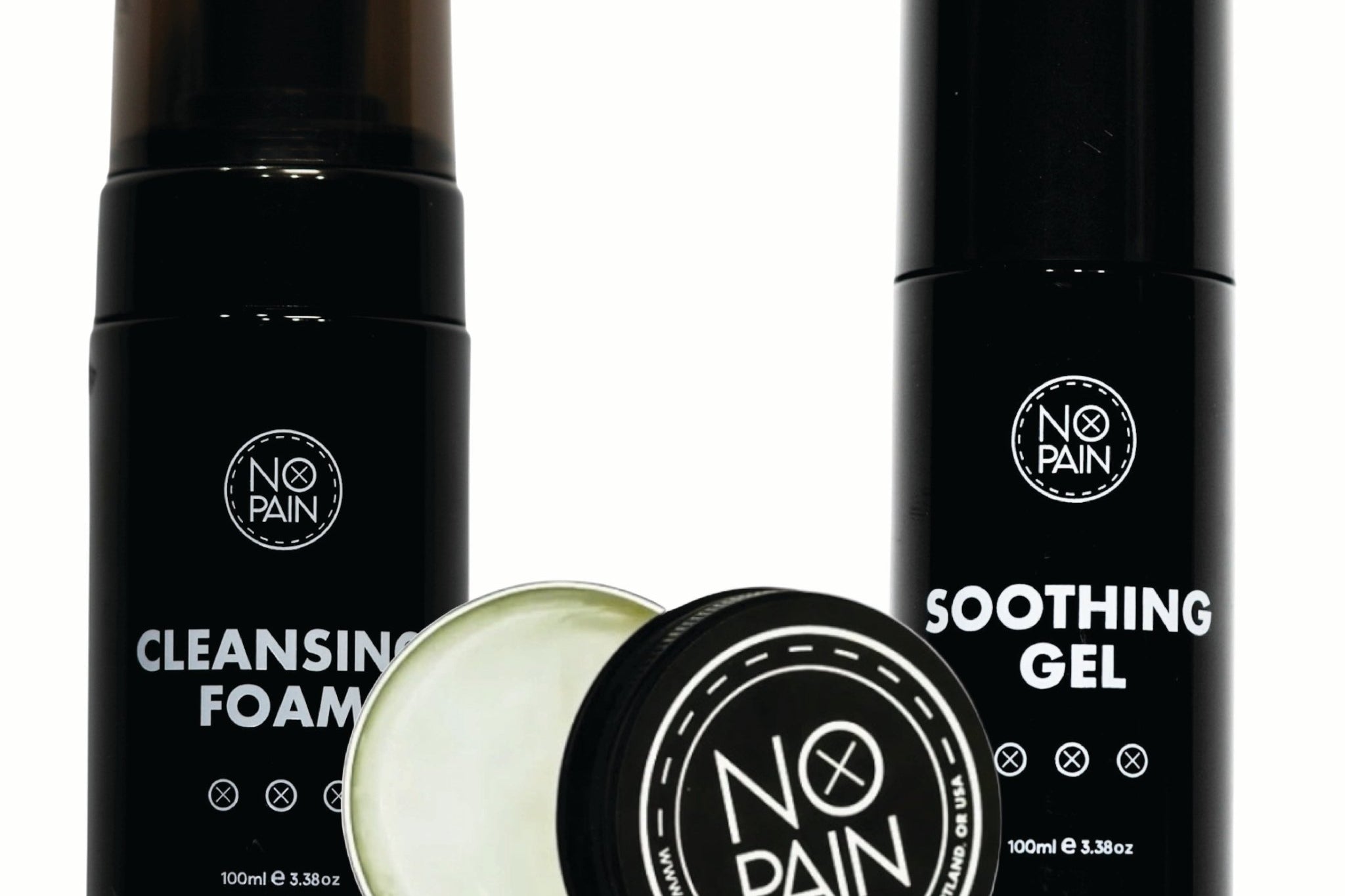
The post-workout routine is non-negotiable: wash the tattooed area immediately after training, gently but thoroughly, to remove sweat and any bacteria introduced during the session. After patting dry, apply a thin layer of aftercare balm to rehydrate the skin and soothe any irritation from the workout. No Pain Tattoo Aftercare Balm absorbs cleanly, provides the moisture the peeling skin needs to continue healing healthily, and helps calm any surface irritation that built up during training.
When to Wait
If the tattoo is in a high-motion area, if the peeling skin is thick and raised rather than light and papery, or if any part of it looks inflamed or irritated, the safest answer is to rest. The peeling phase typically lasts seven to fourteen days. Missing two weeks of training is a much smaller cost than a tattoo that needs significant touch-up work because it was damaged during healing.