


Light flaking and peeling is normal. Deep cracking is not. If your tattoo is splitting open in defined fissures, looking rough and tight, or causing pain when you move, that's your skin telling you it's too dry. Here's how to tell the difference, why cracking happens, and what to do about it.
In this article
- What's normal: peeling and flaking
- What's not normal: cracking
- Why tattoos crack
- How to fix it
- How to prevent it from the start
- When to worry about infection
- Frequently asked questions
What's Normal: Peeling and Flaking
Starting around day four to seven, a healing tattoo sheds its top layer of damaged skin. This looks like thin, semi-transparent flakes peeling away, similar to a healing sunburn. The skin underneath may appear shiny or milky for a few days. This is the normal peeling phase, and you can read more about what to expect in the peeling guide.
Normal peeling characteristics: flakes are thin and come off easily, the area itches but doesn't hurt, the skin underneath looks smooth and healthy, and there's no splitting or separating of the skin surface.
The key is that normal peeling involves the skin loosening and coming away in flakes, not splitting or tearing. Movement doesn't cause pain. The skin stays intact.
What's Not Normal: Cracking
Cracking looks different and feels different. Instead of thin peeling flakes, you'll see defined splits or fissures in the skin surface, similar to dry, cracked earth. The skin around them may look red and pulled tight. Moving the area, especially over joints or high-flex zones, causes pain or a stinging sensation. The cracks may bleed slightly or weep a small amount of fluid.
This is not a stage of normal healing. It's a symptom of dehydration in the healing skin. The skin has lost enough moisture that it can no longer flex with your body's movement, and it splits under the tension instead.
Cracking creates two real problems. First, the splits expose raw skin underneath, which creates an entry point for bacteria. Second, deep fissures can pull ink out of the healing dermis as the skin tears and repairs. That means patchy color, faded lines, or permanent scarring in the affected area.
Why Tattoos Crack
Not moisturizing enough. This is the most common cause by a wide margin. A healing tattoo needs consistent moisture to keep the skin pliable as the new epidermis forms. Skip the aftercare or apply too little, and the skin dries out and loses the flexibility it needs to heal without splitting.
Using the wrong product in the wrong phase. In the first few days, when the skin is still raw and weeping plasma, a thin gel keeps the surface hydrated without sealing it under a heavy occlusive layer. From around day three, as the skin closes and peeling begins, the skin needs a richer product to nourish it through the peeling and milky phase. Using nothing, or using a heavy petroleum ointment that clogs pores in the early phase, can both lead to cracking by week two.
Over-washing. Washing more than twice a day strips the skin's natural oils and dries the surface faster than aftercare can compensate. Twice a day is the right cadence. More than that, and you're working against the healing process.
Air conditioning and dry climates. Low-humidity environments pull moisture from healing skin faster. If you're in a dry climate, working in air conditioning all day, or heading into winter, your skin needs more consistent application to compensate for the faster moisture loss.
High-movement placements. Joints and flex zones, including elbows, wrists, knees, knuckles, and ankles, move constantly. The skin there stretches and compresses with every movement. If it's not well-moisturized, it cracks at the flex points under the mechanical stress. These placements have a higher baseline risk of cracking even with good aftercare, and need extra attention.
How to Fix It
If your tattoo is already cracking, the fix is immediate and straightforward: get moisture back into the skin now and keep it there.
Step 1: Clean the area. Wash the tattoo gently with a fragrance-free liquid soap using your fingertips. The cracks are open skin and can harbor bacteria. Pat dry with a clean paper towel and let it air dry for one to two minutes.
Step 2: Apply a rich balm. This is not the moment for a thin gel or a light lotion. The skin is severely dry and needs something that delivers deep moisture and holds it in. A shea butter-based aftercare balm is the right product at this stage. Apply a thin layer, enough to cover the surface and give it a slight sheen, without loading it on so thick it sits on the surface. Repeat two to three times a day and whenever the skin feels tight or painful.

Shea butter balm for the peeling and milky phase. Rich enough to restore moisture to dry, cracking skin and keep the surface pliable as it heals. Apply two to three times a day and whenever the skin feels tight.
Step 3: Stay consistent. One application won't reverse cracking. The skin needs sustained moisture over the next several days to repair the fissures and stop new ones from forming. Apply balm on a regular schedule, not just when you remember. Morning, midday, and evening is a reasonable baseline until the skin looks and feels recovered.
Step 4: Stop anything that's drying the skin further. That means stopping over-washing, avoiding air conditioning if possible, keeping the tattoo away from direct heat sources, and not touching or picking at the cracked areas.
If the cracking is deep, bleeding, or shows no improvement after two to three days of consistent aftercare, see a doctor. Deep fissures that don't close can become infected.
How to Prevent It From the Start
Cracking is avoidable with a consistent aftercare routine from the first day. The goal is to keep the skin hydrated at every stage of healing without smothering it.
In the first two to three days, the skin is an open wound producing plasma. A lightweight gel applied in a thin layer two to three times a day keeps the surface hydrated without blocking airflow over the wound. This is the period when good aftercare prevents the excessive drying that leads to cracking in the peeling phase. For more on what's happening in the skin at each stage, see the healing process guide.

Lightweight cooling gel for the raw first few days. Keeps the surface hydrated from day one without trapping heat or blocking airflow, which reduces the risk of drying and cracking as peeling begins.
Starting around day three, switch to the balm. The skin has closed and needs a richer product to nourish it as it finishes forming. Continue washing twice a day and applying balm after each wash. This is also when most cracking happens if the first few days' moisture routine was inconsistent, so this phase is the one to stay on top of.
For high-movement placements, apply an extra layer of balm before any activity that will flex the joint repeatedly. Prevention is easier than repair.
When to Worry About Infection
Cracking alone is a moisture problem, not an infection. But the open skin created by deep cracks is a route for bacteria to enter, and infection can develop if the fissures don't close. Watch for these signs: worsening redness or swelling that spreads beyond the tattoo area, yellow or green discharge from the cracks (not clear), a foul smell, fever or chills, or pain that intensifies rather than improving over several days of consistent aftercare.
Normal cracking, once treated with proper moisturizer, should visibly improve within two to three days. If it's not improving or is getting worse, get it looked at. For a full breakdown of what infection looks and feels like, see the infected tattoo guide.
Frequently asked questions
Is it normal for a new tattoo to crack while healing?
Light flaking and peeling is normal. Deep cracking with defined fissures or splits in the skin is not. Cracking means the skin is too dry and has lost the flexibility it needs to heal without splitting. It's a fixable problem if you address it immediately with consistent moisturizer, but it's not a stage of healthy healing. The normal version of what people sometimes mistake for cracking is thin, papery flakes peeling away during the peeling phase around days seven to fourteen. For more on what normal peeling looks like, see the peeling guide.
Why is my tattoo cracking?
The most common reason is not moisturizing enough, or not moisturizing consistently enough. A healing tattoo needs hydration to keep the skin pliable as it regenerates. Without it, the skin dries out, gets tight, and splits under the mechanical stress of normal movement. High-flex placements like elbows, wrists, knees, and knuckles are most prone to cracking because the skin there stretches constantly. Other contributing factors: over-washing (more than twice a day strips natural oils), dry or low-humidity environments, and using the wrong product for the healing phase.
What happens if a tattoo cracks?
Two things: the cracks expose raw skin that can become infected if bacteria enters, and deep fissures can pull ink out of the healing dermis as the skin tears and repairs. This leads to patchy color, faded lines, or scarring in the affected area. The longer cracking goes untreated, the higher the risk of permanent damage to the tattoo. Most cases are fixable if caught early and treated consistently with a rich balm. Severe cases that don't improve need a doctor's assessment to rule out infection.
Can a cracked tattoo heal properly?
Yes, in most cases. If the cracking is caught early and treated with consistent moisturizer, the fissures close, the skin finishes healing, and the tattoo heals without permanent damage. The risk of a lasting effect increases with the severity of the cracking and how long it goes untreated. Mild cracking treated immediately usually leaves no visible mark. Severe cracking that goes untreated for several days, or cracking over mobile joints that keeps reopening, has a higher chance of leaving a scar or a faded patch in the design. Touch-ups are possible but only once the skin is fully healed, which takes several weeks.
Should I pick at a cracking tattoo?
No. Picking at cracked skin pulls away skin that hasn't fully separated, which can take ink with it and leave a pit or scar. Let the cracked skin heal on its own with consistent moisturizer. If a piece of cracked skin is hanging loose and clearly ready to come off, it should separate on its own during a gentle wash. Don't force it. The same rule applies to scabs during the earlier phase of healing. For more on why picking damages healed ink, see the scabbing guide.
How long does tattoo cracking last?
With proper treatment, most cracking improves noticeably within two to three days and resolves fully within a week. Cracking that is caught early and treated immediately recovers fastest. Cracking that has been left untreated for several days, or that keeps reopening because of joint movement, takes longer to fully close. The key is consistent moisture. Two or three applications per day of a rich balm and stopping anything that's drying the skin is the fastest path through it.
Everything Your Skin Needs to Heal Right
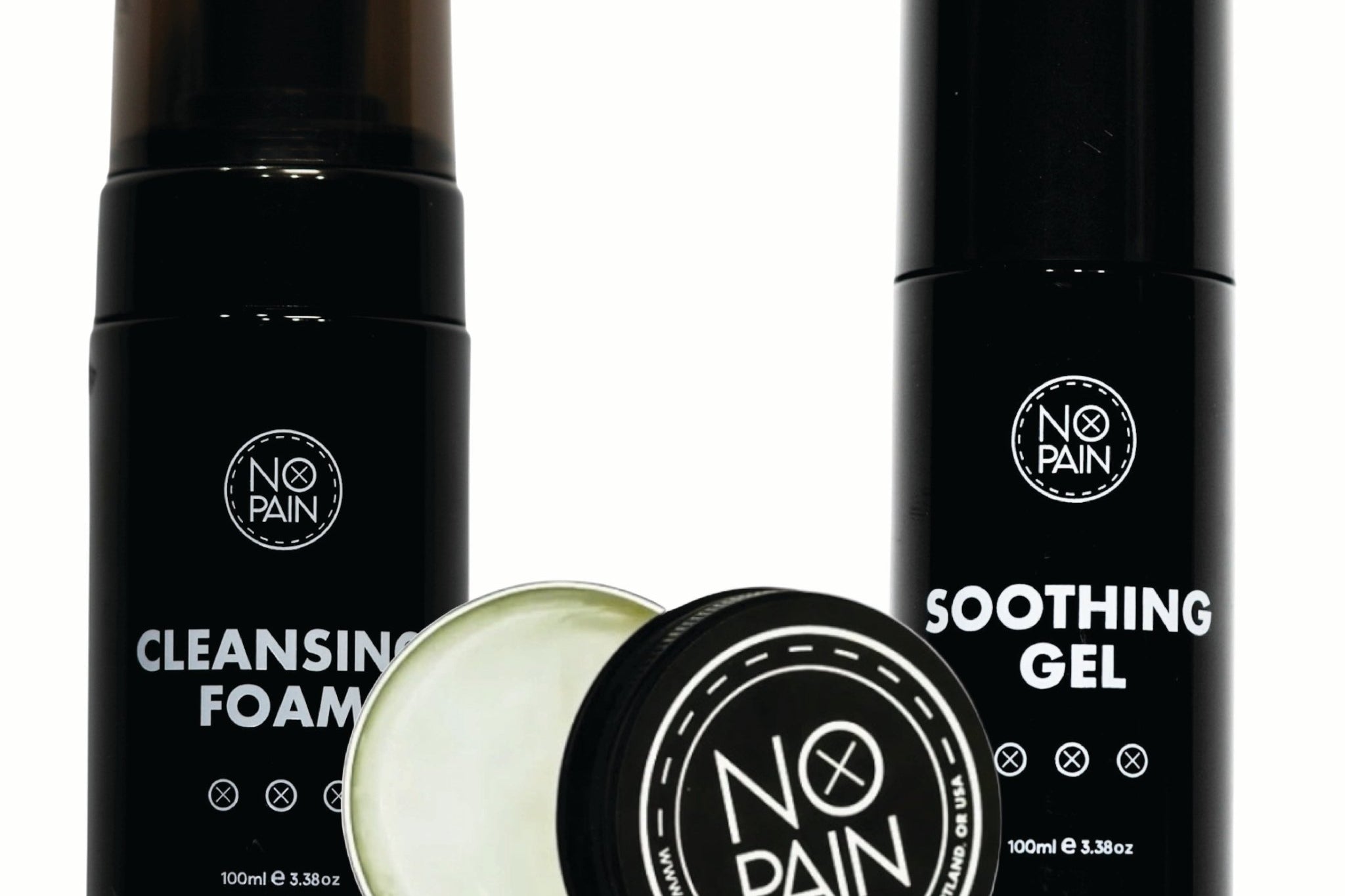
Cleansing foam, soothing gel, and aftercare balm. Each product covers the stage it's designed for, from day one through the end of the milky phase and beyond.
Shop the Aftercare Bundle →Formulated at Historic Tattoo in Portland, Oregon. 100% money-back guarantee.