


Can Friction from Clothing Ruin a New Tattoo?
Yes. Friction from clothing is one of the more common ways new tattoos lose ink during the healing phase. The damage is rarely dramatic, but it accumulates quietly over the first two weeks and shows up as patchy healing, blown-out lines, or color loss in the areas that were rubbed.
Here is what is actually happening, which placements are most at risk, and how to protect a tattoo when wearing clothes is unavoidable.
How Friction Damages a Healing Tattoo
A new tattoo is an open wound for the first several days. The skin is in the process of closing, forming a scab or thin film, and depositing the inflammatory response materials that will rebuild the damaged layers. During this window, the skin is fragile and the ink is not yet anchored.
When clothing rubs against a healing tattoo, several things happen. The mechanical friction pulls at forming scabs before they are ready to shed, lifting ink that was deposited just beneath the surface layer. Fabric fibers can embed in the wound and introduce contaminants. The repeated irritation extends the inflammatory phase, which slows overall healing. And the heat and moisture that builds up under clothing that sits directly against a fresh tattoo creates an environment that can support bacterial growth if the area is not regularly cleaned.
The result is a tattoo that heals unevenly. Areas that received the most friction often show lighter patches, blurry edges on linework, or gaps in color fill where ink was pulled out before the skin could close around it.
Highest-Risk Placements for Clothing Friction
Inner arm and elbow ditch. Shirt sleeves are a constant source of friction on inner arm placements. The elbow ditch is especially problematic because the arm bends during normal movement, creating sliding friction rather than just pressure.
Waistline and hip. Waistbands, belt lines, and the top edge of underwear contact this area directly and continuously. Placements in this zone are among the most reliably problematic for friction damage.
Shoulder and collarbone. Bra straps, bag straps, and shirt necklines create friction across these placements. People who carry bags daily or wear structured clothing have elevated friction exposure here.
Back of knee and inner thigh. Leg movements create consistent fabric sliding in these areas. Tight pants and leggings are particularly problematic.
Foot and ankle. Socks and shoe edges are unavoidable for most people. The foot is uniquely difficult because of the combination of friction, sweat, and the need to walk.
Chest and sternum. Bra underwires and tight tops press directly against this area with every movement of the torso.
How to Protect a New Tattoo from Clothing
The most effective approach is to remove clothing from the equation as much as possible for the first three to five days. Loose, breathable clothing that does not contact the tattoo directly is the goal. For placements where clothing contact is unavoidable, a non-stick dressing creates a barrier between the tattoo and the fabric.
Non-stick dressings (also called release dressings or Telfa pads) are available at most pharmacies. They protect the tattoo from friction and fiber contamination while allowing some air exchange. Secure the edges with medical tape rather than pressing adhesive directly onto the tattoo. Change the dressing after each wear and after any sweating.
Second-skin wraps (like Saniderm or Tegaderm) are another option and offer more comprehensive protection, but they require the skin to be properly prepared before application and should only be left on for the period the product recommends. If using a second-skin wrap, follow the manufacturer's timeline and remove it before it begins to peel at the edges.
Avoid tight elastic fabrics against a new tattoo. The constant compression combined with micro-movement creates exactly the conditions that lift forming scabs. Choose loose natural fibers over tight synthetics where possible.
Aftercare When Friction Is Unavoidable
When you cannot avoid clothing contact (work requirements, foot placements, waistline tattoos), the aftercare routine becomes more important to compensate.
Clean the tattoo after removing the friction-causing garment, not just twice per day. If you wear a sock over an ankle tattoo all day, wash the tattoo when you take the sock off. Apply a soothing gel immediately after cleaning during the first three days. The anti-inflammatory properties reduce the irritation that friction accumulates.

From day three onward, keep the tattoo well-moisturized with a balm applied consistently. Moisturized skin is more resistant to friction damage than dry skin. A scab that is kept pliable by regular balm application is less likely to be torn away by a passing fabric than a brittle, dry scab that catches on fibers.
Protect the Heal from Day One
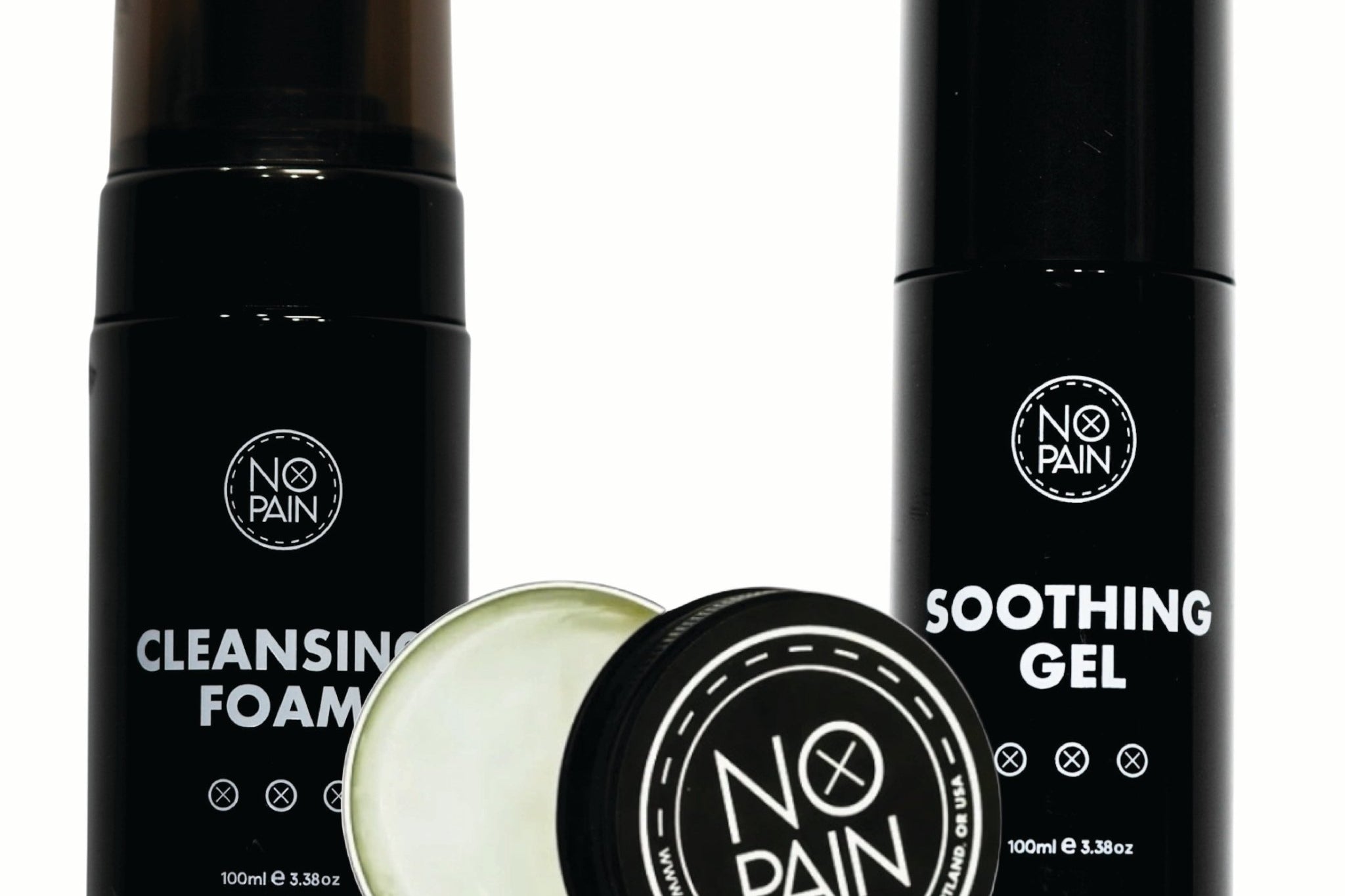
The Aftercare Bundle includes soothing gel for the acute phase and balm for ongoing hydration: everything you need to give friction-prone placements the best chance.
Shop Aftercare Bundle →When Is It Safe to Wear Normal Clothing Again?
The highest-risk window for friction damage is the first ten to fourteen days. During this period, the surface of the skin is still healing and scabs are present or recently shed.
Once the surface peeling phase is complete and the skin feels smooth and no longer flakes, the tattoo is no longer acutely vulnerable to clothing friction. Normal clothing can resume at this point without the risk of ink disruption.
However, tight and abrasive clothing over a freshly healed tattoo can still contribute to skin irritation and is worth avoiding for the full six-week healing period, particularly for placements where elastic, waistbands, or straps press directly against the tattoo site.
Frequently Asked Questions
What happens if a scab gets pulled off by clothing?
If a scab is pulled off prematurely by friction, the ink that was sitting beneath that scab may be lost. The skin will re-scab over the area, but the re-scabbing process does not recover the removed ink. The result is a light patch or gap in the healed tattoo that typically requires a touch-up to correct. If the pulled scab left the skin raw and bleeding, clean the area gently and monitor for signs of infection.
Is it okay to put clothing directly over a new tattoo?
If the clothing is very loose and made of a smooth, natural fabric, brief contact is fine. The problem arises when clothing rubs repeatedly against the tattoo through normal movement. Static placement is less damaging than repeated friction. If you need to cover a new tattoo with clothing, opt for loose, smooth fabrics and use a non-stick dressing as a barrier when possible.
Does denim or rough fabric cause more damage than soft fabric?
Yes. Rough, coarse fabrics create more mechanical friction than soft ones. Denim against a new tattoo is among the worse scenarios, particularly for waistline, hip, and thigh placements. Cotton jersey and linen are far less abrasive. If you have a choice, always put the softest available fabric against a healing tattoo.
Can I wear a bra over a new chest or sternum tattoo?
The underwire and band of a bra create direct pressure and friction against chest and sternum placements. For the first week, a soft bralette or crop top with no underwire is preferable. If a structured bra is required, place a non-stick dressing over the tattoo under the bra to reduce direct contact. Once the surface has healed (after week two), normal bra wear generally resumes without issue.
My waistband keeps rubbing my new hip tattoo. What should I do?
Low-rise pants, loose shorts, or a dress are the best solutions. If you must wear something with a waistband over the tattoo, tape a non-stick dressing over the tattoo area and fold the waistband over it to prevent direct contact. Change the dressing daily. This is one of the hardest placements to protect because the waistline is unavoidable in most clothing, which is why hip and waistline tattoos have a higher rate of patchy healing than placements in locations that clothing naturally avoids.
How do I know if friction damaged my tattoo?
Friction damage becomes visible once the surface has fully healed, usually around weeks two to three. Look for light or blank patches in areas that were under the most clothing pressure, softening of linework in areas that experienced the most rub, or uneven color distribution in filled areas. If you see these, the damage is done and a touch-up is the path to correction. Most artists expect to touch up high-friction placements and will do so as part of the standard healing process.