


The knee ditch is one of the spots people whisper about. If you've asked around before booking, you've probably gotten some version of the same answer: brutal, don't do it without numbing, be ready to twitch. All of that is accurate.
The back of the knee sits at the top of almost every pain ranking, alongside the armpit and the sternum. There are specific anatomical reasons for that, and understanding them is genuinely useful before you go in. Here's the full picture: why it hurts, what it feels like, how to get through the session, and what the heal looks like on the other side.
In this article
- Why the knee ditch is so painful
- What the pain feels like
- Pain rating
- Numbing strategy
- The healing challenge
- Session tips
- Frequently asked questions
Why the Knee Ditch Is So Painful
Three things stack here simultaneously, and none of them are minor.
First: the nerves. The back of the knee is a major nerve junction. Branches of the sciatic nerve pass through this area on their way down the calf and foot. They're close to the surface with almost nothing protecting them. When the needle hits that zone, it's working right next to the nerve pathways responsible for sensation in your entire lower leg. That's why people feel the pain shooting downward rather than staying localized at the skin surface.
Second: the skin itself. The skin in the crease is thin. Genuinely thin, not just "less padded than the outer thigh." It's also elastic by necessity, because it has to stretch every time you bend your knee. That combination means less barrier between the needle and the nerves below, and skin that moves and folds in ways the artist has to work around constantly.
Third: the crease location. Skin that lives in a fold rubs against itself during movement, sits in a warm, slightly occluded environment, and doesn't get the air circulation that helps healing. That affects both the session and what comes after it.
What the Pain Feels Like
Not a scratch. Not a burn. Something more specific than either of those.
Most people describe it as a sharp, searing nerve pain that radiates outward rather than staying put. The sensation frequently shoots down into the calf rather than feeling like a surface sting. And it triggers involuntary responses in a way most other placements don't - leg twitches, reflexive muscle contractions, a flinch you genuinely cannot control. This isn't a willpower problem. It's your nervous system reacting to stimulation in a way it's wired to react. The challenge is that those same involuntary movements make it very hard for your artist to hold a clean line.
Some clients describe it as the first placement where they truly understood what people meant by "unbearable." That's not hyperbole. It's a qualitatively different type of pain than what you feel on the outer arm or the thigh. If you've only been tattooed on comfortable placements, the ditch is going to be a surprise regardless of how high your pain tolerance is.
Pain Rating
Consistently 9 to 10 out of 10. The very center of the crease, directly over the nerve junction, is where most people hit their limit. The areas just above or below, where the skin thickens slightly, can sit a notch lower. But the crease itself is about as hard as tattooing gets.
For comparison: the outer thigh is around a 3. The inner bicep is a 7 or 8. The knee ditch is in a different category entirely. It belongs with the armpit, the sternum, and the inner elbow as one of the spots that collectors genuinely strategize around.
Numbing Strategy
For most placements, numbing cream is useful and recommended. For the knee ditch, it's the difference between a session your artist can actually complete and one that has to stop early.
The involuntary twitching is the key reason. An artist can work around a client who's grimacing or breathing hard. They can't work around a leg that's moving. A flinch during fine line work over the crease can pull a line completely off course. Numbing that nerve response down - even partially - keeps you still enough for the artist to do the work properly.
Apply a maximum strength numbing cream to the area 60 to 90 minutes before your session, cover it with plastic wrap to help absorption, and arrive already numbed. The thick, slow-absorbing formula matters here: thinner creams tend to burn through in the first 45 to 60 minutes of a session, right when the hardest work often happens. You want something that stays active.

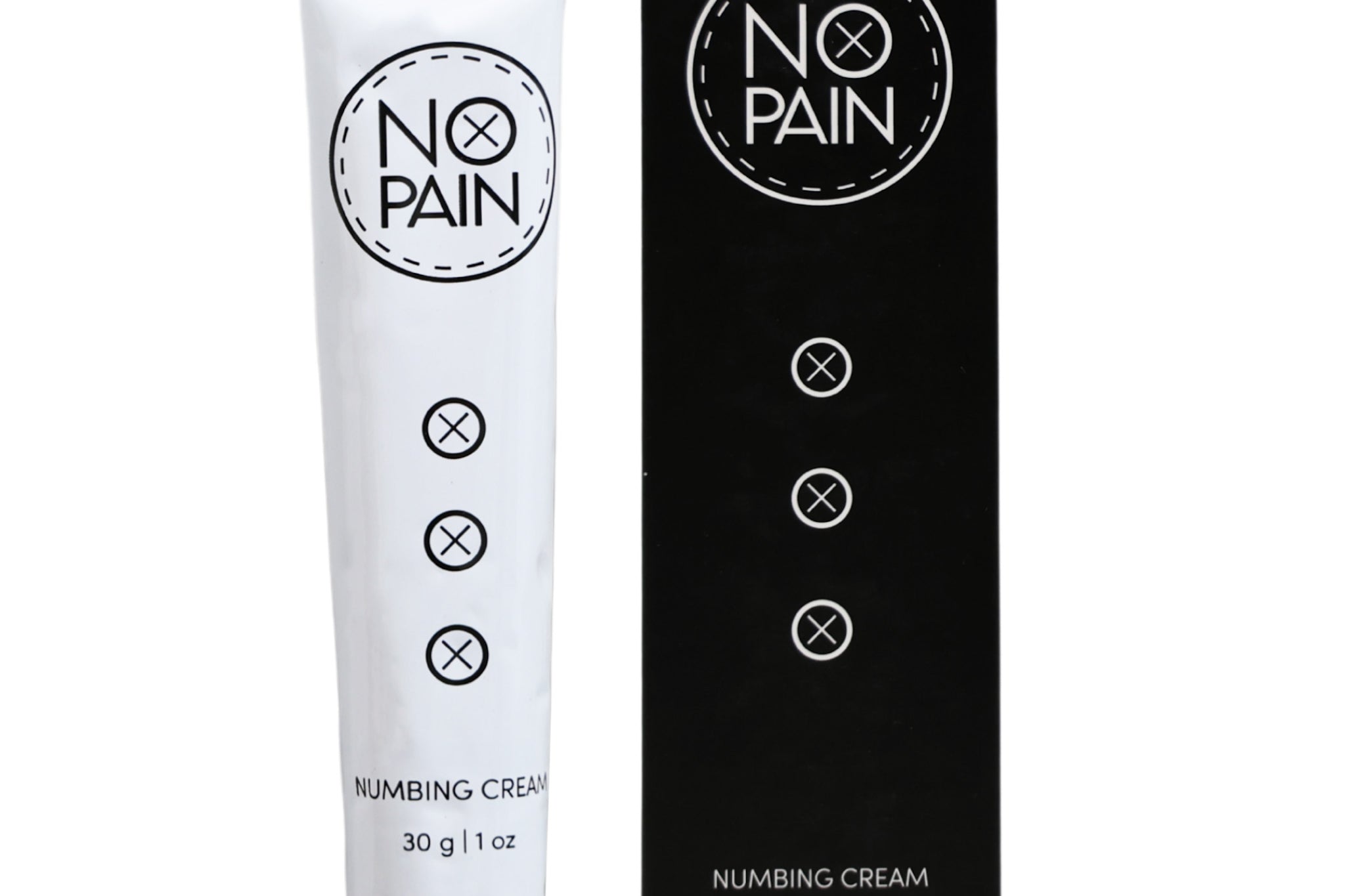
Maximum strength formula in a thick, slow-absorbing base that holds longer than thin creams that wear off mid-session. Apply 60 to 90 minutes before your appointment, cover with plastic wrap, and arrive already numbed. At the knee ditch, this is what keeps you still enough for your artist to work cleanly. Formulated at Historic Tattoo in Portland.
The Healing Challenge
The session is only half the story. The ditch is one of the harder placements to heal, and it's for the same reason it's hard to sit through: the knee doesn't stop moving.
Every time you walk, sit down, stand up, or bend your leg, the skin in the crease folds and stretches. During the first two weeks of healing, that repeated movement works against the skin trying to close. It slows the process, creates micro-friction over the tattooed surface, and increases the risk of cracking and ink loss in the peeling phase. Fine lines are particularly vulnerable here.
The crease environment also stays warm and slightly closed off, which means moisture builds up rather than dissipating. That affects how the skin heals and how product sits on it. A water-based gel works better here than a heavy balm in the first week, because it absorbs rather than collecting in the fold.

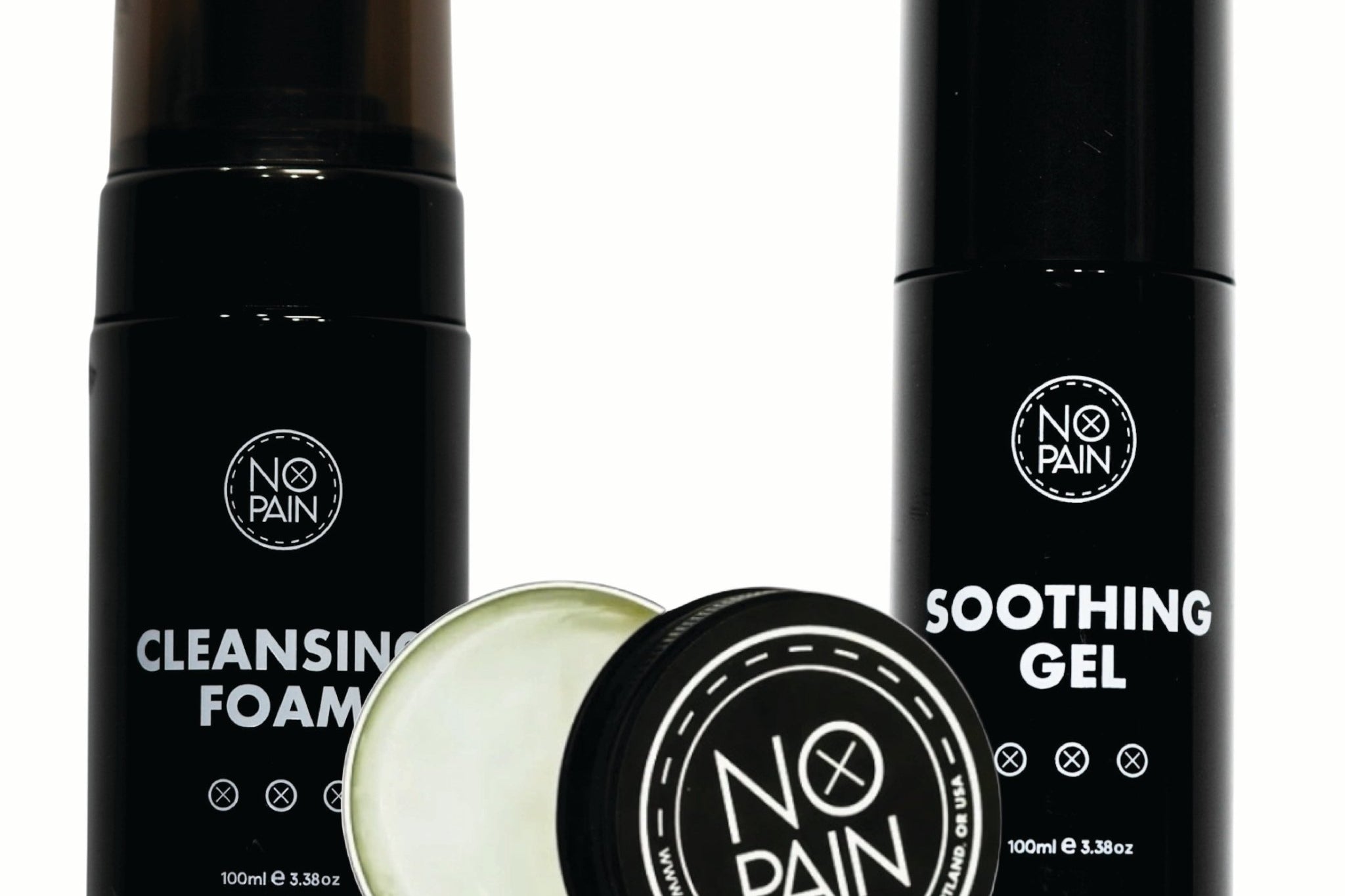
Water-based formula that absorbs cleanly into the skin without leaving residue in the crease. Provides cooling hydration during the most uncomfortable days of healing while supporting skin elasticity in a high-movement zone. Better suited to the knee ditch than heavier balms that sit on the surface. Formulated at Historic Tattoo in Portland.
Session Tips
Eat a full meal before you go. Blood sugar drops during high-intensity sessions and they turn manageable pain into unbearable pain. Don't show up on coffee and half a granola bar.
Talk to your artist beforehand about positioning. Some artists prefer the client lying face-down with the leg extended, others prefer you on your back with the knee at a slight bend. How you're positioned affects how much the skin moves during the work. Ask what they prefer and set it up properly before starting.
Let your artist know if you feel a twitch coming. Most artists working this zone expect it, but a heads-up when you feel your leg starting to react gives them a moment to lift the machine rather than pull a line. They'd rather pause than fix a mistake.
Keep the first few days as low-movement as possible. You can't avoid walking, but avoid anything that requires you to bend and straighten your knee repeatedly - cycling, climbing lots of stairs, squatting in the gym - for at least the first week. The less that crease moves while it's still in the initial healing phase, the better the work holds.
Wear loose clothing to your appointment and for the days after. Anything tight against the back of the knee will press on the fresh work and cause friction during the wrap and early healing period.
Frequently asked questions
How bad does a knee ditch tattoo hurt?
Most people rate it 9 to 10 out of 10. The crease sits over a major nerve junction with very little tissue cushioning, and the sensation often radiates down the calf rather than feeling like a localized surface sting. It also triggers involuntary leg twitches that are hard to control regardless of pain tolerance. It's genuinely in the top tier of painful placements - comparable to the armpit and sternum - and people with high pain tolerance are still frequently surprised by how intense it is.
Do you really twitch during a knee ditch tattoo?
Yes, and it's common enough that artists who work this spot expect it. The nerves running through the back of the knee are connected to the muscles of the lower leg, so stimulating them at sufficient intensity can trigger a reflexive contraction you genuinely can't suppress. It's a nerve response, not a willpower failure. Numbing cream reduces this significantly because it dampens the nerve signal that triggers the reflex in the first place, which is one of the main practical reasons to use it for this placement.
Can you use numbing cream on the back of the knee?
Yes, and it's one of the most important placements to use it on. Apply a thick layer to the crease and the surrounding area 60 to 90 minutes before your session, then cover with plastic wrap while you wait. The skin in the crease is thin and absorbs well, so you get good penetration if you give it adequate time. Tell your artist you've numbed beforehand. Most artists working the ditch are genuinely relieved when clients come in prepared, because it means they can do the work cleanly without the session being derailed by involuntary movement.
How long does it take for a knee ditch tattoo to heal?
Surface healing takes three to four weeks for most people, which is longer than the standard two-to-three-week window for less mobile placements. Full dermal healing takes closer to three to four months. The constant movement of the knee slows the surface closure and increases the chance of cracking or ink loss during peeling. Keeping movement limited in the first week and using a water-based gel rather than a heavy balm in the crease helps the process along.
Do knee ditch tattoos hold up well over time?
They need touching up more often than stable placements. The skin in the crease flexes constantly over a lifetime, which causes ink to migrate and fade faster than it would in a non-movement zone. Fine line work is the most vulnerable - detail can soften or blur over years in a way that bolder, higher-contrast designs resist better. Most artists who specialize in this area recommend slightly heavier line weights than you might use elsewhere, and plan for a touch-up somewhere in the two-to-three-year range.
Is the knee ditch harder than the elbow ditch?
Most people who've done both say yes, though it's close. Both are crease placements over major nerve junctions with thin, mobile skin. The knee ditch tends to rate slightly higher because the sciatic nerve branches here are larger and closer to the surface, and the involuntary twitching response is more pronounced than what you typically get at the elbow. The elbow ditch is extremely painful, but leg twitches are harder to manage than arm movement, which makes the knee ditch a more disruptive experience for the artist as well as the client.
Don't Go In Without Numbing
The knee ditch is one of the few placements where numbing cream isn't just about comfort - it's about keeping you still enough for your artist to work. Maximum strength formula, thick base, applied 60 to 90 minutes before you sit down.
Shop Numbing Cream →Formulated at Historic Tattoo in Portland, Oregon.