


The itch peaks around days seven to ten and is mostly gone by the end of week two. It is one of the more miserable parts of the healing process, but it is also a reliable sign that the skin is doing exactly what it should. The nerve endings under the skin are regenerating, and that process is uncomfortable. Here is what is driving it, how to get through it without scratching, and when itching is actually a warning sign worth taking seriously.
In this article
- Why a healing tattoo itches
- How long does tattoo itching last?
- How to stop the itch without scratching
- What happens if you scratch
- When itching is a warning sign
- Frequently asked questions
Why a Healing Tattoo Itches
When the needle passes through your skin, it damages the outer layer of the epidermis along with the deeper dermis where the ink sits. Your body responds immediately by sending immune cells, increasing blood flow, and starting to rebuild the damaged tissue. That repair process involves nerve fiber regrowth and rapid cell turnover, both of which trigger itch signals.
The main driver is the skin shedding its damaged outer layer. Starting around days five to seven, the top epidermis flakes off, exposing the new skin cells forming underneath. Those new cells are sensitive, thinly covered, and reactive to the slightest environmental input. The nerve endings interpreting those signals send a near-constant itch signal while the new layer is still forming and not yet fully keratinized.
Dryness compounds this. When the skin is not adequately moisturized during healing, the tightening and cracking of the surface amplifies the nerve irritation. A well-moisturized tattoo itches less than a dry one for this reason. For a complete breakdown of what the skin is doing at each stage, see the healing process guide.
How Long Does Tattoo Itching Last?
Days 1-4: Most people have little to no itching at this stage. The skin is still in the acute wound phase - red, swollen, and weeping plasma. The itch-producing nerve regeneration has not yet ramped up. The dominant sensation is soreness, not itch.
Days 5-7: The itch begins as the skin starts transitioning into the peeling stage. The surface starts to tighten. Fine itching appears, usually manageable. This is the window to get ahead of it with consistent moisturizing.
Days 7-10: Peak itch. The damaged outer skin is actively shedding and the fresh layer underneath is exposed and reactive. For most people this is when it becomes disruptive - waking them up at night, pulling at their attention during the day. The itch can feel intense and constant. This is also when most damage from scratching happens, because the temptation is at its highest and the skin is at its most vulnerable.
Days 10-14: The peeling slows. The new epidermis starts to flatten and settle. The itch eases considerably for most people. There may still be occasional itchy patches where the skin is finishing its turnover, particularly at edges and areas with denser ink, but the worst is past.
Weeks 3-4 and beyond: Occasional mild itching as the deeper layers continue settling, but not the constant irritation of week two. For a small number of people, intermittent itching continues for months after healing - that is a different phenomenon driven by histamine and is covered in the healed-tattoo itch guide. For more on what the skin looks like visually at each stage and when the peeling stops, see the peeling guide.
How to Stop the Itch Without Scratching
Keep the skin hydrated. This is the most effective thing you can do. Dry skin itches more. A lightweight gel in the first few days keeps the surface moist enough that the new cells form without the tight, reactive dryness that amplifies nerve signals. Apply it consistently, not just when the itch is already bad. Prevention is more effective than trying to calm an already-firing response.

Lightweight cooling gel that absorbs quickly without blocking airflow. Keeps the healing skin hydrated to reduce nerve irritation during the peak itch phase. Apply whenever the itch spikes - it soothes on contact.
Switch to a balm from day three. As the peeling begins and the surface dries out more aggressively, a lightweight gel may not be rich enough to hold moisture through the day. A shea butter balm applied after washing provides a more sustained barrier against dryness. This is particularly useful during the peak itch days seven to ten, when the skin needs consistent nourishment as the new epidermis forms.

Shea butter balm for the peeling and milky phase. Keeps skin nourished through the days when itch is worst, reducing the dryness and tightening that amplify nerve signals in the new epidermis.
Tap or pat, never scratch. When the itch is at its worst and you need physical relief, firm tapping with clean fingers on or around the itchy area can temporarily override the itch signal without the mechanical damage of fingernails. It is not as satisfying as scratching, but it does not pull off healing skin or push bacteria into the wound. Cold compresses applied over cling film can also help without direct contact.
Keep it clean. Sweat, dust, and environmental irritants accumulating on healing skin make the itch worse. Washing twice daily with a gentle fragrance-free cleanser removes surface irritants and creates a clean base for your moisturizer. Wash with fingertips using lukewarm water, pat dry with a paper towel, and apply gel or balm immediately after.
Avoid things that trigger vasodilation. Hot showers, saunas, heavy exercise, and alcohol all increase blood flow to the skin and can spike the itch noticeably. During peak itch week, shorter lukewarm showers are less miserable than hot ones. This is not permanent - just a two-week consideration.
What Happens If You Scratch
Scratching a healing tattoo causes two distinct types of damage. First, fingernails physically disrupt the peeling skin before it is ready to shed. The flakes of healing epidermis are still attached to the ink-containing dermis beneath. Ripping them off early pulls ink out of the dermis, leaving pale patches, soft spots in lines, and areas where the color did not hold. That damage is permanent - it shows in the healed tattoo and requires a touch-up to fix. For more on how poor healing affects the final result, see the scabbing guide.
Second, scratching introduces bacteria from under the fingernails directly into open or recently open skin. The healing tattoo is not fully closed during peak itch week. Bacterial contamination during this phase can cause a localized skin infection that, beyond being medically serious, creates additional scarring and ink disruption on top of the mechanical damage from scratching.
The itch is temporary. The damage from scratching is not. That is the only calculation you need to make when the urge to scratch is strong.
When Itching Is a Warning Sign
Most healing itch follows the timeline above and resolves by week two. Itching that falls outside that pattern can indicate something that needs attention.
Itching with worsening redness, swelling, warmth, or discharge after day three. Normal healing has some redness and warmth in the first 48 to 72 hours. If those signs are getting worse rather than better, and especially if they are accompanied by an unpleasant odor or discharge that is anything other than clear, this can indicate infection. See the infected tattoo guide for the five specific warning signs and what to do.
Raised, bumpy, or hive-like texture over the tattooed area. Some people develop a localized allergic reaction to certain ink pigments, most commonly red and yellow. The reaction can look like small raised bumps, persistent scaling, or an inflamed texture that does not resolve. If the itching is concentrated in specific colors of the design rather than across the whole tattoo, this is worth discussing with a doctor.
Itching that starts months later on a fully healed tattoo. This is a separate phenomenon from healing itch and is driven by a different mechanism, usually histamine response triggered by temperature changes, illness, or allergen exposure. That guide covers it in detail: why does my tattoo itch months after it healed?
Frequently asked questions
Why does my tattoo itch so much?
Itching during healing is driven by nerve fiber regrowth and rapid skin cell turnover. As the damaged outer epidermis sheds and new cells form underneath, the fresh nerve endings in the new skin generate constant itch signals. Dryness amplifies this: skin that is not adequately moisturized tightens as it heals, which further irritates the sensitive new tissue. The itch is a sign healing is progressing. It peaks around days seven to ten and eases as the new epidermis matures and the surface settles.
How long does tattoo itching last?
For most people, the intense healing itch peaks between days seven and ten and is mostly resolved by the end of week two. You may have mild residual itching through week three as the deeper layers continue to settle, but it will not be the constant, disruptive itch of the peak phase. Occasional itching that starts months after the tattoo is fully healed is a different phenomenon driven by histamine rather than skin repair, and it can recur indefinitely in some people.
How do I stop my tattoo from itching?
Keep the skin hydrated. Dry healing skin itches more than moisturized skin. Apply a lightweight cooling gel during the first few days and switch to a richer balm from day three as the surface dries out more aggressively during peeling. Wash twice daily with a gentle cleanser and apply product immediately after patting dry. For in-the-moment relief, firm tapping on the itchy area with clean fingers can temporarily override the itch signal without the damage that scratching causes. Avoid hot showers and heavy exercise during peak itch week, as vasodilation spikes the sensation.
Is it okay to scratch a healing tattoo?
No. Scratching with fingernails pulls off healing skin before it is ready to separate, dragging ink out of the dermis and leaving patchy, faded areas in the healed tattoo. It also introduces bacteria from under the fingernails into skin that is not yet fully closed, raising infection risk. The damage from scratching shows permanently in the healed result and typically requires a touch-up to correct. If you need physical relief, tap or pat the area firmly with clean hands instead.
Does a healing tattoo itch more in some places than others?
Yes. Areas with denser ink packing, more surface trauma, or thinner skin tend to itch more than lightly worked areas. Placements with constant movement - like hands, wrists, elbows, and knees - can itch more because the skin is repeatedly flexed during healing, keeping the new tissue in a more reactive state. Placements that rub against clothing or are prone to sweating also tend to itch more than open, well-ventilated areas. None of this changes how to manage it. Consistent moisture and no scratching applies across all placements.
Should I let my tattoo dry out to heal faster?
No. Dry healing is an older approach that has been replaced by the understanding that moist wound healing produces better results. Letting a tattoo dry out encourages thick scab formation instead of light peeling, which increases the risk of ink loss when the scabs eventually separate. Dry healing also intensifies itching by creating the surface tightening that irritates nerve endings most. A thin layer of gel or balm applied consistently during healing keeps the skin shedding in thin flakes rather than hard scabs, which protects the ink and reduces discomfort.
Everything Your Skin Needs to Heal Right
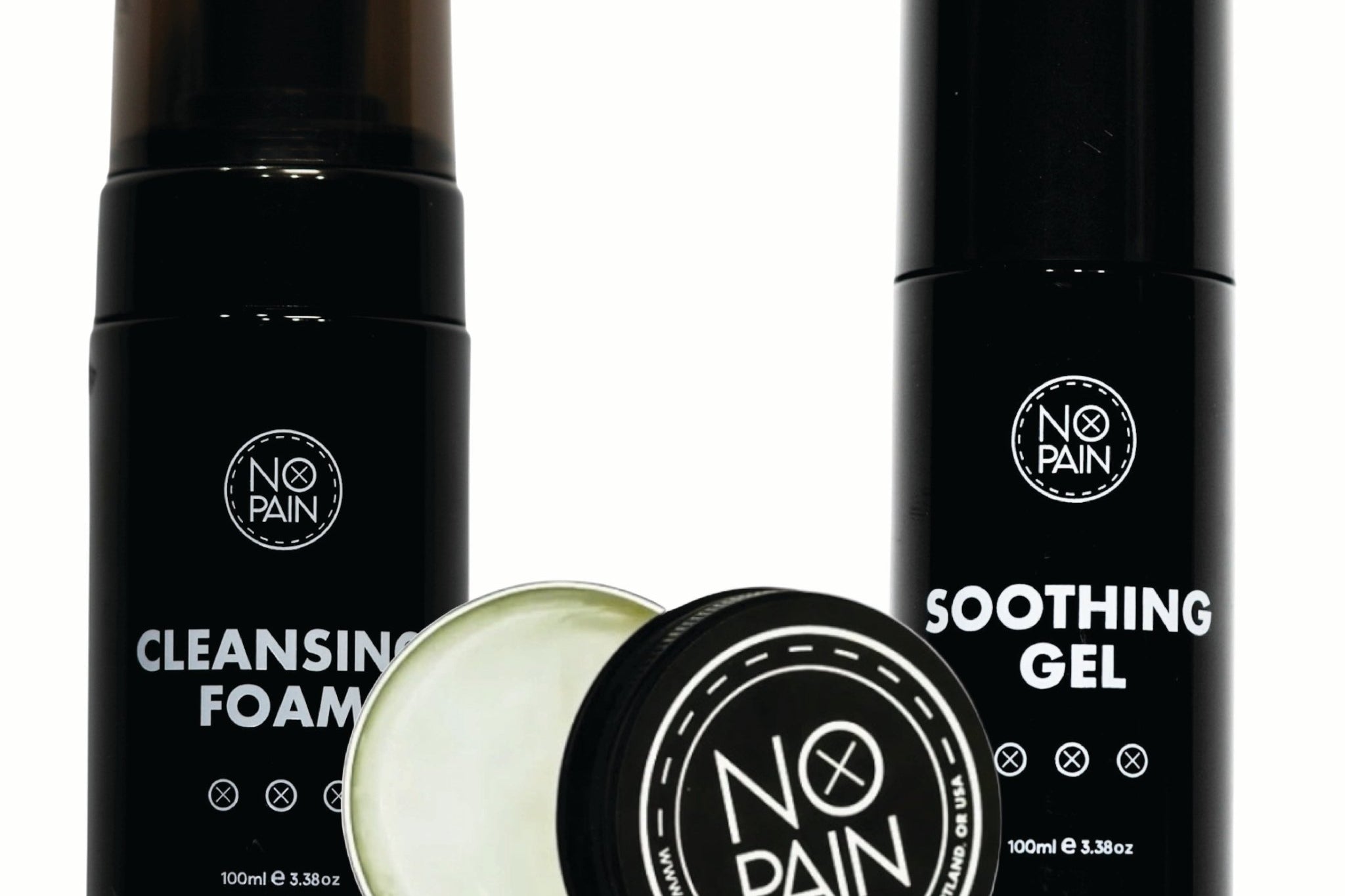
Cleansing foam, soothing gel, and aftercare balm - each product covers the stage it's designed for, from day one through week two and beyond.
Shop the Aftercare Bundle →Formulated at Historic Tattoo in Portland, Oregon. 100% money-back guarantee.