


A new tattoo is a wound. Redness, warmth, mild swelling, and soreness in the first two to three days are part of normal healing. The skin is inflamed because it was just punctured thousands of times. That's expected. An infected tattoo looks different, and it gets worse over time instead of better.
This article covers what normal healing looks like, what infection symptoms actually are, what causes them, and what to do if you think something has gone wrong. If you're seeing spreading redness, colored discharge, or you're developing a fever, stop reading and contact a doctor. This page is information, not medical advice, and it's not a substitute for professional care.
In this article
- What normal healing looks and feels like
- Signs of an infected tattoo
- What causes tattoo infections
- What to do if your tattoo is infected
- How to prevent a tattoo infection
- Frequently asked questions
What Normal Healing Looks and Feels Like
The first three days are the most dramatic-looking stage of the heal. Here's what's expected:
Redness and warmth. The tattooed area will be pink to red and warm to the touch, similar to a sunburn. This is the inflammatory response. Blood flow increases to the area to begin the repair process.
Swelling. Mild puffiness around the tattoo is normal, especially in the first 24 to 48 hours. High-movement areas (hands, feet, ankles, knees) tend to swell more than still areas.
Weeping. For the first day or two, the tattoo will ooze a thin, clear or slightly tinted fluid. This is plasma and excess ink. It should be thin and mostly clear, not thick or colored.
Soreness. The area will be tender, like a scrape or surface abrasion. Pressure on it will be uncomfortable.
Itching and peeling. Starting around day four to seven, the outer skin layer begins to shed. The itching during this phase can be intense. This is normal and means the skin is regenerating. For a full stage-by-stage breakdown, the tattoo healing process guide covers what to expect each week.
The key indicator of normal healing: everything gets better each day. Redness fades, swelling goes down, soreness decreases. If the trajectory reverses (things getting worse on day three or four rather than better), that's when to pay attention.
Signs of an Infected Tattoo
Worsening pain, swelling, or redness after day three
Normal soreness peaks in the first 24 to 48 hours and then gradually improves. If pain is increasing on day three or four, that's abnormal. Same for swelling that's expanding rather than reducing, or redness that's spreading outward from the tattoo into the surrounding skin.
Red streaks extending from the tattoo in any direction are a serious sign that infection may be spreading through the lymphatic system. That requires immediate medical attention.
Thick, colored, or foul-smelling discharge
Normal weeping is thin and clear or very lightly tinted. An infection changes that. Thick, opaque discharge (yellow, green, or white) is pus, and pus means bacterial activity. A foul or unusual smell coming from the tattoo is also a sign that something has colonized the wound. If you're not sure whether your discharge is normal, the tattoo scabbing guide covers what weeping and crusting should look like at each stage.
Pus-filled bumps or a spreading rash
Small pimple-like bumps or pustules directly on the tattoo, especially if they're red and tender, can indicate a localized infection. A red, blotchy rash spreading out from the tattoo could be a contact dermatitis (allergic reaction) or an early sign of spreading infection. These look different from normal peeling and require evaluation.
Fever, chills, or feeling generally unwell
Any systemic symptoms alongside local signs of infection (fever above 100.4°F / 38°C, chills, nausea, body aches) mean the infection may be moving beyond the tattoo site into the bloodstream. This is a medical emergency. Don't wait to see if it resolves on its own.
No improvement after a week
By the end of the first week, a normally healing tattoo should look clearly better than it did on day one. Still some peeling, still some muted color, but no real redness, swelling, or pain. If it still looks angry and feels sore at the one-week mark, something is wrong.
What Causes Tattoo Infections
Tattoo infections almost always come down to one of three things: the studio, the aftercare, or bad luck with a resistant organism.
Studio hygiene. A reputable, licensed studio uses single-use needles, sterile equipment, fresh ink poured into disposable caps, and gloved artists. These practices eliminate the most direct routes of bacterial and bloodborne contamination. An unlicensed artist, a kitchen tattoo, or a studio with poor hygiene standards is a different situation entirely.
Aftercare failures. Most infections in otherwise-clean studio environments come from what happens after the person leaves. Touching the fresh tattoo with unwashed hands, soaking it in a bath or pool before it's healed, letting pets lick the wound, sleeping directly on dirty bedding without covering the tattoo, or applying products not meant for open wounds. The tattoo is an open wound for at least the first few days, and it needs to be treated like one.
Contaminated ink. Less common but documented: contaminated tattoo ink. This is rare and mostly associated with non-sterile dilution practices on gray and black washes, not with properly handled bottled ink from reputable suppliers. Infections from this route typically appear as raised, red, scaly patches within the tattooed area weeks after the session, often without fever. If you develop a rash within the tattoo pattern weeks after healing, mention this possibility to a dermatologist.
What to Do If Your Tattoo Is Infected
See a doctor. A tattoo infection is a skin infection, and skin infections require assessment by a medical professional. Don't try to treat it yourself with over-the-counter antibiotic ointment and hope. Bacterial infections need proper diagnosis (the type of bacteria matters for treatment), and if the infection has spread, oral or IV antibiotics may be needed.
Don't pick, squeeze, or drain it yourself. Attempting to drain pustules or remove crusts from an infected tattoo can drive bacteria deeper into the tissue and make the infection worse. Leave it for a professional.
Keep washing it gently. While you're waiting for a medical appointment, continue washing the tattoo once or twice a day with a gentle, fragrance-free cleanser and patting it dry. Don't soak it. This reduces the bacterial load on the surface without making things worse.
Document what you see. Take photos. Note when symptoms started, how they've changed, and what aftercare products you've used. This information helps the doctor assess the situation faster.
Contact your artist. Let them know what's happening, especially if you think it could be a studio issue. A good artist wants to know. If other clients from the same session are also having problems, that's important information for public health.
How to Prevent a Tattoo Infection
The vast majority of tattoo infections are preventable. The two levers you control are artist selection and aftercare.
Choose a licensed studio. Check that the studio is licensed by the local health authority, that the artist uses single-use needles, and that ink is poured fresh into disposable caps, not drawn from a communal bottle. If a studio won't answer these questions or seems defensive about them, go elsewhere.
Wash with clean hands every time. Before you touch the tattoo for any reason (applying aftercare, checking how it looks, patting it dry), wash your hands. This is the single highest-impact aftercare habit.
Wash the tattoo itself once or twice a day. Use a gentle, fragrance-free cleanser. Work it in with clean fingertips, no washcloths or scrubbing, and rinse thoroughly. Pat dry with a clean paper towel (not a bath towel, which harbors bacteria).
Moisturize to support healing. Keeping the skin hydrated reduces cracking, which reduces entry points for bacteria. A lightweight, non-occlusive product in the early days gives the skin what it needs without trapping heat and moisture in a way that promotes bacterial growth.

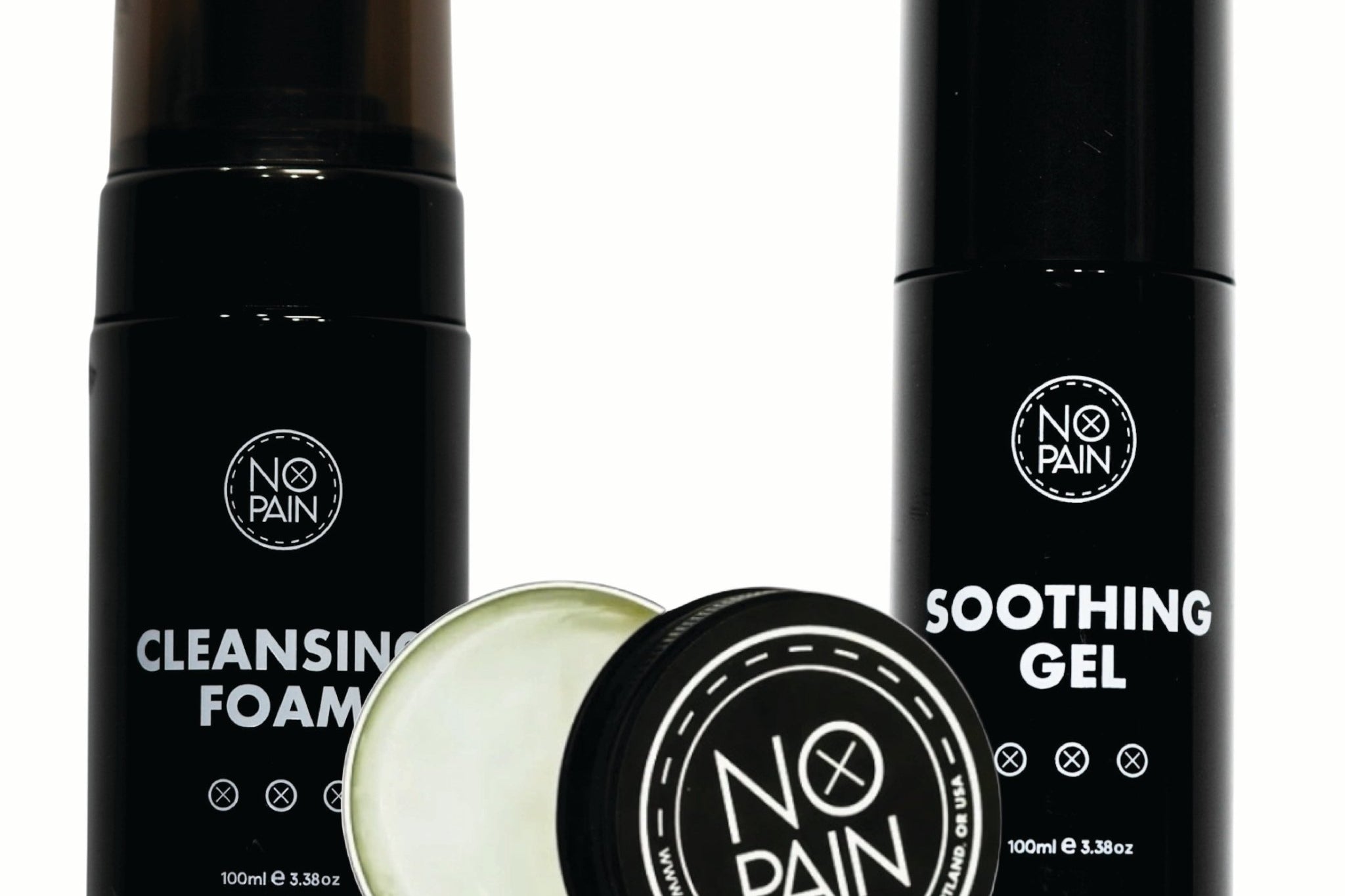
Lightweight cooling gel for the first days of healing. Calms inflammation and keeps skin hydrated without sealing the wound or trapping heat and bacteria the way heavy ointments can.
Avoid soaking for the first four weeks. Baths, pools, hot tubs, and open water are off-limits until the tattoo is fully surface-healed. Showers are fine. Prolonged water exposure softens the healing skin and introduces bacteria.
Don't cover it with non-breathable materials for too long. Secondary bandaging beyond the first day or two creates a warm, moist environment. If you need to cover the tattoo (for work, for sleep, for sun protection), use breathable materials and change them regularly.
Frequently asked questions
How do I know if my tattoo is infected or just healing?
The clearest indicator is the direction of change. Normal healing gets better every day. Redness, swelling, and soreness should all be fading by day three or four. An infection reverses that: pain that's increasing after the first couple of days, redness spreading rather than contracting, swelling that's growing rather than going down. Normal weeping is clear and thin; infected discharge is thick, colored (yellow, green, white), or foul-smelling. When in doubt, compare a photo from day one to day four. Improvement is reassuring; a reversal is not.
Can a tattoo get infected after it looks healed?
Yes, though it's less common. The surface heals within two to four weeks, but the dermal layer continues healing for three to six months. A trauma to the area, a break in the surface skin, or in rare cases contaminated ink can cause delayed reactions. Certain bacterial infections (particularly non-tuberculous mycobacteria linked to contaminated diluted inks) can appear weeks after the session as raised, red patches within the tattoo pattern. If you develop new inflammation in a healed tattoo, especially if it's within the lines of the design, see a dermatologist.
Should I put antibiotic ointment on an infected tattoo?
Not without medical guidance. Over-the-counter antibiotic ointments like Neosporin contain neomycin, which some people develop contact allergies to, and a reaction looks similar to an infection, which makes diagnosis harder. More importantly, a self-diagnosed "infection" may be something else entirely (allergic reaction, folliculitis, or a systemic condition), and slathering antibiotic ointment on it without a diagnosis delays getting proper care. If you think it's infected, see a doctor rather than treating it yourself.
How long does a tattoo infection last?
With proper antibiotic treatment, most surface-level bacterial infections resolve within seven to fourteen days. More serious infections that have spread to surrounding tissue can take longer. Infections caused by atypical organisms (like mycobacteria from contaminated ink) can be particularly stubborn and may require weeks or months of treatment with specific antibiotics. The sooner you seek care, the shorter the treatment course.
Will an infected tattoo ruin the ink?
Possibly, depending on the severity. A mild surface infection treated promptly usually doesn't cause permanent damage to the tattoo. A more serious infection that involves deep tissue damage, scarring, or prolonged inflammation can distort the healed result. Areas where thick scabs formed from an infected wound often lose ink when those scabs detach. If there's visible ink loss or patchy areas after the infection resolves, wait until the skin is fully healed (three to six months minimum) before assessing whether a touch-up is worth pursuing.
Is it normal for a new tattoo to have a bump or raised area?
Some raised texture in the first few weeks is normal. The skin is healing and the surface isn't fully settled. Individual raised lines or a slightly proud surface in the tattooed area is common and usually resolves as the skin matures. What's not normal: raised bumps that are red, warm, filled with fluid, or that develop after the tattoo has been looking fine for a while. A single firm, painless raised bump that appears months or years after the tattoo could be a granuloma (an immune reaction to ink particles) and is worth showing to a dermatologist.
Give It the Right Start
Clean skin heals clean. Cleansing foam, soothing gel, and aftercare balm. Everything you need from day one through full healing, in one kit.
Shop the Aftercare Bundle →Formulated at Historic Tattoo in Portland, Oregon. 100% money-back guarantee.