


A healed tattoo that suddenly starts itching is almost always a histamine reaction. Your immune system releases histamines in response to a trigger, and the skin where tattoo ink sits in the dermis can react more visibly than the surrounding skin. The tattoo may feel raised, puffy, or more sensitive to the touch for a few hours to a few days, then settle back to normal on its own.
This is one of the more common things that happens to tattooed skin over a lifetime of owning it. It is not a sign of infection, rejection, or a problem with the ink. Here is what causes it and what to do.
In this article
- Why healed tattoos itch
- Common triggers
- What a flare-up looks and feels like
- How to get relief
- How to reduce how often it happens
- When to see a doctor
- Frequently asked questions
Why Healed Tattoos Itch
The ink in a healed tattoo sits permanently inside the dermis, held in place by a long-term immune response. The body recognized the ink particles as foreign material during the initial healing process and surrounded them with immune cells to contain them. That process does not end once the tattoo looks healed on the surface. A low-level immune relationship with the ink continues indefinitely.
Because of this, the tattooed skin is not quite the same as the untattooed skin next to it. It is more immunologically active. When the body releases histamines in response to a seasonal allergen, a skin irritant, a temperature shift, or an illness, the tattooed area can amplify that reaction more than the surrounding skin does. The result is localized itching, a slight raised feeling, and sometimes minor swelling confined to the shape of the tattoo itself.
This is why the itch traces the tattoo outlines so precisely. The reaction is happening in the specific tissue where the ink is deposited, not in the skin adjacent to it.
Common Triggers
Seasonal allergies
This is the most frequently reported trigger. People with hay fever or pollen sensitivities often notice their old tattoos become itchy and slightly raised during high-pollen seasons, even when they are not experiencing obvious allergy symptoms elsewhere. The systemic histamine response from environmental allergens reaches the tattooed skin and produces a more visible local reaction than it would in un-inked skin.
Temperature and humidity changes
Rapid shifts in weather can cause histamine release in the skin as part of the body's temperature regulation response. This is one reason tattoos sometimes itch noticeably when you move between air conditioning and heat, or during the transition between seasons. Cold in particular can trigger it: tattooed skin in winter, especially on exposed areas, sometimes reacts with itching and slight puffiness that resolves once the skin warms up.
Skin irritants
A bug bite near the tattoo, contact with an irritating plant, a new laundry detergent or body wash, or friction from a new fabric can trigger a localized histamine response that then spreads into the tattooed area. The ink-holding tissue is a convenient target for the immune response. If a flare-up seems to coincide with something new in your routine, the irritant is worth identifying and removing.
Illness and immune system activity
When you are fighting off a cold, flu, or any other illness, your immune system is running at higher capacity. That heightened activity can spill over into non-essential immune responses, including a flare-up in tattooed skin. The same thing can happen during periods of significant stress, which also modulates immune function. A tattoo that itches during a period of illness or stress will typically settle once you recover.
Sun exposure
UV exposure on tattooed skin can cause a localized reaction, particularly in tattoos with certain ink colors. Older tattoos with faded red, orange, or yellow pigments are the most commonly reported culprits. The reaction can manifest as itching, slight swelling, or heightened sensitivity during and after sun exposure. Sun protection on healed tattoos is worth doing for longevity reasons regardless.
What a Flare-Up Looks and Feels Like
A histamine-driven flare-up in a healed tattoo is usually subtle from the outside. The tattoo may look slightly raised or puffy compared to normal, following the exact contours of the design. The skin may feel mildly inflamed to the touch, and the itch can range from a low-grade annoyance to something as intense as the itching during the original healing process.
The key characteristic of a benign flare-up is that it is isolated to the tattoo, the surrounding skin looks normal, there is no discharge or open skin, and it improves on its own within hours to a couple of days. The tattoo does not look different or damaged after the flare-up passes.
How to Get Relief
The fastest relief for a histamine-driven itch is something that addresses the inflammation directly. A cooling, anti-inflammatory gel applied to the tattooed area calms the localized reaction and takes the itch down significantly within minutes. This works at any stage of tattoo ownership, not just during the initial heal.

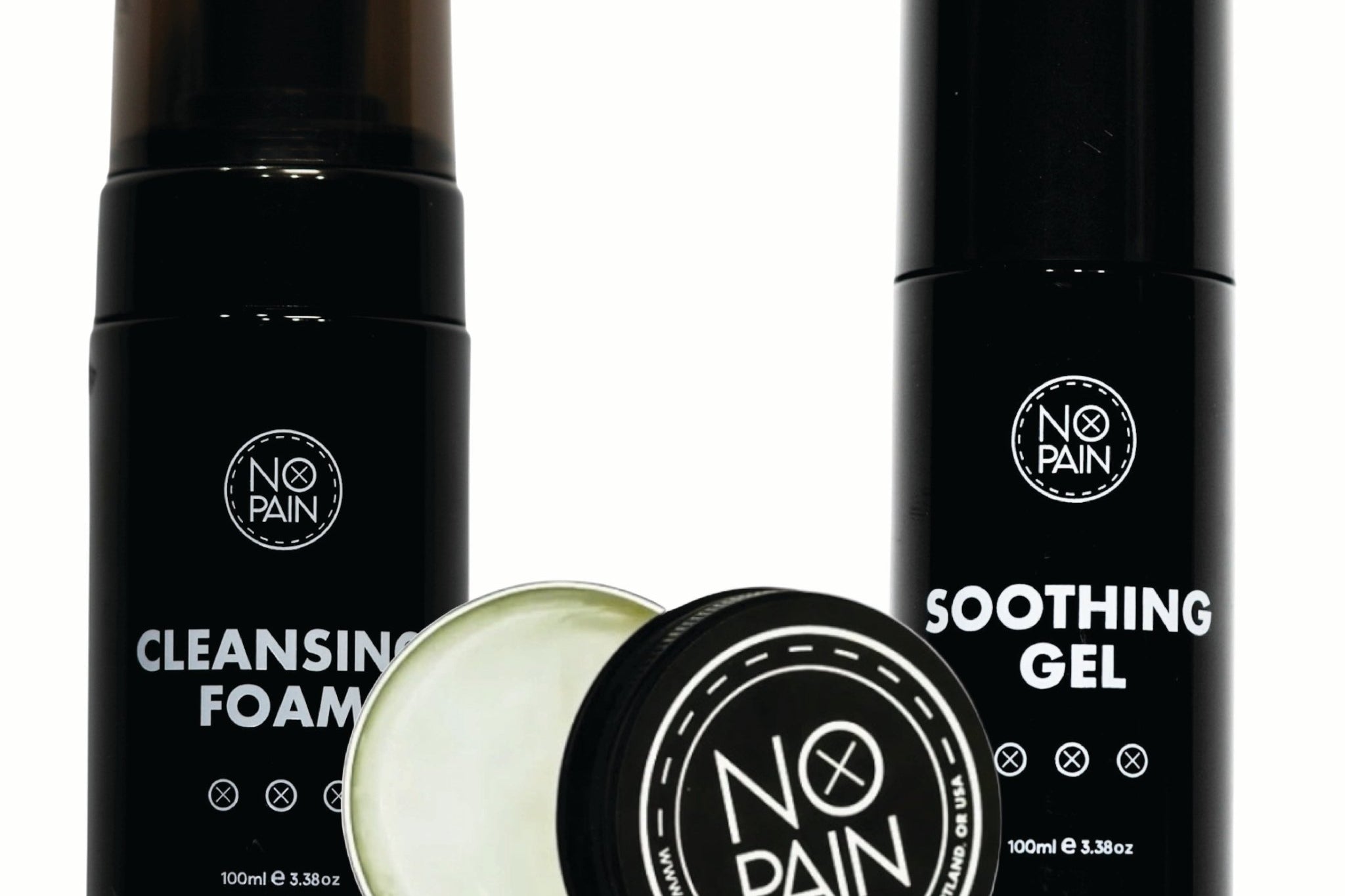
Lightweight cooling gel that absorbs quickly and brings down the inflammation driving the itch. Apply directly to the flared-up tattoo whenever the itch spikes. Works just as well on a healed tattoo reacting to a trigger as it does on a freshly healing one. Formulated at Historic Tattoo in Portland.
An oral antihistamine is worth considering for a particularly persistent or intense flare-up. Over-the-counter options like cetirizine or loratadine address the histamine response from the inside and can reduce symptoms more completely than a topical product alone. Non-drowsy formulas work well for daytime use; older formulas like diphenhydramine may be worth taking at night when the itch is interfering with sleep.
Keeping your skin moisturized during a flare-up also helps. Dry skin amplifies itch regardless of the cause, and a well-hydrated tattoo sits in a better baseline state to resist the reaction. A nourishing balm applied after the soothing gel provides a protective moisture barrier without the occlusive seal that could trap irritants.

Shea butter and plant oil formula that absorbs into the skin rather than sitting on top. Keeps tattooed skin hydrated and the skin barrier healthy, which makes it less reactive to everyday triggers. Fragrance-free, no petrolatum, no lanolin. Formulated at Historic Tattoo in Portland.
How to Reduce How Often It Happens
You cannot eliminate histamine reactions entirely, but a few things reduce their frequency and intensity. Keeping your tattooed skin consistently moisturized is the most straightforward: well-hydrated skin has a stronger barrier function and handles environmental triggers better than dry skin. A regular application of a nourishing, fragrance-free balm keeps the baseline in better shape.
Managing known allergens during high-trigger seasons also helps. If you know spring pollen sets off your healed tattoos, taking a daily oral antihistamine during peak season is a practical approach that addresses the root cause rather than waiting to react each time.
Avoiding fragrant skincare products directly on tattooed skin reduces one common irritant source. Fragrances are among the most frequent triggers of localized skin reactions, and tattooed skin has a lower threshold for them than un-inked skin.
When to See a Doctor
Most flare-ups in healed tattoos resolve within a few hours to two days without any intervention beyond rest and topical relief. The reaction is worth a medical consultation when it persists beyond a few days without improvement, is accompanied by blistering or open skin, produces discharge or significant weeping, spreads beyond the tattoo into the surrounding skin, or is accompanied by systemic symptoms like fever.
A persistent reaction specifically to red, orange, or yellow ink that does not respond to antihistamines may warrant a dermatologist visit, as certain pigment compounds in older tattoos can cause a more specific immune response than the generalized histamine reactions described above. A patch test or skin biopsy can clarify what is happening in cases that do not fit the standard pattern.
Frequently asked questions
Why does my old tattoo suddenly itch and feel raised?
The most common reason is a histamine reaction. Tattooed skin holds ink particles permanently in the dermis, and that tissue is more immunologically active than un-inked skin. When your body releases histamines in response to a trigger, such as pollen, a temperature change, a new skincare product, or an illness, the tattooed area can amplify the reaction and become raised and itchy while the surrounding skin remains unaffected. The reaction is almost always harmless and temporary, resolving within hours to a couple of days.
Is it normal for a healed tattoo to itch years later?
Yes. Tattoos can flare up with itching and raised texture at any point after healing, including years or decades later. The immune cells that encapsulate the ink particles remain active in the dermis indefinitely, which is why the skin remains more reactive at those sites than the surrounding skin. Seasonal allergies, weather changes, illness, and skin irritants are all documented triggers for these late-onset reactions.
Can a tattoo become itchy again if you get sick?
Yes. When your immune system is working harder than usual, whether from a viral infection, significant stress, or any other condition that activates systemic immune activity, the tattooed skin can flare up as part of that broader response. The itch typically appears during the illness or shortly after and resolves as you recover. It is not a sign that the tattoo is infected or that anything is wrong with it.
How do I stop my healed tattoo from itching?
The fastest approach is a cooling anti-inflammatory gel applied directly to the tattoo. For a more persistent flare-up, an over-the-counter oral antihistamine addresses the histamine response from the inside. Keeping the skin moisturized reduces the baseline reactivity. Avoid scratching: it does not help and risks breaking the skin over the tattoo, which can cause irritation or introduce bacteria. If the itch is linked to a known allergen like seasonal pollen, managing the allergen exposure directly is more effective than treating each flare-up individually.
Does a raised and itchy healed tattoo mean it is infected?
No, not on its own. A histamine flare-up in a healed tattoo produces raised, itchy skin that is confined to the tattoo outline, but it does not produce the other signs of infection: worsening pain over multiple days, warmth spreading beyond the tattoo border, colored discharge, a foul smell, or systemic symptoms like fever. An infected tattoo is also uncommon in fully healed skin because the wound channels have long since closed. If you are seeing only the raised and itchy symptoms without any of those other signs, a histamine reaction is the far more likely explanation.
Why does my tattoo only itch in certain weather?
Temperature and humidity changes are documented triggers for histamine reactions in tattooed skin. Cold weather in particular is a common culprit: the skin constricts in response to cold, and the tattooed tissue can react with itching and puffiness. Rapid shifts between indoor and outdoor temperatures, or the transition between dry winter air and humid summer air, can trigger the same response. Sun exposure is another weather-related trigger, particularly for tattoos with certain ink colors. The pattern of weather-linked flare-ups is consistent with a histamine mechanism and is not a sign of any underlying problem with the tattoo.
Keep It in Your Cabinet
Soothing Gel for when a flare-up hits. Aftercare Balm for the day-to-day moisture that keeps tattooed skin from getting reactive in the first place. Both worth having on hand.
Shop Soothing Gel →Formulated at Historic Tattoo in Portland, Oregon.