


A tattoo heals in two separate phases, and most people only know about one of them. The surface (what you can see) clears up in two to four weeks. The deeper dermal layer, where the ink actually lives, takes three to six months to fully stabilize. When the peeling stops and the tattoo looks normal, the job isn't done. The skin is still working.
Knowing what your body is doing at each stage tells you what to do, what to avoid, and why. Here's the full picture, week by week.
In this article
- How long does a tattoo take to heal?
- Stage 1: The open wound (Days 1-6)
- Stage 2: Peeling and itch (Days 7-14)
- Stage 3: Surface healed, skin settling (Weeks 3-4)
- Stage 4: Full dermal healing (Months 2-6)
- What slows healing down
- Frequently asked questions
How Long Does a Tattoo Take to Heal?
The surface of a tattoo heals in two to four weeks for most people. The itching stops, the peeling is done, and the tattoo looks clear. That's the part you can see.
Below the surface, the dermis, where your ink is actually stored, takes longer. Skin cells at that deeper level continue regenerating and stabilizing for three to six months after your session. This is why some tattoos look slightly different at the three-month mark than they did at the four-week mark. The colors shift slightly, the lines get a little crisper, and the overall look settles into its permanent state.
For practical purposes: four weeks of active care, then ongoing protection (primarily sunscreen) for life.
Factors that affect healing time include placement (high-movement areas like hands, knees, and wrists take longer), size and density (heavily packed color or shading takes more from the skin than a fine-line piece), and individual factors like age, skin type, and how well you follow aftercare.
Stage 1: The Open Wound (Days 1-6)
Your tattoo is a fresh wound. The needle has broken the skin thousands of times, and your immune system responds the same way it does to any injury: inflammation, plasma, and rapid repair.
What it looks and feels like. Redness, swelling, warmth, and soreness, like a bad sunburn. In the first 24 to 48 hours, the tattoo will weep a clear or slightly ink-tinted fluid. That's plasma, not ink. It's a normal part of the process. The weeping slows and stops on its own within a day or two.
What the skin is doing. White blood cells flood the area to clear debris and fight potential infection. Skin cells at the wound edges begin migrating inward to close the surface. The ink particles that were deposited in the dermis start getting encapsulated by fibroblasts. This is what makes a tattoo permanent.
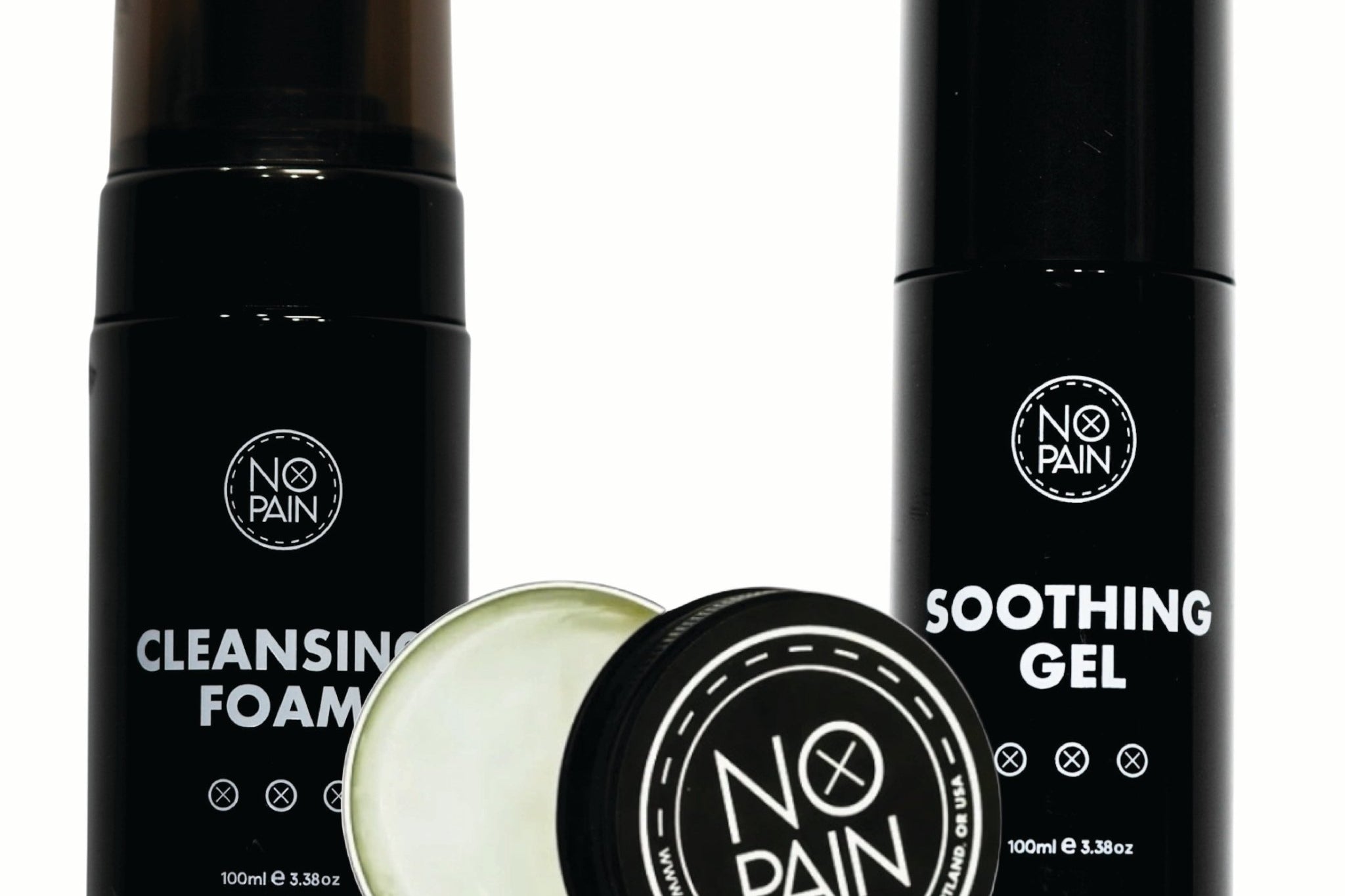
Your job: keep it clean. Wash the area two to three times a day with a gentle, fragrance-free foam cleanser. Use your fingertips only: no washcloths, no scrubbing. Pat dry with a clean paper towel. After drying, apply a very thin layer of soothing gel for the first two to three days — just enough to stop the skin looking dry. Around day 3, as the acute weeping settles, transition to the aftercare balm for richer moisture. A thick coating of any product traps heat and increases infection risk.
What to avoid. Soaking (no baths, pools, ocean), sun exposure on the fresh wound, covering with tight clothing that rubs, and anything petroleum-based that seals the wound. Your artist's wrap comes off according to their instructions: typically two to four hours for standard bandage, or up to five days for a Saniderm-type film wrap. Follow what your artist told you specifically.

Lightweight cooling gel for the first days of healing. Calms inflammation and reduces the angry, sunburned feeling without sealing the wound or trapping heat the way heavy ointments do.
Stage 2: Peeling and Itch (Days 7-14)
The surface inflammation has settled. Now the skin starts shedding the outer layer that was damaged during the session. This is the hardest stage to get through, not because it hurts, but because it tests your patience.
What it looks and feels like. The tattoo becomes intensely itchy. The skin starts peeling and flaking, similar to a healing sunburn. The colors look dull or cloudy, sometimes even milky, through this stage. That cloudiness is the new outer skin layer forming over the tattoo. It clears on its own once the skin finishes regenerating.
The one rule that matters most: do not pick, scratch, or peel. The flaking skin is still attached to the dermis below. Pulling it off before it's ready pulls ink with it and can leave permanent light spots or scarring in the tattoo. Let it come away on its own. (Full guide to the peeling phase.) If the itch is intense, tap the area gently instead of scratching.
What the skin is doing. The epidermis is rebuilding. The damaged outer layer cells are being pushed upward and shed while new cells form underneath. The dermis continues encapsulating ink particles and laying down collagen at the wound site.
Your job: moisture. A hydrated tattoo itches less than a dry one. Wash once or twice a day and apply the aftercare balm after each wash. The goal is to keep the skin supple enough that flakes separate naturally rather than cracking off and taking ink with them.

Nourishing shea butter balm for the peeling stage and beyond. Keeps the skin supple enough that flakes separate naturally, reducing itch and protecting against ink loss from picking.
Stage 3: Surface Healed, Skin Settling (Weeks 3-4)
The peeling has stopped. The itch is gone. The tattoo looks like a tattoo again. Most people think they're done at this point. The surface is healed, but the skin below is still working.
What it looks and feels like. The milky cloudiness from stage 2 fades as the new skin layer matures and becomes less opaque. Colors become more vibrant again. The texture of the tattooed skin, which may have felt slightly raised, shiny, or waxy, starts returning to normal. Some people notice a small amount of continued itching or sensitivity during this stage. That's the dermis finishing up.
What the skin is doing. The new epidermis is thickening and keratinizing, becoming the tough, normal outer skin you're used to. In the dermis, the collagen laid down at the wound site continues to remodel, and the ink particles settle into their permanent home in the dermal fibroblasts.
Your job: protect and maintain. Continue moisturizing daily. No soaking until the skin has fully closed. Even if it looks healed on the surface, a healing tattoo is still more permeable than fully healed skin, and soaking can introduce bacteria or draw out ink. Sun protection is now the biggest variable. A single day of sun exposure on a healing tattoo can fade colors noticeably.
Stage 4: Full Dermal Healing (Months 2-6)
The tattoo looks normal. It feels normal. From the outside, you're done. But inside the dermis, the final stages of healing are still happening.
What's happening below the surface. The collagen remodeling continues. The dermis gradually rebuilds its normal structure around the ink deposits. Some slight changes in how the tattoo looks at this stage are completely normal: a very small amount of additional color settling, fine lines becoming slightly crisper, the overall image becoming slightly more defined.
Why this matters. Touch-ups should wait until the tattoo is fully settled, typically three months minimum, ideally four to six months. Going back too early means working on skin that's still changing. Most artists won't touch up a tattoo before the three-month mark for exactly this reason.
Your job: sunscreen, always. UV radiation is the primary cause of tattoo fading over time. Once your tattoo is fully healed (surface and deeper layers), apply a high-SPF sunscreen any time it's exposed. This is a lifetime habit, not a temporary one. A tattoo that's consistently protected from sun looks far better at 20 years than one that wasn't.
What Slows Healing Down
Sun exposure. UV radiation on a healing tattoo causes inflammation, fades ink, and disrupts the skin's repair process. Keep fresh tattoos out of direct sun for at least four weeks, and use high-SPF sunscreen after that forever.
Soaking. Prolonged submersion in water: baths, pools, hot tubs, ocean. This softens the healing skin and creates conditions for bacterial growth. Showers are fine. Soaking isn't. (Full swimming timeline here.)
Picking and scratching. Removes flaking skin before it's ready to detach, pulls out ink, and can cause permanent scarring or light spots in the tattoo. If you pick your healing tattoos, expect to need touch-ups.
Over-moisturizing. Applying too much product traps moisture, creates a warm environment where bacteria thrive, and can cause a moist wound environment that softens and disrupts the healing epidermis. A thin layer is always the goal, not a thick coating.
Heavy exercise. Sweating excessively over a fresh tattoo introduces bacteria and salt, both of which irritate the wound. High-impact movement that stretches or rubs the tattooed skin can disrupt healing too. Light activity is generally fine; intense workouts over the tattoo site should wait at least a week.
Petroleum-based products. Vaseline, Aquaphor (in large amounts), and similar products create an occlusive seal over the wound. That seal traps bacteria and can pull ink out as the product is reapplied and wiped off. For long-term moisturizing, use products designed for tattoo aftercare.
Frequently asked questions
How long does a tattoo take to fully heal?
The surface heals in two to four weeks for most people. The peeling stops, the itch goes, and the tattoo looks clear. But the deeper layer of skin where the ink lives takes three to six months to fully stabilize. During that deeper healing period, the tattoo may continue to look slightly different from month to month before settling into its permanent state. For practical aftercare purposes, four weeks of active care is the target.
Is it normal for a tattoo to look dull or cloudy while healing?
Yes, and it's one of the most common things new tattoo owners worry about. The cloudiness happens in stage 2 (days 7-14), when the new layer of skin forming over the tattoo is still immature and slightly opaque. As it thickens and matures over weeks 3 and 4, the cloudiness clears and the colors come back. If your tattoo looks milky or faded during the peeling phase, it's not losing its ink. The ink is fine; the new skin layer is just temporarily obscuring it.
What happens if I pick at my peeling tattoo?
Peeling skin during the healing stage is still partially attached to the dermis below. Pulling it off before it's ready to detach pulls ink with it, leaving permanent light spots or gaps in the tattoo. In more severe cases, repeated picking causes scar tissue to form, which changes the texture of the tattoo and affects how ink sits in that area permanently. The fix is a touch-up session, but that can only happen after the skin fully heals, meaning you wait months and go through the session again.
Can I exercise after getting a tattoo?
Light activity like walking is fine from day one. Intense exercise over the tattoo site should wait at least a week, ideally two. The reasons: heavy sweating introduces salt and bacteria to the open wound; exercises that stretch the tattooed skin repeatedly can disrupt healing and cause cracking; and exercises that rub clothing or equipment over the area can damage the surface before it's closed. Swimming should wait until the tattoo is fully healed, typically four weeks minimum.
How do I know if my tattoo is infected rather than just healing?
Normal healing looks like: redness fading over the first few days, some plasma weeping in the first 48 hours, itching and peeling in week 2, gradual clearing after that. Infection looks like: redness that's spreading rather than fading after day 3, significant swelling that's getting worse not better, pus (thick colored discharge, not clear plasma), a hot or fever-like feeling at the site, or red streaks radiating outward from the tattoo. If you're seeing those signs, see a doctor. It's not something to wait out or treat with more aftercare products.
When can I put sunscreen on a new tattoo?
Once the surface is fully healed, typically four weeks after your session. Before that, the skin has gaps and is still permeable, and applying sunscreen over an open or healing wound can introduce irritants and block the normal healing process. Your artist's wrap plus keeping the tattoo covered with clothing is the sun protection strategy for the first month. After that, SPF 50 or higher sunscreen is the single most effective thing you can do to keep a tattoo looking good for the long term.
Everything You Need for the Full Heal
Cleansing foam, soothing gel, and aftercare balm in one kit. The right product for each stage of healing, from day one through the final weeks.
Shop the Aftercare Bundle →Formulated at Historic Tattoo in Portland, Oregon. 100% money-back guarantee.