


Your tattoo will look slightly softer and less saturated once fully healed than it did the moment you walked out of the studio. That's not damage, and it's not disappointing. It's how a properly healed tattoo is supposed to look. The first-day boldness isn't the tattoo's permanent state. Here's what's actually happening, and what to expect at each stage.
In this article
- Why a fresh tattoo looks so bold
- The visual timeline of healing
- What determines the healed result
- Frequently asked questions
Why a Fresh Tattoo Looks So Bold
Right after your session, the tattoo looks its most dramatic. The lines appear razor-sharp, the blacks are very dark, and color-packed areas look almost unnaturally saturated. There are two reasons for this, and neither will last.
First, ink is sitting in two places at once. The needle deposits ink into the dermis, the deep stable layer where it stays permanently. But the repeated passes also push ink into the epidermis, the outer layer of skin, which is not a permanent home for pigment. That surface-level ink contributes to the initial boldness. As healing progresses, the epidermis turns over completely, and that excess ink leaves with it.
Second, the surrounding skin is inflamed. The trauma from needlework causes redness and swelling in the area. That inflammation adds contrast and makes colors appear more saturated against the irritated skin. As the redness fades over the first few days, the tattoo's visual intensity drops with it.
So what you see on day one is the tattoo with bonus ink and bonus redness. Neither bonus is permanent. What remains after both clear is the actual tattoo: the ink in your dermis, seen through new healed skin. That's what it looks like for the rest of your life.
The Visual Timeline of Healing
Days 1 to 6: bold, red, and weeping
The tattoo looks its boldest here. The area is red, tender, and producing plasma as your body starts wound healing. You'll see fluid and some surface ink coming away when you wash or pat dry. That's the epidermis-layer ink leaving, not the dermis ink. The tattoo will look slightly different from wash to wash as the surface settles. This is normal.
Days 7 to 14: the milky phase
This is the stage that causes the most concern. The peeling begins, and underneath the flaking skin, the new surface layer looks cloudy and opaque. Tattoos that looked sharp and vivid suddenly appear dull, faded, or washed out. Blacks look grey. Colors look muted. Lines look blurry. People frequently worry something went wrong.
Nothing went wrong. You're looking at your tattoo through a new, not-yet-transparent layer of skin. The pigment is still there. The detail is still there. But the new epidermis hasn't fully clarified yet, and until it does, everything underneath looks muted. This is called the milky phase, and it's a completely normal part of healing. The milky phase guide explains exactly why it happens and how long it lasts.
Weeks 3 to 4: settling
The peeling finishes. The milky cloudiness fades as the new skin layer completes its formation and becomes transparent. The tattoo's true colors emerge. The texture of the tattooed area returns to normal. This is when you see what your healed tattoo actually looks like.
For most people, the settled appearance is close to final by week four. For larger pieces with heavy shading or color packing, the deeper skin layers continue to settle for another month or two. The very final state of a tattoo, particularly how the blacks settle and how colors develop their long-term depth, can take up to three months to fully appear. The tattoo healing process guide breaks down each stage in detail.
What Determines the Healed Result
The dermis-level ink is set. Your artist put it there and it stays. What you can affect is the quality of the healing process around it, which directly determines how vivid the colors are, how rich the blacks look, and how cleanly the lines remain defined when the skin is fully healed.
Thick scabs are the main variable to control. When plasma dries on the surface without being regularly cleaned away, it forms heavy, raised scabs. Those scabs fuse with the skin underneath, and when they eventually separate, they pull pigment with them. Patchy areas in a healed tattoo where color looks missing or faded almost always trace back to heavy scabbing during healing. The scabbing guide covers what normal looks like vs. what to watch for.
The prevention is consistent washing (gently, twice a day with a fragrance-free cleanser) and keeping the surface lightly hydrated. Not saturated, just enough to stop the surface from drying into a hard crust between washes.

Lightweight cooling gel for the first few days. Keeps the surface hydrated and prevents the heavy scab formation that causes ink loss, without blocking airflow or trapping heat.
Once the peeling starts and the milky phase kicks in, the skin needs more nourishment than a lightweight gel provides. A richer balm keeps the new skin layer supple as it finishes forming and helps it clarify faster. The goal is a well-conditioned skin surface that becomes fully transparent, so the ink underneath can show through cleanly.

Shea butter balm for the peeling and milky phase. Nourishes the new skin layer as it finishes forming and helps the surface clarify so the ink underneath shows through at its best.
Long-term, the factors that affect how a healed tattoo looks over years are UV exposure, skin hydration, and the color composition of the ink itself. Blacks and dark blues hold the longest; pastels, whites, and lighter yellows fade faster regardless of how well the initial healing went. For a breakdown of what affects long-term vibrancy, the tattoo fading guide covers each factor.
Frequently asked questions
Do tattoos look better after healing?
In most cases, yes. Not because the healed tattoo is darker than the fresh one, but because a properly healed tattoo sits cleanly in the skin without redness, swelling, or surface debris. The lines look defined, the colors look settled, and the whole piece looks intentional rather than raw. The exception is during the milky phase (roughly days seven to fourteen), when the tattoo looks worse before it looks better. That phase passes.
Will my tattoo get darker after healing?
No. A healed tattoo will be slightly lighter and softer than it was on day one. The first-day boldness comes from excess ink in the epidermis and skin inflammation, both of which are temporary. Once those clear, you're left with the dermis-level ink seen through healed skin. That's lighter than what you saw in the studio, and it's the permanent state.
My tattoo looks dull and faded. Is that normal?
If you're in the first two to three weeks, almost certainly yes. The milky, dull appearance during the peeling phase is one of the most consistent parts of healing. The new skin layer over the tattoo hasn't fully clarified yet, and everything underneath looks muted. Keep washing, keep moisturizing, and don't pick. The color comes back as the new skin finishes forming. If it still looks dull at the four-week mark, that may be how it healed, which can happen from heavy scabbing, sun exposure, or inconsistent aftercare.
Why does my tattoo look faded after the first wash?
The wash removes the weeping plasma and surface ink that were making the tattoo look extra vivid. It's not removing dermis ink. That ink is locked in below the surface. What you're seeing after the first wash is closer to what the healed tattoo will actually look like. It often looks a bit less saturated and softer. That's a preview of the final result, not damage.
How long until a tattoo looks fully healed?
Surface healing is complete for most people between two and four weeks. The skin texture normalizes, the cloudiness clears, and the tattoo looks settled. Full dermal healing, where the deeper layers finish repairing and the ink reaches its final visual depth, can take up to three months. The tattoo continues to look incrementally better and more defined for the first few months post-session.
What makes a tattoo look less vibrant after healing?
Several things: heavy scabbing during healing (the most common cause), sun exposure on the fresh tattoo, dehydration, and the nature of the ink colors used. Lighter colors (pastels, whites, yellow, light pink) fade faster than dark blues and blacks regardless of how well you care for them. If the healed result looks patchy or noticeably less vibrant than expected, and your aftercare was solid, ask your artist about a touch-up. That's a normal part of working with certain placements, skin types, and ink colors.
Everything Your Skin Needs to Heal Right
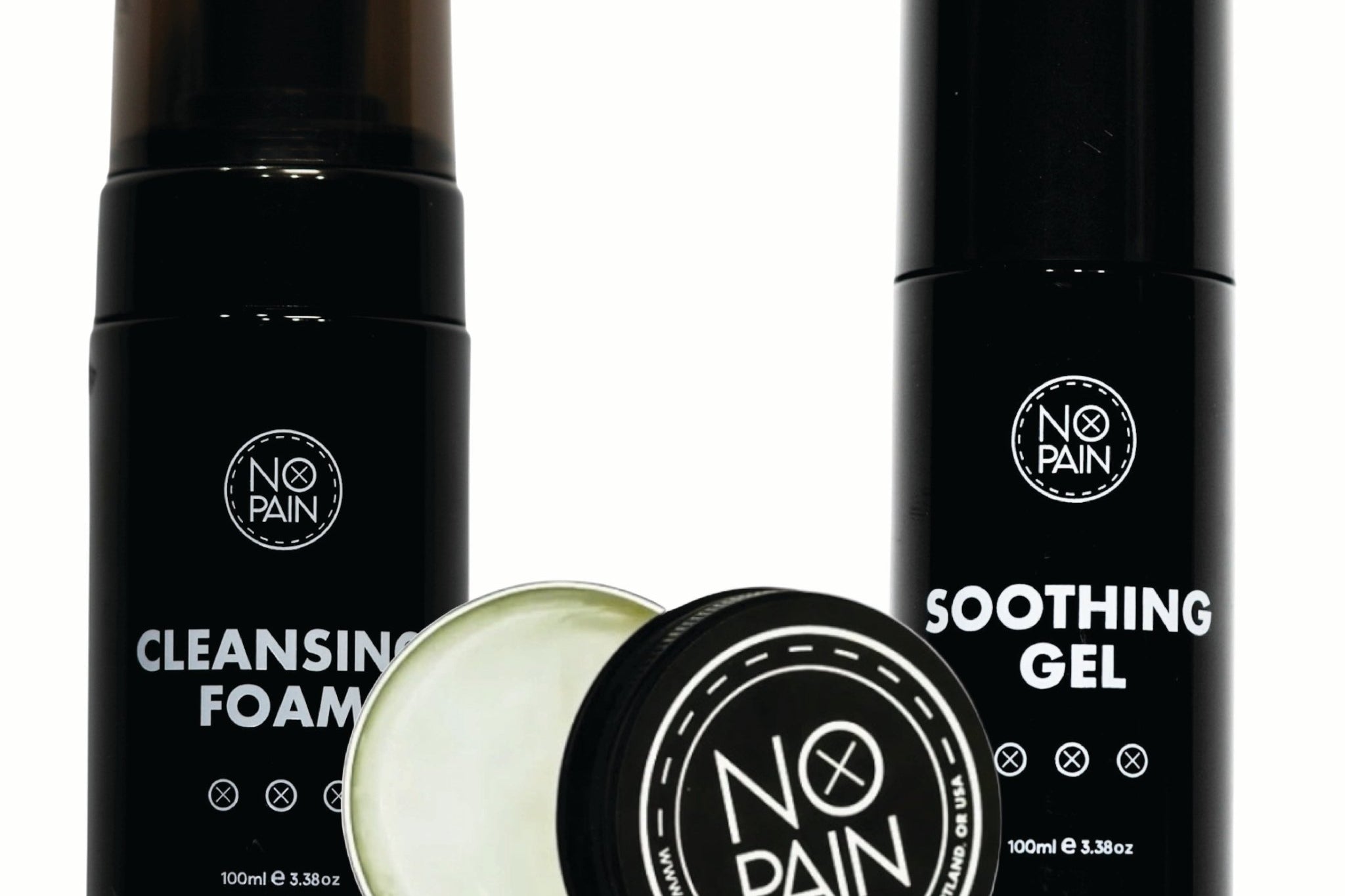
Cleansing foam, soothing gel, and aftercare balm. Each product covers the stage it's designed for, from day one through the end of the milky phase and beyond.
Shop the Aftercare Bundle →Formulated at Historic Tattoo in Portland, Oregon. 100% money-back guarantee.