


Tattoo peeling is a normal part of healing. The surface skin, the epidermis, sheds in the first one to two weeks while the ink sits safely in the dermis below. Nothing is coming out of the tattoo. The peeling you see is dead skin cells, not ink, and they carry nothing permanent with them when they flake away.
What trips people up is how the tattoo looks during and immediately after this stage. The ink can look washed out, the lines look hazy, and some people see a faint cloudy film over the whole tattoo. This is also normal, and it is temporary. Here is the full picture of what the peeling stage involves and what comes after it.
In this article
- When does a tattoo start peeling?
- What normal tattoo peeling looks like
- Why it looks like ink is coming off
- The milky stage: why your tattoo looks faded after peeling
- How long does the cloudy stage last?
- Aftercare during the peeling stage
- Frequently asked questions
When Does a Tattoo Start Peeling?
Most tattoos begin peeling between days 4 and 7 after the session. The exact timing depends on the size and density of the piece, how your skin heals in general, and where the tattoo is located. Heavily saturated areas with dense color or shading tend to peel more and later than clean linework. Placements that see more movement or friction may peel earlier.
In the first three days, the tattoo is still in the acute healing phase. The skin is red, swollen, and still producing the clear plasma weeping that is a normal response to the needle trauma. As that initial inflammation settles and the surface begins to dry out, the outer layer of damaged skin starts to lift and separate. That is when the peeling begins.
What Normal Tattoo Peeling Looks Like
Normal tattoo peeling looks like sunburn peeling. Thin, papery flakes of skin lift off the surface in small patches. The skin underneath is fresh and slightly pink. The flakes are pale and translucent, not colored, though they may sometimes have a slightly tinted appearance from ink residue on the very surface layer of skin. This does not mean the ink is leaving.
The peeling is typically patchy rather than uniform. One section of the tattoo may be actively peeling while an adjacent section still has intact surface skin. Some designs peel several times in different areas over a two-week window rather than all at once. This is normal and does not indicate anything is wrong.
What is not normal: the skin weeping colored fluid, thick peeling with a foul smell, spreading redness beyond the tattoo border, or skin that is getting more painful rather than less after day two. Those signs point to an infection rather than normal healing and need medical attention.
Why It Looks Like Ink Is Coming Off
This is the most common worry during the peeling stage. The flakes can appear to have color in them, and when a section of skin lifts away, the tattoo underneath can look patchy or lighter than the surrounding area. It looks like the ink is coming out with the skin.
It is not. The ink lives in the dermis, which is the deeper layer of skin below the epidermis. The peeling is entirely at the epidermal level. The two layers do not peel together. What you are seeing in the flakes is a small amount of excess ink that was sitting in the surface layer of skin and did not make it into the dermis during the session. This is normal: artists deposit more ink than the skin needs, knowing that some will be shed during healing. What stays in the dermis is what you keep.
The patchiness under lifted skin resolves once the surface settles. If the tattoo still looks patchy and uneven four to six weeks after healing is complete, that is the time to talk to your artist about whether a touch-up is needed. Do not assess the final result during the peeling phase.
The Milky Stage: Why Your Tattoo Looks Faded After Peeling
Once the visible peeling stops, many people expect to see the finished tattoo. Instead they see something that looks dull, hazy, or cloudy, as if there is a translucent film sitting over the ink. The blacks look more grey than black, colors look washed out, and the lines look less sharp than they appeared in the first few days.
This is the milky stage, and it has a simple explanation. Your body has built a brand new layer of epidermis over the tattooed skin, but this new skin is not yet fully mature. New epidermal cells are smaller, denser, and less transparent than fully developed skin. They let light through differently, which creates that hazy, frosted appearance over the ink. The tattoo underneath is unchanged. You are looking at it through immature skin that has not yet reached its final clarity.
Some people also call this the silver skin stage. The terminology varies but the cause is the same: fresh epidermal tissue over healing dermis.
How Long Does the Cloudy Stage Last?
The milky or cloudy appearance typically resolves two to four weeks after the visible peeling stops. For large, heavily saturated pieces, it can take up to six to eight weeks for the skin to fully mature and the ink to read clearly. The process is gradual and not linear: the tattoo may look better one day and hazy again the next as the skin continues to develop.
The overall healing timeline looks like this: acute inflammation days 1 to 3, surface peeling days 4 to 14, milky stage weeks 2 to 6, fully settled four to six weeks after the session. The ink continues to settle in the dermis for up to three months, which is why tattoos often look slightly sharper at the three-month mark than they did at six weeks.
A tattoo that still looks dull, faded, or patchy beyond three months has likely healed that way and would benefit from a touch-up assessment with your artist.
Aftercare During the Peeling Stage
The peeling stage is when most aftercare mistakes happen. The itch during this phase is real and persistent, it comes from the nerve endings in the healing skin activating as the new cells proliferate, and scratching even once can pull off a scab or section of lifting skin before it is ready to come away cleanly. This can leave an ink void in that spot.
The practical rule is to let peeling skin come away on its own. Pat dry rather than rub. Apply a thin layer of aftercare balm after washing to keep the surface moisturized and reduce the urge to scratch. Dry skin itches more, and keeping it hydrated is the most effective way to get through the peeling phase without pulling anything off early. Do not pick, peel, or rub the flaking skin off ahead of its natural timeline.
In the first three days before visible peeling starts, the skin is still inflamed and weeping. That is when soothing gel is the right product, lighter and better suited to freshly traumatized skin than balm.

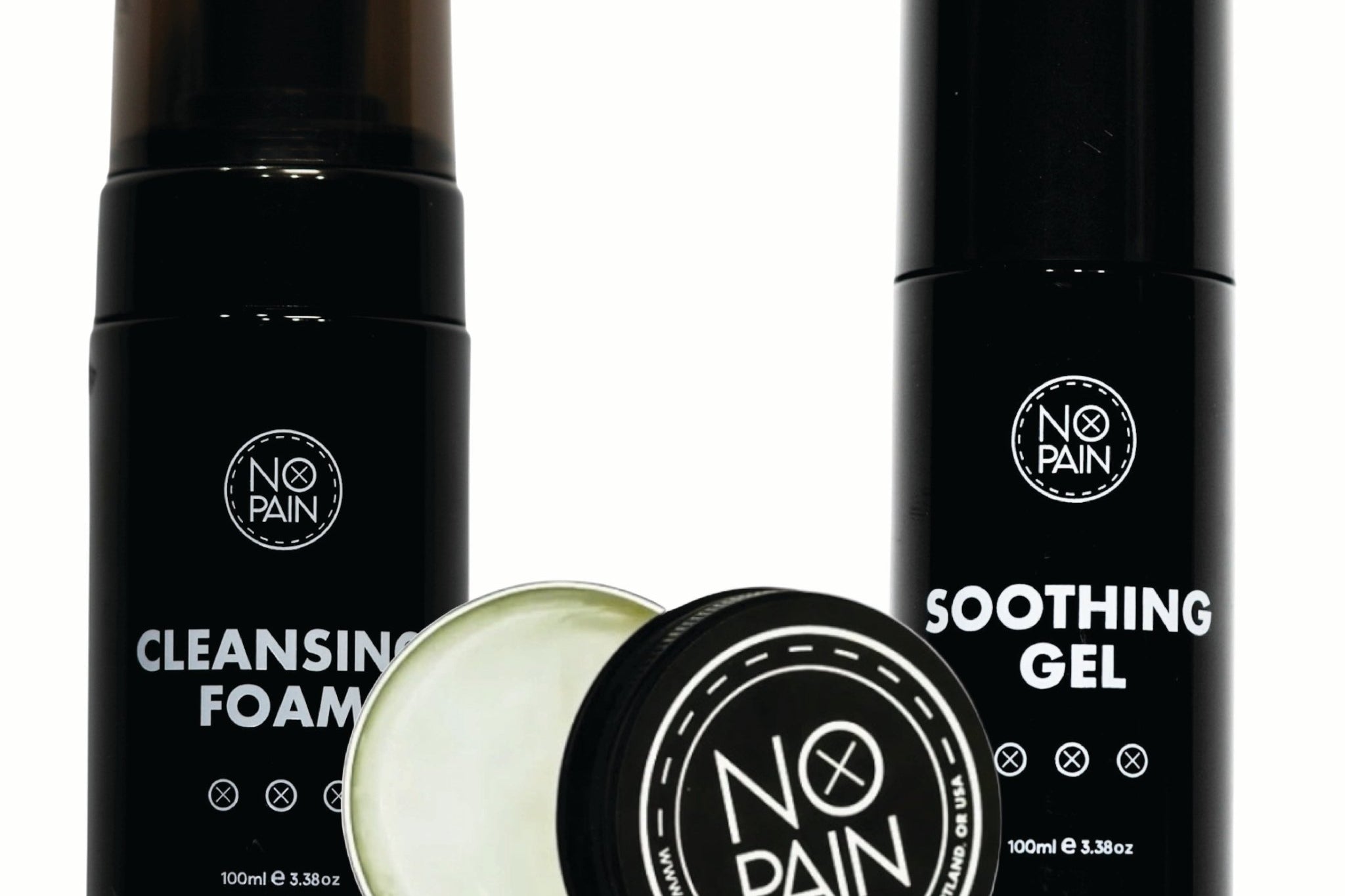
Lightweight, cooling formula for the first three days of healing. Calms inflammation without heavy residue. Apply after washing to soothe freshly tattooed skin before the peeling starts. Formulated at Historic Tattoo in Portland.
Once the visible peeling has stopped and the skin has moved into the milky stage, keep using balm in thin layers after each wash. Hydrated new skin becomes transparent faster than dry, flaky skin. The full kit covers both stages: gel for days 1 to 3, balm for everything after.
The Right Products for Every Stage of Healing
Soothing gel for days 1 to 3, aftercare balm from day 3 onward through the peel and milky stage. The Aftercare Bundle has both, plus cleansing foam to keep the area clean.
Shop Aftercare Kit →Formulated at Historic Tattoo in Portland, Oregon.
Frequently asked questions
Why is my tattoo peeling?
Tattoo peeling is the normal shedding of the outer layer of skin, the epidermis, as it replaces itself after the trauma of tattooing. The needle damages the surface skin while depositing ink in the dermis below. As the damaged surface skin dies and is replaced by new cells, it peels away in thin flakes. This usually starts between days 4 and 7 and continues for one to two weeks. The ink is not going anywhere; it lives in the deeper dermis that does not peel.
Is it normal for a tattoo to peel?
Yes, peeling is a standard part of tattoo healing. Most tattoos peel to some degree, with heavily saturated pieces tending to peel more than clean line work. The absence of visible peeling does not mean something is wrong; some tattoos shed less visibly while still going through the same underlying process. What is not normal is weeping colored fluid, skin that is getting more painful after the first two days, or spreading redness beyond the tattoo border.
Why does my tattoo look faded after peeling?
After the visible peeling stops, the tattoo often looks dull, hazy, or washed out. This is the milky or silver skin stage: your body has grown a new layer of epidermis over the tattooed skin, but the new cells are not yet fully mature and transparent. They create a slight opacity over the ink, which makes colors look muted and lines look less sharp. This resolves as the new skin matures, usually within two to four weeks of the peeling stopping.
Is the ink coming off when my tattoo peels?
No. The flakes coming off during tattoo peeling are epidermis, the surface layer of skin. The ink lives in the dermis, the deeper layer below. The two do not peel together. Some flakes appear slightly tinted because there may be a small amount of excess surface ink in the very outer skin cells, but none of the ink that was deposited in the dermis is leaving. If the tattoo looks patchy under lifted skin, it will resolve once the surface settles.
What is the silver skin or milky stage of tattoo healing?
The silver skin or milky stage is the period after peeling when the new epidermis has formed but is not yet fully mature. New epidermal cells are denser and less transparent than developed skin, which creates a hazy or frosted appearance over the ink. The tattoo underneath is unchanged; you are looking at it through immature skin. This stage typically lasts two to four weeks after the visible peeling stops, and up to six to eight weeks for large or heavily saturated pieces.
Should I peel my tattoo?
No. Let the skin come away on its own. Pulling at peeling skin or picking scabs before they are ready removes them ahead of their natural timeline and can pull underlying ink out of the dermis along with the surface skin, leaving a void in that area. If the itch is making it hard to leave the skin alone, applying a thin layer of aftercare balm reduces dryness and the urge to scratch without disturbing the peeling surface.