


Your tattoo looks soft, raised, and almost soggy, like waterlogged skin sitting over your ink. This is tattoo bubbling, and it looks worse than it is. It is not an infection. It is skin maceration: your healing tattoo has gotten too much moisture and not enough air. It's fixable in under 30 minutes, and once you understand what caused it, it won't happen again.
In this article
- What tattoo bubbling actually is
- Why it happens
- The immediate fix
- Bubbling vs. infection: how to tell
- How to prevent it going forward
- Frequently asked questions
What Tattoo Bubbling Actually Is
Bubbling is the visible sign of skin maceration: the same process that makes your fingertips wrinkle in the bath, scaled up to cover your healing tattoo. When the top layer of healing skin stays wet for too long without enough airflow, it becomes waterlogged: soft, puffy, and raised in a way that looks alarming.
The skin around a healing tattoo is regenerating. That process requires a balance of moisture and oxygen. If moisture wins because of too much product, trapped water, or poor airflow, the skin can't finish what it's doing. The result is that soft, bubble-like texture sitting over the tattoo.
The ink itself is in your dermis, the deeper layer of skin. Bubbling only affects the surface. If you fix the moisture balance quickly, the skin settles back to normal without damage to the tattoo.
Why It Happens
Over-moisturizing. This is the most common cause. Applying too much aftercare product, applying it too often, or using a heavy ointment that doesn't breathe traps moisture against the skin. A thick, occlusive layer of product prevents the healing surface from getting the airflow it needs. The fix is less product, not more.
Trapped water after a shower. If you don't dry the tattoo properly before applying product, you're sealing water underneath. The tattoo feels damp, you apply moisturizer anyway, and the moisture has nowhere to go. Always pat completely dry with a clean paper towel and let the area air out for a few minutes before applying anything.
A fluid pocket under second-skin wrap. Saniderm and similar breathable film bandages are designed to accumulate a small amount of plasma under the surface during the first day or two: that's normal and expected. But if too much fluid accumulates, or the film stays on longer than recommended, the skin underneath can become over-saturated. Bubbling under a second-skin bandage means it's time to remove it.
Sweat under tight clothing. Workouts, hot weather, or a tattoo in a placement covered by close-fitting clothing can keep the area warm and wet for extended periods. Sweat has the same maceration effect as water or product. This is one more reason to wear loose, breathable clothing over a healing tattoo and to wash the area promptly after sweating.
The Immediate Fix
Stop applying any product and give the skin time to breathe. Then follow these steps:
Step 1: Clean gently. Wash your hands first. Then wash the tattoo with a fragrance-free liquid soap, using only your fingertips. No scrubbing. The goal is to remove bacteria and any excess product sitting on the surface.
Step 2: Dry completely. Pat the area dry with a clean paper towel. Not a cloth towel. Don't rub. Pat until no moisture is visible, then leave the tattoo uncovered to air dry for 20 to 30 minutes. This is the most important step. If you skip it, you'll trap moisture again with the next product application.
Step 3: Apply a very thin layer of a breathable gel. Once the skin is fully dry, apply the smallest amount of soothing gel that will cover the area. Rub it in completely: you should see a slight sheen, not a coat. A gel-based product lets the skin breathe in a way that a thick balm or ointment cannot at this stage.
Step 4: Leave it uncovered. Don't cover the tattoo with clothing, wrap, or anything else for at least an hour after this fix. The skin needs airflow.
If the bubbling was under a second-skin bandage, remove the bandage entirely. Clean and dry as above, then switch to a standard aftercare routine without reapplying film.

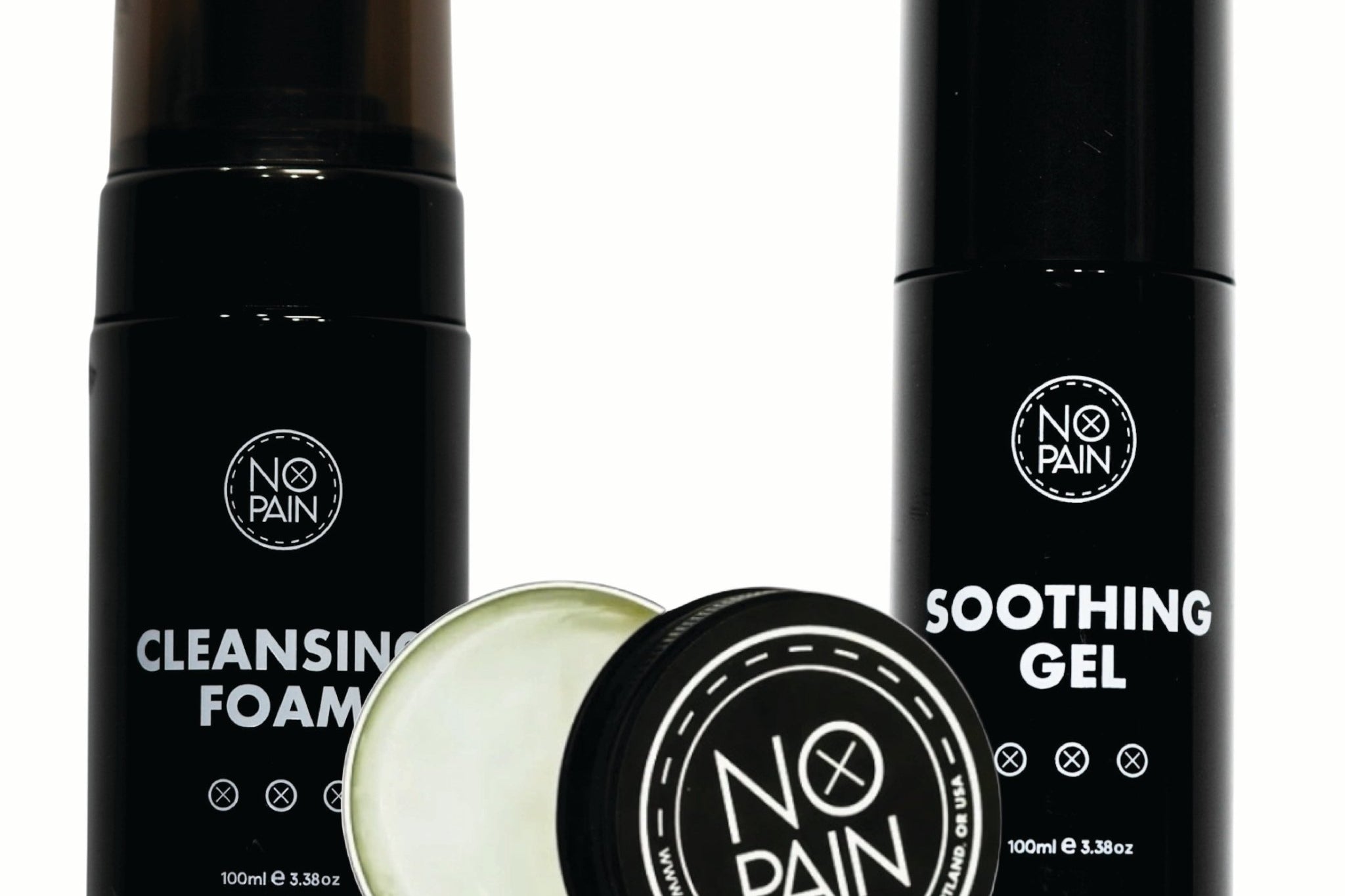
A cooling, lightweight gel that hydrates without trapping heat or moisture. Absorbs fully into the skin, cools on contact, and lets the healing surface breathe. The right product for the first few days of healing, and the right fix if your tattoo is bubbling.
Bubbling vs. Infection: How to Tell
The two things look different and feel different, and it matters to know which you're dealing with.
Bubbling looks like soft, raised, waterlogged skin. The surface feels spongy. Any discharge is clear or very pale (plasma, not pus). The area may be mildly uncomfortable, but the discomfort should not be getting worse over time. Bubbling responds quickly to the fix above: within a day, the skin should be settling back to normal.
Infection produces discharge that is yellow, green, or has an odor. The redness spreads outward from the tattoo rather than sitting within it. The skin feels hot. The pain gets worse rather than better. A fever may accompany it. If you have any of these signs, see a doctor. For the full list of what to watch for, see the infected tattoo guide.
Bubbling is a moisture problem. Infection is a bacterial problem. They require completely different responses, so being clear on which you have matters.
How to Prevent It Going Forward
The rule is a sheen, not a coat. When you apply aftercare product to a healing tattoo, you should be able to rub it in completely until the skin has a slight sheen but no visible layer sitting on top. If you can see the product, you've applied too much.
Dry before you moisturize, every time. After washing or showering, pat the area dry with a clean paper towel and let it air out for a few minutes before applying anything. This one step prevents most cases of bubbling.
Use the right product for the right phase. In the first week of healing, the skin needs something lightweight and breathable: a gel, not a heavy balm or ointment. Thick products belong in the second week, once the surface has closed and the peeling phase has begun. For the full healing timeline and what to use at each stage, see the healing process guide.
Moisturize less often if you're bubbling. Twice a day is enough for most people: after your morning wash and before bed. If you've been applying product three, four, or five times a day, that's likely the cause.
Frequently asked questions
Is tattoo bubbling normal?
It's common, especially for first-time tattoo owners who apply too much product too often. It's not a sign of infection and it doesn't mean permanent damage is done, but it does need to be corrected. Stop applying product, dry the area completely, and switch to a lighter, more breathable aftercare routine.
Will tattoo bubbling ruin my tattoo?
If you fix it quickly, no. The ink sits in the dermis, deeper than the surface maceration. Bubbling affects the top layer of healing skin, not the ink. What can damage the tattoo is leaving the bubbling uncorrected for days, which increases infection risk and can lead to heavier scabbing when the skin finally dries out. Address it the same day you notice it.
How long does it take for a bubbling tattoo to recover?
If you follow the fix above, the skin should look and feel noticeably better within 24 hours. The waterlogged appearance resolves quickly once the moisture balance is corrected. Full healing still takes the normal 2 to 4 weeks for the surface layer and several months for the dermis to fully settle.
My tattoo is bubbling under Saniderm. What do I do?
Remove the Saniderm. A small fluid pocket under the bandage in the first 24 hours is normal, but if the skin is visibly macerated and soft, the film has been on too long or too much fluid has accumulated. Remove it, wash and dry the area thoroughly, and switch to a standard open-air aftercare routine. Do not apply a new bandage over waterlogged skin.
Can over-moisturizing cause ink loss?
Yes, indirectly. When macerated skin forms a thick scab as it dries out, that scab can pull ink with it when it falls or gets knocked. The bubbling itself doesn't pull ink, but the cycle of over-moisturizing followed by heavy scabbing does. Keeping product application to a thin, breathable layer prevents both problems. For more on scabbing and ink retention, see the scabbing guide.
Should I use a balm or a gel on a bubbling tattoo?
Gel. In the first week of healing, and especially if bubbling is already occurring, a lightweight gel that absorbs fully into the skin is the right choice. Heavy balms are better suited for the second week of healing when the surface has closed and the skin needs deeper hydration. Using a balm too early is often what causes bubbling in the first place. Switch to the balm once peeling has begun and the surface is no longer an open wound.
The Right Product for Every Stage of Healing
The Aftercare Bundle includes everything you need from day one to fully healed: a gentle cleansing foam, a lightweight soothing gel for the first few days, and a nourishing balm from day three onward.
Shop the Aftercare Bundle →Formulated at Historic Tattoo in Portland, Oregon. 100% money-back guarantee.