


Yes, you can get a tattoo with eczema. Many people with eczema do, with good results. The conditions that make it safe are specific: the skin at the tattoo site needs to be clear and stable, not actively flaring, and not in a zone that flares regularly. Aftercare matters more than it does for non-eczema skin because the barrier is more reactive. Here's what the process actually looks like when done carefully.
In this article
- The one rule that overrides everything
- How eczema affects the tattoo process
- Choosing placement with eczema
- Before you book
- Aftercare for eczema-prone skin
- Frequently asked questions
The One Rule That Overrides Everything
No reputable artist will tattoo over skin with an active eczema flare, and you shouldn't want them to. The reasons are structural, not arbitrary.
Eczema-flared skin is already inflamed, compromised at the barrier level, and often has micro-breaks in the surface. Tattooing into that skin creates several compounding problems at once. The ink won't saturate evenly into inflamed dermis, which means the healed result will be patchy and inconsistent. The immune response from the eczema and the immune response from the wound are competing with each other, which slows healing and increases the risk of infection. And the physical trauma of tattooing will almost certainly intensify the flare, making it harder to resolve after the fact.
The rule is simple: the skin at the tattoo site needs to look and feel exactly like normal skin on the day of the appointment, and for at least a couple of weeks before it. If you're in any doubt, reschedule. Rescheduling is free. A poorly healed tattoo from tattooing through a flare isn't fixable.
How Eczema Affects the Tattoo Process
There's a phenomenon called the Koebner response that's worth understanding before you commit to a placement. The Koebner response is when skin that's been physically traumatized develops a flare at that site, even if the area was previously clear. Not everyone with eczema experiences this, but it does occur, and tattoos are a documented trigger for it.
What this means practically: a zone that has never flared before can become a flare zone after tattooing. The tattoo may heal fine initially, and then weeks or months later, a flare develops directly over the inked skin. This is different from a healing complication; it's a long-term skin behavior change in that location.
This risk is real but not universal. If your eczema is well-controlled and you've discussed the Koebner response with your dermatologist, you can make an informed decision about how much risk you're comfortable with. The areas where most people with eczema have the lowest Koebner risk are the same low-flare zones that are anyway better placement choices.
Choosing Placement With Eczema
Placement strategy matters more with eczema than it does with non-eczema skin. The goal is to find zones where you've had little or no eczema history and where the skin is stable and relatively low-movement.
Classic high-eczema areas (inner elbows, back of knees, inner wrists, neck) are poor choices even if they happen to be clear today. These are the zones most likely to flare again in the future, and a Koebner response in one of these areas is more likely than in low-flare zones. Tattooing a high-flare zone while it's temporarily clear is a gamble on it staying that way permanently.
Better choices are areas with a personal history of stability: outer upper arm, outer thigh, upper back away from the spine, calf. If you have a specific area that hasn't flared in years (or ever), that's meaningful information. Your personal flare map is more useful than any general guidance, because eczema distribution varies considerably between individuals.
If you're set on a particular placement that's historically been a flare zone, have a frank conversation with your dermatologist about your Koebner risk before committing. That conversation is worth having before you're in the chair.
Before You Book
Talk to your dermatologist first. They can assess your current skin condition, advise on whether your eczema is controlled enough to safely heal a tattoo, and give you a realistic picture of your personal Koebner risk. If you're on topical corticosteroids or systemic immunosuppressants, your dermatologist can also tell you whether your current medication affects wound healing or infection risk.
Find an artist who takes skin conditions seriously. During your consultation, be upfront about your eczema history, the placements you've had issues with, and any medications you're on. A good artist will want this information, not be put off by it. Some artists are willing to do a small patch test (a few dots of ink in a discreet area) several weeks before the main appointment to check how your skin responds to the specific pigments. This is worth asking about for large or high-commitment pieces.
Time your appointment during a stable period. If your eczema tends to flare seasonally (winter dryness is a common trigger), schedule during your most stable time of year. Give yourself a buffer: if you've had a flare in the last two to three weeks, even in a different location, consider waiting. Systemic inflammation can affect healing across the body, not just at the site of the flare.
Aftercare for Eczema-Prone Skin
Aftercare is where eczema-prone skin needs the most attention. The barrier is more reactive, which means standard products that work fine for most people can trigger a response in sensitive skin.
Cleaning. Use a gentle, fragrance-free liquid soap: nothing with added scent, alcohol, or antibacterial agents that aren't needed. Wash twice daily with clean hands, rinse thoroughly, and pat dry with a clean paper towel rather than a cloth (which can harbor bacteria). Keep it simple and consistent.
Moisturizing in the first few days. The goal is moisture balance, not occlusion. Heavy, thick balms in the first few days can trap heat and moisture against the wound, which is the opposite of what eczema-prone skin needs during active healing. A lightweight, breathable gel applied in a thin layer after each wash lets the skin breathe while keeping it from drying out.
Moisturizing from day three onward. Once the surface has closed and the peeling phase is done, a richer balm becomes appropriate. This is when eczema-prone skin benefits from more intensive hydration. Apply consistently, not just when it feels dry; maintaining the barrier proactively is better than reacting to dryness after it sets in.
Watch for signals. If the healed tattoo area starts to itch intensely, become raised, or show the early signs of a flare (redness, texture change, micro-cracking), contact your dermatologist before treating it yourself. Some treatments used for eczema flares can affect tattoo ink, and you'll want guidance on how to manage it without damaging the piece. For more on what separates normal healing irritation from something that needs attention, see the infected vs. irritated guide.
For the common aftercare mistakes that affect any skin type, but land harder on sensitive skin; see the aftercare mistakes guide.

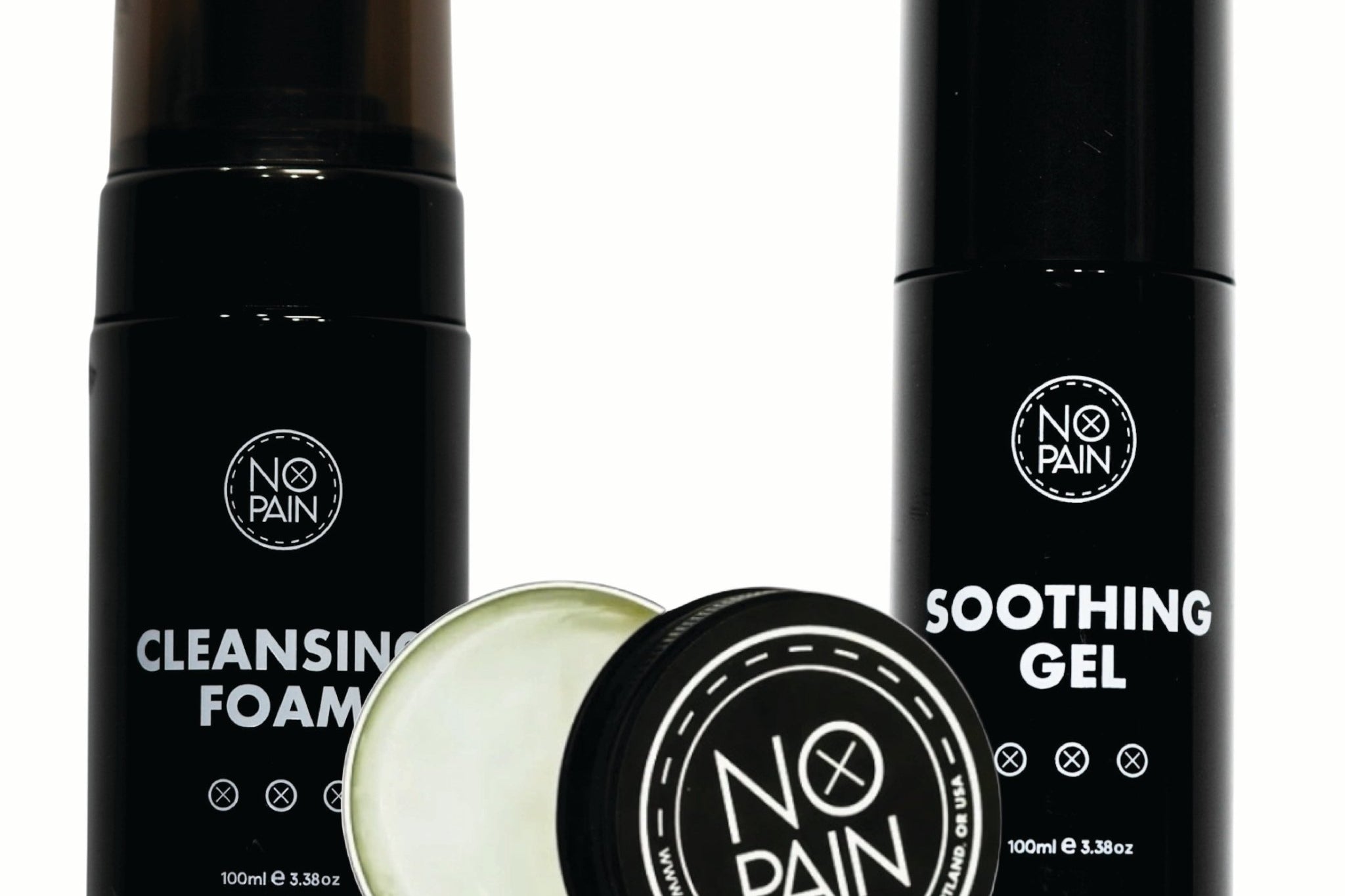
A lightweight, fragrance-free gel that calms a fresh tattoo without trapping heat or moisture against the wound. For eczema-prone skin, this is the right product for the first few days: breathable enough to let the barrier heal without the occlusion risk of heavy creams or ointments. Apply in a thin layer after each wash.
Frequently asked questions
Can you get a tattoo over eczema skin?
Not while it's actively flaring. An artist won't tattoo over inflamed, compromised skin, and doing so would result in a poor-quality heal and a higher risk of infection. The tattoo site needs to be completely clear and stable, looking and feeling like normal skin, on the day of the appointment and for a few weeks before it. On a clear, stable patch of skin, yes. On an active flare, no.
What is the Koebner response and does it happen with tattoos?
The Koebner response (or Koebner phenomenon) is when skin that's been physically traumatized develops a condition (like eczema) at that site, even if the area was previously unaffected. It does occur with tattoos in some people with eczema. The tattoo may heal fine, and then weeks or months later a flare develops directly over the inked skin. Not everyone with eczema experiences this, but it's worth discussing with your dermatologist before you commit to a high-flare-risk placement.
Where is the safest placement for a tattoo if you have eczema?
The safest placements are zones with a personal history of little or no eczema flares: outer upper arm, outer thigh, upper back away from the spine, calf. Classic high-eczema zones like inner elbows, back of knees, and inner wrists are higher-risk even when they're currently clear, because they're more likely to flare again in the future and more likely to develop a Koebner response. Your personal flare history is the most useful guide; zones that have been stable for years are safer than zones that happen to be clear right now.
Do I need to tell my tattoo artist about my eczema?
Yes. Be upfront during your consultation about your eczema history, which areas you've had flares in, and any medications you're currently on. A professional artist will want this information to advise you on placement, timing, and aftercare. Some artists will suggest a small patch test with the specific pigments weeks before the main appointment to check your skin's response. Hiding a skin condition from your artist doesn't protect you; it removes information they need to do their job well.
What aftercare products should I avoid with eczema?
Avoid anything with added fragrance, alcohol, or unnecessary preservatives in the first few weeks. Heavy petroleum-based ointments (like plain Vaseline) can occlude the wound too much in the active healing phase, trapping moisture and heat against skin that needs to breathe. Antibacterial soaps with triclosan or other active ingredients aren't needed and can be irritating. Stick to fragrance-free liquid soap for washing and a lightweight, breathable gel for the first few days. Switch to a richer balm once the surface has fully closed.
Can eczema flare up on a healed tattoo?
Yes. A healed tattoo can develop an eczema flare at any point, either as a Koebner response or simply because the tattooed skin is skin, and if your eczema is triggered there, it can happen over ink as much as anywhere else. If a flare develops on a healed tattoo, contact your dermatologist before self-treating. Some topical corticosteroids used for eczema can affect the appearance of tattoo ink, particularly if applied repeatedly over time, and your dermatologist can advise on the safest treatment approach for the tattooed area.
The Two-Phase Aftercare System
The Aftercare Bundle pairs the lightweight soothing gel for the first few days with the nourishing balm from day three onward. Two products designed to work together: breathable during active healing, then deeply moisturizing once the surface has closed. For eczema-prone skin, having the right product for each phase matters more than most.
Shop the Aftercare Bundle →Formulated at Historic Tattoo in Portland, Oregon. 100% money-back guarantee.