



If you've gone looking for a way to make your next tattoo hurt less, EMLA has almost certainly come up. It's the numbing cream everybody's heard of, it's been around since the 1980s, and plenty of tattoo clients swear by it. So does it work? Yes. It numbs. But it was never built for a tattoo session, and it usually runs out well before your artist does.
Here's the number that explains everything else in this article: EMLA is 2.5% lidocaine. No Pain Tattoo Numbing Cream is 5% lidocaine, which is the strongest concentration the FDA allows over the counter. That gap is the reason most people who use EMLA for a tattoo end up feeling the needle a lot sooner than they expected.
Below is the whole picture. What EMLA actually is, how long it really lasts once a machine is running, what to do if you already own a tube, and what we'd hand you instead.
What EMLA Cream Actually Is
EMLA stands for Eutectic Mixture of Local Anesthetics. It's a 1:1 blend of 2.5% lidocaine and 2.5% prilocaine in a water based emulsion, and it was developed for one specific medical job: numbing a small patch of intact skin before a needle stick, an IV line, a mole removal, or minor dermatological work.
Look at what those procedures have in common. They're over in seconds. One puncture, or a shallow shave. The skin stays basically closed the whole time. EMLA is genuinely excellent at that, which is why it's been the clinical standard for forty years.
A tattoo is a completely different event. The machine is driving needles into your dermis 50 to 150 times per second, for one hour, three hours, sometimes six. Your skin isn't intact for long. It's open, it's bleeding, and it's getting wiped down every couple of passes. EMLA wasn't built for that and doesn't claim to be. The issue isn't that EMLA is a bad product. It's that people keep using a needle stick cream to get through a marathon.
The Concentration Problem: 2.5% vs 5%
Topical anesthetics work by diffusion. Lidocaine has to travel down through the stratum corneum, through the epidermis, and reach the free nerve endings sitting in the dermis where pain signals actually start. Two things control how much of it gets down there: how long it sits, and how concentrated it is.
Time you can adjust. Concentration you can't. A 2.5% cream simply has less lidocaine per gram available to make that trip than a 5% cream does. Leave EMLA on for five hours if you want. It still can't deliver more lidocaine than it contains.
People sometimes point out that EMLA's total anesthetic load hits 5% once you count the prilocaine, and that's fair. Prilocaine does contribute. But it's the weaker and slower half of the pair, it's the ingredient behind EMLA's methemoglobinemia warnings on larger surface areas, and the combination still peaks and fades on a clinical schedule rather than a tattoo schedule. If you're sitting for three hours, what you want is the strongest lidocaine concentration you can legally buy, left on long enough to actually saturate the dermis.
| EMLA | No Pain Tattoo Numbing Cream | |
|---|---|---|
| Lidocaine concentration | 2.5% | 5% (FDA max OTC) |
| Designed for | Needle sticks, IV lines, minor derm work | Full length tattoo sessions |
| Application time | 60 min per the label | 90 to 120 min under wrap |
| Real world duration in a tattoo | About 30 to 45 min | 2 to 4 hours |
| Mid session reapplication | Not on broken skin | Numbing Spray, made for broken skin |

The 5% alternative
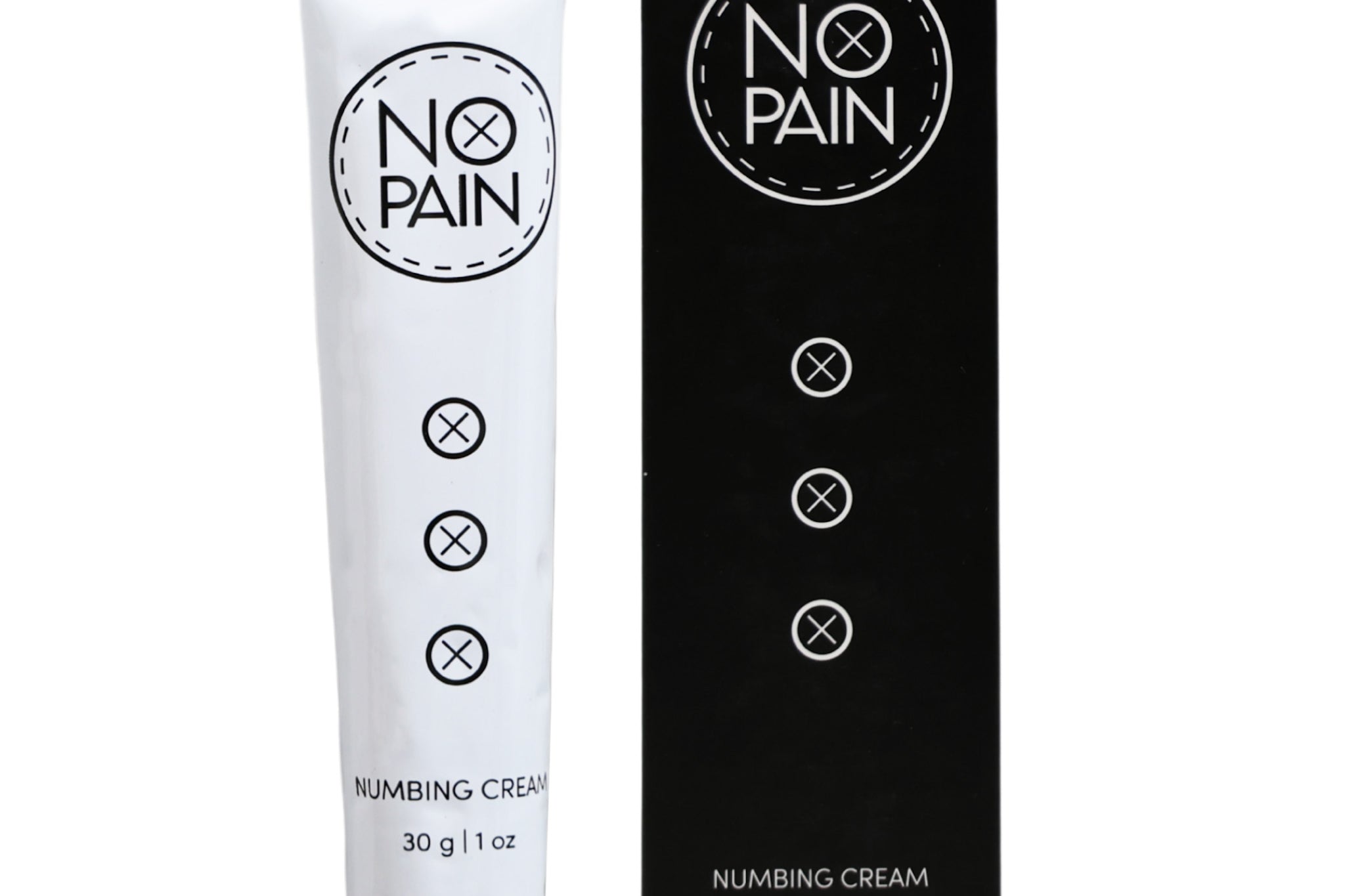
No Pain Tattoo Numbing Cream
Double the lidocaine, 2 to 4 hours of numbing, built for tattoo sessions.
How Long Does EMLA Actually Last on a Tattoo?
The packaging points to one to two hours of anesthesia after a 60 minute application. On intact skin in a clinic, that's a reasonable claim.
In a tattoo chair, plan on 30 to 45 minutes of real relief. That's not a shot at a competitor. It's just what happens when you change the conditions:
- The skin opens. The second your artist breaks the surface, that sealed reservoir of anesthetic you spent an hour building is no longer sealed.
- Blood and plasma flush it out. The weeping that comes with tattooing physically carries lidocaine back up and out of the skin.
- Wiping takes some with it. Your artist wipes the area constantly, and every wipe removes a little more.
- Circulation speeds up. Trauma pulls blood flow toward the surface, and more blood flow clears lidocaine away from the nerve endings faster.
- You started with less. A shallower reserve at 2.5% runs dry sooner than a deep one at 5%.
Which is why you hear the same story from so many people. The outline feels like nothing. Then somewhere in the shading the tattoo shows up all at once, and it's a rough surprise. Nothing was wrong with the tube. A 2.5% cream did what a 2.5% cream does. If your numbing has faded early before and you were never sure why, we broke down every cause in why your numbing cream isn't working.
Already Own a Tube? Know the Ceiling
Plenty of people reading this already have EMLA in a drawer. If you're going to use it, use it the way its own label says, because most people don't and then blame the cream.
EMLA's instructions are short. A thick layer on intact skin, covered with an occlusive dressing, left in place for at least an hour for minor work or two hours for anything bigger. The occlusion is the step people skip and the one that matters most. An uncovered topical anesthetic loses most of its effect before it ever reaches the nerve endings.
Do all of that correctly and here is what the label itself says you get: anesthesia that builds for up to about three hours under the dressing, then persists one to two hours after removal. On intact skin. Those are ceiling numbers, not floor numbers, and they were measured on skin nobody was tattooing.
Which is the whole point. Perfect technique on a 2.5% cream still delivers 2.5%. You can control how much of the lidocaine in the tube reaches your nerves. You can't control how much lidocaine is in the tube.
Two safety notes regardless of what you use. Don't reapply EMLA to broken skin partway through a session. It isn't formulated for open skin, and putting an anesthetic on a freshly tattooed area changes how much of it gets absorbed into your bloodstream, which is not something to improvise with. And patch test any topical anesthetic 24 hours beforehand. Any product can cause a reaction in someone, ours included. A simple patch test is the easiest way to find out how your skin responds before it matters.
What We'd Use Instead
Our numbing cream works for plenty of things, and the label says so: microblading, piercings, waxing, microneedling, laser treatments, tattoo removal, injections. But it was built for one situation in particular, which is sitting still for a long tattoo. That's what drove every decision in the formula.
Before the session: No Pain Tattoo Numbing Cream
5% lidocaine, the FDA maximum for over the counter. Applied 90 to 120 minutes ahead of your appointment under plastic wrap, it gives you 2 to 4 hours of effective numbing, which covers most sessions start to finish.
Application is where people go wrong, so here is the whole routine. It starts the day before.
The day before your appointment
- Spot test. Put a small amount on a discreet patch of skin, inner bicep or thigh. Mild redness is normal. Stop if you get anything stronger than that.
- No alcohol for 24 hours. Alcohol thins your blood and reduces the effectiveness of any topical anesthetic.
90 to 120 minutes before your appointment
- Cleanse. Wash the area to be tattooed and dry it thoroughly.
- Wipe with an alcohol pad and let it dry. Optional, but it helps.
- Prime. Thin layer of cream, rubbed all the way in.
- Saturate. Thick second layer, 2 to 3mm, over the same area. Don't rub this one in. It should sit on top of the skin like frosting on a cake.
- Cover. Plastic wrap, tight, with the entire area sealed. This keeps the cream moist and drives the lidocaine into the skin.
- Wait. 90 minutes for shorter or lighter sessions. 120 or more for anything long or intense.
- Wipe off with a dry paper towel, not an alcohol wipe. Alcohol constricts the pores and can pull anesthetic back out right before you need it. Your artist starts immediately after.
Full instructions for every product are on our how to use page, and our step by step application guide goes deeper on the why behind each step.
Use before your session
No Pain Tattoo Numbing Cream
★★★★★ 4.8 out of 5 (100+ reviews)
- 5% lidocaine, double the lidocaine in EMLA
- 2 to 4 hours of numbing from one application
- Built for full length sessions, not needle sticks
$30.00 · 30g / 1oz
Shop No Pain Tattoo Numbing Cream →During the session: No Pain Tattoo Numbing Spray
This is the part EMLA has no answer for. Once the outline is done and the skin is open, you need something formulated for broken skin instead of a pre procedure cream stretched past what it was made for.
Our Numbing Spray pairs 5% lidocaine with a vasoconstrictor, which tightens the vessels at the surface. That does three jobs at once. Less pain, less bleeding, less swelling. And because you're bleeding less, the anesthetic stays where your artist put it instead of washing straight back out.
- Artist wipes the area clean.
- Spray it directly onto the broken skin.
- Wrap with plastic for 12 minutes or more.
- Wipe the excess, artist gets back to work.
- Reapply on later passes as needed. No rewrap required after the first one.

Use during your session
No Pain Tattoo Numbing Spray
★★★★★ 4.8 out of 5 (20+ reviews)
- Safe on broken skin, unlike EMLA
- Lidocaine plus a vasoconstrictor: less pain, less bleeding, less swelling
- Reapply mid session with no rewrap needed
From $24.00
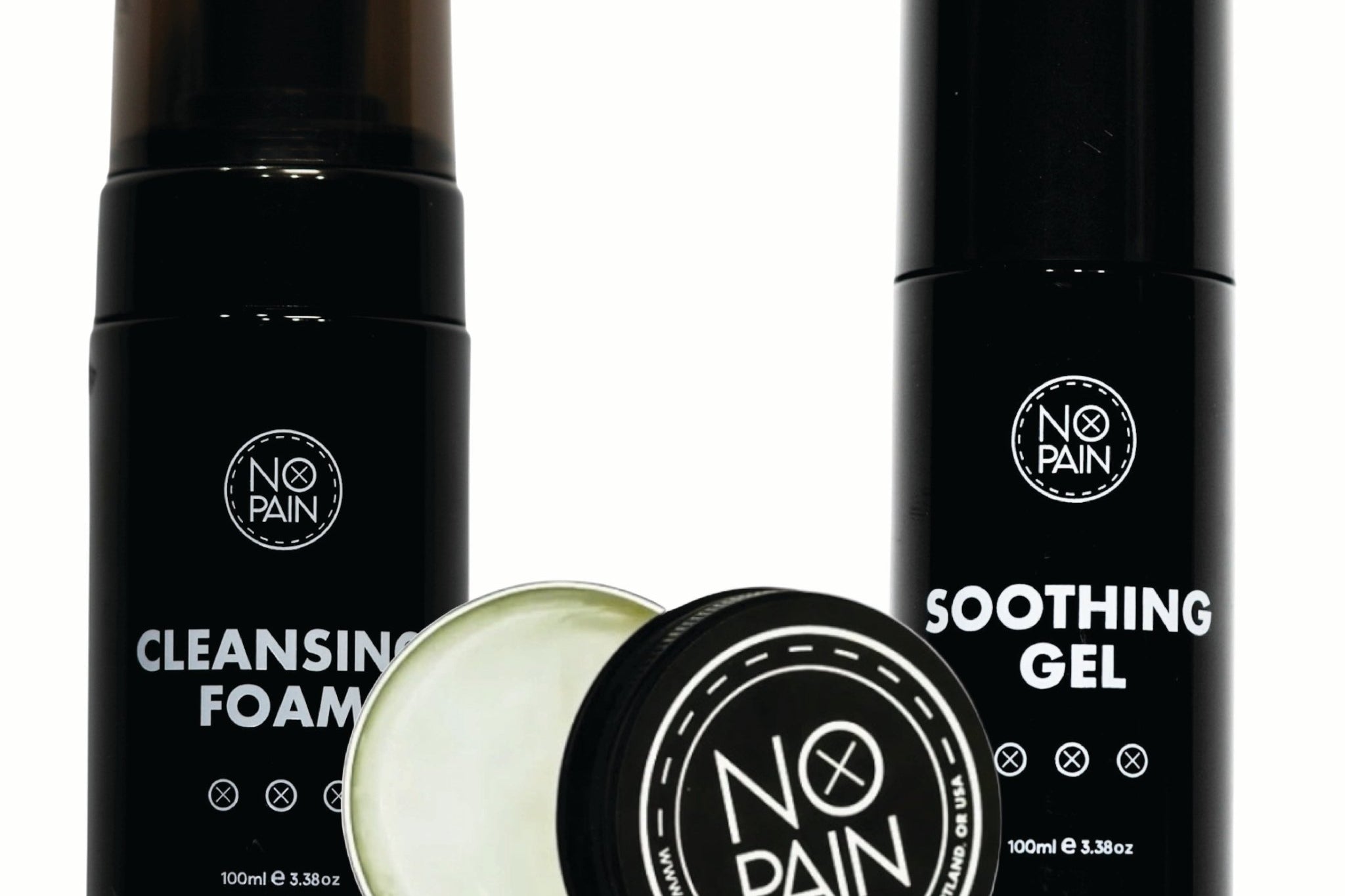
Shop No Pain Tattoo Numbing Spray →Cream before, spray during. That combination is what gets people through a five hour rib or spine session, and it's a fundamentally different approach than stretching a clinical needle stick cream past its design limits. If you're still deciding where to put the piece, our tattoo pain chart ranks every body part from worst to easiest.
The Honest Verdict
EMLA is a legitimate, well studied product. If you're getting something small and fast, a fineline piece on your forearm that takes twenty minutes, EMLA applied correctly will probably carry you through it without much complaint.
Go any longer and the math stops working. Half the lidocaine, a shorter window, and nothing you can safely reapply once the skin opens up means you'll spend most of your appointment feeling everything. If you're going to sit for hours and pay for the privilege, use something built for the hours.
Weighing up other brands too? We ran the same breakdown on No Pain Tattoo vs. HUSH, and if you want the theory behind why any of this works, start with the Numbing Cream Bible.
Frequently Asked Questions
Does EMLA cream work for tattoos?
Yes, but not for long. EMLA numbs intact skin well, and most people feel real relief at the start of a session. In actual tattoo conditions it gives you roughly 30 to 45 minutes before bleeding, wiping, and increased blood flow clear it out. Workable for very short tattoos, not enough for longer ones.
How much lidocaine is in EMLA?
EMLA contains 2.5% lidocaine and 2.5% prilocaine. Its lidocaine concentration is half that of a 5% lidocaine cream like No Pain Tattoo Numbing Cream, which is the strongest strength allowed over the counter in the US.
How long before a tattoo should I apply EMLA?
EMLA's label calls for at least 60 minutes under an occlusive dressing. For a tattoo, longer is better, and most people get more out of it at 90 minutes under tight plastic wrap. For comparison, No Pain Tattoo Numbing Cream goes on 90 to 120 minutes before the appointment.
Is EMLA stronger than 5% lidocaine cream?
No. EMLA delivers 2.5% lidocaine, and a 5% lidocaine cream delivers twice that. EMLA only reaches 5% total anesthetic content by adding prilocaine, which acts more slowly, is weaker, and carries the surface area restrictions behind EMLA's methemoglobinemia warnings.
Can I reapply EMLA during my tattoo?
No. EMLA is not formulated for broken skin, and applying it to a freshly tattooed area increases systemic absorption. For mid session relief, use something made for open skin. No Pain Tattoo Numbing Spray combines lidocaine with a vasoconstrictor and goes directly onto the tattooed area under wrap for 12 minutes or more.
Do I need a prescription for EMLA?
In the United States, EMLA cream is a prescription product, though similar lidocaine and prilocaine formulations sell over the counter in some other markets. A 5% lidocaine cream is available over the counter in the US with no prescription.
Does numbing cream affect how a tattoo heals or how the ink settles?
Applied correctly to clean, dry skin and wiped off before the session starts, a topical anesthetic doesn't change how the ink sits or how the tattoo heals. What matters is telling your artist you used one, since numbed skin can feel a little different to work on, and then following a proper aftercare routine once you're home.
Will my artist let me use numbing cream?
Most will, but ask first. Some artists have strong opinions about product and timing, and turning up with wrapped, prepped skin unannounced is a good way to start the appointment badly. A quick message a few days ahead sorts it out.
Get both, save $10.80
Numbing Cream and Spray Bundle
Cream before your session, spray once the skin opens. It's the exact combination this article recommends, and it's what carries people through the long sittings EMLA can't cover.
$43.20 $54.00
Shop Cream + Spray Bundle →About the author. Michael Hollman is the founder of No Pain Tattoo and a lifelong tattoo collector (since the late '80s). He started the company after finding other products were substandard and quit early, and built the range around the concentrations and application methods that hold up in an actual tattoo session.
This article is general information, not medical advice. Topical anesthetics are real drugs with real limits. Patch test before first use, follow the label on whatever product you use, don't exceed the recommended amount or surface area, and talk to a doctor first if you're pregnant, nursing, taking other medication, or living with a heart, liver, or blood condition.