



Most tattoo damage happens after the needle stops. The artist does their part in the studio. What happens over the next two weeks determines whether the healed tattoo looks like the fresh one. These are the five mistakes that reliably produce patchy ink, faded color, and results that need touching up, and what to do instead.
In this article
- Mistake 1: Over-moisturizing and smothering the skin
- Mistake 2: Picking, scratching, or peeling
- Mistake 3: Soaking in water
- Mistake 4: Sun exposure on a healing tattoo
- Mistake 5: Using the wrong products
- Frequently asked questions
Mistake 1: Over-Moisturizing and Smothering the Skin
The instinct to pile on moisturizer makes sense. Hydration helps healing, so more must be better. It is not. The healing skin needs moisture, but it also needs airflow. A heavy layer of thick ointment seals the surface against both.
When the skin cannot breathe, a few things happen. The surface stays too wet, which softens the delicate tissue and makes it more vulnerable to bacteria. The occluded environment encourages the kind of moisture-trapped bacteria that cause folliculitis and rashes on healing skin. And thick petroleum-based products in particular sit on top of the skin rather than absorbing, which means they are doing nothing useful while blocking the air exchange the wound needs.
The fix is a thin layer of a purpose-made gel or balm, applied consistently but not excessively. After washing, pat the skin fully dry and apply a product thin enough to create a slight sheen, not a greasy coat. The skin should feel comfortable and moisturized, not slick. For most people, two to three applications a day is adequate. For the first few days, a lightweight gel that absorbs quickly without occluding the surface keeps the skin hydrated while allowing normal healing to proceed. For a full week-by-week breakdown of how the skin heals and what it needs at each stage, see the healing process guide.

Absorbs quickly without trapping heat or blocking airflow. Keeps the raw first few days hydrated without the smothering effect of thick ointments, reducing the risk of bacteria, rashes, and overworked skin.
Mistake 2: Picking, Scratching, or Peeling
Around days five to seven, the damaged outer epidermis starts to shed. The peeling can look dramatic, with semi-transparent flakes lifting from the surface. The itch that comes with it can be intense. Both create a strong temptation to scratch, pick, or pull the flakes off manually.
This is the most damaging mistake in the list, and it is a common one. The peeling skin is not ready to separate yet. Those flakes are still attached to the dermis below, which is where the ink sits. Pulling them off early rips ink out of the dermis, leaving pale patches, faded lines, and soft spots in the design. That damage is permanent. The healed tattoo will have visible gaps that require a touch-up to fix, and even a touch-up cannot always restore the original crispness.
Scratching with fingernails does the same thing with the additional problem of introducing bacteria into skin that is not yet fully closed. The healing surface in weeks one and two is still permeable. Bacteria from under the fingernails can take hold in this environment in a way they cannot on intact skin. For a detailed breakdown of what normal peeling looks like versus what to watch for, see the peeling guide. For the warning signs of infection specifically, see the infected tattoo guide.
The substitute for scratching is firm tapping or patting with clean hands. It is less satisfying but does not damage the skin. Keeping the surface well moisturized also reduces the itch by preventing the dryness and tightening that amplifies nerve signals during the peak peeling phase. From around day three as peeling begins, a richer balm helps the new skin form more smoothly and can reduce the severity of the itch.

Shea butter balm for the peeling and milky phase. Reduces the dryness and tightening that amplify itch, helping the new skin layer form smoothly without the thick scabbing that pulls ink.
Mistake 3: Soaking in Water
Showering over a healing tattoo is fine. Submerging it is not. The distinction matters more than most people realize before their first tattoo.
When a healing tattoo is submerged in water for an extended period, the skin absorbs moisture into the tissue and begins to macerate. The soft, waterlogged surface loses its structural integrity. Ink that has not yet fully settled in the dermis can migrate and blur. The peeling outer layer, already fragile, separates more easily when saturated, which again risks pulling ink. For baths and pools specifically, there is the additional problem of contamination: bath water carries bacteria from the body, and pool water contains chlorine and other chemicals that irritate and dry healing skin. Ocean water carries its own bacterial load and salt that draws moisture out of the wound.
The rule is short showers for the first two to four weeks, or until the tattoo is fully surface-healed. No baths, no pools, no ocean, no hot tubs. When you shower, keep the water lukewarm rather than hot, and do not let it run directly onto the tattoo for extended periods. Pat dry with a paper towel rather than rubbing with a bath towel. For a full breakdown of when each activity is safe again, see the swimming and soaking guide.
Mistake 4: Sun Exposure on a Healing Tattoo
UV radiation breaks down the pigment molecules in tattoo ink. On intact skin, this is a gradual process. On healing skin, it is accelerated and the consequences are more severe. The new epidermis forming over the tattoo in the first two to four weeks is thinner and more permeable than mature skin. It offers less natural protection against UV, and the ink below is more accessible. Sun exposure during this window can bleach color before the tattoo has even finished healing.
A sunburn on a new tattoo is particularly damaging. The inflammation and blistering that come with a burn disrupt the healing tissue directly and can destroy ink in the affected area. Color tattoos are more vulnerable than black work, but all ink is susceptible to UV damage at this stage.
For the first three to four weeks, keep the tattoo covered with clothing when outdoors. After healing is complete, SPF on exposed tattoos is one of the most effective long-term preservation strategies available. Color fades faster on tattoos that are regularly sun-exposed without protection. For a full guide to keeping ink looking its best over the years, see the fading guide.
Mistake 5: Using the Wrong Products
The most common wrong products are petroleum-based ointments, fragranced body lotions, and anything with harsh active ingredients not designed for broken or sensitive skin.
Petroleum ointments like Vaseline and early-generation Aquaphor work by forming an occlusive barrier. That is useful for very short windows immediately after tattooing, but for ongoing aftercare it seals too aggressively. The skin cannot breathe, pore-clogging becomes a problem, and the surface can develop milia and rashes that complicate healing. Fragrance is an irritant on sensitive healing skin. The nerve endings in and around a healing tattoo are raw and reactive. Fragranced lotions, alcohol-based toners, and antibacterial washes with harsh surfactants all provoke irritation that slows healing and can cause a contact dermatitis reaction on top of the wound.
Purpose-made tattoo aftercare products are formulated with the specific conditions of healing tattooed skin in mind: lightweight, non-occluding, free from fragrance and harsh actives, with ingredients that actively reduce inflammation rather than simply moisturize. The right products do not just avoid causing problems. They actively support the conditions the skin needs to heal cleanly and hold ink well. For a specific comparison of common products people use, see the scabbing guide, which covers how product choice directly affects whether the skin sheds cleanly or develops the thick scabs that pull ink.
Frequently asked questions
What should you not do after getting a tattoo?
The five things that most reliably damage healing tattoos are over-moisturizing with thick ointments, picking or scratching the peeling skin, soaking in baths or pools, exposing the fresh tattoo to direct sunlight, and using fragranced or petroleum-heavy skincare products. Of these, picking at the peeling skin and soaking cause the most immediate ink damage. Sun exposure is the most serious long-term threat, both during healing and for the rest of the tattoo's life.
How do I know if my tattoo is healing correctly?
Normal healing has redness and swelling in the first 48 to 72 hours, which then subsides. Light weeping of plasma and some ink in the first day or two is normal. Peeling begins around days five to seven and may continue for up to two weeks. There may be a milky, cloudy appearance during the peeling phase as the new epidermis forms over the ink. The tattoo should look clearer and more settled by weeks three to four. Signs that something is wrong include worsening redness after day three, discharge that is colored or has an odor, fever, or bumps and rashes that do not resolve. For the full infection warning sign list, see the infected tattoo guide.
How long should I follow aftercare instructions?
The active aftercare window is roughly two to four weeks, until the surface is fully healed and the skin no longer feels tender or looks inflamed. The no-soaking and no-sun rules apply for this full period. Product application, specifically the gel-then-balm routine, is most important in the first two weeks but continuing to moisturize and apply SPF on exposed tattoos past that point protects the ink long-term. Once healed, the main ongoing maintenance is sunscreen and hydration.
What happens if you over-moisturize a tattoo?
Applying too much moisturizer, or the wrong kind, prevents the skin from breathing during healing. This creates conditions that favor bacterial growth, causes the surface to stay too wet, and can produce rashes, folliculitis, or milia over the healing tattoo. It can also slow the normal shedding process, as the skin needs to dry slightly to complete its cycle. A thin, absorbable layer two to three times a day is sufficient. The product should leave the skin comfortable and hydrated, not greasy or slick.
Can using regular lotion ruin a tattoo?
Fragrance-free, alcohol-free lotions are generally acceptable but not ideal for the first two weeks. Fragranced lotions are a direct problem: the fragrance chemicals are common skin irritants and the healing surface is particularly reactive to them. Petroleum-heavy body butters and ointments occlude the skin too aggressively. For the healing phase, a product formulated specifically for tattooed skin performs better because it is calibrated to the specific requirements of the wound. Once the tattoo is fully healed, any fragrance-free, gentle daily moisturizer is fine for routine skin hydration.
Does poor aftercare cause a tattoo to need touching up?
Yes, and it is the main reason tattoos need touch-ups outside of artist error. Thick scabbing from under-moisturizing pulls ink out of the dermis when the scabs separate. Picking or peeling skin during healing does the same. Sun exposure during healing can bleach color before it has settled. Each of these leaves visible patches, faded sections, or soft lines in the healed tattoo. Good aftercare, specifically keeping the skin hydrated to prevent thick scabs, not picking, and avoiding UV, directly reduces the likelihood of needing corrective work.
Everything Your Skin Needs to Heal Right
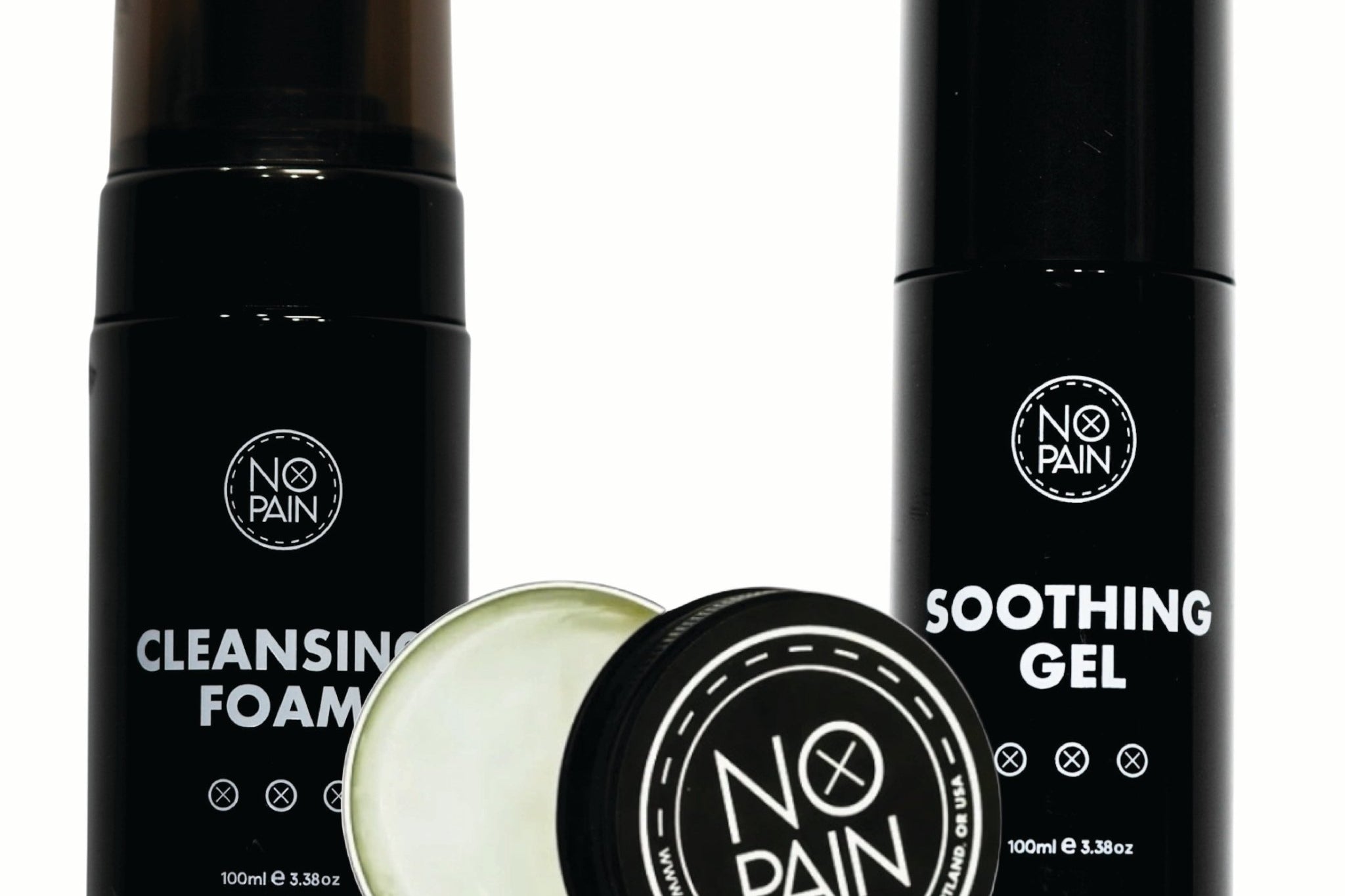
Cleansing foam, soothing gel, and aftercare balm. Each product covers the stage it's designed for, so you're not guessing what to use or when.
Shop the Aftercare Bundle →Formulated at Historic Tattoo in Portland, Oregon. 100% money-back guarantee.