

The outer arm, outer thigh, upper back, shoulder cap, and calf are the consistently easiest placements. What they share: good muscle and tissue coverage, thicker epidermis, and fewer superficial nerve endings. If you want to understand why those zones hurt less, or if your design belongs somewhere that doesn't make that list, here's what you need to know.
In this article
- Why some placements hurt less
- The least painful tattoo placements
- What makes high-pain spots hurt more
- Getting a tattoo anywhere you want
- Frequently asked questions
Why Some Placements Hurt Less
Tattoo pain comes from needles penetrating through the epidermis into the upper dermis. The same depth, every placement. What changes is what's underneath that skin and how many pain-sensing nerves are in the area.
Tissue depth between skin and bone. Bone conducts vibration. When the needle works over skin that sits directly above bone with minimal tissue between them (ribs, spine, shin, collarbone, skull), the vibration resonates in a way that's hard to adapt to. Areas with substantial muscle or fat beneath the skin absorb that vibration and damp the sensation considerably.
Nerve density. Some areas of the body have high concentrations of sensory nerves close to the skin surface. The inner arm, the armpit, the inner thigh, the back of the knee, the hands and feet. These areas are wired to detect fine sensation because they need to be. Areas like the outer thigh and outer bicep have lower superficial nerve density, which is why the pain registers as duller and more manageable.
Skin thickness. The epidermis is thicker in some areas than others. Thicker skin means more distance between the needle and the nerve endings underneath. The outer forearm, for instance, has a noticeably thicker epidermis than the inner forearm. That difference shows up in the pain level.
Skin mobility. Loose, flexible skin that can move with the needle is less painful than skin held taut over a bone or tendon. The outer thigh sits over mobile tissue; the shin sits directly over the tibia with almost no slack.
The Least Painful Tattoo Placements
These are the placements that consistently come up at the low end of the pain scale. For a ranked overview of every body part, see the tattoo pain chart.
Outer arm (outer bicep and outer forearm): 3 to 4 out of 10. The most forgiving placement on the body. The outer bicep has the deltoid and brachialis muscles providing deep cushion, and the skin here is thick and stable. The outer forearm benefits from the extensor muscle group running underneath; there's good tissue between skin and the bones of the radius and ulna. The pain tends to feel like a consistent scratch, and most people find it easy to sit through long sessions here. Both sides wrap easily, which makes it an ideal zone for numbing cream if you want it.
Outer thigh: 3 to 5 out of 10. The outer thigh is one of the largest low-pain canvases on the body. The vastus lateralis (the outermost quad muscle) provides substantial padding, the skin is thick, and there are no major superficial nerve concentrations on the lateral thigh. It's a popular choice for large, detailed pieces because both the pain and the healing tend to be more manageable than most other large-canvas options. The pain level rises noticeably once you move toward the inner thigh, where the femoral nerve branches run close to the surface.
Calf: 4 to 5 out of 10. The gastrocnemius muscle runs the full length of the back and sides of the calf, providing solid cushion. It's a consistently low-pain spot that can accommodate a fair amount of work before fatigue sets in. The caveat: pain increases toward the shin (tibia is close to the surface at the front) and toward the back of the knee (a high-nerve concentration). Work done on the back and outer calf stays in the comfortable range.
Shoulder cap (deltoid): 4 to 5 out of 10. The deltoid muscle at the top of the arm provides good cushion over the humeral head. It's a classic placement for a reason: enough tissue to keep the pain manageable, a stable surface for the artist, and low healing complications. The pain rises toward the back of the shoulder as you approach the scapula and toward the front as you approach the chest. The deltoid cap itself, though, sits at the low end.
Upper and lower back (away from the spine): 4 to 6 out of 10. The broad muscle groups of the upper and lower back (trapezius, latissimus dorsi, erector spinae) provide meaningful cushion when you're working in the fleshy areas away from the spine and shoulder blades. The skin is thick, the canvas is large, and most people find it easier to tolerate back work than they expect. The pain rises steeply near the spine (bone conduction) and near the shoulder blades (periosteum proximity). Stay in the muscle zones and it's manageable.
What Makes High-Pain Spots Hurt More
It helps to understand the contrast, because the same logic that explains why the outer arm is easy explains why certain other spots are genuinely difficult.
Placements like the ribs, spine, shin, collarbone, sternum, hands, feet, and head hurt for identifiable anatomical reasons: minimal tissue between skin and bone, high concentrations of sensory nerve branches close to the surface, and in some cases (hands, feet, spine) nerve architecture that doesn't adapt well to sustained stimulation. These aren't just subjective; there are structural reasons why a rib tattoo hurts more than a bicep tattoo at the same depth and speed.
The inner arm, inner thigh, armpit, and back of the knee hurt because the nerves in those areas are dense and close to the skin. The area needs fine sensation to function, and the tattooing process activates those receptors in an unavoidable way.
This isn't a reason to avoid painful placements. It's a reason to go in knowing what to expect, and to plan accordingly. For a full zone-by-zone pain breakdown across the whole body, the placement guide covers everything.
Getting a Tattoo Anywhere You Want
If your design belongs on your ribs, sternum, foot, or another notoriously painful spot, you're not stuck choosing between your vision and your comfort. Topical numbing cream changes the math in a meaningful way.
A maximum strength lidocaine cream applied correctly (thick coat, cling film wrap, 90 to 120 minutes before the appointment) blocks sodium channels in the pain-sensing nerve fibers near the skin surface. That's the mechanism that makes a 9 out of 10 placement feel like a 2 or 3 for most people. It doesn't remove all sensation; you'll still feel pressure and vibration, but the sharp, burning pain that makes difficult placements so hard to sit through is largely gone.
One thing worth noting: thin-skin placements like the ribs and feet often absorb numbing cream faster than thick-skin areas, which means you sometimes get even better results in the spots you need it most. For everything you need to know about applying it correctly, see the tattoo prep guide.

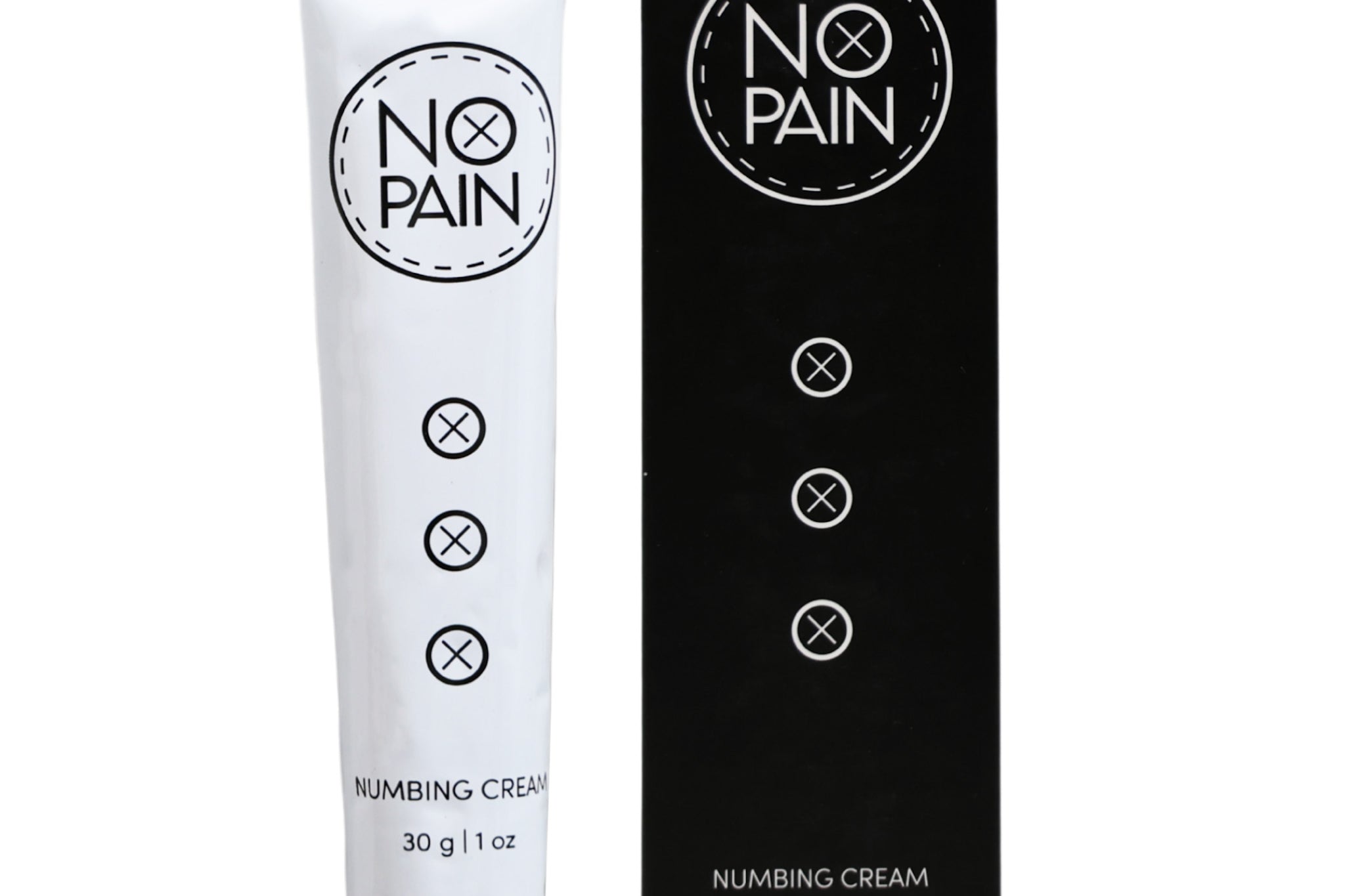
Maximum strength lidocaine in a thick, slow-absorbing base that lasts 2 to 4 hours from wrap removal. Apply one thick coat, wrap with cling film, wait 90 to 120 minutes. Gets your tattoo where you actually want it, not just where it won't hurt. 100% money-back guarantee.
Frequently asked questions
What is the absolute least painful place to get a tattoo?
The outer bicep is the most consistently cited low-pain placement. Good muscle depth, thick skin, and relatively few superficial nerve endings make it the easiest canvas for most people. The outer forearm and outer thigh are close seconds. Pain tolerance varies between individuals, but these placements sit at the low end for almost everyone, regardless of their baseline sensitivity.
Does placement matter more than pain tolerance for how much a tattoo hurts?
Both matter, but placement has a more predictable effect. The difference between a rib tattoo and an outer arm tattoo is structural: the nerve anatomy and tissue depth are different regardless of who's in the chair. Pain tolerance shifts that experience up or down from its baseline, but it can't close the gap entirely. Someone with high pain tolerance will still find the ribs harder than the outer arm. Someone with low pain tolerance will still find the outer arm easier than the ribs. If pain is a concern, placement is the most controllable variable, more so than trying to raise your baseline threshold. For more on managing low pain tolerance, see the low pain tolerance guide.
Is a first tattoo less painful in a certain spot?
Yes, placement choices genuinely affect how your first session goes. The outer arm or outer thigh let you focus on the experience without the pain becoming the main event. That's useful when you're also managing novelty, nerves, and not knowing what to expect. A first tattoo in a difficult placement (ribs, spine, foot) is harder to sit through not just because it hurts more, but because you have no reference point for what the pain will feel like or how long the session will last. Starting somewhere lower-pain gives you a baseline to build from.
Do larger tattoos in low-pain areas still hurt?
Yes, but differently than a small tattoo in a high-pain area. A multi-hour session on the outer arm will introduce fatigue and skin sensitivity that a 45-minute piece doesn't. The nerves become more reactive as a session goes on, and the skin has been worked through repeatedly. So a large back piece or a full outer sleeve involves a different kind of discomfort than a short session: more cumulative soreness than sharp pain. For sessions over two hours, a mid-session numbing spray for broken skin can help maintain the effect when the initial cream window starts to close.
Are there least painful placements that are also easy to hide?
Yes. The outer thigh and upper back are both low-pain and easy to cover with standard clothing. The outer thigh in particular is hidden by shorts of almost any length and visible whenever you choose to show it. The shoulder cap is another option: covered by a t-shirt, visible at the beach. If you want something both low-pain and discreet, those three placements give you the most flexibility. For a full breakdown of placement by visibility, healing, and pain, see the placement guide.
Does numbing cream work on the least painful spots too, or only on hard ones?
It works on any placement where you can apply it and wrap it before the session. Some people use it on low-pain areas simply because they want to be completely relaxed and anxiety-free during the experience. Others save it for placements they know will be harder. There's no rule that it's only for difficult spots. If a zero-pain session sounds better than a mild-pain session, numbing cream makes that possible regardless of where you're getting tattooed.
Get Your Tattoo Wherever You Want It
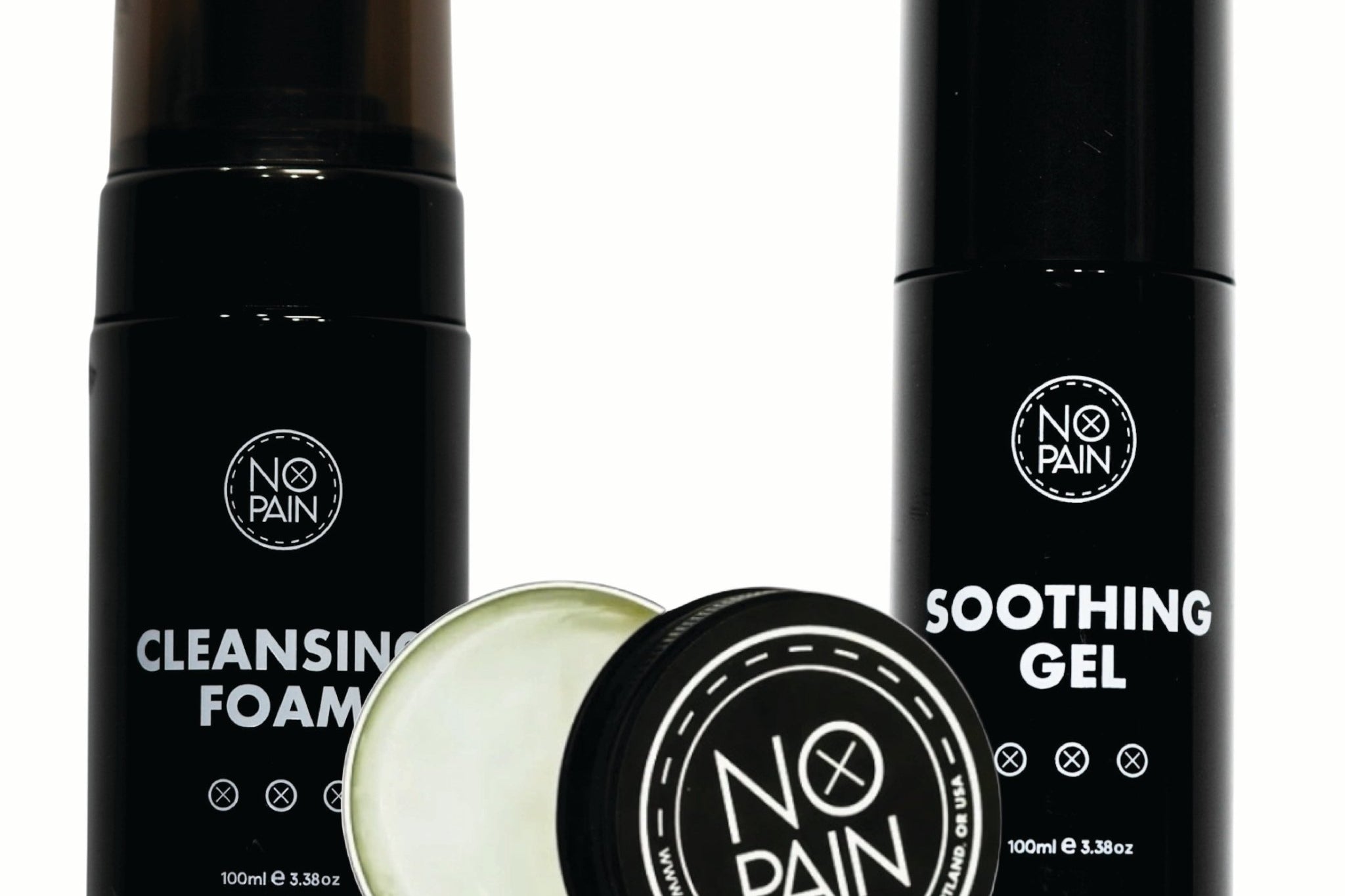
The Comfort Bundle includes maximum strength numbing cream for the pre-session prep and a lidocaine spray for mid-session top-ups on broken skin. Designed for longer sessions and difficult placements. Sit all day with the spray and cream combo.
Shop the Comfort Bundle →$54.00 $43.20 | For Longer Sessions | 100% money-back guarantee.