


A 2023 study out of Lund University in Sweden made headlines with a finding that tattooed people had a 21% higher risk of lymphoma than non-tattooed people. That number spread fast. What spread slower was the context: the study found an association, not a cause. The researchers themselves said they couldn't rule out that people who get tattoos differ in other ways — lifestyle, health history, exposure to other risk factors — that might explain the difference.
That is the honest state of the science right now. There is genuine ongoing research. There is no proven causal link between tattoos and cancer. And the real, documented risk from tattoos — the one that affects a meaningful number of people every year — is infection, not cancer.
Here is what the research actually shows and what it means for anyone making a decision about getting tattooed.
What's in Tattoo Ink — and Why It Raises Questions
The concern about tattoos and cancer starts with ink composition. Tattoo ink is not regulated the same way cosmetics or pharmaceuticals are in most countries. Historically, some pigments — particularly in colored inks — have contained:
- Polycyclic aromatic hydrocarbons (PAHs), found in some black inks, which are known carcinogens in other contexts
- Azo dyes in colored inks, some of which can break down into aromatic amines — compounds linked to bladder cancer in occupational exposure settings
- Heavy metals including nickel, chromium, and cobalt in some pigments
The European Union banned several of these substances under the REACH chemical regulation in 2022, including a large number of azo compounds and PAH-containing pigments. This effectively tightened the ink supply chain for reputable manufacturers across the globe, not just Europe. High-quality inks from established manufacturers today are meaningfully different from what was in circulation a decade ago.
A second concern is ink migration. Studies have confirmed that microscopic particles of tattoo pigment do travel from the skin to regional lymph nodes over time. This is well documented. What is not established is whether this migration causes harm.
The Lymphoma Study: What It Found and What It Didn't
The 2023 Lund University study (Nielsen et al., eClinicalMedicine) examined 11,905 cases of malignant lymphoma in Sweden and found that tattooed people had a 21% higher relative risk of lymphoma overall. Within lymphoma subtypes, diffuse large B-cell lymphoma showed a 30% higher association with tattooing.
These are relative risk numbers, not absolute ones. If the background risk of lymphoma in the general population is roughly 0.02% per year, a 21% relative increase brings that to about 0.024% — still a very small absolute risk.
More importantly, the study has significant limitations the authors acknowledged:
- It found a statistical association, not a causal relationship
- Confounding factors — other lifestyle differences between tattooed and non-tattooed populations — could not be fully controlled for
- The study could not track ink type, color, total surface area, or ink vintage (older, unregulated inks vs. modern formulas)
- A follow-up analysis removing tattoos acquired less than two years before diagnosis (to reduce reverse causation) showed a weaker association
The researchers called for more longitudinal studies with better controls. That is the right conclusion. The study raises a question worth investigating further — it does not answer that question.
Skin Cancer Within Tattoos
There are documented cases of skin cancers — including basal cell carcinoma, squamous cell carcinoma, and melanoma — appearing within tattooed skin. These cases are extremely rare. Dermatologists note that causation is nearly impossible to establish in individual cases: some cancers appear on tattooed skin simply because tattooed skin exists on a large number of people, and cancer can appear anywhere on skin.
One practical concern dermatologists raise is diagnostic difficulty. Dark tattoo ink can obscure early signs of melanoma — the asymmetry, irregular borders, and color changes that clinicians look for. If you have significant tattoo coverage, make sure your dermatologist is aware and performs full-skin exams accordingly. This is a real, manageable concern, not a reason to avoid tattooing.
The Real, Documented Risk: Infection
While the cancer question remains in the realm of ongoing research, infection is the risk that affects people right now. A tattoo is an open wound. If bacteria enters during application or the healing process, the consequences range from painful and prolonged healing to serious systemic infection.
The documented causes of tattoo-related infection:
- Non-sterile equipment or ink (the artist's responsibility)
- Poor aftercare during healing (the client's responsibility)
Infections can permanently scar the tattoo, damage the design, and in serious cases require medical treatment. This is not a theoretical risk — it happens regularly. And unlike the cancer question, it is entirely preventable with the right artist and the right aftercare.
How to Reduce Every Known Risk
Choose a licensed artist in a regulated studio. A professional artist uses sterile, single-use needles, medical-grade equipment sterilization, and high-quality inks from reputable manufacturers. Ask about their sterilization process. A legitimate artist welcomes the question.
Ask about ink sourcing. Reputable artists use inks from established manufacturers who have updated their formulas to comply with modern safety standards. If an artist can't tell you what brand of ink they use, that's a signal.
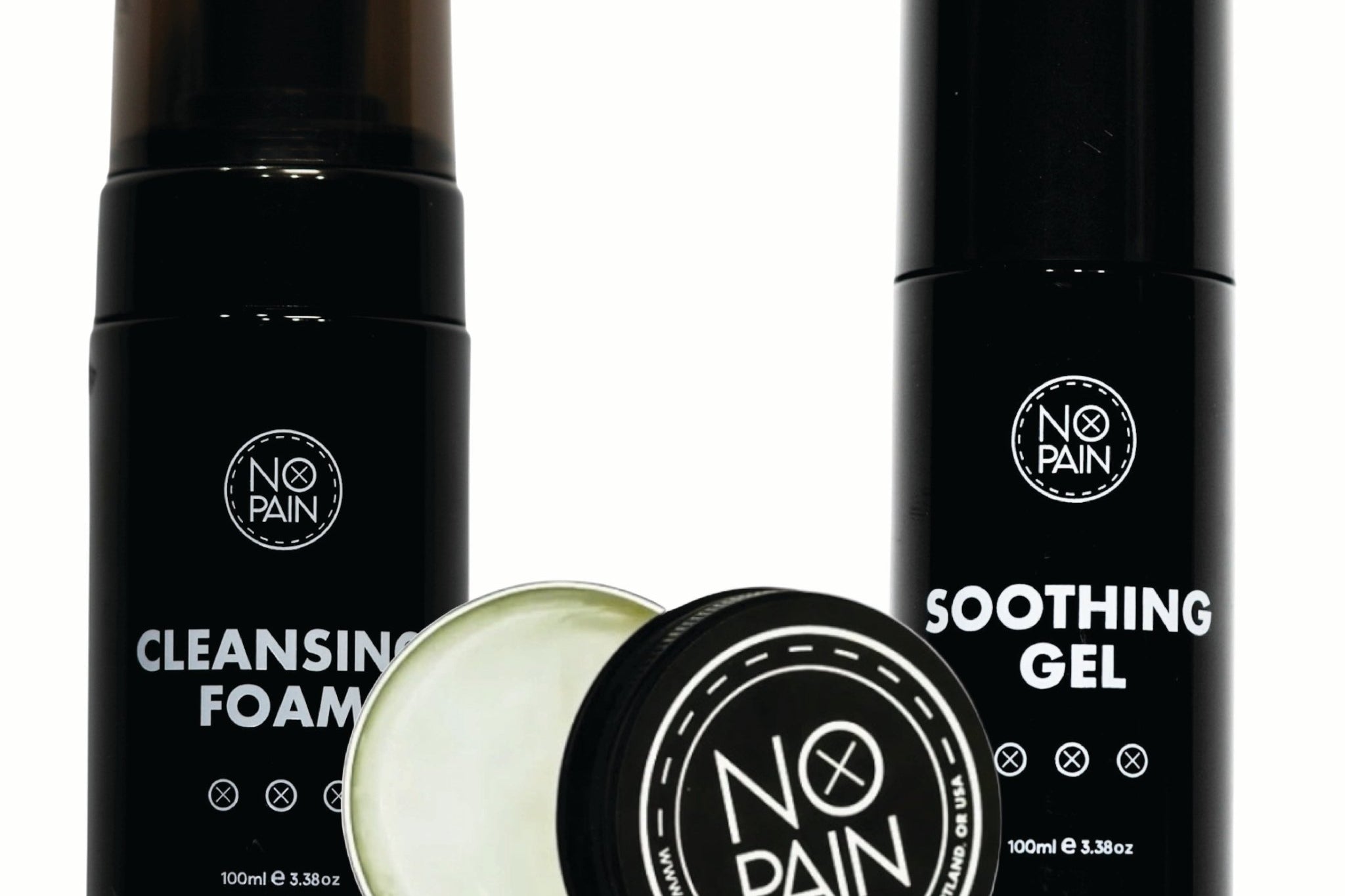
Take aftercare seriously. The healing phase is when infection risk is highest. Clean the tattoo gently 2 to 3 times a day with fragrance-free soap. Apply soothing gel for the first 3 days to reduce inflammation. Transition to aftercare balm from day 3 onward to keep the skin barrier healthy and healing without occlusion.

Get regular skin checks. If you have significant tattoo coverage, tell your dermatologist. Make sure they perform thorough skin exams and know where your ink is. This is the practical step that addresses the diagnostic-difficulty concern directly.
The Aftercare Bundle covers the full healing protocol — gentle soap, soothing gel for the inflammatory phase, and aftercare balm for the repair phase.

FAQ
Do tattoos increase cancer risk?
There is no proven causal link between tattoos and cancer as of current research. A 2023 Swedish study found a statistical association between tattoos and lymphoma risk, but the researchers themselves noted they could not establish causation and called for more research. The scientific consensus has not shifted to saying tattoos cause cancer.
What did the 2023 tattoo cancer study find?
The Lund University study found that tattooed people in their sample had a 21% higher relative risk of lymphoma compared to non-tattooed people. It could not determine whether this was caused by tattooing itself or by other differences between the populations studied. The study was observational, not experimental.
Can tattoo ink cause lymphoma?
This has not been established. Tattoo ink particles do migrate to lymph nodes — this is documented — but whether that migration causes lymphoma is not proven. Research is ongoing.
Are tattoos safe from a cancer perspective?
The current scientific consensus does not classify tattoos as a known cancer risk. Regulatory changes in the EU and increased quality standards from reputable ink manufacturers have reduced the presence of the most concerning chemical classes in modern inks. If you are concerned, choose an artist who uses inks from established manufacturers and get regular dermatological skin checks.
Can tattoos hide skin cancer?
Dark tattoo ink can make it harder to spot early signs of melanoma — irregular borders, color changes, asymmetry. This is a real and practical concern. If you have significant tattoo coverage, tell your dermatologist and ensure they perform thorough full-skin examinations that account for tattooed areas.
What is the biggest real risk from tattoos?
Infection. A tattoo is an open wound, and if bacteria enters during application or the healing phase, the consequences can be serious. This risk is well documented, affects people regularly, and is entirely preventable with a licensed artist using sterile equipment and a proper aftercare routine.