
Technically, a person with a tattoo machine could copy any image. But a professional tattoo artist will not directly copy another artist's custom tattoo design, and a reputable one will tell you no if you ask. This is not about being difficult. It is about how the tattoo industry works, what custom work actually means, and what you lose when you try to replicate something that was designed for someone else. Here is the full picture, including the one exception where copying is completely fine.
In this article
- Why artists won't copy another artist's custom work
- The exception: flash designs
- Inspiration vs. imitation
- How to use references in a consultation
- Showing up prepared
- Frequently asked questions
Why Artists Won't Copy Another Artist's Custom Work
It is an ethical violation within the tattoo community. A custom tattoo is a one-of-a-kind piece of art. The original artist spent time developing the concept, the composition, the line work, and the color, often in close collaboration with a specific client. Asking another artist to reproduce it without the original creator's permission is plagiarism in the same way copying a painting or a photograph is. The tattoo world is a relatively small professional community, and direct copying is taken seriously. Artists who do it develop a reputation for it.
It may be a copyright violation. Original tattoo designs are protected by copyright law in the same way other visual art is. The artist who created the design owns it. Reproducing it without their permission is technically infringement. Legal action is rare in practice, but the protection exists and the risk is real, particularly as the tattoo industry has become more visible and well-documented online.
It is a disservice to you as the client. The original design was built around a specific person: their body proportions, the placement they chose, their personal story and meaning. A direct copy on your body will never fit the same way. The composition, the flow, the way the design interacts with the muscle and bone underneath: all of that was calibrated for someone else. You end up with a lesser version of something that was never meant for you.
The Exception: Flash Designs
Flash is the term for pre-drawn, repeatable tattoo designs that artists create specifically to be tattooed multiple times. Walk into most shops and you will see flash on the walls or in a binder: traditional eagles, roses, daggers, pin-up figures, geometric shapes, and so on. Flash is designed to be reproduced. The artist who drew it intended for it to be tattooed on many clients. There is no ethical issue with asking for flash, and many artists enjoy tattooing it.
Flash is also how a lot of people get excellent tattoos without the lead time and cost of a fully custom design. If you see a piece of flash you love, it is completely appropriate to ask for it.
Inspiration vs. Imitation
The distinction that matters in practice is between using something as inspiration and asking for a direct copy.
Imitation is bringing in a single image and saying "I want exactly this." The artist is being asked to reproduce someone else's custom work with no room for their own interpretation or skill.
Inspiration is bringing in a collection of references and saying "I love the elements in these pieces. The subject matter in this one, the color palette in that one, the linework style in this other. Can you use these to create something original for me?" That is the conversation every good artist wants to have. You are giving them raw material to work with and trusting their craft to synthesize it into something new.
The difference matters because the second approach produces a better tattoo. An artist who is building something original, using their own eye to combine the elements you love, will create a piece designed for you, not a copy of something designed for someone else.
How to Use References in a Consultation
Coming in with good references makes the consultation more productive and the final design more likely to match what you had in mind. A few principles:
Bring multiple images, not one. Three to five references that each show something specific you like gives the artist more to work with and makes it clear you are interested in elements, not a direct copy. One image with "I want this exactly" shuts the creative process down.
Be specific about what you like in each one. "I love the way the snake is coiled in this piece." "I love the deep red in that rose." "I love how this design flows around the forearm." The more specific you are about what is drawing you to each reference, the better the artist can extract and use those qualities.
Find an artist whose existing work matches the style. If the references you love are Japanese-style botanical work, bring them to an artist who specializes in that. Do not take a Japanese-style reference to an artist who works primarily in American traditional and ask them to produce something in a style they have not spent years developing. The output will not be what you want, and the artist cannot do their best work outside their core style.
Ask for their interpretation, not their reproduction. The best version of what you want is what a skilled artist creates when you give them creative latitude within the elements you care about. Trust that.
Showing Up Prepared
A custom tattoo is a collaboration. The artist has put real work into designing something specific to you before you even sit down. Showing up prepared (on time, well-fed, and ready to sit comfortably) respects that investment.
For longer sessions, arriving with a numbing plan means you can stay still and let the artist work without interruptions. The quality of detail on a custom piece depends on a steady canvas.

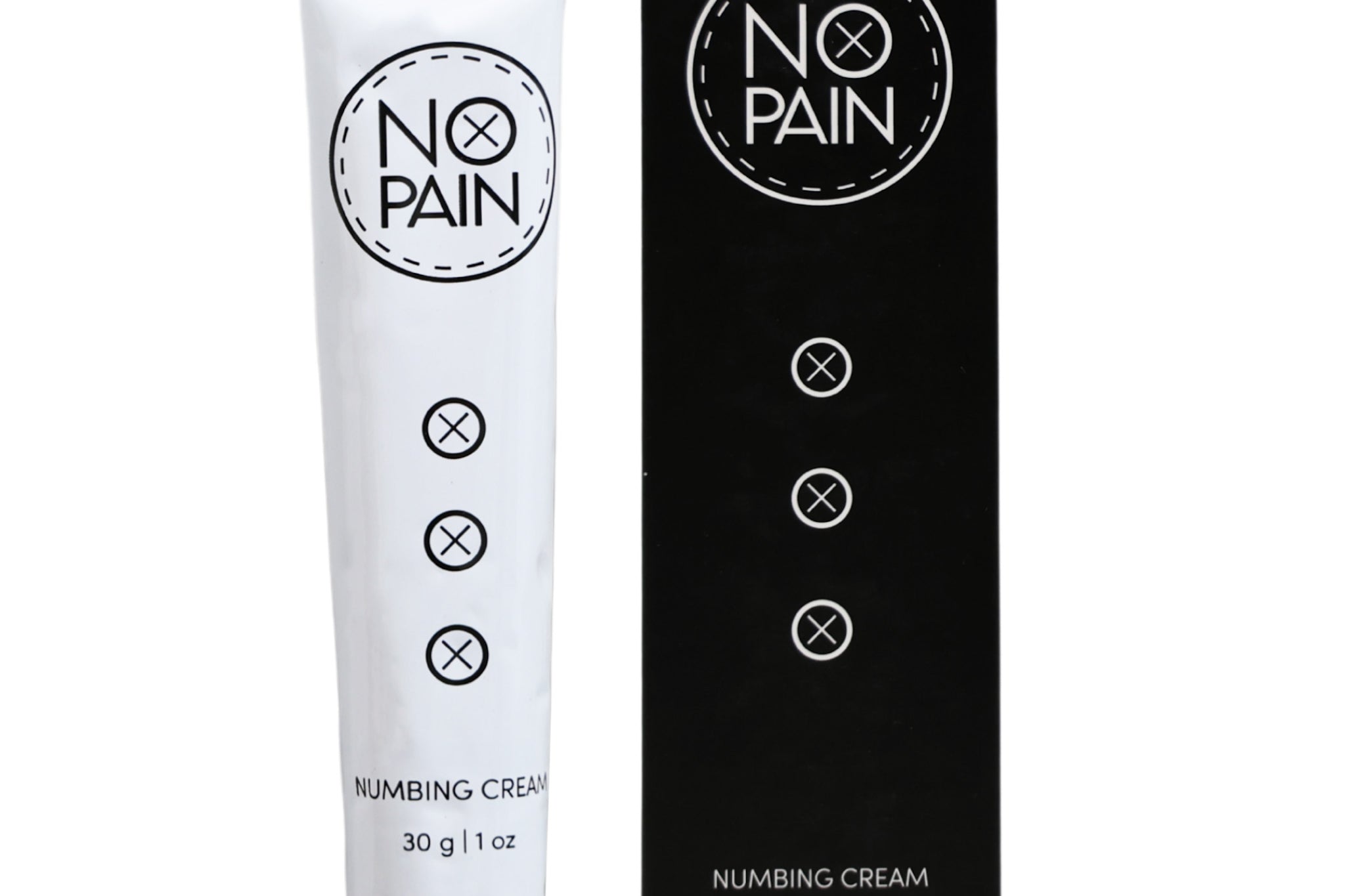
Maximum strength lidocaine cream in a thick, slow-absorbing base that lasts two to four hours from the moment the wrap comes off. Apply a generous coat to the placement area, cover with cling film, and wait 90 to 120 minutes before your appointment. Arrive pre-numbed and let your artist focus on the work.
Frequently asked questions
Can a tattoo artist copy another artist's design?
Technically yes, but a professional artist will not copy another artist's custom work without permission. It is considered plagiarism within the tattoo community, it may constitute copyright infringement, and it produces an inferior result for the client since the original was designed for a different person. The exception is flash: designs that artists create specifically to be tattooed by multiple people.
Is it illegal to copy a tattoo design?
Original tattoo designs are protected by copyright law in most jurisdictions. The artist who created the design owns it, and reproducing it without permission is technically infringement. Legal action is uncommon in practice, but the risk is real. More relevantly, it is widely considered a serious ethical violation within the tattoo profession, regardless of the legal angle.
Can I bring a picture of someone else's tattoo to a studio?
Yes, as a reference, not as a blueprint. Bringing images to show an artist the style, subject matter, or color palette you are drawn to is how good consultations work. What you should not do is hand an artist a single image and ask them to reproduce it exactly. Use images to communicate what you love about certain designs, and ask the artist to use those elements to create something original for you.
What if I want the exact same tattoo as someone I saw online?
Consider what you are actually drawn to. Usually it is specific elements: the subject matter, the style, the color palette, the line weight, the composition. Identify those elements and bring them to a consultation as inspiration. An artist who specializes in that style can create something that captures everything you loved about the original while making it a piece designed for you. The result will almost always be better than a copy.
What is tattoo flash and is it OK to get?
Flash is pre-drawn tattoo art that artists create specifically to be tattooed on multiple clients. It is completely appropriate to ask for flash. The artist designed it to be reproduced. Flash tends to be associated with traditional and neo-traditional styles, though artists in many styles produce flash. It is a good option if you want a high-quality tattoo without the timeline and cost of a fully custom piece.
How do I find a tattoo artist who can create something original from my references?
Look for artists whose existing portfolio already shows work in the style you want. If your references are heavily Japanese-influenced, find a Japanese specialist; if they are neo-traditional, find an artist whose healed portfolio shows strong neo-traditional work. Then bring your references to a consultation and ask the artist to use them as inspiration to build something original for you. An artist who is experienced in the style you want and given creative latitude will consistently produce better results than one asked to copy outside their specialty.
Sit All Day with the Comfort Bundle
The Comfort Bundle pairs the numbing cream for pre-session application with the mid-session spray for longer sittings. Built for multi-hour custom sessions where one application isn't enough.
Shop the Comfort Bundle →$54.00 $43.20 · Formulated at Historic Tattoo in Portland, Oregon. 100% money-back guarantee.