


Coconut oil isn't the worst thing you could put on a healing tattoo. It's natural, it moisturizes, and it has real antimicrobial properties. But it has two specific problems that make it a poor choice during the healing phase: it scores high on the comedogenic scale (meaning it clogs pores), and it's too thin to maintain a protective layer. Neither issue matters much on fully healed skin. Both matter a lot on an open wound.
Here's what coconut oil actually does to a healing tattoo, when it's fine to use, and what works better during the critical first weeks.
In this guide
- Why people reach for coconut oil
- Problem 1: It clogs pores
- Problem 2: It doesn't hold
- Problem 3: Contamination risk
- When coconut oil is fine on a tattoo
- What to use during healing instead
- FAQ
Why people reach for coconut oil
The appeal is real. Pure virgin coconut oil contains lauric acid, a fatty acid with documented antimicrobial and anti-inflammatory properties. It's a capable moisturizer for intact skin. It has no synthetic chemicals, no fragrance, no preservatives. For people who prefer natural products, it looks like an obvious choice.
It's also widely available and cheap, which matters when you're trying to keep a fresh tattoo moisturized several times a day for weeks.
The problem isn't the logic. The problem is that a healing tattoo is an open wound, and what works for dry skin on your elbows behaves differently on broken, inflamed dermis.
Problem 1: It clogs pores
Cosmetic chemists use a comedogenic scale (0 to 5) to rate how likely an ingredient is to clog pores. Coconut oil scores a 4. That's high. For context, petroleum jelly scores a 0 on the comedogenic scale but causes problems through occlusion rather than pore-clogging; coconut oil causes problems the other way.
On healthy, intact skin, a comedogenic rating of 4 just means you might get the occasional breakout. On a healing tattoo, the stakes are different. The skin is open, inflamed, and actively trying to weep plasma and push out debris. Clogged pores during this phase trap bacteria trying to exit the wound and block the skin's natural drainage process. The result is clusters of pimples or milia (hard white bumps) forming directly on the tattooed area. Both disrupt the healing surface. Both carry a risk of ink loss if they're scratched or break open.
This doesn't happen to everyone. People with naturally drier, less congestion-prone skin may use coconut oil without obvious problems. But the risk is real and not worth taking on a piece of work you paid several hundred dollars for.
Problem 2: It doesn't hold
Coconut oil is a light oil. It absorbs quickly into the skin and rubs off easily on clothing and sheets. That's fine for a quick moisture boost on healed skin. On a healing tattoo, you need something that stays in place long enough to actually protect the wound.
A balm made with shea butter, beeswax, or similar thick emollients creates a barrier that holds between applications. Coconut oil dissipates in an hour or less. That means the tattoo is sitting unprotected and exposed for most of the time between washes, which increases friction damage and drying.
The thin consistency also means coconut oil provides almost no physical protection against the friction of clothing rubbing on a healing tattoo. A proper balm does both: it moisturizes and it acts as a friction barrier.
Problem 3: Contamination risk
Most coconut oil comes in a wide-mouth jar that you scoop from with your fingers. Fingers carry bacteria. Every time you dip into the jar before applying to your tattoo, you're potentially introducing bacteria from your hands into the product, which then goes directly onto an open wound. You can mitigate this by using a clean spoon to scoop, but in practice most people don't.
Purpose-made aftercare products are packaged to minimize this: tubes or pump dispensers that don't require contact with the inside of the container.
When coconut oil is fine on a tattoo
Once a tattoo is fully healed (typically four to six weeks for surface healing, longer for full dermal settlement), the clogging risk largely disappears because the skin is no longer an open wound and there's no active healing process to disrupt.
On a healed tattoo, a thin layer of coconut oil can be a decent everyday moisturizer that adds some visual depth and keeps the skin hydrated. The antimicrobial properties of lauric acid are mostly irrelevant at this point, but the moisture effect is real. If you already own it and like how it feels on healed skin, it's fine to use.
The caveat: people with naturally congestion-prone skin may still find it causes breakouts even on healed tattooed skin. If that applies to you, a lighter, non-comedogenic oil (jojoba, for example) or a balm is a better long-term maintenance product.
What to use during healing instead
The goal during healing is a product that moisturizes without clogging, holds long enough to protect between applications, and is packaged hygienically. That's not a high bar, but coconut oil misses two out of three.
Days 1 through 3. A soothing gel applied thin after each wash. Gel formulas are non-occlusive and don't sit heavily on the skin. They hydrate without blocking the surface, and they typically contain calming actives that reduce redness and irritation. Apply just enough to leave a light sheen.

Non-occlusive, non-comedogenic gel for the first days of healing. No petroleum, no fragrance. Keeps the wound hydrated and calm without the pore-clogging that oils cause on fresh skin. Backed by a money-back guarantee.
Shop Soothing Gel: $15.00
From day 3 onward. As early peeling starts, transition to a balm with an oil-and-butter base. Unlike thin oils, a good balm creates a lasting barrier that protects against friction and holds moisture between applications without clogging. Apply a thin layer after washing and continue through surface healing.

Oil-and-butter base, non-comedogenic, no petroleum. Holds long enough to actually protect the wound between washes. Works from day 3 through full healing. Backed by a money-back guarantee.
Shop Aftercare Balm: from $12.00

No Pain Tattoo Aftercare Bundle
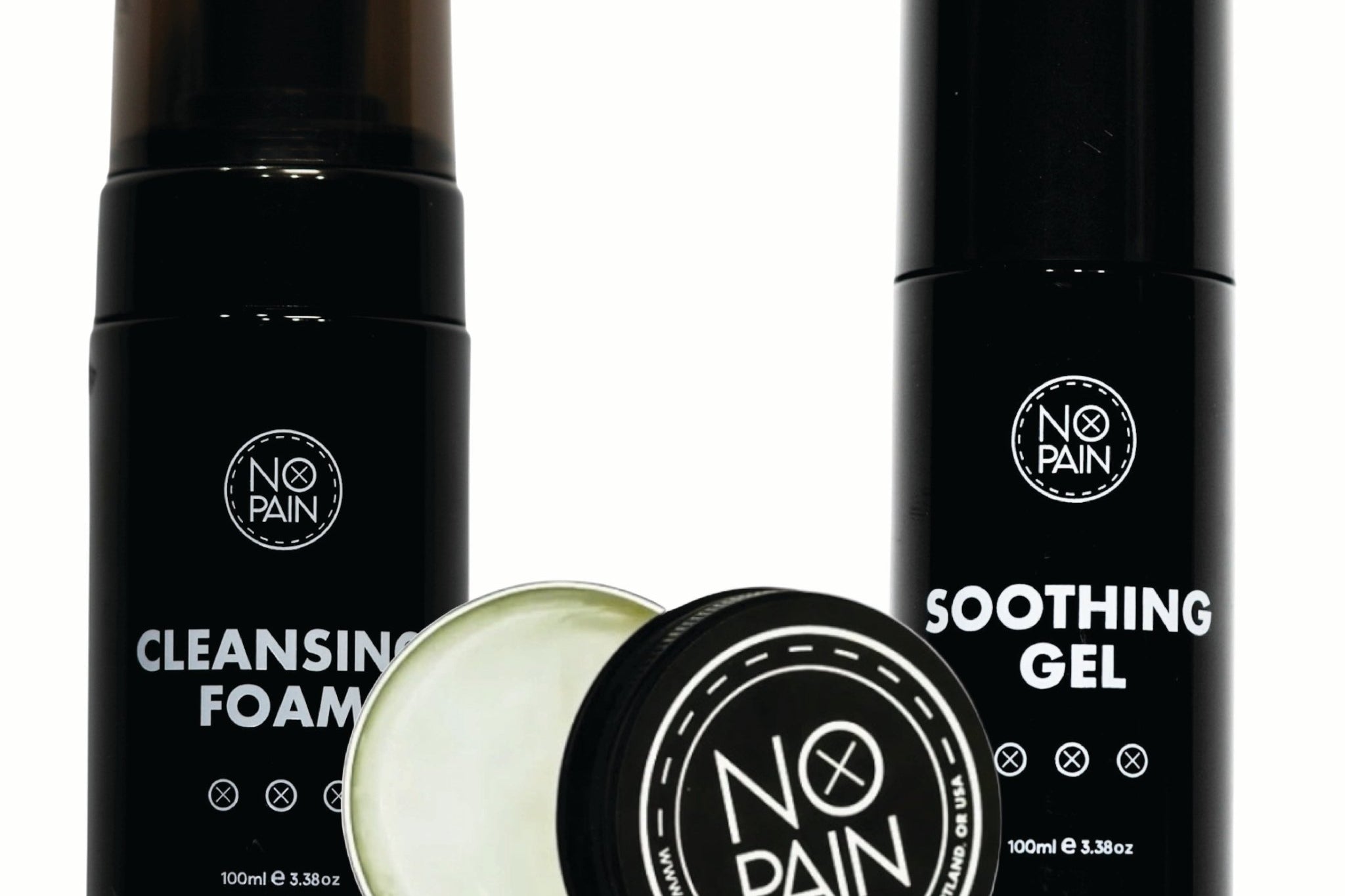
Soothing gel for the first few days, aftercare balm from day three onward, and cleansing foam for daily washing. Everything your tattoo needs to heal cleanly, without the pore-clogging or protection gaps that natural oils create. Backed by a money-back guarantee.
Shop Aftercare Bundle: $33.60FAQ
Is coconut oil good for tattoos?
On a fully healed tattoo, yes: it's a decent everyday moisturizer that keeps the skin hydrated and adds visual depth to the ink. On a healing tattoo, it's not the right choice. Coconut oil scores high on the comedogenic scale (4 out of 5), meaning it tends to clog pores, which causes breakouts and milia on fresh, open skin. It also absorbs too quickly to provide lasting protection between wash cycles.
Can I use coconut oil on my tattoo after it heals?
Yes. Once the surface is fully healed (typically four to six weeks, though full dermal healing takes longer), the pore-clogging concern is much reduced because the skin is no longer an open wound. A thin layer of coconut oil makes a fine maintenance moisturizer for healed ink. If you have congestion-prone skin, a lighter non-comedogenic option like jojoba oil may suit you better long-term.
Why does coconut oil clog pores on a new tattoo?
Coconut oil is high in saturated fatty acids, which give it its solid consistency at room temperature but also make it prone to sitting in pores rather than absorbing cleanly. On intact skin with a healthy barrier function, this is a manageable tradeoff. On a fresh tattoo where the skin is open and actively trying to drain plasma and debris, the clogging effect interferes with that process and can cause milia or infected follicles directly on the healing area.
Virgin vs. fractionated coconut oil: which is better for tattoos?
Virgin coconut oil retains more of its lauric acid content and natural compounds. Fractionated coconut oil (where the long-chain fatty acids have been removed) stays liquid at room temperature and has a lower comedogenic rating. Fractionated is the better option if you do want to use coconut oil on a healing tattoo, though a purpose-made aftercare product is still preferable during the first few weeks.
My tattoo artist told me to use coconut oil. Is that okay?
Some artists recommend it, particularly those who prefer natural product lists. It's not going to ruin a tattoo in the way that Neosporin can trigger a serious allergic reaction. The risk is more about congestion and inadequate protection than acute harm. If you want to follow your artist's advice and try it, monitor closely for signs of clogged pores (small white bumps, pimple-like spots) around the tattooed area, and switch to a balm if those appear.
Can coconut oil make a tattoo look more vibrant?
On healed ink, yes. Any moisturizer improves the visual depth of a tattoo by keeping the skin hydrated and reducing the dull, dry appearance that makes ink look faded. Coconut oil isn't unique in this respect. Any good moisturizer does the same thing, and a non-comedogenic balm will do it without the pore-clogging risk.