


No. Not while it's still healing. A healing tattoo is an open wound, and applying sunscreen to an open wound causes irritation, traps bacteria, and disrupts the repair process. Sunscreen belongs on fully healed skin only. The question worth answering isn't whether you can put it on. It's when you can, and what to do in the meantime to keep the sun off a tattoo that isn't ready yet.
In this article
- Why sunscreen is off the table while your tattoo is healing
- How to protect a healing tattoo from the sun
- When it's safe to use sunscreen on a tattoo
- How to protect a healed tattoo with sunscreen
- Frequently asked questions
Why Sunscreen Is Off the Table While Your Tattoo Is Healing
For the first two to four weeks after getting tattooed, your skin is in active repair. The top layers are still an open wound: weeping plasma, forming new epidermis, shedding the outer layer. Sunscreen is designed for intact, healthy skin. On a healing tattoo, it creates three specific problems.
Chemical irritation. Even formulas marketed as “gentle” or “sensitive” contain UV-blocking agents, preservatives, and emulsifiers designed to sit on the surface of unbroken skin. When those ingredients come into contact with an open wound, they sting, inflame the tissue, and disrupt the skin's ability to repair itself. The result is prolonged healing and sometimes a patchy final result.
Bacterial risk. Sunscreen applied to a healing tattoo is not applied under sterile conditions. Your hands, the bottle nozzle, and the lotion itself can introduce bacteria directly into a wound that doesn't yet have a sealed barrier to keep them out. That's a straightforward infection risk, not a theoretical one.
Occlusion during the wrong phase. A thick layer of sunscreen creates a barrier that traps moisture and heat. In the first week of healing, the wound needs to breathe. Sealing it under sunscreen smothers the tissue, slows cell regeneration, and creates the same conditions that cause tattoo bubbling: too much moisture, not enough airflow. For more on what that looks like and how to avoid it, see the healing process guide.
How to Protect a Healing Tattoo From the Sun
The method during the healing phase is simple: keep the tattoo covered with clothing. That's it. A layer of clean, soft fabric blocks UV rays without touching the wound, introducing irritants, or disrupting the healing environment.
This means planning for sun exposure when you're getting tattooed. A tattoo on your forearm in summer means long sleeves when you're outside. A leg tattoo means long pants or a wrap. It sounds inconvenient, but the alternative (UV exposure on a healing tattoo) is one of the fastest ways to damage the ink while it's still settling into the dermis.
A few practical points: avoid dark, tight fabric that traps heat against the wound. Loose, breathable cotton or linen lets air circulate while still blocking direct sunlight. If the tattoo is in a placement where clothing coverage is awkward (the back of the neck, the top of the shoulder), stay in the shade during peak hours and get in and out of sun exposure quickly. Shade isn't perfect protection, but it's far better than direct sunlight on a wound.
What you're not doing during this phase: applying sunscreen, putting the tattoo under UV-blocking film, or using any topical product not designed for aftercare. The only thing going on the skin is a gentle cleanser and a breathable aftercare product. Nothing else.
When It's Safe to Use Sunscreen on a Tattoo
Sunscreen is safe to use when the tattoo is fully healed. That means all scabbing and peeling has finished, the skin is no longer shiny or waxy in texture, and the tattooed area feels exactly like the skin around it: not raised, not tender, not tight. For most people, that's three to four weeks minimum. For large or heavily worked pieces, it can be six weeks or longer.
The peeling phase ending is not the same thing as the tattoo being healed. After the outer layer peels, there's a period where the skin looks milky or slightly faded; this is new epidermis still forming under the surface. It looks normal but the tissue is still regenerating. Applying sunscreen during this window is less damaging than doing it in week one, but it's still not ideal. Wait until the milky appearance has cleared and the skin texture feels completely even. When in doubt, wait another week. For a breakdown of what each stage looks like, see the peeling guide.
The calcification test: run your fingers across both the tattooed skin and the skin immediately beside it. If you can feel a difference in texture, the tattoo isn't ready for sunscreen yet.
How to Protect a Healed Tattoo With Sunscreen
Once the skin is fully healed, the script flips. Sunscreen becomes one of the most important things you can put on a tattoo, and not using it is one of the fastest ways to age the ink prematurely.
UV radiation breaks down ink particles over time. It's not a dramatic or sudden process; it's gradual. The cumulative effect over years is the difference between a tattoo that still looks sharp at 40 and one that's soft and faded. Black ink turns grey. Saturated colors dull. Fine lines spread. Some of this is normal and expected, but UV exposure accelerates all of it. SPF doesn't prevent fading entirely, but it slows the process considerably. For more on what drives long-term fading and how to protect against it, see the fading guide.
What to use: a broad-spectrum SPF 30 or higher. Broad-spectrum means it blocks both UVA (the deep-penetrating rays that break down ink) and UVB (the surface-burning rays). SPF 30 blocks about 97% of UVB; SPF 50 blocks about 98%. The difference in practice is small; the more important variable is whether you apply it at all and reapply when you're out for extended periods.
Mineral sunscreens (zinc oxide or titanium dioxide) tend to be gentler on tattooed skin than chemical sunscreens, especially on older pieces where the skin may have some texture variation. They sit on the surface rather than absorbing into it. Either type works on fully healed tattoos; personal preference is fine.
Apply sunscreen to the tattoo every time it's going to be exposed to sunlight. Reapply every two hours if you're outdoors. This applies year-round, not just in summer; UV exposure happens on overcast days and through car windows too.

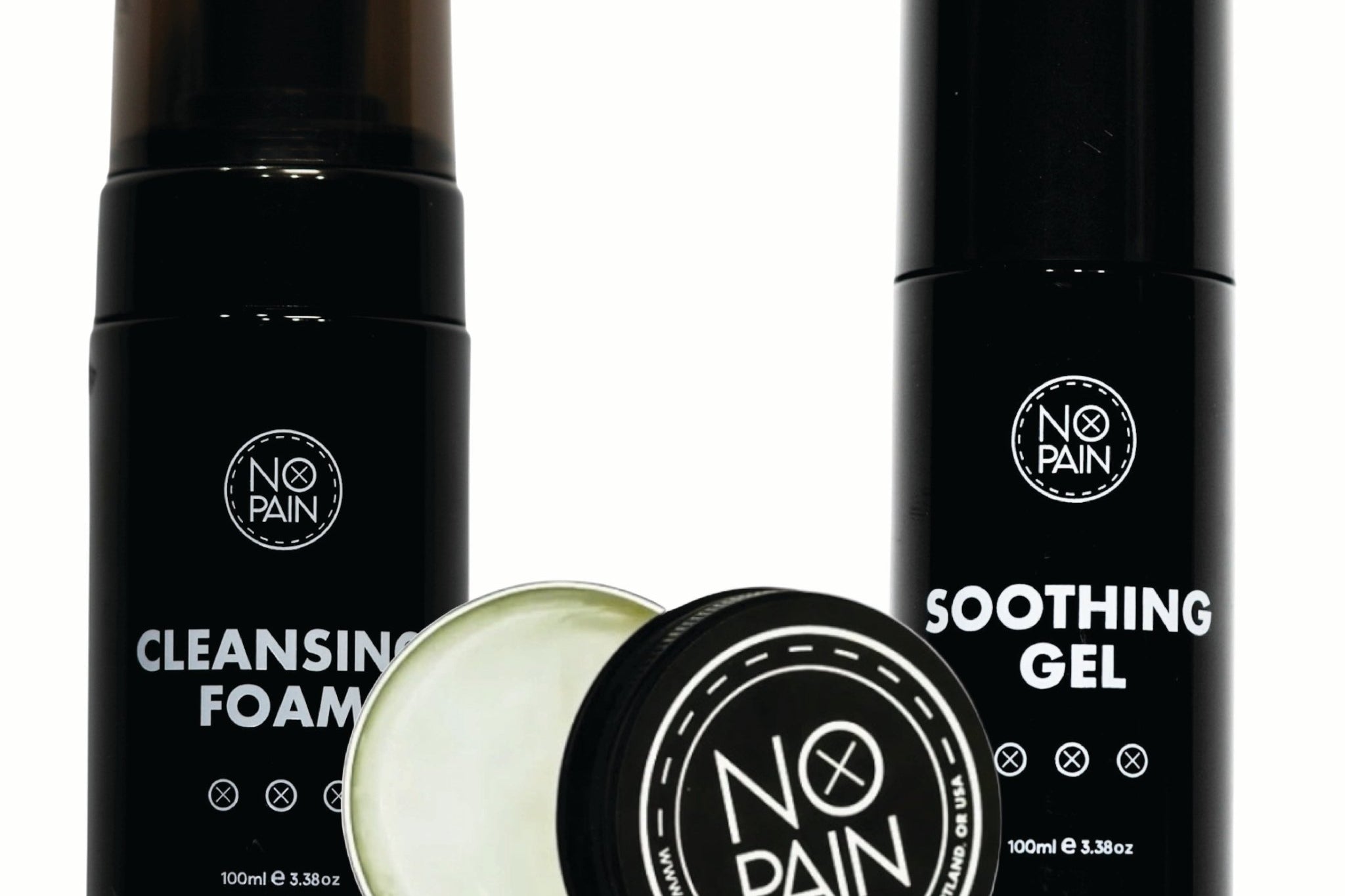
A lightweight soothing gel for the first few days, a nourishing balm from day three onward. Two products, two phases, one system, designed to get your tattoo healed cleanly so it's ready to face the sun.
Frequently asked questions
Can I use SPF 50 on a new tattoo?
No. A higher SPF doesn't change the problem. The issue isn't UV protection strength; it's the fact that sunscreen of any SPF is designed for intact skin. On a healing tattoo, the chemical ingredients irritate the wound, the formula can trap bacteria, and the occlusive layer blocks airflow the tissue needs to regenerate. Wait until the skin is fully healed before applying any sunscreen, SPF 30 or 50 or otherwise.
My tattoo is still peeling. Can I use sunscreen?
Not yet. The peeling phase means the outer layer is shedding but new skin underneath is still forming. It looks close to done but the tissue is still regenerating. Stay out of direct sun, keep it covered with clothing, and continue your aftercare routine. Once peeling is fully finished, the skin texture has evened out, and there's no milky or waxy appearance, you're in the clear. For what to expect during the peeling phase, see the peeling guide.
What if sunscreen accidentally touches my healing tattoo?
Wash it off promptly. Use a gentle fragrance-free liquid soap, rinse thoroughly with lukewarm water, pat dry with a clean paper towel, and apply a thin layer of your aftercare gel. One accidental contact is unlikely to cause lasting damage, but the sooner it's removed the better. Don't rub or scrub the area; clean it and move on.
How long until I can put sunscreen on a new tattoo?
Three to four weeks minimum for most tattoos. Larger, more saturated, or heavier pieces may need six weeks or more. The right test isn't the calendar date; it's the skin itself. The tattoo is ready for sunscreen when all peeling and scabbing has finished, there's no waxy or milky texture remaining, and the tattooed skin feels identical to the skin around it. If it still feels different, give it another week.
What's the best sunscreen for tattoos?
Broad-spectrum SPF 30 or higher is the baseline requirement. Broad-spectrum means the formula blocks both UVA and UVB rays: UVA penetrates deeper and is the primary driver of ink breakdown over time. Mineral sunscreens using zinc oxide or titanium dioxide are often recommended for tattooed skin because they sit on the surface rather than absorbing into it, and they tend to cause less irritation. In practice, any broad-spectrum SPF 30+ formula you'll actually use consistently is better than a theoretically superior formula you forget to apply.
Does sunscreen prevent tattoo fading?
Yes, substantially. UV radiation is the main external driver of tattoo fading. It breaks down ink particles in the dermis over time, turning saturated colors soft and bold black lines grey. Sunscreen doesn't stop the aging process entirely, but it slows UV-driven fading considerably. Applied consistently over years, it's the single most effective thing you can do for the long-term appearance of a tattoo. For a full breakdown of what else drives fading and how to protect against it, see the fading guide.
Heal It Right Before the Sun Gets to It
The Aftercare Bundle includes a lightweight soothing gel for the first few days and a nourishing balm from day three onward: the right products in the right order to get your tattoo healed and sunscreen-ready.
Shop the Aftercare Bundle →Formulated at Historic Tattoo in Portland, Oregon. 100% money-back guarantee.