


Modern red tattoo ink does not fade faster than blue or green. That reputation comes from older pigments that were genuinely unstable, and it has not kept pace with how much ink chemistry has changed over the past two decades. The real issue with red ink today is not pigment stability in the way most people mean. It is how some bodies respond to the pigment after healing, which plays out differently from person to person. Here is where red actually sits on the durability scale, why some people have more trouble keeping it sharp than others, and what actually determines how long it lasts.
In this article
- Where the red-fades-fast myth came from
- Where red sits on the durability scale today
- Why some bodies fade red faster
- Sun exposure: the biggest long-term variable
- How to protect red ink
- Frequently asked questions
Where the Red-Fades-Fast Myth Came From
The reputation is rooted in history. Decades ago, red tattoo pigments were often made with mercury-based compounds like cinnabar, or with iron oxide. These early pigments were not lightfast, broke down under UV exposure faster than other colors, and caused a notable number of skin reactions. The warning passed from tattooist to client to internet forum and got locked in as received wisdom even after the underlying problem was solved.
Modern professional inks use organic, carbon-based pigments that are substantially more stable. A quality red applied by a skilled artist into properly prepared skin has comparable longevity to modern blues and greens. The chemistry changed. The warning did not.
Where Red Sits on the Durability Scale Today
Assuming professional-grade ink and a skilled artist, here is where red ranks among tattoo colors:
Red is more durable than yellow, orange, and anything in the pastel or white range. Those colors use smaller pigment molecules and lower pigment concentrations that the body clears faster. Red sits in the same durability tier as modern blues and greens, which are also organic-based and similarly lightfast. All of them are less durable than black and grey, which are carbon-based. Black is the undisputed long-haul color because carbon pigment is something the immune system cannot break down at all.
The durability gap between red and black is real but moderate. It is not the dramatic scenario the reputation suggests. If your tattoo uses red alongside black outlines, you will likely see the red sections soften somewhat before the black, but not at a rate that should alarm you.
Why Some Bodies Fade Red Faster
This is where it gets individual. Your immune system treats tattoo ink particles as foreign matter. The macrophage cells that surround ink in the dermis maintain a permanent low-level monitoring state for the life of the tattoo, which is why old tattoos stay put rather than being expelled. Red pigment, for reasons that are not fully understood, provokes a stronger ongoing immune response in some people than other colors do.
When your body maintains a mild chronic inflammatory state around the red ink, it accelerates pigment breakdown over time. This is not an acute allergic reaction but a sustained low-level one that plays out over months and years. The tattoo does not look obviously irritated, but the ink does not hold as crisply as it otherwise would. The red sections become less saturated while blue or black areas in the same tattoo remain sharper.
This is why two people with the same artist and the same ink can end up with very different results: one person's red holds for decades while another's softens noticeably within a few years. The immune response, not the pigment, does most of the work in those cases.
People who notice raised or itchy red sections in healed tattoos are often seeing this immune reactivity express itself more visibly. The same pigment sensitivity that causes occasional flare-ups in a healed tattoo is also working on the ink's long-term retention, just less visibly. For more on what to do when a healed tattoo becomes raised or reactive, see our guide on keeping tattoo colors from fading.
Sun Exposure: The Biggest Long-Term Variable
For every tattoo color, UV exposure is the single largest driver of fading over a lifetime. Sunlight breaks down organic pigments in the dermis, and red is somewhat more susceptible than black because black's carbon base is photostable in a way organic pigments are not. This does not make red uniquely fragile, but it does mean that a red tattoo in a location that sees regular sun without protection will fade faster than an identically placed black tattoo.
Red ink that is also sensitized by immune reactivity and exposed to regular UV is getting pulled from two directions at once. That combination, more than any inherent property of the pigment itself, is what produces the worst fading outcomes.
How to Protect Red Ink
The healing phase sets the foundation. Red areas can be more reactive during healing than the surrounding tattooed skin, and inflammation during the first few days can compromise how well the ink settles into the dermis. Keeping that inflammatory response calm in the first few days matters more for red ink than it does for black.

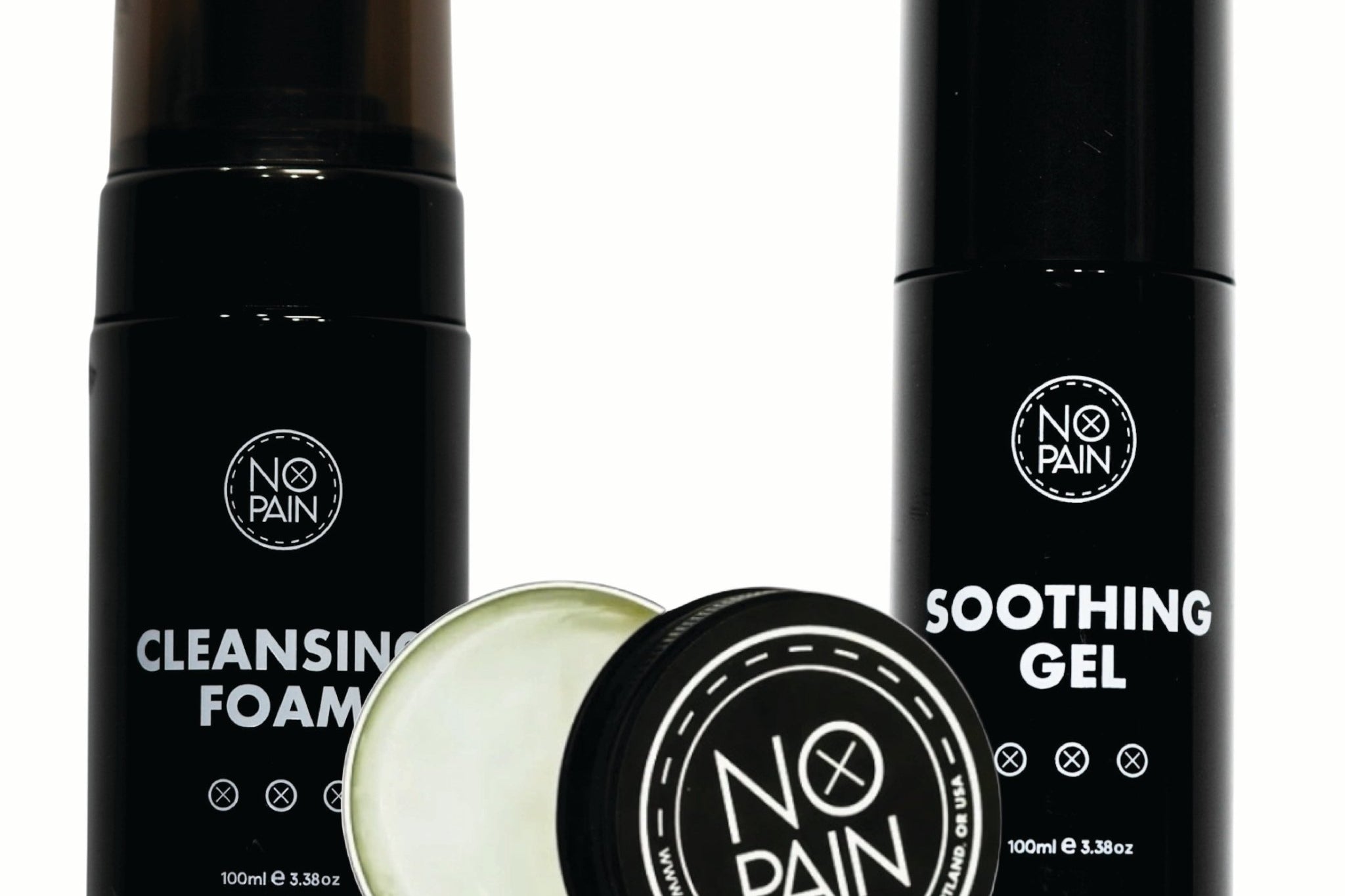
A lightweight, fragrance-free gel that calms the inflammatory response in the first days of healing. Apply a thin layer after each wash to reduce swelling and redness, particularly in red-inked areas that tend to stay reactive longer than black. Breathable enough to let the wound close cleanly while keeping the surface moist.
Once through the initial healing phase, consistent moisturizing through the peeling stage protects ink quality while the dermis is still settling. From day three onward, a nourishing balm helps the deeper layers of the skin stabilize without trapping moisture against the wound.
For the long term: SPF 30 or higher on any healed red ink that sees regular sun is the highest-return habit for color retention. A broad-spectrum sunscreen applied before going outside slows down UV-driven pigment breakdown for all tattoo colors, but red benefits from it more than black. Make it a habit before sun exposure on any tattooed area, and the difference over years is noticeable.
Frequently asked questions
Does red tattoo ink fade faster than other colors?
Modern red ink does not fade faster than blue or green, and it is more durable than yellow, orange, or white. The reputation for fading comes from older mercury-based and iron oxide pigments that were genuinely unstable. Today's professional organic pigments have comparable longevity to other modern colors. The exception is black and grey, which are carbon-based and outlast any organic pigment including modern red.
Why does red tattoo ink fade more than black?
Black ink uses carbon pigment, which is photostable and cannot be broken down by UV exposure or the immune system in the way organic pigments can. Red uses organic compounds that are more reactive to sunlight and more susceptible to the body's ongoing immune monitoring around the ink. The gap is real but moderate, and lifetime sun protection over the tattooed area offsets much of it.
Why is my red tattoo ink fading while other colors stay sharp?
This is most commonly an immune response specific to the red pigment. Some people's bodies maintain a stronger ongoing reaction to red ink than to other colors, which accelerates pigment breakdown over time. You may also notice the red areas feel raised or itchy occasionally. That is the same immune activity expressing itself more visibly. Sun exposure amplifies the effect. Touch-ups are the practical solution once fading becomes noticeable.
Does red tattoo ink cause more allergic reactions?
Red is the most common tattoo ink color to cause sensitivity reactions, including itching, raised lines, and flare-ups in healed tattoos. This is not typically a dangerous acute reaction but a chronic mild immune response to the pigment. Modern red inks are substantially less reactive than older formulations, but the sensitivity varies by individual. People who react to red often find the reaction is consistent across different tattoos regardless of ink brand.
How do I keep red tattoo ink from fading?
Three things make the biggest difference. First, keep inflammation down during healing with a cooling gel in the first few days, since high inflammation during healing can affect how well the ink settles. Second, moisturize consistently through the peeling stage to protect the skin while the dermis is still sealing. Third, apply SPF over any healed red ink before sun exposure. UV breakdown is the largest long-term driver of fading for any organic pigment, and red has less photostability than carbon-based black.
Is red tattoo ink safe?
Modern professional red inks are formulated without the mercury compounds and heavy metals that caused problems in older pigments. The primary consideration with today's red inks is the potential for pigment sensitivity in some individuals, which presents as chronic low-level inflammation or occasional flare-ups in a healed tattoo rather than acute toxicity. If you have sensitive skin or a history of reactions to red ink, discuss ink brand selection with your artist before the session.
Give Red Ink the Best Possible Start
The Aftercare Bundle pairs a lightweight soothing gel for the first few days with a nourishing balm from day three onward. Two phases of healing, covered so the ink settles cleanly and the color holds.
Shop the Aftercare Bundle →Formulated at Historic Tattoo in Portland, Oregon. 100% money-back guarantee.