

Dry healing means leaving your tattoo alone and letting it form whatever scab it forms. Moist healing means keeping it clean and lightly moisturized so it heals with thin flaking instead of a hard crust. The debate has been going on for decades in tattoo shops. The answer isn't really a debate: moist healing is the modern standard, backed by wound care science and the experience of every reputable artist working today. Here's what each approach actually does to your skin.
In this article
- What dry healing is and where it came from
- What dry healing does to your tattoo
- Why moist healing works
- How to moist heal correctly
- Frequently asked questions
What Dry Healing Is and Where It Came From
Dry healing is exactly what it sounds like: after the initial clean-up at the studio, you wash the tattoo occasionally and apply nothing. No lotion, no balm, no gel. You let the wound dry out, form a scab, and wait for the scab to fall off on its own.
This approach has real historical roots. Before tattoo-specific aftercare products existed, the alternatives were often worse than nothing: heavy petroleum-based ointments that smothered the skin, fragranced lotions that irritated fresh wounds, and generic products that weren't designed with open skin in mind. In that context, leaving the tattoo alone was sometimes the safest bet. It kept people from making things worse with the wrong product.
That context no longer applies. Aftercare has caught up. Products now exist that are designed specifically for healing tattoos, and the wound care science underlying them is well-established. The argument for dry healing, to the extent it ever had merit, was an argument against bad products, not against moisturizing in principle.
What Dry Healing Does to Your Tattoo
When a healing tattoo is left to dry out, several things happen, none of them good for the ink or the skin.
Thick, rigid scabs form over the design. As plasma weeps from the fresh wound and dries without being managed, it hardens into a heavy crust. This crust sits over your tattoo like a shell. It's inflexible, and the skin beneath it is still trying to regenerate and move. Every time you flex, bend, or even sleep on the area, the scab cracks. Those cracks are painful and create new openings in the healing skin.
Ink pulls out with the scab. The biggest cost of dry healing is ink loss. A thick scab that forms over a tattoo bonds to the skin beneath it. When it falls off or gets knocked, it takes pieces of the healing dermis with it. This produces a patchy, faded result before the tattoo has had any time to fully settle. Touch-ups can fix it, but you're paying for damage that didn't need to happen.
The itch is worse and harder to resist. Dry, tight, cracking skin itches badly. That itch drives people to scratch or pick, which creates more damage to the ink and more entry points for bacteria. A moisturized tattoo produces mild itching as the skin regenerates. A dry tattoo produces the kind of itch that's difficult to leave alone for two weeks straight.
Healing takes longer. Wound care research has consistently shown that wounds kept in a moist environment regenerate skin cells faster than wounds left to dry. A dry-healed tattoo spends more time in the open-wound phase, which also means more time at risk of infection. For the full timeline of what's happening at each stage, see the healing process guide.
Why Moist Healing Works
Moist wound healing became the gold standard in clinical medicine decades ago. The principle is straightforward: a wound that maintains a controlled level of moisture heals faster, produces less scarring, and keeps skin cells mobile enough to regenerate efficiently. A tattoo is a wound. The same biology applies.
When a healing tattoo is kept properly moisturized, the weeping plasma doesn't get a chance to harden into a thick scab. Instead it forms light, thin flakes similar to what you'd see peeling from a sunburn. Those flakes shed naturally without pulling ink with them. The result is a tattoo that holds its saturation and detail through the heal.
The key word is "properly." Moist healing doesn't mean wet, and it doesn't mean applying heavy product multiple times a day. Over-moisturizing creates its own problems, including maceration and bubbling. The goal is a thin, breathable layer of the right product at the right phase of healing. Too much product is as disruptive as none at all. For what that looks like in practice, see the section below.
How to Moist Heal Correctly
The routine is simple. Two washes a day with a fragrance-free liquid soap, each followed by a thin layer of a breathable aftercare product. That's it. The phase of healing determines which product to use.
Days 1 to 3 (the early wound phase): Use a lightweight gel. During the first few days, the tattoo is still an open wound actively weeping plasma. What the skin needs is cooling, soothing hydration that doesn't trap heat or block airflow. A gel absorbs fully into the skin, keeps the surface comfortable, and reduces the inflammatory response without smothering the wound. Apply a thin layer after each wash and let it absorb fully before covering with clothing. You should see a slight sheen on the skin, not a visible coat of product.
Day 3 Onward (the peeling and settling phase): Switch to a richer balm once the surface has closed and peeling has begun. At this stage, the wound is no longer open. The skin is shedding its outer layer and the dermis underneath is continuing to settle. A balm provides deeper, longer-lasting hydration for skin that is now more intact. Continue twice daily until the tattoo looks and feels like normal skin, which is typically 3 to 4 weeks for the surface layer.
What you're never doing: applying product without drying first, applying so much that the skin looks glossy or wet, using fragranced lotions, petroleum-based ointments in the first week, or anything not designed for sensitive or healing skin. For more on what trips people up at this stage, see the scabbing guide.

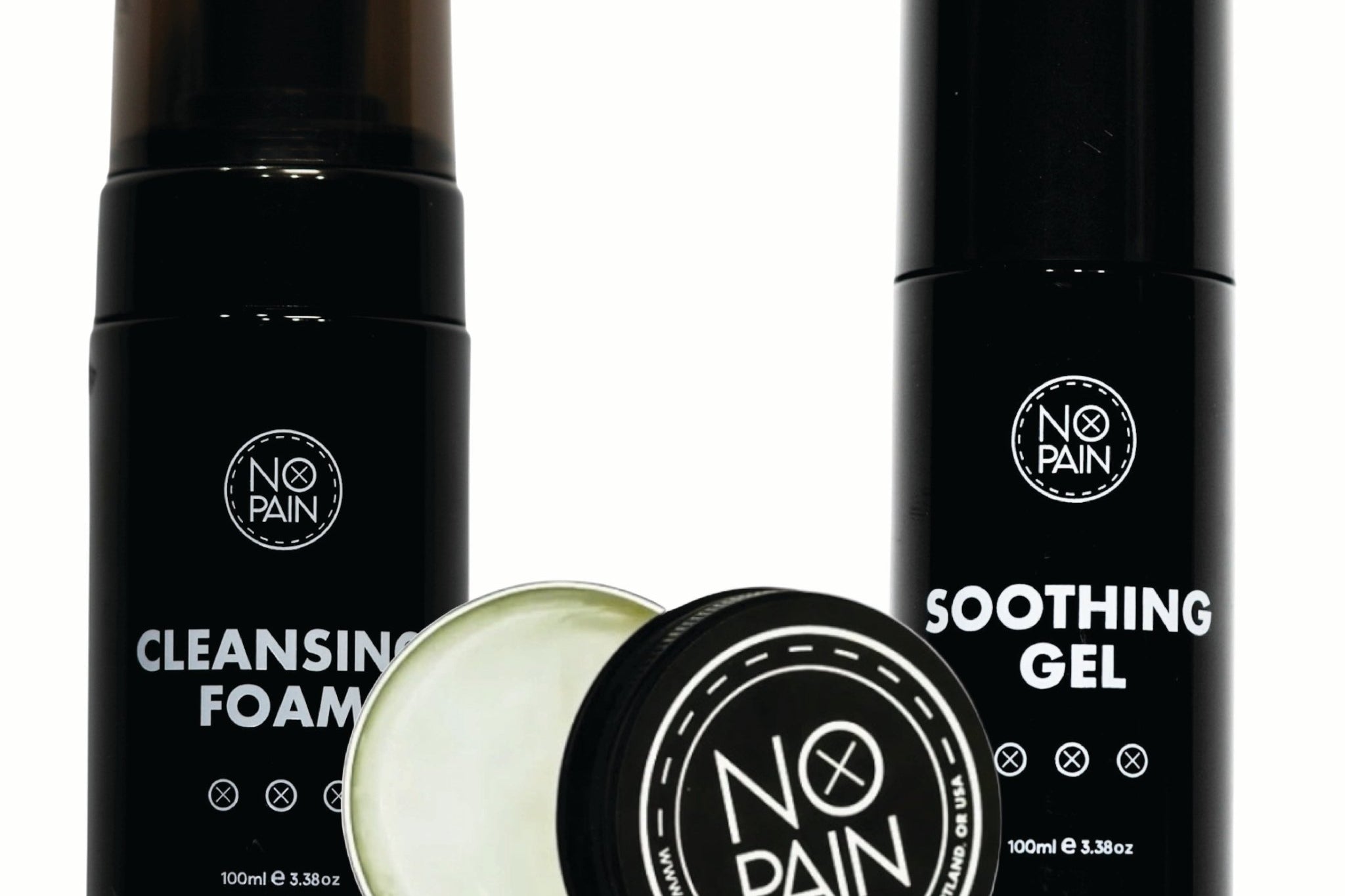
A lightweight, cooling gel that hydrates without trapping heat or moisture. Absorbs fully into the skin, reduces irritation, and lets the wound breathe. Designed for the open-wound phase when the skin needs support without occlusion.
Frequently asked questions
Is dry healing bad for tattoos?
Yes, compared to moist healing. Dry healing allows thick, rigid scabs to form over the design. When those scabs crack or detach, they pull ink with them, producing a patchy, prematurely faded result. The healing process is also longer and more uncomfortable. There is no meaningful upside to dry healing for a modern tattoo when appropriate aftercare products are available.
Why do some tattoo artists still recommend dry healing?
Mostly tradition. Dry healing was the default before dedicated aftercare products existed, and some artists learned it that way and never updated their advice. A smaller subset have had clients over-moisturize and cause bubbling or maceration, and conclude that no product is safer than the wrong product. Both positions are understandable but outdated. If your artist recommends dry healing and you're not sure why, it's worth asking.
What happens if I dry heal by accident (I forgot to moisturize for a few days)?
Start moisturizing now. A few days of dryness may have already produced thicker scabbing than ideal, but resuming a proper routine will prevent further damage. Don't try to loosen or remove any existing scabs. Keep them moisturized, don't scratch, and let them shed on their own. The tattoo may need a touch-up once it's fully healed, which takes at least 2 to 3 months before the result is final. For what normal and abnormal scabbing looks like, see the scabbing guide.
Can you over-moisturize a tattoo?
Yes. Applying too much product, too often, or using a heavy ointment that doesn't breathe can cause the skin to become waterlogged: a condition called maceration. The tattoo looks soft, raised, and soggy. The fix is to stop applying product, let the area dry fully, and resume with a much thinner layer less often. Twice a day is enough for most people. More than that is where problems start.
What products should you use for moist healing?
A lightweight, fragrance-free, breathable gel for the first few days while the wound is still open, then a richer balm from around day 3 once the surface has closed and peeling has begun. Avoid petroleum-based ointments in the early days: they're too occlusive for an open wound and can trap moisture and heat. Avoid fragranced lotions at any stage: the fragrance irritates healing skin.
How long should you moisturize a healing tattoo?
At minimum, through the peeling phase, which is typically weeks 2 to 3. Most people moisturize for 4 to 6 weeks until the skin texture feels completely normal. Long-term, keeping tattooed skin hydrated and protected from UV exposure slows fading and keeps the ink looking sharp for years. The moisturizer changes from a dedicated aftercare balm to whatever fragrance-free lotion or sunscreen you normally use on healed skin.
Everything You Need, in the Right Order
The Aftercare Bundle includes a soothing gel for the first few days and a nourishing balm from day 3 onward. The right product at the right phase, without having to figure it out yourself.
Shop the Aftercare Bundle →Formulated at Historic Tattoo in Portland, Oregon. 100% money-back guarantee.