


The rules for moles and freckles are completely different. Tattooing over freckles is generally safe and routine. Tattooing directly over a mole is something professional artists won't do, for a specific medical reason. Here's the distinction, what artists do instead, and what you need to know before your appointment.
In this article
Tattooing Over Freckles
Tattooing over freckles is safe. Freckles are flat concentrations of melanin pigment in the outermost layer of the skin — they're not raised, not a type of growth, and not a skin anomaly that creates any tattooing risk. The needle passes through this surface layer into the dermis the same way it would on any other area of skin. The freckle may become less visible through the ink above it, or the scattered melanin may interact very slightly with certain ink colors at the surface level, but neither of these is a health concern.
A heavily freckled area is no harder to tattoo than unfreckled skin. If you're concerned about how an existing freckle pattern might interact with a specific design, ask your artist during the consultation. In most cases, it's a non-issue.
Tattooing Over Moles: Why Artists Decline
Moles are different. A mole (nevus) is a growth formed by a cluster of melanocyte cells — the cells that produce melanin. The vast majority of moles are entirely benign and change very slowly or not at all over a lifetime. But some moles develop into melanoma, the most dangerous form of skin cancer, and early detection is what makes melanoma survivable.
The standard tool for detecting potentially problematic mole changes is the ABCDE framework: Asymmetry, Border irregularity, Color variation, Diameter change, and Evolution over time. A tattoo placed directly over a mole makes it impossible to monitor any of these indicators. The ink obscures the mole's color, border, and shape. If the mole begins to change in ways that indicate malignancy, neither you nor a dermatologist can see it through the tattoo until the change has progressed beyond what it would have been if caught early.
Reputable professional artists decline to tattoo directly over moles because of this. It's not a technical challenge — it's a safety issue they're not willing to create for a client. If an artist is willing to tattoo directly over your moles without comment, that's a sign of inexperience or indifference to client safety, not skill.
Note: If you have any concerns about a specific mole — whether it's changed recently or looks unusual — see a dermatologist before your appointment, not after.
What Artists Do Instead
Skilled artists work around moles as part of the composition. They leave a clear margin of untattooed skin around the mole — typically a few millimeters — that keeps it visible for monitoring and creates a clean edge. How that margin reads in the final tattoo depends entirely on the design and the artist's approach.
Good artists incorporate the mole into the composition deliberately. A mole in the middle of a botanical piece might become the center of a flower or a berry on a branch. One positioned within a geometric design might be framed by negative space. In portrait or realism work, a mole can become a beauty mark or a natural element of the skin's character. These aren't compromises — they're design solutions that experienced artists often enjoy as creative constraints.
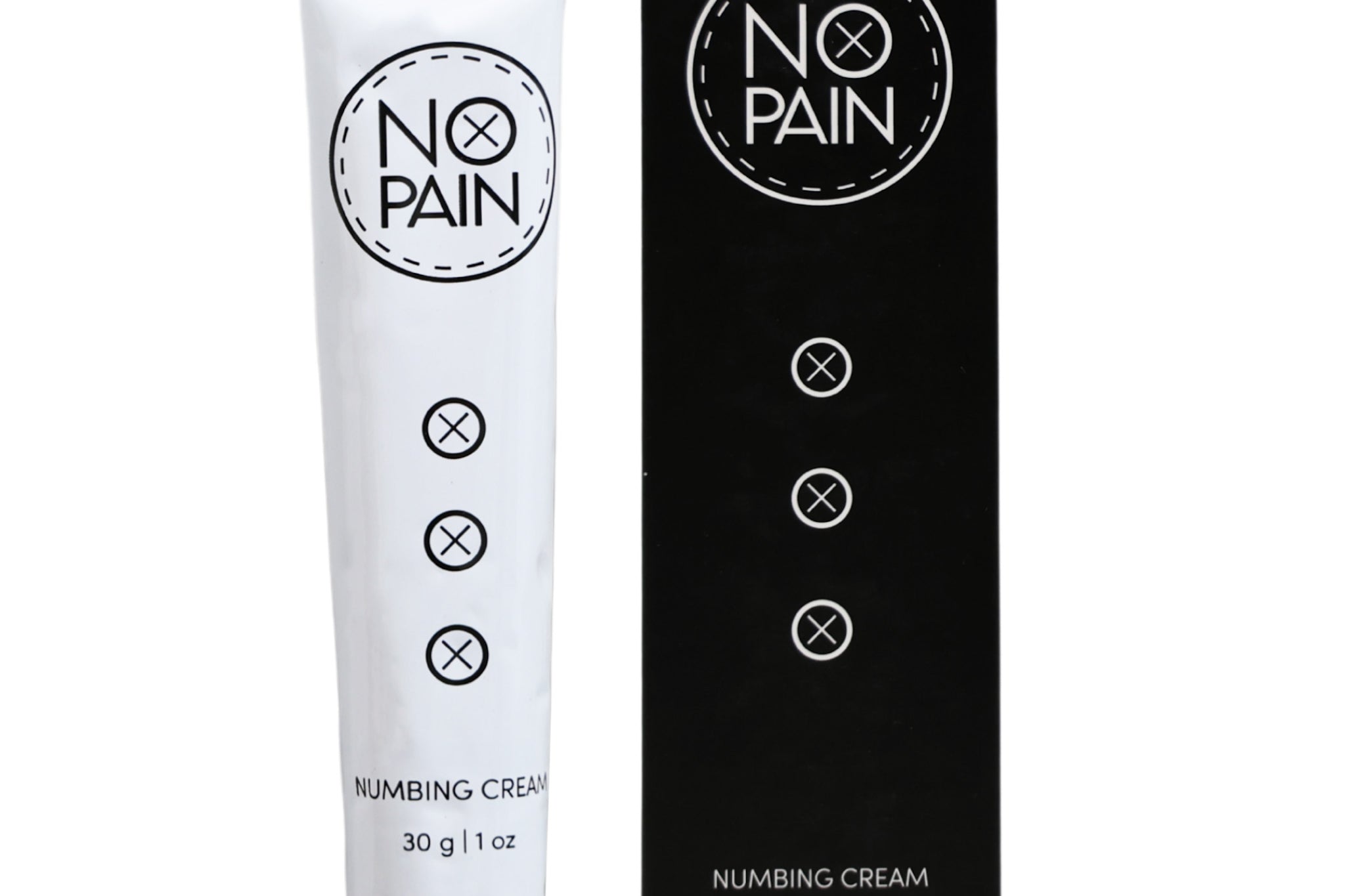
The practical requirement for this kind of precise work is staying still. Tattooing around a mole with a clean buffer requires the artist to place lines with exact control, which means any involuntary movement from pain affects the outcome. If the placement is also one with high pain sensitivity — ribs, inner arm, knee area — numbing cream is worth discussing with your artist before the session.
FAQ
Can a tattoo cover up a mole?
Technically the ink would cover the mole visually, which is exactly why professional artists won't do it. Covering a mole means concealing the only visual cues available for detecting early changes that could indicate melanoma. No reputable artist will intentionally place ink over a mole for this reason. If you want a design that flows over an area with a mole, the mole gets incorporated or buffered, not covered.
Is it ever safe to tattoo over a mole?
Some dermatologists will surgically remove a mole before tattooing if the mole has been assessed as benign and the patient wants the area clear for a design. Once the removal site has fully healed and been cleared by the dermatologist, tattooing over the former mole location is generally possible. This is the correct sequence: dermatologist assessment and removal if appropriate, full healing, then tattoo. Not the other way around.
What if my mole is tiny and I don't think it matters?
Size doesn't change the cancer-screening concern. A small, pale mole that has been stable for years carries the same detection risk under ink as a larger one. The issue is that "stable for years" can change, and removing your ability to detect that change is the specific problem. The solution is the same regardless of mole size: leave a clear margin and incorporate the mole into the composition or frame it with negative space.
Can tattoos cause moles to turn cancerous?
There is no established evidence that tattooing over or around a mole causes malignant transformation. The primary concern is not that the tattoo triggers cancer but that it conceals the warning signs of changes that may occur independently for other reasons. The mole would need to be monitored whether or not there was a tattoo near it. The issue is that a tattoo directly over the mole makes that monitoring impossible.
Will the ink look different over freckled skin vs. unfreckled skin?
In most cases, no visible difference. Freckles are in the epidermis, above the dermis where the ink is placed. For most ink colors, this surface-level pigmentation has no meaningful effect on how the healed tattoo looks. Very light-colored inks (white, light yellow) that are partially visible through the epidermis might show slightly more interaction with very densely freckled skin, but this is a subtlety most people wouldn't notice unless looking closely.
Should I tell my artist about moles on the area before my appointment?
Yes. Include this in your consultation so the artist can factor the moles into the design from the beginning. Trying to adjust a composition to accommodate a mole at the stencil stage is harder than designing around them from the start. If you have multiple moles in the area, bring a clear photo of the skin taken in good lighting. This lets the artist plan the layout with full information before any stencil is drawn.
Heal the Design You Planned
Soothing gel for the first few days, nourishing balm from day three onward. Clean, straightforward aftercare for any placement.
Shop the Aftercare Bundle →Formulated at Historic Tattoo in Portland, Oregon. 100% money-back guarantee.