



For most people with tattoos, getting an MRI is fine. Adverse reactions are documented but rare, occurring in less than 1 percent of cases, and when they do occur, they're almost always mild and temporary. If you have tattoos and need an MRI, the right approach is to inform the technologist before the scan, not to postpone or refuse a medically necessary procedure.
Here's what the actual risk is, where it comes from, and what to do about it.
In this guide
- Why there's a concern at all
- How rare reactions are
- What to do before and during your scan
- New tattoos and MRI timing
- Does ink quality matter?
- FAQ
Why there's a concern at all
MRI machines use very strong magnetic fields and radiofrequency pulses to produce images. The concern with tattoos comes from a specific ingredient that appears in some inks: iron oxide. Iron is ferromagnetic, meaning it responds to magnetic fields. Some tattoo inks, particularly older formulations and some red, orange, and flesh-tone pigments, contain iron oxide compounds as colorants.
When ferromagnetic particles in skin are exposed to MRI's magnetic field and radiofrequency pulses, two things can happen. The radiofrequency energy can cause the metal particles to heat up slightly, producing warmth or a mild burning sensation at the tattoo site. Less commonly, the magnetic field can cause a faint pulling or tingling sensation. These are the reactions that the concern is based on.
Modern professional tattoo inks have moved substantially toward iron-free formulations, but older tattoos and inks from less controlled sources may still contain enough ferromagnetic material to cause a reaction.
How rare reactions are
Clinical data puts adverse reactions to MRI in tattooed patients at under 1 percent. The vast majority of those are mild: transient warmth or a brief tingling at the tattoo site that resolves quickly. Actual burns are extremely rare and are documented mostly in older case studies involving older tattoos or ink from unknown sources. A 2012 review of the literature found only a handful of confirmed burn cases across millions of MRI procedures.
The takeaway: the risk is real but small, and the severity when it does occur is usually low. This is not a reason to avoid a medically necessary MRI. It's a reason to tell the technologist about your tattoos so they can monitor the situation.
What to do before and during your scan
Tell the MRI technologist about your tattoos before the scan starts. Let them know the location of each tattoo and, if you know it, roughly how old it is and where you got it done. They're aware of the issue and will note it. This lets them monitor for any signs of reaction during the scan.
During the scan, you'll have a way to communicate with the technologist, either through an intercom or a call button. If you feel warmth, burning, or discomfort at the tattoo site, alert them immediately. They can pause or stop the scan and assess. Don't try to wait it out if something feels wrong.
In most cases, nothing unusual will happen. But communication beforehand makes everything easier and faster if it does.
New tattoos and MRI timing
If your tattoo is fresh and you have an MRI coming up, most radiologists recommend waiting at least six weeks after getting a new tattoo before a non-urgent scan. A fresh tattoo is an open wound in the process of healing; the ink hasn't fully settled into the dermis yet, and the surrounding tissue is still in an inflammatory state. Both of these factors can affect how the skin responds during an MRI.
If the MRI is medically urgent, it should proceed regardless. The potential for mild skin irritation is not a reason to delay a necessary diagnostic procedure. Let the care team know your tattoo is recent and they'll take appropriate precautions.
Does ink quality matter?
Yes. The risk of a reaction is highest with very old tattoos (when iron oxide was more commonly used in ink formulations) and with low-quality inks from unknown sources. Professional studios in the US and EU are using inks that meet modern safety standards, which have reduced iron oxide content substantially. Tattoos from amateur or unregulated sources have less predictable ink composition.
This is one of many reasons that choosing a reputable professional studio and proper aftercare matters: higher-quality work typically means higher-quality materials at every stage.

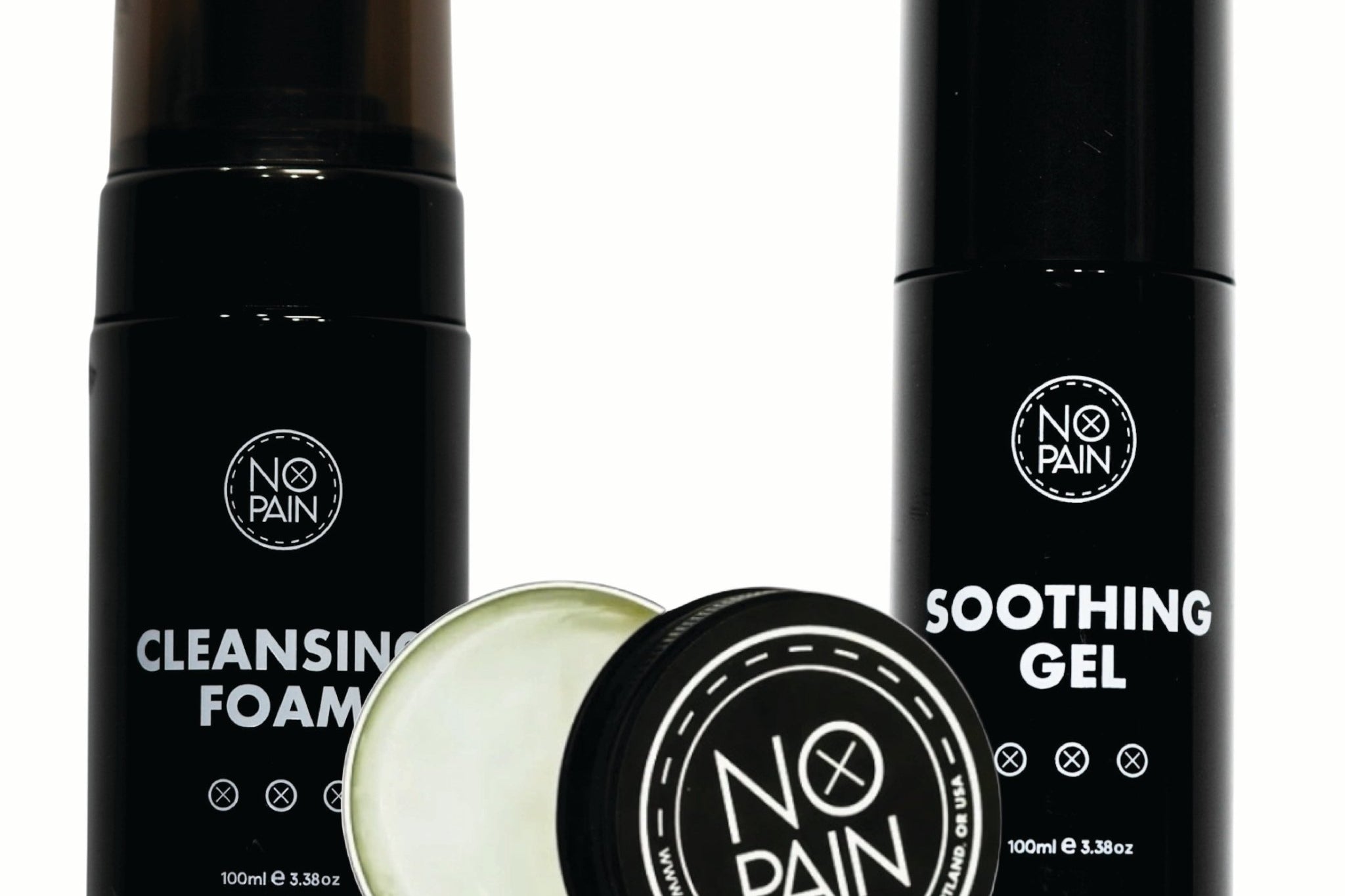
No Pain Tattoo Aftercare Bundle
Soothing gel for the first days of healing, aftercare balm from day two or three onward, and cleansing foam for daily washing. A clean, proper heal is part of a responsible tattoo. Backed by a money-back guarantee.
Shop Aftercare Bundle: $33.60FAQ
Is it safe to get an MRI with tattoos?
For most people, yes. Adverse reactions occur in less than 1 percent of cases, and when they do happen, they're usually mild: brief warmth or tingling at the tattoo site. Tell the MRI technologist about your tattoos before the scan so they can monitor the area, and communicate immediately if you feel any discomfort during the procedure. Don't skip or delay a necessary MRI because of tattoos.
Why do tattoos react with MRI machines?
Some tattoo inks contain iron oxide, which is a ferromagnetic material. MRI machines use a strong magnetic field and radiofrequency pulses. When ferromagnetic particles in tattoo ink are exposed to these, they can heat up slightly or produce a mild pulling sensation. Not all inks contain iron oxide, and modern professional inks have reduced iron content substantially compared to older formulations.
What does a tattoo MRI reaction feel like?
The most commonly reported sensation is warmth at the tattoo site during the scan. Some people describe a tingling or mild pulling sensation. Actual burning is rare and is mostly associated with older tattoos or inks with higher iron oxide content. If you feel anything unusual during your scan, use the call button to alert the technologist right away.
Which tattoo colors are most likely to react in an MRI?
Red, orange, and flesh-tone inks historically had higher iron oxide content than other colors. Black inks can also contain iron compounds depending on the formulation. Blues and greens tend to use copper-based pigments, which are not ferromagnetic. That said, ink formulations vary by brand and era, so the color alone isn't a reliable predictor of risk.
Do I need to wait after getting a tattoo before having an MRI?
For non-urgent MRIs, most radiologists recommend waiting at least six weeks after a new tattoo. This allows the skin to heal and the ink to settle. If the MRI is medically urgent, it should proceed regardless of tattoo age. Let the care team know your tattoo is recent so they can take appropriate precautions.
Should I tell the MRI technologist about my tattoos?
Yes. This is the most important step. Tell them before the scan starts: where your tattoos are and how old they are. The technologist can note it, monitor for any warmth or discomfort during the scan, and stop if needed. Most MRI facilities ask about tattoos on their pre-scan intake forms precisely for this reason.