


Tattoos on constantly moving body parts like inner elbows, wrists, backs of knees, ankles, hands, and fingers are some of the most beautiful and some of the most challenging to heal. The constant motion stresses the skin in ways a stable placement never does.
The core problem is simple: healing skin needs to be flexible. A tattoo that dries out and stiffens cracks every time you bend. Cracked scabs pull ink and open the wound. The most important thing you can do is prevent that from happening.
Why High-Movement Placements Are Hard to Heal
Three things work against healing in high-movement areas, and they compound each other.
Constant skin stress. Every bend or grip pulls the healing skin in multiple directions. The skin is trying to lay down new cells and close the wound while being mechanically stretched repeatedly. This slows the closing process and can cause minor re-openings of the wound surface.
Higher cracking risk. If the healing skin dries out and loses elasticity, movement cracks the scab layer. Cracked scabs hurt, create infection entry points, and often tear away with ink when they break. Keeping the skin pliable is not optional in these placements. It is the primary goal.
Friction. The inner elbow, the wrist, the back of the knee. These are all high-contact areas. Skin rubs against itself, against clothing, and against surfaces constantly. That friction is abrasive to healing skin and can lift peeling layers prematurely.
The Core Strategy: Keep Skin Elastic
Everything else follows from this. If the skin stays flexible, bending does not crack it. If it does not crack, the scab layer stays intact. If the scab layer stays intact, ink stays in place and infection risk drops sharply.
Keeping the skin elastic means:
- Moisturizing more consistently than you would for a stable placement. After every wash, apply a thin layer. Do not let the skin get to the point of feeling tight or dry.
- Using a product that absorbs without leaving a thick residue that could be rubbed off immediately by movement.
- Applying an extra application before activities you know will stress the placement (a long car drive, a workout, anything involving repetitive movement in that joint).
The other half of the strategy is minimizing unnecessary motion during the first week. You cannot stop moving entirely, but you can avoid extended repetitive movements: long runs if you have a knee tattoo, heavy grip work if you have a hand tattoo, activities that require sustained bending at the tattooed joint.
Specific Notes by Placement
Inner elbow (elbow ditch)
One of the most demanding healing placements. The crease flexes every time you bend your arm. Clothing over the crease will stick to the healing surface if it is allowed to dry out. Keep it moisturized and wear loose, soft clothing layers. Expect some itching in the crease itself as the skin regenerates, which is normal and particularly intense here because of the thin skin. For more detail on this placement, see our guide to Elbow Ditch Tattoos.
Wrists
Wrist tattoos benefit from being kept somewhat still during the first week. Avoid long sessions of repetitive wrist motion (typing for hours, gaming, lifting) if you can. The thin skin and constant blood flow to this area means it heals faster than most, but the movement factor is still real. Keep it clean and moisturized consistently.
Hands and fingers
Hands are the highest-maintenance placement. You wash your hands many more times per day than you wash any other body part, which means both more cleansing opportunities and more product being washed away. Apply a small amount of balm after every hand wash. The skin on hands turns over quickly, which is why finger tattoos fade faster and need touch-ups more often. For more detail, see our complete guide to Hand and Finger Tattoo Healing.
Backs of knees and ankle creases
These areas flex continuously when walking. Sweat accumulates in them, creating a moist environment that can cause maceration (over-softened skin) if you are over-moisturizing. Balance is more important here than anywhere else: enough moisture to keep the skin elastic, not so much that the crease stays wet. Pat dry thoroughly after washing and apply a thin layer of balm, not gel, from day 3 onward.
Ankles
Swelling is common with ankle tattoos and is exacerbated by the foot being down all day. Elevate the foot when possible during the first few days. Avoid tight socks or footwear over the healing tattoo. Loose, soft socks are fine and actually beneficial for reducing friction.
What to Use

Days 1 to 3
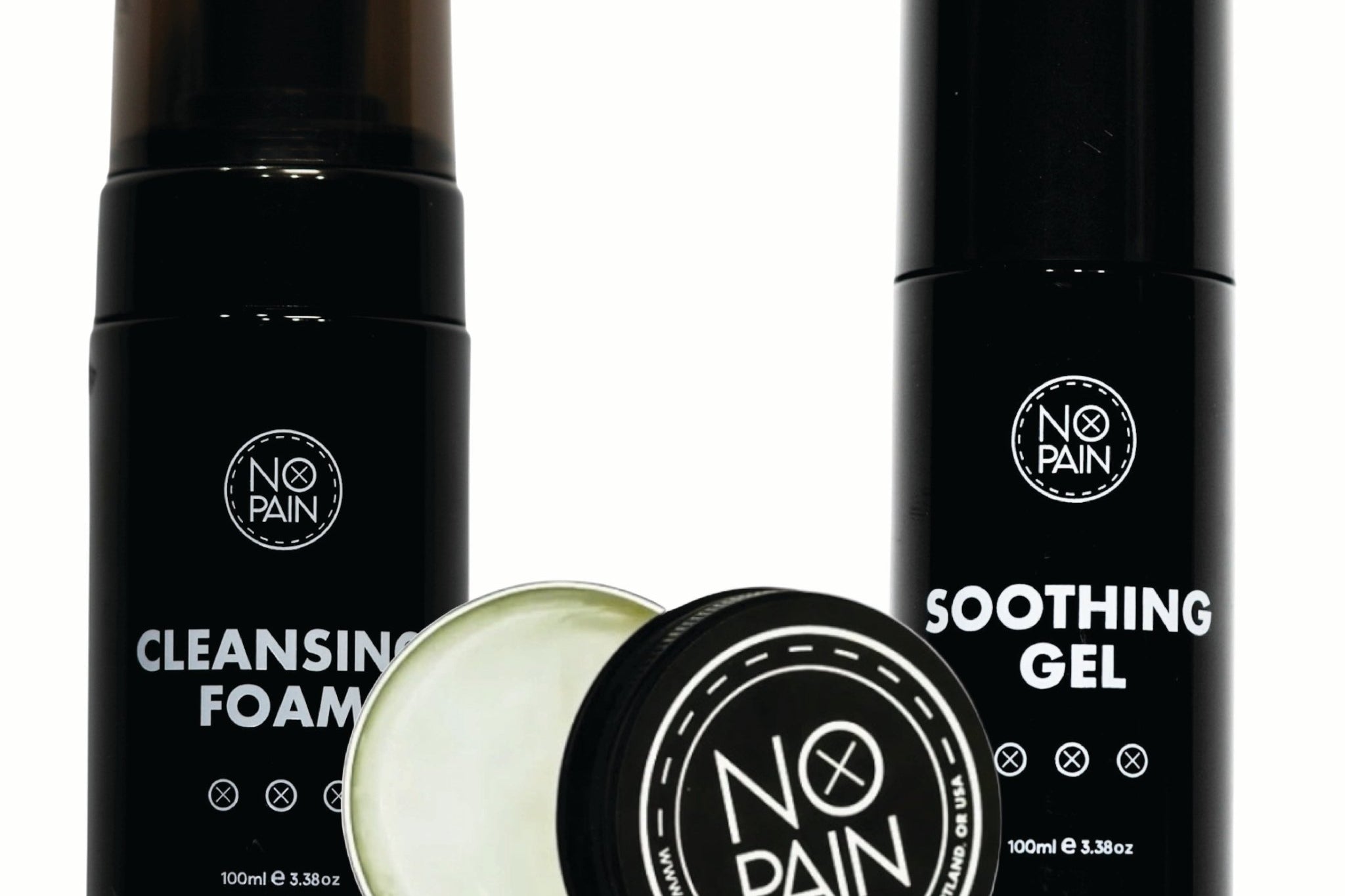
No Pain Tattoo Soothing Gel
For the first few days: lightweight and absorbs fully without leaving residue that motion will wipe away. Keeps the skin hydrated and elastic without creating a slick surface that sticks to clothing. Apply a thin layer after each wash.
$15.00
Shop Soothing Gel →
Day 3 Onward
No Pain Tattoo Aftercare Balm
The richer formulation locks in moisture for longer between applications. This is important for placements like hands and inner elbows where you cannot reapply as often as you might want. Breathable and non-occlusive.
from $12.00
Shop Aftercare Balm →Managing Expectations
Even with perfect aftercare, high-movement placements take longer to heal than stable ones. Surface healing that takes 4 weeks on a shoulder may take 6 to 8 weeks on an inner elbow or wrist. Do not compare your timeline to others who have tattoos in different spots.
Touch-ups are also significantly more common on these placements. It is standard for fingers and hands to need one touch-up as part of the normal process, not as a sign that something went wrong. For inner elbows and wrists, touch-ups are less common but not unusual. When you book a tattoo in a high-movement area, mentally include the possibility of a touch-up in your plan.
FAQ
Can I still move the body part normally while healing?
Yes. You cannot immobilize a joint for 4 to 6 weeks. Normal movement is fine. What you want to avoid is sustained, repetitive stress: long workouts, extended typing sessions, activities that require that joint to flex hundreds of times in a row. Brief normal movement is unavoidable and acceptable.
Should I wrap the tattoo to protect it during activity?
A loose, non-adhesive covering (like a clean wrap of cling film secured lightly) can protect a high-movement tattoo during specific activities where friction and contamination risk are high: a gym session, a day at work where you handle dirty equipment, and so on. Remove it after and let the skin breathe. Do not keep it wrapped continuously. The skin needs airflow.
My inner elbow tattoo keeps peeling and re-opening. Is that normal?
Some minor re-opening of the surface in the crease during the first week is common and expected due to the constant flexing. Keep it clean and well moisturized. If you have significant bleeding or the skin is consistently tearing with movement rather than just looking a bit raw, speak to your artist. They may have suggestions specific to the design and placement.
How can I reduce friction from clothing over the tattoo?
Wear soft natural fabrics like cotton jersey rather than rough or stiff materials. Loose fit matters more than fabric type. If you cannot avoid a seam or waistband going directly over the tattoo, a thin piece of cling film (secured lightly) under the clothing creates a barrier. Replace it if it gets wet or dirty.
Do high-movement tattoos fade faster long-term?
Placements that go through frequent bending and high skin turnover, especially fingers, hands, and inner wrists, do fade faster than stable areas. This is structural: the skin in these areas regenerates more rapidly, which means ink at the surface level sheds faster. Artists who specialize in these placements typically go slightly bolder on linework to account for it, and touch-ups every few years are part of the long-term maintenance plan.
My elbow ditch tattoo is extremely itchy. Is that normal?
The inner elbow has thin, sensitive skin and a high concentration of nerve endings. Itching there during healing is typically more intense than in other placements. Keep it consistently moisturized. A well-hydrated tattoo is a less itchy one. The soothing gel is particularly helpful here because the cooling effect gives real itch relief without the scratching that would damage the skin. For the full guide to managing tattoo itch, see our article on How Long Tattoo Itching Lasts.

No Pain Tattoo Aftercare Bundle
Soothing Gel for the first few days, Aftercare Balm from day 3 onward. Keeping the skin elastic and hydrated is the core strategy for healing tattoos in high-movement areas.
$33.60 Save 20%
Shop Aftercare Bundle →