


You've just got a new tattoo. You want to protect it. So you go looking for "what to put on a new tattoo" and come back with a dozen different answers: Aquaphor, lotion, Vaseline, balm, coconut oil, whatever your artist had lying around. It's a mess.
Here's the clear answer: a new tattoo needs three things. A gentle soap for washing, a lightweight soothing gel for the first few days, and a nourishing balm from day three onward. That's it. The rest is either unnecessary or actively bad for your heal.
This guide breaks down what you need, what you don't, and exactly when to use each product.
What to Avoid (And Why)
Before getting into what works, it's worth knowing what doesn't, because most of the common go-tos cause problems.
Petroleum-based products (Vaseline, A+D, Aquaphor). These form a thick, semi-occlusive barrier over the tattoo. In the first few days, when your skin is actively weeping plasma and trying to breathe, petroleum traps moisture underneath and creates the right conditions for bacteria to multiply. Aquaphor is lighter than Vaseline and acceptable as a last resort, but it's far from ideal. Here's a deeper look at why petroleum is a bad call.
Fragrance and dyes. Any product with a scent (body lotion, scented moisturizer, even "natural" fragranced products) contains compounds that irritate healing skin. The result is prolonged redness and, in some cases, a localized allergic reaction that can look a lot like an infection. Keep everything fragrance-free for at least two weeks.
Antibiotic ointments (Neosporin, bacitracin). These don't prevent infection in a well-cared-for tattoo. They're overkill. Worse, neomycin (one of the active ingredients in Neosporin) causes contact allergic reactions in around 10–15% of people. If you react, you'll be dealing with a rash on an open wound. Not a good situation.
Regular body lotion. Most commercial lotions are water-heavy emulsions that evaporate quickly, meaning you'll need to reapply constantly. Many also contain alcohol, fragrance, or exfoliating agents (glycolic acid, salicylic acid) that irritate healing skin. A dedicated tattoo balm or a fragrance-free, alcohol-free lotion is the safer call.
Coconut oil. It's comedogenic (pore-clogging) and far too thin to provide the barrier a healing tattoo needs. Fine on fully healed ink, not on a fresh one.
Phase 1 (Days 1-3): The Soothing Gel
For the first two to three days, your tattoo is inflamed. The skin is red, warm, and actively weeping a mix of plasma and excess ink. What you need at this stage is something lightweight that calms the inflammation without creating an occlusive seal.
A heavy balm too early traps moisture and can cause the skin to go soft and macerate, which leads to ink loss. A thin, cooling gel is the right tool for this window. It soothes the initial "sunburn" feeling, supports the skin's natural healing response, and washes off cleanly without residue.
Apply a thin layer after every wash. You want a sheen, not a coat. Twice daily (morning and night) is the right cadence for most people.

A lightweight, cooling gel formulated for the first few days of healing. Calms redness and inflammation, absorbs without residue, and won't trap moisture or suffocate the skin the way heavy balms can in week one.
Phase 2 (Day 3 Onward): The Aftercare Balm
Around day two or three, the weeping stops. The surface starts to dry out, and the peeling phase begins. This is when a heavier, more nourishing product takes over.
A balm is oil-and-butter based, meaning it creates a breathable barrier without the drawbacks of petroleum. It locks in the skin's natural moisture rather than adding an occlusive layer on top. The result: less thick scabbing, less ink loss, and a smoother peel.
Keep using the balm through the peeling phase and well into the "milky phase" (typically weeks two and three), when the tattoo looks dull and faded under a fresh layer of new skin. That's not permanent (it clears up) but keeping the skin hydrated speeds it along. Once the tattoo looks fully settled, you can switch to any good fragrance-free body lotion for long-term maintenance.

A nourishing, non-comedogenic balm that takes over when the gel phase ends. Shea butter and natural oils lock in moisture and support skin renewal through the peeling and milky phase, without clogging pores or suffocating the skin.
What About Soap?
Soap matters. Every day for at least two weeks, you're washing an open wound. Whatever you use touches freshly traumatized skin twice a day.
The rule: fragrance-free, gentle, liquid soap. No bar soap (bacteria can collect on the surface), no scented body wash, no exfoliating formulas. Dial Gold and Dove Sensitive Skin are widely available and both work well. A dedicated tattoo cleansing foam is even better, designed specifically to clean without drying.
Here's our full breakdown of the best soap options, including a comparison of the most popular choices.
Long-Term Care: Sunscreen
Once your tattoo is fully healed (meaning the skin texture matches the surrounding area, typically six to eight weeks for most placements), sunscreen becomes the most important product in your arsenal.
UV radiation is the number one cause of tattoo fading. It breaks down pigment, particularly in lighter colors, and turns black ink grey over time. SPF 30 or higher, broad-spectrum, applied whenever the tattoo will be in the sun.
Don't put sunscreen on a healing tattoo. The chemicals can irritate fresh skin, and the physical barrier isn't appropriate while the skin is still closing. Clothing is the best protection while healing.
The Easiest Option: A Complete Kit
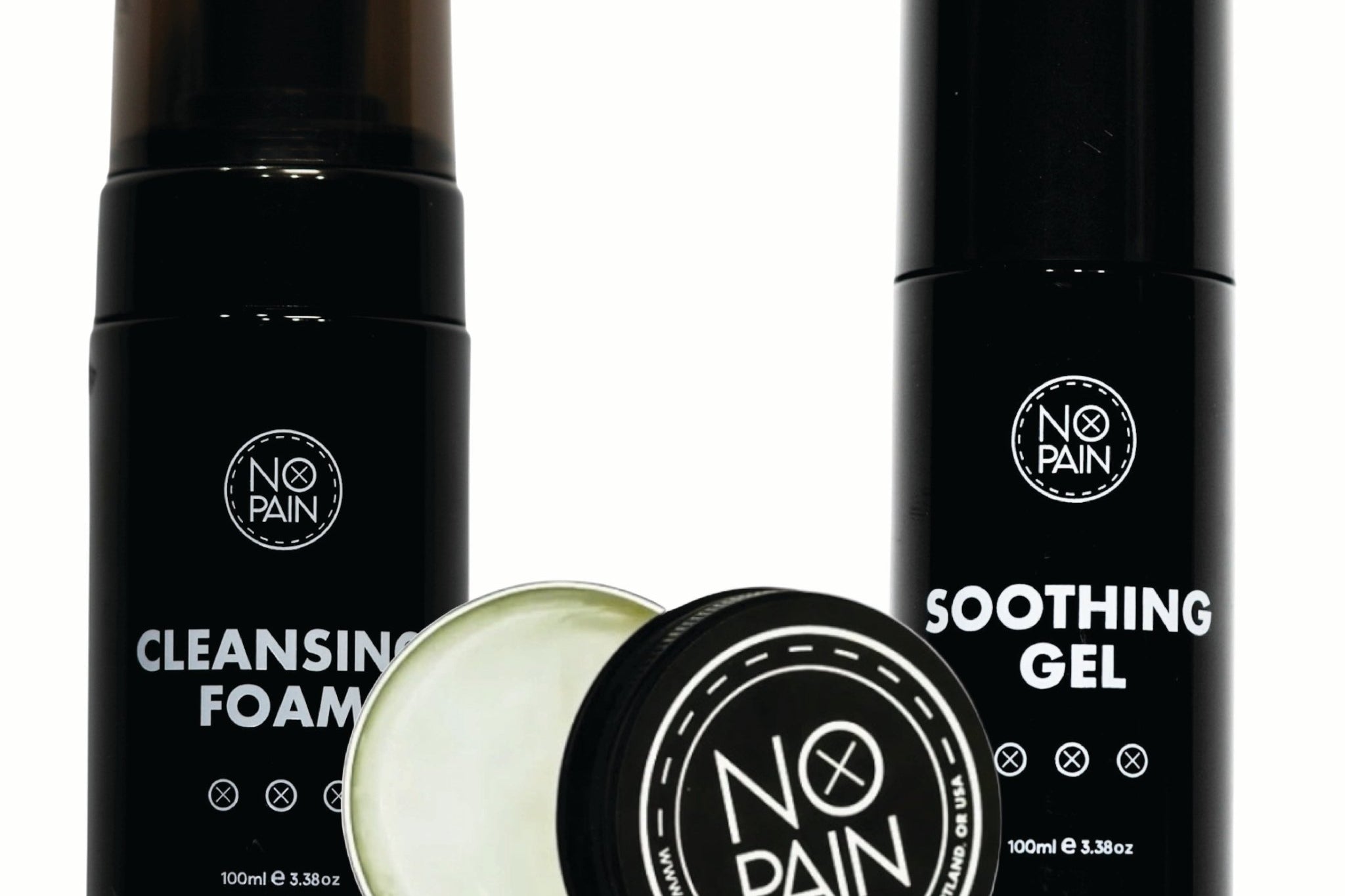
If you'd rather not track down separate products, the Aftercare Bundle contains both the Soothing Gel and the Aftercare Balm in one order. You get the gel for the first few days and the balm from day three onward: the full two-phase system without the guesswork.

Everything you need for the full healing process in one kit. Soothing Gel for the first few days, Aftercare Balm from day three onward. No hunting down separate products; just follow the two-phase system and let your tattoo heal right.
Frequently Asked Questions
Can I use regular body lotion on a new tattoo?
Not in the first two weeks. Most body lotions contain fragrance, alcohol, or preservatives that irritate healing skin. Once the tattoo is fully healed (six to eight weeks for most placements), a fragrance-free, alcohol-free body lotion is fine for maintenance. During healing, stick to a dedicated aftercare gel and balm.
Is Aquaphor good for new tattoos?
It's better than Vaseline, but still not ideal. Aquaphor is 41% petrolatum, which creates a barrier that's too occlusive for the first week of healing. It can trap moisture, soften the skin surface too much, and in some cases cause small white bumps (milia) where it clogs pores. It's a reasonable last-resort if you have nothing else, but there are better options.
How often should I apply aftercare products?
Twice daily is the baseline: morning and night, always after washing. In the first few days while the tattoo is weeping, a third application midday is fine. The goal isn't constant reapplication; it's keeping the skin consistently hydrated without smothering it. A thin layer that absorbs into the skin is what you're after, not a thick coat sitting on top.
When do I switch from gel to balm?
Around day two or three, when the weeping stops and the surface starts to dry. Some people notice it earlier, some a day later. The practical signal: when the tattoo stops leaking fluid and starts looking dry and slightly tight, transition to the balm. If you're using both in the same kit, the switch is intuitive.
Do I need a special tattoo soap, or will any gentle soap work?
Any gentle, fragrance-free liquid soap works. Dial Gold or Dove Sensitive Skin are both solid choices and easy to find. The key requirements: no fragrance, no alcohol, no exfoliating ingredients, liquid not bar. A dedicated tattoo cleansing foam is more convenient and designed specifically for the job, but it's not required if you have a good gentle soap already.
What's the difference between the Soothing Gel and the Aftercare Balm?
The gel is lightweight and cooling, designed for the first few days when the skin is inflamed and weeping. It soothes without creating a heavy barrier. The balm is richer and more nourishing, designed for the peeling and milky phase once the surface has closed. Using balm too early traps too much moisture; using gel too long misses the deeper hydration the skin needs as it rebuilds. They're both part of the same two-phase system, not interchangeable.