


A fragrance-free, dye-free liquid soap that rinses clean is the minimum. Anything with added scent, color, or harsh antibacterial agents is too much for a fresh wound. Beyond that baseline, not all soaps behave the same on healing skin, and a few popular options that seem like safe choices can actually slow healing or cause irritation.
Here is a rundown of the most common options people reach for, what each one actually does to healing skin, and what to use instead.
In this article
- What to look for in a tattoo soap
- Common options compared
- What to avoid entirely
- How to actually wash a new tattoo
- How often to wash
- Frequently asked questions
What to Look for in a Tattoo Soap
A healing tattoo is an open wound in the epidermis. The cleanser you use on it needs to satisfy a few specific conditions that most household soaps are not designed to meet simultaneously.
It should be fragrance-free and dye-free. Both fragrances and artificial dyes are common irritants that provoke inflammation in compromised skin. Even products labeled "unscented" sometimes contain masking fragrances to neutralize other scents. Check the ingredient list for anything listed as "parfum" or "fragrance."
It should be liquid, not a bar. Bar soaps accumulate bacteria between uses and often contain binding agents that leave residue on the skin. Liquid formulas rinse more cleanly.
It should have some antimicrobial action, particularly in the first week when the wound channels created by the needle are still partially open. A cleanser that does nothing to reduce bacterial load is missing the point for the first seven to ten days.
It should not be excessively alkaline. Healthy skin has a slightly acidic pH (around 4.5 to 5.5). High-pH cleansers strip the skin's acid mantle, which increases dryness, slows the healing process, and can make the skin more susceptible to infection rather than less. Many common antibacterial soaps sit at a pH well above 7.
Common Options Compared
Dial Gold (classic antibacterial liquid soap)
Dial Gold has been the standard tattoo artist recommendation for decades, and it is not a bad option. It is inexpensive, widely available, and has genuine antimicrobial action. The problem is that it was formulated for intact hand skin, not for healing wounds. It has a relatively high pH, contains surfactants that can be quite stripping, and tends to leave healing tattoos feeling uncomfortably dry and tight after washing. That dryness contributes to heavier scabbing and more intense itching in the peeling phase. It is acceptable in a pinch, but it is far from the best tool for the job.
Unscented Dove soap
Dove's unscented bar and liquid formulas are genuinely gentle, have a skin-friendly pH, and do not contain added fragrances. They are a better choice than Dial for minimizing irritation. The limitation is that Dove is not antimicrobial. In the first week of healing, when the wound is most open, you want something that reduces bacterial load, not just something that removes visible debris. Dove is fine from week two onward when the surface has closed, but it is not the best choice for the early healing period.
Dr. Bronner's castile soap
Dr. Bronner's has developed a devoted following in the tattoo community, and the appeal is understandable: it is plant-based, contains no synthetic additives, and feels clean. The problem is pH. Castile soap is made with a saponification process that leaves it quite alkaline, typically pH 9 or above. That level of alkalinity is well outside the range that healing skin handles well. It can strip the acid mantle, cause the skin to become dry and reactive, and paradoxically leave the wound more vulnerable. The "pure and natural" reputation does not offset the pH issue for fresh tattoos.
Cetaphil gentle skin cleanser
Cetaphil is fragrance-free, very gentle, and well-tolerated by sensitive skin. It has a skin-compatible pH and will not cause the dryness or irritation that harsher soaps do. Like Dove, the limitation is that it has no meaningful antimicrobial action. For the first week, when keeping the wound clean matters most, Cetaphil alone is not enough. It becomes a reasonable option from week two onward if a dedicated tattoo cleanser is not available.
Dedicated tattoo foam cleansers
Products formulated specifically for healing tattoos are designed to solve all of the problems above at once: pH-balanced, fragrance-free, dye-free, antimicrobial, and formulated to rinse cleanly without stripping the skin. The foam delivery format is also practical for a healing tattoo because it spreads across the skin with minimal friction, so you do not need to rub or scrub to create a lather, which means less mechanical disruption to the healing surface. If you have access to one, this is the cleanser to use for the full first two weeks.

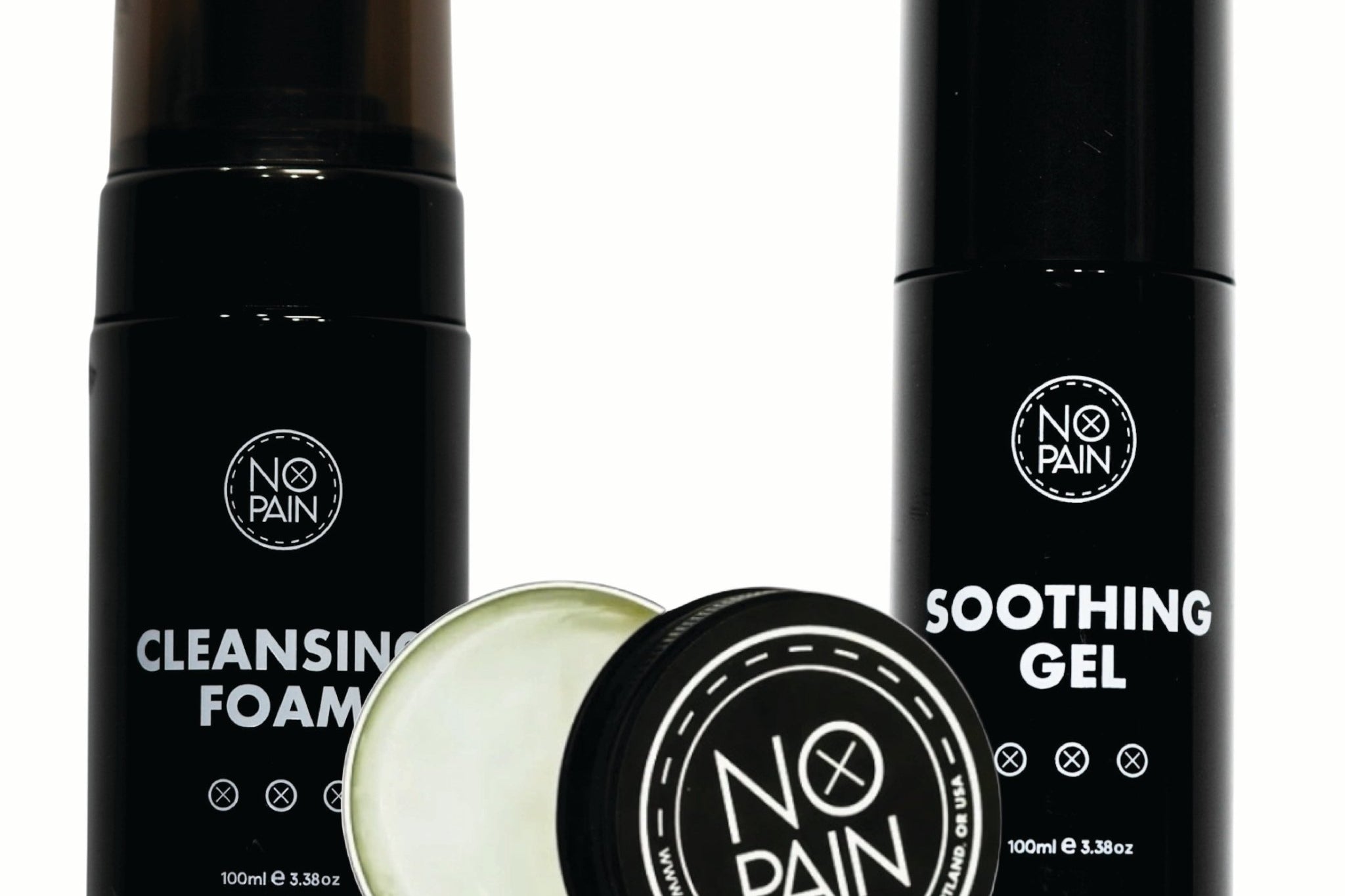
Everything you need to take the tattoo from raw wound to fully healed skin. Soothing Gel for daytime hydration and itch relief in the peeling phase, Aftercare Balm for deeper moisture when the skin is feeling dry and tight. Covers the full healing window without any of the fragrance, dye, or alcohol that irritates healing skin.
What to Avoid Entirely
Scented soaps of any kind, including those marketed as "natural" or "botanical," carry the same irritation risk as synthetic fragrances and should not go anywhere near a healing tattoo. The same applies to soaps with added moisturizers, oils, or skin conditioning agents: these are formulated for intact skin and can clog the still-open wound channels in a fresh tattoo.
Bar soaps in general are not ideal. The surface of a bar soap that sits in a wet dish is a bacterial accumulation point, which is the opposite of what you want when cleaning an open wound. If bar soap is all you have, use a fresh, clean bar and do not let it sit in standing water between uses.
Loofahs, washcloths, and sponges should stay away from the tattooed area for the entire healing period. The mechanical friction from any scrubbing surface can lift peeling skin before it is ready, pull ink out, and cause abrasion on skin that is already compromised. Use clean fingertips only.
Products with alcohol, hydrogen peroxide, or Bactine are too harsh for a healing tattoo despite being common household wound care items. They disrupt the healing process more than they help it.
How to Actually Wash a New Tattoo
Wash your hands thoroughly before touching the tattoo. Apply a small amount of soap to clean fingertips and gently work it across the tattooed area using light circular motions. You are removing plasma, excess ink, and surface bacteria, not scrubbing a dirty pan. The pressure should be comparable to washing your face.
Rinse with lukewarm water, not hot. Hot water increases blood flow to the area and can cause the tattoo to weep more, and it is uncomfortable on raw skin. Rinse until the soap is completely gone, as any residue left behind can cause irritation.
Pat the area dry with a clean paper towel. Do not use a cloth towel, which can harbor bacteria and snag on peeling skin. Do not rub. Pat lightly until the skin is dry, then apply your aftercare product while the skin is still slightly warm.
How Often to Wash
Twice a day is the standard recommendation for the first two weeks: once in the morning and once at night. Washing more often than that can dry the skin out and disrupt the moisture balance the skin needs to heal. Washing less often allows plasma and bacteria to accumulate on the surface.
If the tattoo gets dirty during the day (from physical activity, dusty environments, or accidental contact with something), a gentle rinse with clean water and a light pass with soap is appropriate outside the regular schedule. Do not skip the aftercare application after any wash.

A water-based gel that absorbs quickly and restores the moisture barrier after washing without sealing the skin too heavily. Apply after each wash while the skin is still slightly warm. Works particularly well during the peeling phase when the itch is at its worst, because the cooling effect helps without requiring you to scratch.
Frequently asked questions
Can I use Dial soap on a new tattoo?
Yes, Dial Gold is an acceptable option, particularly in the first week when antimicrobial action matters most. It is not the best choice because it is formulated for intact hand skin rather than healing wounds and can be quite drying and alkaline, which increases itching and the likelihood of heavy scabbing. If Dial is what you have, use it for the first week and switch to something gentler once the surface begins to close. A dedicated tattoo cleanser is a better option from day one if you have access to one.
Can I use regular hand soap on a new tattoo?
It depends on what is in it. Most hand soaps contain added fragrance, which is an irritant for healing skin and should be avoided. If you have a fragrance-free, dye-free liquid hand soap, it is a reasonable temporary option. Any hand soap with a scent, antibacterial additives like triclosan, or skin conditioning agents is not appropriate for a fresh tattoo. When in doubt, check the ingredient list before using it.
Is Dove soap good for new tattoos?
Unscented Dove is gentle, pH-appropriate, and will not cause the dryness that harsher soaps do. The limitation is that it has no meaningful antimicrobial action, which matters most in the first week when the wound is still partially open. Dove is a reasonable choice from week two onward when the surface has closed and the priority shifts to gentle cleansing over bacterial reduction. For the first week, pair it with proper wound cleaning technique and watch for any signs of infection.
Can I use Dr. Bronner's soap on a new tattoo?
Dr. Bronner's is not recommended for fresh tattoos despite its popularity in the tattoo community. Castile soaps are made through a process that leaves them quite alkaline, typically with a pH around 9 or above. Healthy skin sits at a pH of roughly 4.5 to 5.5, and using a significantly alkaline cleanser disrupts the acid mantle, increases dryness, and can slow healing. The plant-based, additive-free formulation is appealing, but the pH issue makes it a poor choice for the healing period.
How long do I need to wash my tattoo with special soap?
The most careful washing protocol is most important during the first two weeks, when the wound is healing and the skin is still vulnerable to infection. By week three, the surface has typically closed and the priority is simply keeping the area clean without irritating the new skin. From week two onward, a gentle fragrance-free cleanser that works for your skin is fine, even if it does not have antimicrobial properties. There is no reason to stop washing the tattoo entirely: keeping it clean is part of long-term maintenance, not just healing.
Should I use hot or cold water to wash my tattoo?
Lukewarm water is best. Hot water increases blood circulation in the area, which can cause the tattoo to weep plasma and excess ink and makes raw skin more uncomfortable. Cold water is not harmful but does not rinse soap as effectively and may cause the muscles near the tattooed area to contract, which can be uncomfortable if the tattoo is in a fleshy or mobile area. The goal is water that feels comfortably warm, similar to what you would use to wash your face.
Clean It Right, Heal It Right
The wash is only half of it. What you put on after makes just as much difference. Soothing Gel after every wash, Aftercare Balm when the skin needs deeper moisture. Both in the bundle.
Shop the Aftercare Bundle →Free shipping on orders over $35.