


If your tattoo is still red and slightly swollen on day three, that is almost always normal. Redness in the first three days is part of the body's acute inflammatory response to a fresh wound, not a sign that something has gone wrong. The question is whether it's improving, staying the same, or getting worse.
In this article
- What normal tattoo redness looks like, day by day
- Why the redness happens
- When redness at day 3 is a warning sign
- How to reduce tattoo redness
- When to see a doctor
- FAQ
What Normal Tattoo Redness Looks Like, Day by Day
Days 1 to 3. The tattooed area will be red, raised, and warm to the touch. The skin around the design may look pink for an inch or two beyond the edges. This is normal. The intensity peaks in the first 24 to 48 hours and then should slowly begin to decrease. On day three, you may still see noticeable redness, but it should look a little better than it did on day one, not worse.
Days 4 to 7. Redness should be visibly reducing. The skin starts to feel less warm. Swelling subsides. The wound transitions from the acute phase into early repair. If the redness is clearly less than it was on days one and two, you are on a normal healing trajectory.
Days 8 to 14. The acute inflammatory phase is over. The skin may still appear slightly pink in places, especially on lighter skin tones, but the angry red of the first few days should be long gone. By this point, peeling and flaking are the main visible activity.
The rule: redness that gets a little better each day is healing. Redness that stays the same for several days, or that gets worse after day three, needs attention.
Why the Redness Happens
A tattoo is a wound. The process involves tens of thousands of needle punctures depositing ink into the dermis, and the body's immune response is the same as it would be for any wound: increased blood flow sent to the area to begin repair. That rush of blood is what makes the skin appear red and feel warm.
At the same time, the body releases inflammatory mediators that cause the surrounding tissue to swell and become sensitive to touch. This is not a malfunction. It is the healing system working exactly as it should. The first three days represent the acute phase of this response, and some level of redness, warmth, and tenderness throughout that period is expected in a perfectly normal heal.
Larger tattoos, heavily worked areas, and sensitive placements typically produce more pronounced redness in the first few days than small or lightly worked pieces. A full sleeve session will look angrier on day three than a quarter-size design on the outer forearm. Both can be healing normally.
When Redness at Day 3 Is a Warning Sign
Redness on day three is almost always benign, but there are specific patterns that indicate something else is happening.
Redness that is getting worse, not better. If your tattoo looks more red and swollen on day three than it did on day one, the inflammation is not following a normal declining curve. This warrants close monitoring, and potentially a doctor visit if it continues past day four or five.
Redness spreading beyond the design. Some pinkness in the skin immediately surrounding a fresh tattoo is normal. A ring of redness that is visibly expanding outward from the tattoo border over several hours or days is not. Spreading redness with a defined edge is a classic sign of a localized infection spreading into the surrounding tissue.
Red streaks extending from the tattoo. Streak-like lines of redness radiating outward from the tattoo (not just diffuse pinkness) are a serious sign that warrants same-day medical attention. This pattern suggests the infection may be spreading through the lymphatic system.
Redness with thick or colored discharge. Clear plasma weeping from a fresh tattoo is normal in the first 24 to 48 hours. Yellow, green, or gray discharge, or any discharge with a foul odor, is not. If redness at day three is accompanied by this type of discharge, see a doctor.
How to Reduce Tattoo Redness
If the redness is in the normal range (improving, not spreading), there are a few practical steps that help the skin settle faster.
Wash with cool to lukewarm water. Hot water increases blood flow to the skin, which intensifies redness and slows the transition out of the acute inflammatory phase. Use cool to lukewarm water for the first few days. The difference is noticeable.
Apply a thin layer of soothing gel. A cooling, lightweight gel applied after each wash helps calm the surface inflammation without trapping heat beneath an occlusive layer. Apply a rice-grain-sized amount, just enough to lightly coat the surface. More than that traps heat and can worsen the appearance.
Let it breathe. After washing and patting dry, give the tattoo 20 to 30 minutes of air exposure before applying anything. Skin that gets constant coverage from wrap, clothing, or product tends to stay more inflamed than skin that gets regular airflow.
Keep it elevated if possible. For placements on the arm or leg, keeping the limb elevated above heart level in the first 24 to 48 hours reduces fluid accumulation in the tissue and helps swelling (and by extension, redness) resolve faster.
Avoid heat sources. Hot showers, saunas, hot yoga, and direct sunlight all raise skin temperature and can prolong the acute redness phase. The first few days are not the time for any of these.

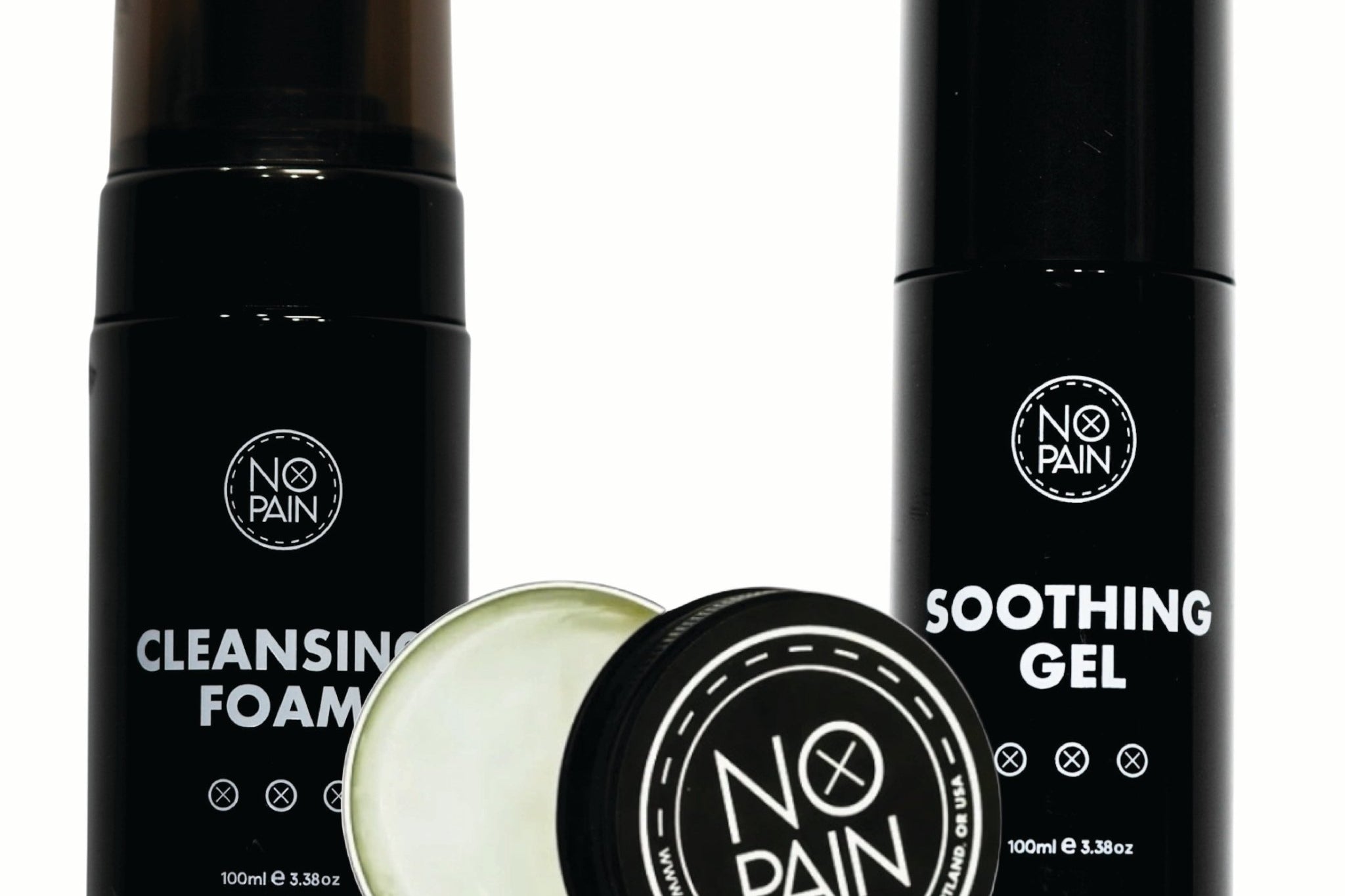
A lightweight, cooling gel that calms the redness and heat of a fresh tattoo without trapping warmth beneath an occlusive layer. Apply a thin layer after each wash in the first few days. Helps the acute inflammatory phase resolve cleanly.
When to See a Doctor
See a doctor if any of the following apply: redness is getting worse rather than better after day three; the redness is spreading beyond the tattoo border; you see red streaks extending from the tattoo; the area is producing thick or colored discharge; you have a fever or feel generally unwell alongside the local symptoms; or you are not confident it is healing normally and would rather have it checked. Tattoo infections respond well to antibiotics when caught early. Waiting until symptoms become severe is the mistake that turns a manageable early infection into a serious one.
FAQ
Is it normal for a tattoo to still be red after 3 days?
Yes, in most cases. The first three days represent the acute inflammatory phase of healing, when increased blood flow to the wound produces redness, warmth, and swelling. On day three, redness should be noticeably less than it was on day one and continuing to improve. If it is still clearly red on day three but less so than before, that is a normal healing trajectory. If the redness is the same or worse than day one, that is worth paying attention to.
How long does tattoo redness last?
Acute redness typically peaks in the first 24 to 48 hours and then decreases steadily over the following days. By day four or five, the obvious redness of the first few days should be mostly gone, with mild residual pinkness possible into the end of the first week. Large pieces or heavily worked areas can stay visibly red a day or two longer than smaller pieces. If redness is persisting past day seven without improvement, or is getting worse rather than better, it warrants a closer look.
Why is my tattoo red and swollen after 3 days?
Redness and mild swelling at day three are a normal part of the acute inflammatory response to a fresh wound. The body sends increased blood flow to the area to begin repair, which causes the redness. Fluid accumulates in the surrounding tissue, which causes the swelling. Both should be declining by day three. If they are, you're healing normally. If either is getting worse rather than better, see a doctor.
Can aftercare products make tattoo redness worse?
Yes. Thick, petroleum-based products like Vaseline and Aquaphor trap heat beneath an occlusive layer and can prolong redness. Heavily scented products can irritate the skin and trigger a secondary inflammatory response on top of normal healing inflammation. Using too much product, even a good product, can also cause problems by suffocating the skin. The standard guidance: a rice-grain-sized amount of a lightweight, fragrance-free gel in the first few days. Thin layers applied twice daily after washing.
Is tattoo redness a sign of infection?
Redness alone, in the first three to five days, is usually not a sign of infection. Infection produces a different pattern: redness that is getting worse over time rather than better, redness that is spreading beyond the tattoo border, thick or colored discharge, red streaks extending from the tattoo, or fever. Redness that is improving each day is healing. Redness that is worsening, spreading, or accompanied by those other symptoms needs medical attention.
My tattoo is still red after a week. Is that normal?
Some very faint residual pinkness can persist at the end of the first week, particularly on lighter skin or with larger pieces. But the obvious, inflamed redness of days one to three should be fully gone by day seven, and any redness present should be clearly improving. A tattoo that is still visibly red and inflamed at day seven, especially without improvement, is not healing on a normal timeline. See a doctor to rule out infection or an adverse skin reaction.
Support the Acute Phase and Beyond
Soothing gel for the first few days to calm the redness and heat of a fresh tattoo. Nourishing balm from day three onward as the skin transitions into the repair and peeling phase.
Shop the Aftercare Bundle →Formulated at Historic Tattoo in Portland, Oregon. 100% money-back guarantee.