
For most people, weight changes have little to no visible effect on tattoos. Skin is more elastic than people assume, and moderate fluctuations over months or years give it time to adapt without distorting the ink. The risk increases with the speed and size of the change, and one specific outcome, stretch marks through the tattooed skin, is worth understanding before you choose where to place a tattoo. Here is what actually happens when bodies change and ink is involved.
In this article
- How skin adapts to body changes
- Weight gain and tattoos
- Tattoo stretch marks: the main risk
- Weight loss and tattoos
- Pregnancy
- Placement: higher-risk and lower-risk areas
- Keeping skin resilient
- Frequently asked questions
How Skin Adapts to Body Changes
Tattoo ink sits in the dermis, the second layer of skin below the epidermis. When the body changes size, the skin stretches or contracts with it, and the ink moves along. For gradual changes, the skin has time to remodel its collagen and elastin fibers to accommodate the shift, and the tattoo distorts very little if at all.
The analogy that holds up is an image printed on a rubber band. Stretch it slightly and the image looks the same. Stretch it rapidly and far, or do it repeatedly without giving it time to relax, and the image distorts. Your skin is far more sophisticated than rubber, and its capacity to adapt is greater, but the principle applies: speed and scale of change matter more than the change itself.
Weight Gain and Tattoos
Gradual weight gain over months or years typically has no visible effect on tattoos. The skin accommodates the increase, and the ink redistributes with it. Many people gain and lose considerable weight over a lifetime without their tattoos showing any meaningful distortion.
Where distortion becomes more likely is with rapid or very large weight gain. Geometric designs, lettering, and anything with straight lines or perfect symmetry are more sensitive to distortion than organic shapes. A flowing botanical tattoo that gains a small amount of stretch will still read correctly. A tattoo of precise block letters or a symmetrical mandala may show visible warping if the underlying skin changes shape quickly.
The placement also matters: areas with more underlying fat and soft tissue (abdomen, hips, thighs, upper arms) stretch more than areas over bone or lean tissue (forearms, calves, wrists).
Tattoo Stretch Marks: The Main Risk
Stretch marks are the most concerning way that weight changes can damage a tattoo. A stretch mark is not a surface scar. It forms in the dermis, the same layer where tattoo ink lives. When skin stretches faster than its collagen and elastin can accommodate, those fibers tear. The resulting stretch mark is a permanent structural change in the layer of skin that holds the ink.
If a stretch mark forms through a tattooed area, the result is a pale, slightly raised or indented line running through the design. The ink in that zone is disrupted. Depending on the severity and location, this can look like a crack or gap in the tattoo, a lightened band through the design, or a raised textural change that alters how the tattoo reads.
This damage is permanent. Stretch marks do not fade back to normal skin, and the disrupted ink in that zone cannot be fully restored. A cover-up or rework around the affected area is possible but limited by the texture of the stretch mark itself.
The conditions that make stretch marks more likely: rapid weight gain (the faster the gain, the less time the skin has to adapt), very large weight changes, genetic predisposition to stretch marks, and areas that carry the most physical expansion. The abdomen and hips during pregnancy are the highest-risk example, but any area of rapid expansion carries this risk.
Weight Loss and Tattoos
Weight loss does not cause tattoos to shrink or disappear. The ink is in the dermis and stays there. What changes is the canvas. The two main effects are a slight repositioning of the tattoo (as the underlying tissue volume decreases) and, with large or rapid weight loss, skin laxity.
Skin laxity means the skin has lost volume beneath it and may not lie as flat as it did. A tattoo on loose or folded skin will look different when the skin is relaxed versus when it is taut. The design itself has not changed, but its appearance at rest changes with the skin's texture. For most people who lose weight gradually, the skin tightens enough over months to years that this is not a lasting issue. For large, rapid weight loss (such as after bariatric surgery), loose skin can be more persistent, and tattoos in affected areas may look less defined or slightly wrinkled.
Tattoos on the abdomen, inner thighs, and upper arms are most affected by this. Tattoos on areas with less skin laxity after weight loss (forearms, calves, chest) tend to look largely unchanged.
Pregnancy
Pregnancy is the highest-stakes version of rapid body change, particularly for the abdomen. The abdomen expands quickly and substantially, far faster than gradual weight gain, and then contracts again postpartum. This combination creates the greatest stretch mark risk of any normal life event.
Tattoos on the lower abdomen, hips, and sides are the most vulnerable. Some people come through pregnancy with their abdominal tattoos looking unchanged; others develop stretch marks through the tattooed skin. Genetics play a large role in who gets stretch marks and where, and this is not something that can be reliably prevented.
If you are planning a pregnancy and are considering a lower abdominal or hip tattoo, it is worth waiting until after. Tattoos on the ribs, back, chest, and extremities are largely unaffected by pregnancy. If you already have a tattoo in a high-risk zone and are pregnant, keeping the skin well-hydrated does not guarantee stretch mark prevention but supports the skin's elasticity as much as possible.
Placement: Higher-Risk and Lower-Risk Areas
If you anticipate major body changes in the future, placement is worth factoring into your decision.
Higher-risk areas (more soft tissue, more expansion during weight changes): abdomen and lower belly, hips and upper buttocks, inner and outer thighs, upper arms (bicep and tricep area), chest and breast tissue, sides and ribs at the waistline.
Lower-risk areas (over bone or lean tissue, minimal soft tissue change): forearms and wrists, calves and ankles, feet and hands, upper back and shoulder blades, sternum and collarbone, back of the neck.
Lower-risk does not mean zero risk. Any skin can develop stretch marks under the right conditions. But a tattoo on the forearm is largely unaffected by a 30-pound weight change in either direction, while a tattoo on the abdomen is more exposed to that same change.
Keeping Skin Resilient
You cannot prevent all weight-related changes to your skin, but you can keep your skin in the best possible condition to adapt to them. Well-hydrated skin with healthy elastin and collagen stores is more resilient than dry, neglected skin. The difference matters most during periods of rapid change.
Applying a nourishing balm to tattooed areas daily, drinking adequate water, and avoiding prolonged sun exposure (which degrades collagen and reduces skin elasticity) are the practical steps that support skin resilience. No cream can guarantee you will not develop stretch marks, but maintaining the skin's baseline health gives it the best chance to accommodate change without permanent damage.

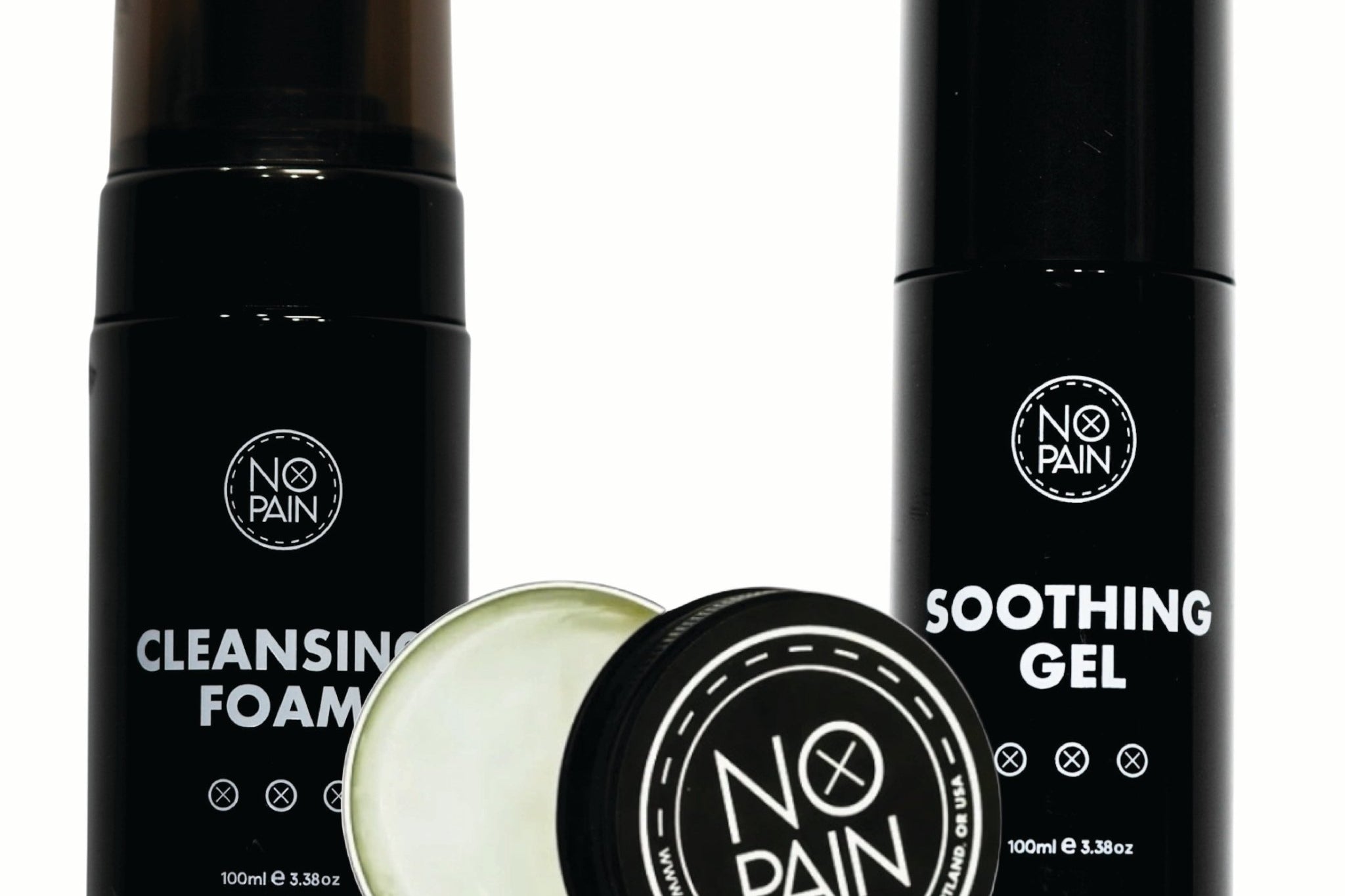
A petroleum-free, fragrance-free balm formulated for healing and healed tattoo skin. Regular use keeps the skin supple and hydrated, supporting its natural elasticity during periods of body change.
Frequently asked questions
Do tattoos stretch with weight gain?
Yes, but for most people the stretching is so gradual and minor that it is not visibly noticeable. Skin is elastic and adapts well to moderate, gradual weight gain over months or years. Tattoos with organic shapes (florals, animals, abstract designs) are more forgiving of stretching than geometric designs, straight lines, or lettering, which can show distortion more readily. Very rapid or very large weight gain carries more risk than gradual change.
Can weight gain cause stretch marks through a tattoo?
Yes, and this is the most serious way weight changes can damage a tattoo. Stretch marks form in the dermis, the same layer where tattoo ink sits. When skin expands faster than its collagen and elastin can accommodate, those fibers tear, creating a permanent structural change through the tattooed skin. A stretch mark through a tattoo creates a visible pale line or disrupted zone in the design that cannot be fully repaired. The faster and larger the weight gain, the higher the risk.
What happens to tattoos after weight loss?
The tattoo itself stays in the dermis and does not shrink or disappear. What changes is the canvas: as underlying fat and tissue volume decreases, the skin may sit differently, and the tattoo repositions slightly with it. With large or rapid weight loss, loose skin can make a tattoo look less defined or slightly wrinkled when the skin is relaxed. This is most noticeable on the abdomen, inner thighs, and upper arms. Tattoos on lower-risk areas like forearms and calves are generally unchanged.
Do pregnancy and tattoos mix badly?
Pregnancy involves the most rapid and substantial body change most people experience, particularly for the abdomen. Lower abdominal and hip tattoos are at the highest risk for stretch mark damage during pregnancy. Some people come through with their tattoos unchanged; others develop stretch marks through the design. Genetics play a large role in who develops stretch marks and where, and there is no reliable way to prevent them. If you are considering a lower abdominal tattoo and plan to have children, waiting until after is worth considering. Keeping the skin well-hydrated during pregnancy supports elasticity but does not guarantee protection.
Which tattoo placements are safest if I expect to gain or lose weight?
Lower-risk placements are those over bone or lean tissue with minimal soft tissue volume change: forearms and wrists, calves and shins, ankles, feet and hands, upper back, shoulder blades, sternum, and collarbone. These areas change very little in size even with large weight changes. Higher-risk areas are those with more underlying fat and soft tissue: abdomen, hips, thighs, upper arms, chest, and sides at the waistline.
Can you fix a tattoo that has been stretched or crossed by stretch marks?
Partially. A tattoo distorted by gradual stretching without stretch marks can often be corrected or reworked by a skilled artist once the body has stabilized at a new weight. A tattoo with stretch marks running through it is harder to repair because the stretch marks themselves represent permanent structural damage to the dermis. The texture of the scar tissue affects how ink holds in that zone. A cover-up or rework that accounts for the stretch mark lines is possible, but the texture difference will still be present even if the design is redesigned around it.
Keep Your Skin in the Best Shape It Can Be
The Aftercare Bundle covers both the healing phase and long-term maintenance. The same nourishing routine that helps new tattoos heal cleanly also keeps older skin supple and resilient over time.
Shop the Aftercare Bundle →Formulated at Historic Tattoo in Portland, Oregon. 100% money-back guarantee.