


Tattoos fade for predictable reasons, and most of them are reversible with the right approach. Whether your ink looks dull and washed out or has lost its sharpness entirely, the options range from a simple at-home routine to a professional rework. Here is what is actually happening when a tattoo fades and what you can do about it, in order of effort and commitment.
In this article
- Why tattoos fade
- What you can do at home
- When to consider professional options
- Touch-ups and relining
- Reworks
- Cover-ups
- Long-term maintenance
- Frequently asked questions
Why Tattoos Fade
Tattoos sit in the dermis, the deeper layer of skin beneath the epidermis. The dermis is relatively stable, but the ink particles placed there are not permanent in the way most people assume. Several processes work on them over time.
UV exposure is the biggest driver. Sunlight breaks down pigment molecules through photodegradation. Color inks are more vulnerable than black because their complex molecular structures absorb and scatter different wavelengths of light. Black ink's carbon base is chemically simpler and more stable, which is why black tattoos tend to hold their contrast longer. But no ink is completely UV-resistant, and repeated unprotected sun exposure accelerates fading faster than any other single factor.
The immune system keeps working. Macrophages (immune cells) continuously surround and attempt to clear foreign particles in the dermis. Over decades, they slowly migrate with ink particles toward the lymph nodes. This is a gradual process and not the main cause of visible fading in most people, but it explains why even a completely sun-protected tattoo softens over very long time horizons.
Skin cell turnover. The epidermis above the dermis renews itself constantly. As the cell layers above the ink change, the ink's appearance shifts slightly. Dehydrated, dead-cell-laden skin is less transparent than healthy hydrated skin, which is why a well-moisturized tattoo looks richer than a dry one even when the ink hasn't changed at all.
Placement and friction. Areas that see constant movement, pressure, or friction lose ink faster. The hands, fingers, feet, inner elbow, and back of the knee are all high-turnover areas where fading happens years faster than on the outer arm or back.
Ink color hierarchy. Not all inks fade at the same rate. White and pastels fade the fastest, often becoming almost invisible within a few years. Yellow, pink, and red are next. Deep blues, greens, and purples hold longer. Black and dark grey hold longest. A tattoo with multiple colors will age unevenly, with lighter colors disappearing or shifting while darker areas hold.
What You Can Do at Home
Before booking an artist, there are two things worth trying first because they work and they are free.
Moisturize consistently. This is the single most effective at-home step, and it is often underestimated. Dehydrated skin is opaque. Well-hydrated skin is more transparent, which means the ink in the dermis underneath reads more vividly. People who consistently moisturize their tattoos are often surprised by how much richer the ink looks after a few weeks compared to when they were letting the skin dry out. Use a fragrance-free balm rather than a water-heavy lotion, which evaporates quickly and does not deliver lasting hydration. Apply once or twice daily to tattooed areas.
Gentle exfoliation. A buildup of dead skin cells on the surface creates a cloudy layer that mutes the appearance of the ink beneath. Gently exfoliating tattooed areas once or twice a week with a soft cloth or mild scrub removes this layer and can noticeably sharpen and brighten the appearance of older ink. This is not a substitute for professional work on a genuinely faded tattoo, but it is worth doing before drawing any conclusions about how far gone the piece really is.
SPF going forward. You cannot reverse existing UV damage, but you can stop further fading. Applying a broad-spectrum SPF 30 or higher sunscreen to tattooed skin whenever it will be exposed to sun is the highest-impact preventive measure available. This is especially relevant for color work, where continued UV exposure degrades the remaining pigment faster than anything else.
When to Consider Professional Options
If the at-home routine makes a noticeable difference, keep it up and reassess in a month or two. If the tattoo still looks washed out or the linework has become soft and blurry, it is time to talk to an artist.
The right professional option depends on what has actually faded and how much of the original design is still intact. A tattoo with solid black linework that has softened is a different problem from one where the entire piece has lost its contrast. And both are different from a design you have simply outgrown.
Touch-Ups and Relining
A touch-up is the most conservative professional option. The artist goes back over existing ink to restore saturation and sharpen edges. This works best when the underlying design is still in good shape but has lost vibrancy. Faded color sections can be re-saturated. Soft linework can be relined.
Relining specifically means going back over the outline with fresh black ink to restore the crisp, defined edge that age and UV exposure have softened. Even if the shading inside has faded considerably, a crisp reline can make a tattoo look years younger by restoring its contrast and structure.
Touch-up costs vary widely depending on the amount of work needed and the artist's rates. A small reline or color boost from an established artist typically runs $50 to $150 for a contained area. A full re-saturation of a larger piece can run several hundred dollars. Most reputable artists offer free or reduced-cost touch-ups within the first few months of a new tattoo if the issue is related to healing. For older tattoos, it is standard to pay at their current rate.
Wait until you are confident the tattoo is fully settled before booking a touch-up. For older pieces, there is no waiting period; book whenever you are ready. For recently healed work, wait at least four to six weeks from the original session, and ideally two to three months for complex or color pieces, so the artist is working on a fully stable canvas.
Reworks
A rework goes further than a touch-up. Instead of just freshening up existing ink, the artist redesigns or substantially reworks sections of the piece. This is appropriate when the original tattoo has degraded past the point where simple touch-ups will restore it, or when the design itself has elements you want to change.
Reworks are more expensive than touch-ups because they require more time and creative input from the artist. They are also more selective: not every artist will take on every rework, particularly if the original work is dense or heavily layered. Finding an artist who specializes in reworks, or whose style complements the original, produces better results than just bringing the piece to whoever is available.
Cover-Ups
When the design is too faded, too damaged, or simply one you no longer want, a cover-up creates an entirely new tattoo over the old one. The artist designs something new that works with the placement, shape, and darkness of the existing piece. Cover-ups generally need to be larger and darker than the tattoo being covered, since the old ink will show through lighter or less saturated new work.
If the original tattoo is very dark or dense, laser lightening sessions before the cover-up give the artist more design flexibility. This is common for cover-ups of heavily saturated black pieces. Most cover-up specialists will assess whether pre-lightening is needed before committing to a design.
Long-Term Maintenance
Once you have had a piece touched up or reworked, the goal is to keep it looking as close to fresh as possible for as long as possible. A consistent balm routine and daily SPF discipline are the two things that make the biggest difference over the long run. Hydrated skin holds color more vividly. Protected skin does not lose pigment to UV degradation.

A petroleum-free, fragrance-free balm formulated for healing and healed tattoo skin. Regular use keeps the skin hydrated and the ink underneath looking richer and more defined. Works on fresh tattoos and older ink alike.
Frequently asked questions
Why do tattoos fade over time?
The main driver is UV exposure: sunlight breaks down pigment molecules through photodegradation, and color inks are more vulnerable than black because of their more complex molecular structures. The immune system also plays a role, with macrophages slowly migrating away with ink particles over decades. Skin cell turnover, placement (high-friction areas lose ink faster), and the type of ink used (white and pastel fade fastest, black holds longest) all affect how quickly a tattoo ages visually.
Can you fix a faded tattoo at home?
Partially. Consistent moisturizing with a fragrance-free balm and gentle weekly exfoliation can make a faded tattoo look noticeably richer by keeping the skin hydrated and removing dead cell buildup that dulls the surface. These steps will not restore ink that has genuinely degraded, but they often make a bigger difference than people expect before going to a professional. Starting SPF protection stops further UV damage from making things worse.
How much does a tattoo touch-up cost?
Touch-up pricing varies widely by artist and scope. A small reline or spot color boost from an established artist typically runs $50 to $150 for a contained area. A full re-saturation of a larger piece can cost several hundred dollars. Most artists charge their current hourly or piece rate for touch-up work on older tattoos. If your tattoo is new (healed within the past few months) and the fading is related to how it healed, many artists will touch it up for free or at a reduced rate, so check the artist's policy before booking.
What is the difference between a touch-up and a rework?
A touch-up freshens up existing ink: relining softened outlines, re-saturating faded colors, restoring contrast to areas that have lost it. A rework goes further, redesigning or substantially changing sections of the piece rather than just refreshing what is there. Touch-ups are appropriate when the design is still intact but has lost vibrancy. Reworks are appropriate when the tattoo has degraded past the point where simple freshening will fix it, or when you want to change elements of the design.
How long should I wait before getting a faded tattoo touched up?
For older tattoos, there is no waiting period. For recently healed work, wait at least four to six weeks from the original session before assessing whether a touch-up is needed. For complex or heavily colored pieces, waiting two to three months gives the skin more time to settle and gives you a clearer picture of what the fully healed result actually looks like. Some apparent fading in the first month is the normal milky healing phase, not permanent ink loss.
When does a faded tattoo need a cover-up instead of a touch-up?
A cover-up becomes the better option when the original design is too degraded, too blurry, or too dark for a touch-up to restore it cleanly, or when you no longer want the original design at all. Very heavily saturated old pieces may need laser lightening sessions before a cover-up to give the artist enough design flexibility. If the original linework is still mostly intact and the issue is mainly lost color or contrast, a touch-up or rework is usually sufficient and far less involved than a full cover-up.
Built for the Long Haul
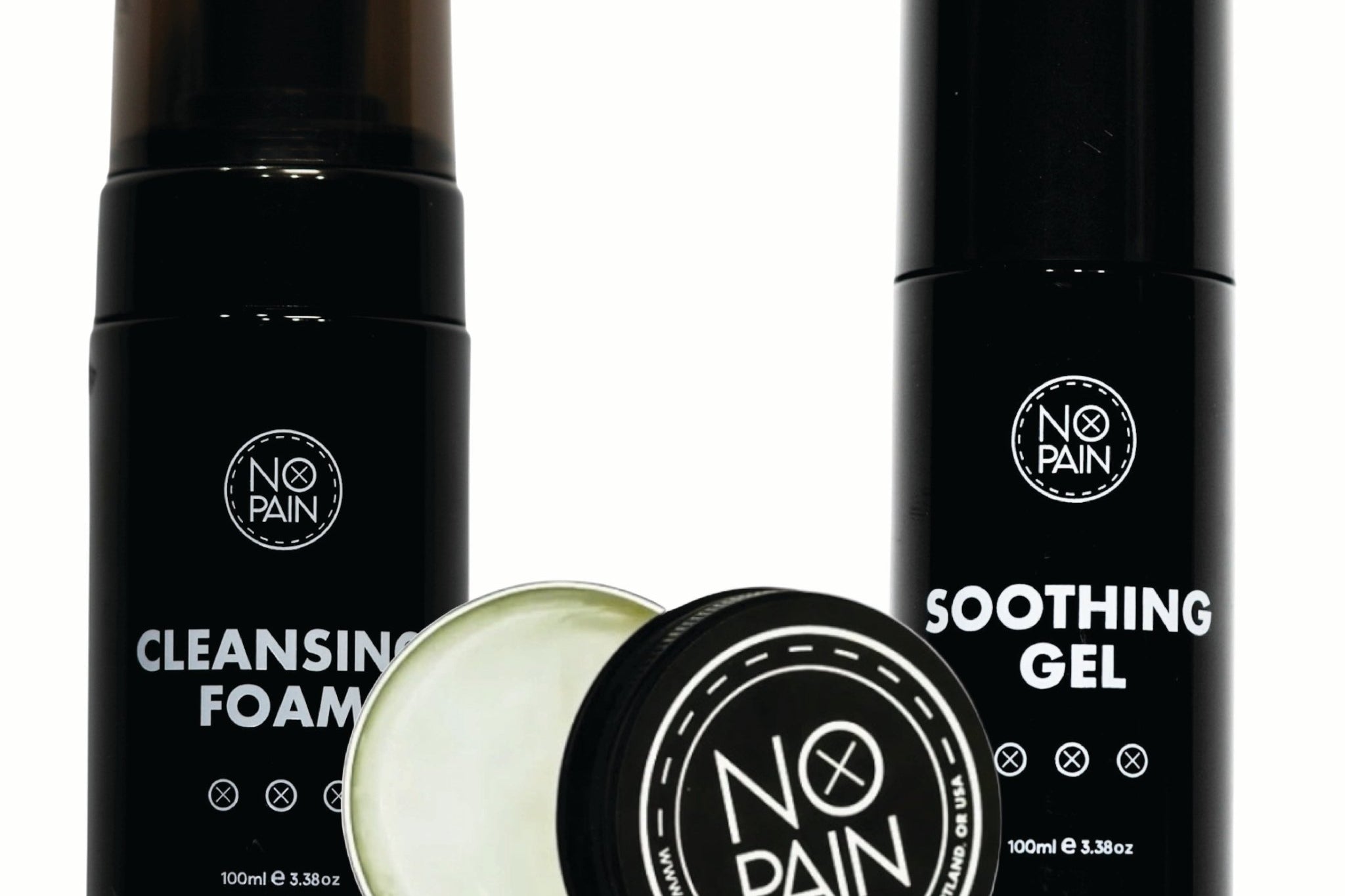
The Aftercare Bundle covers both phases of healing and long-term maintenance. Soothing gel for fresh tattoos, nourishing balm for ongoing protection. The same products that keep a new tattoo healing cleanly also keep an older one looking its best.
Shop the Aftercare Bundle →Formulated at Historic Tattoo in Portland, Oregon. 100% money-back guarantee.