
No reputable artist will tattoo over a sunburn. This is not a preference or a technicality; it is a safety boundary with real consequences on the other side. Tattooing compromised skin produces blown-out ink, a painful and prolonged heal, and an elevated infection risk. The tattoo can end up genuinely ruined before it even starts healing properly.
If your appointment is coming up and you have a sunburn, here is what you are actually dealing with, how long you need to wait, and how to get the skin ready for rescheduling.
In this article
- Why sunburned skin cannot be tattooed
- How long to wait after a sunburn
- What to do about your appointment
- How to heal a sunburn faster
- What fully healed actually looks like
- Session prep once you are cleared
- Frequently asked questions
Why Sunburned Skin Cannot Be Tattooed
A sunburn is radiation damage to the skin. UV exposure destroys cells in the epidermis and sometimes penetrates into the dermis, the layer where tattoo ink actually lives. The skin responds with inflammation, fluid retention, and a repair cycle that can take weeks to fully complete even after the surface looks fine.
Tattooing into this environment creates several compounding problems. The skin's protective barrier is compromised, which raises the risk of infection from the tattooing process itself. The inflammatory state of sunburned tissue means ink does not settle cleanly: pigment can blow out and spread beyond the intended lines. The peeling that follows a sunburn takes pigment with it, and peeling that happens during or right after tattooing can pull ink before it has any chance to anchor into the dermis. Pain is also dramatically worse: sunburned skin is already raw and hypersensitive, and a needle passing through it is a significantly different experience than tattooing healthy skin.
None of these problems get better with numbing cream. You cannot anesthetize your way around damaged tissue.
How Long to Wait After a Sunburn
The general guidance from experienced artists is a minimum of two to four weeks after a sunburn, but the calendar is the wrong thing to be counting. What you are waiting for is the skin to fully complete its repair cycle, and that is measured by condition, not days.
A mild sunburn that turns pink and fades without peeling clears faster than a deep burn with significant peeling or blistering. Any burn that blistered needs considerably more time, and those cases should be discussed with a dermatologist before rescheduling. The skin above a blister has effectively been destroyed and will take longer to rebuild the healthy tissue underneath than a standard sunburn.
The lower end of that two-to-four-week window applies to mild burns with no peeling. Most burns with peeling are closer to three to four weeks, and sometimes longer depending on severity and how well you care for the skin during recovery.
What to Do About Your Appointment
Contact your artist as soon as you know. Do not show up hoping they will not notice or that it will be fine. Good artists check the skin they are working on, and most will refuse if the area is visibly burned. If you say nothing and they catch it at the appointment, you lose the time slot anyway. Some studios treat no-disclosure as a no-refund situation.
When you reach out, be direct: you have a sunburn over the area being tattooed and you need to reschedule. Most artists have dealt with this before and will work with you on moving the deposit. Deposits are typically meant to protect the artist's time, and a client who gives advance notice is demonstrably acting in good faith. The conversation goes better the earlier you have it.
If your appointment is more than three weeks away and the sunburn is mild, check in with your artist after two weeks and let them assess when they see you. Some cases will clear in time. Just keep them informed.
How to Heal a Sunburn Faster
You cannot speed up skin repair, but you can avoid slowing it down. The things that extend recovery time are continued sun exposure, letting the skin dry out, and peeling it manually.
Stay out of direct sun on the affected area until it is fully healed. This sounds obvious but most people underestimate how much incidental sun exposure they get: driving, outdoor seating, walking between buildings. Cover the area or keep it in the shade.
Keep the skin hydrated. Burned skin loses moisture faster than healthy skin, and dehydration extends the repair timeline and makes peeling worse. Apply a lightweight, fast-absorbing gel to the area several times a day. Avoid heavy, occlusive creams that trap heat on already-inflamed skin, and avoid anything with alcohol, fragrance, or menthol.
Do not peel. The urge to pull peeling skin is strong, but each piece you pull away manually can remove skin that is still partially attached to healing tissue underneath. Let it come away on its own.
Stay hydrated overall. Skin repair happens from the inside out, and systemic dehydration slows everything.
What Fully Healed Actually Looks Like
The skin is ready to tattoo when all of the following are true: there is no remaining redness or tenderness when you press on the area, there is no ongoing peeling, the skin tone looks uniform with the surrounding skin, and the texture feels the same as unaffected skin nearby. A tan that developed from the sun exposure is fine. The color shift is not a problem. What matters is that the active damage is resolved.
If you press the area and it hurts, you are not ready. If you can still see defined peeling, you are not ready. If the skin feels rougher, tighter, or more sensitive than the surrounding area, it is still completing the repair cycle.
Session Prep Once You Are Cleared
Once the skin is fully healed, the rest of session prep is standard. Drink water, eat a meal beforehand, wear loose clothing that gives the artist easy access. If pain management is a priority, numbing cream applied correctly in the hours before your appointment makes a real difference, but it needs to be applied to healthy, intact skin to work as intended.

Frequently asked questions
Can I get tattooed over a tan from the sun?
A tan is a change in pigment, not an injury. As long as the skin is fully healed, with no redness, no tenderness, no active peeling, normal texture: a tan does not affect the tattooing process. The concern with sun exposure is the damage that causes a burn, not the pigmentation response that produces a tan. If the area only tanned and never burned, you are fine to proceed.
What if my sunburn is somewhere else on my body, not the tattoo area?
If the burn is genuinely in a completely separate area from where you are getting tattooed, and the tattooed area is unaffected, most artists will proceed. The problem is when the two overlap. If you burned your arms and you are getting a calf tattoo, that is a different situation than a burn directly over the planned tattoo area. Talk to your artist specifically about where the burn is relative to where they will be working.
Can numbing cream help with the pain of tattooing over sunburned skin?
No, and this is not a reason to try. Numbing cream reduces sensation in the skin by blocking nerve signals; it does not repair the damage that makes sunburned skin a poor tattooing surface. Blown-out ink, poor pigment retention, and infection risk are not pain problems. They are structural problems with the skin's condition. Numbing the area does not fix any of them.
Will my deposit be lost if I have to reschedule due to a sunburn?
This depends on the studio's policy and how much notice you give. Most artists understand that a sunburn is not a choice, and most have deposit policies designed to protect against no-shows, not against clients who communicate early and reschedule in good faith. The earlier you contact your artist, the better the outcome. Showing up without saying anything and having them refuse at the appointment is a much worse position than reaching out a week or two before.
How do I know when a sunburn is bad enough to require rescheduling?
Any sunburn over the area being tattooed requires rescheduling, even a mild one. The threshold is not about severity but about location. Redness, warmth, tenderness, or any degree of peeling over the planned tattoo area means the skin is not ready. A burn that seems minor still represents a compromised barrier and an inflammatory state that will affect how ink heals in the skin.
Can a sunburn ruin a tattoo that is already healing?
Yes, and this concern extends well beyond the session itself. A fresh or healing tattoo sunburning is a separate and serious problem. Healing skin has no functional UV protection, so any sun exposure on a tattoo in the first few weeks of healing accelerates fading and can cause lasting damage to the ink. Once fully healed, UV exposure still fades tattoos over time. For both the healing period and the long term, keeping tattoos out of the sun or covered with SPF is standard care.
Ready for the Rescheduled Session?
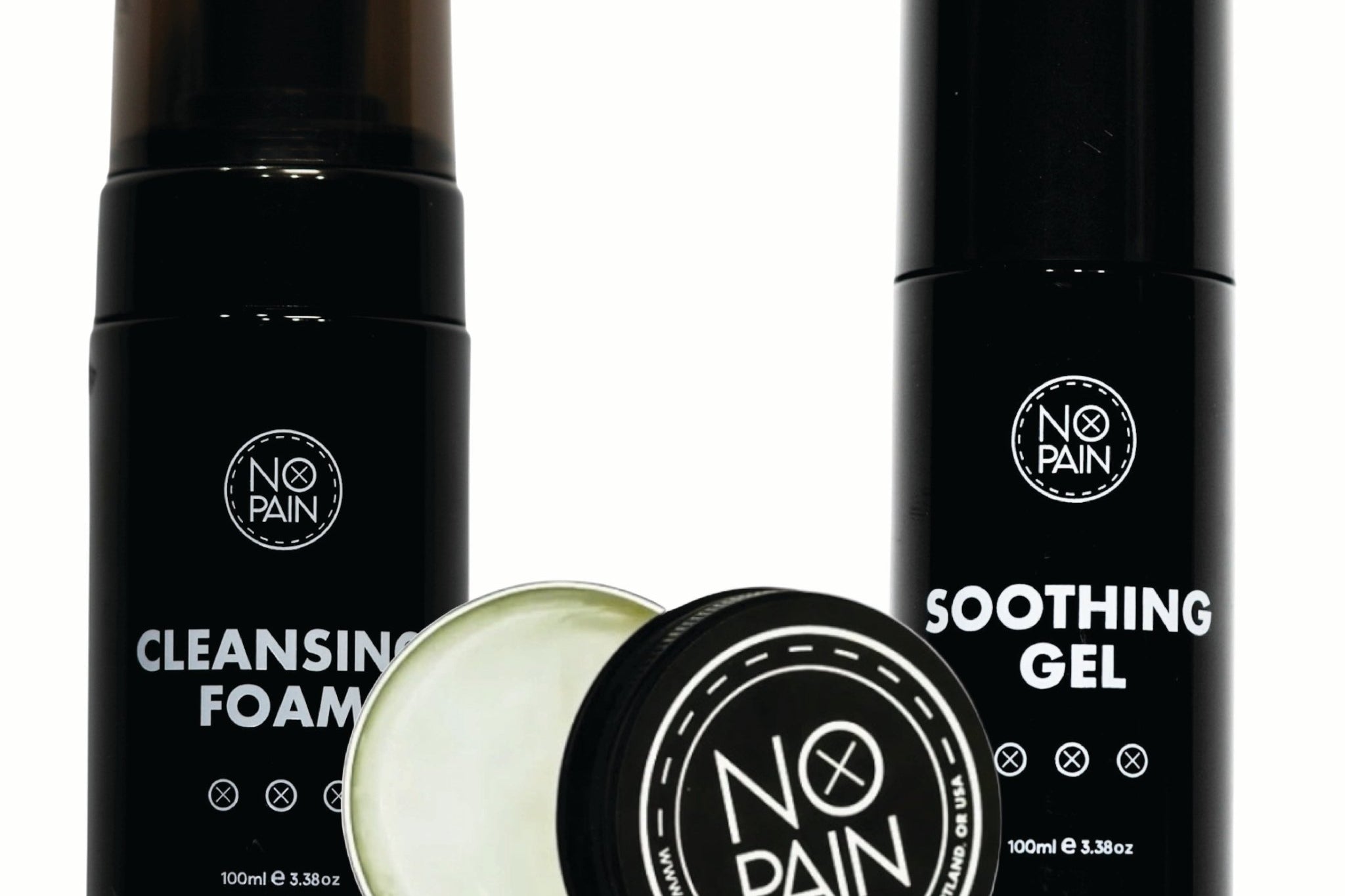
Once the skin is healed, the aftercare that follows matters just as much. Soothing gel for the first three days, aftercare balm from day three onward. Both in one kit.
Shop Aftercare Kit →