


You are a day or two into healing under a second-skin bandage. You notice a dark, inky bubble forming under the film. That is the ink sac, and it is completely normal. Then you see a trickle of that fluid escaping from the edge.
The leak is the problem. Here is what the ink sac actually is, why a leak matters, and the exact steps to take when it happens.
What the Ink Sac Actually Is
The ink sac is not a sac and the fluid is not just ink. When you apply a second-skin bandage (Saniderm, Tegaderm, or similar) shortly after tattooing, the sealed environment traps the fluid your skin naturally produces during the first phase of healing. That fluid is a mix of plasma, lymph fluid, and a small amount of excess ink that was sitting on the skin surface. Under the film, it collects into a visible bubble.
This is normal. It is your body healing exactly as it should. The moist environment under the film speeds up early healing by keeping the wound surface from drying out. The bubble itself does not hurt the tattoo.
What is not supposed to happen is that fluid escaping from the edges.
Why a Leak Is a Problem
Second-skin bandages work because they create a sealed, sterile barrier. Everything good (healing plasma) stays in. Everything bad (bacteria, dirt, pet hair) stays out.
When the bandage leaks, the seal is broken. That means bacteria can now enter through the same gap the fluid is exiting. You have gone from a controlled healing environment to an open wound with a compromised barrier, which is worse than no bandage at all.
Do not try to patch it with tape. The sterile seal is already broken. The only correct response is to remove the wrap entirely and switch to open-air healing.
What to Do When the Wrap Leaks
Step 1: Remove the bandage immediately
Get into a warm shower. The water and heat help loosen the adhesive so removal is less painful. Find an edge and peel back slowly, pulling parallel to your skin (like peeling off a sticker), not straight up and away from it. Work slowly. Do not rush.
Step 2: Wash the tattoo thoroughly
Once the wrap is off, clean the tattoo right away. There will be dried plasma and potentially bacteria from the leak period. Use a gentle, fragrance-free cleanser and clean hands. Wash the entire tattooed area, rinse with lukewarm water, and pat completely dry with a clean paper towel. This wash is more important than usual.
Step 3: Soothe the skin
After washing, the skin will be sensitive. Apply a thin layer of a cooling, anti-inflammatory gel to calm the initial irritation and keep the surface from drying out. This replaces the moist environment the bandage was providing.

Days 1 to 3
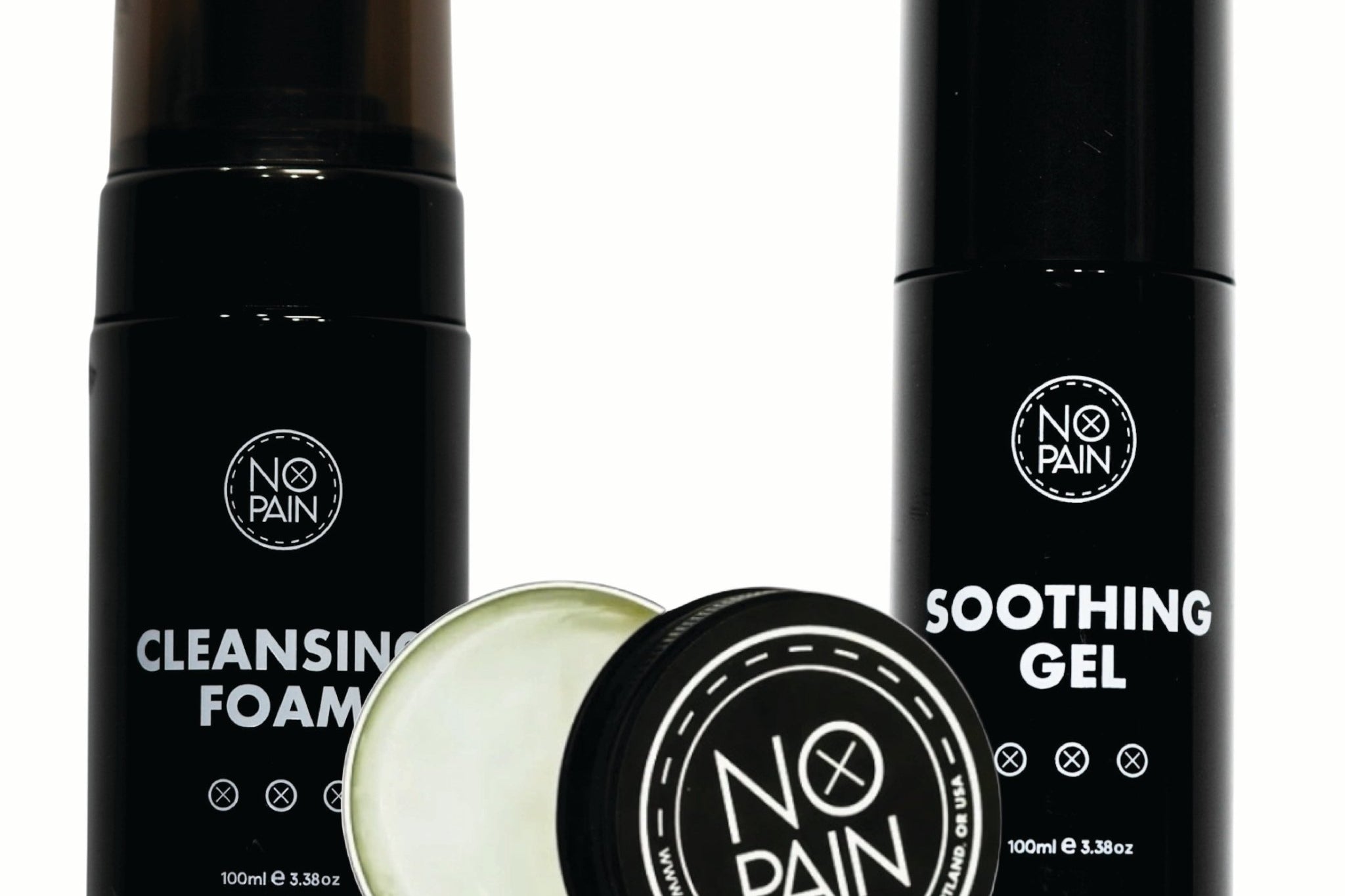
No Pain Tattoo Soothing Gel
Lightweight and breathable. Apply a thin layer after each wash to keep the skin hydrated and calm during the first phase of open-air healing. Does not clog pores or suffocate the skin.
$15.00
Shop Soothing Gel →Step 4: Switch to a full open-air routine
You cannot apply a new bandage. Switch to traditional open-air healing from this point forward: wash 2 to 3 times a day with a gentle cleanser, pat dry, apply a thin layer of gel (days 1 to 3), then switch to a richer balm from day 3 onward as the skin moves into the peeling phase.

Day 3 Onward
No Pain Tattoo Aftercare Balm
Richer moisture for the peeling and milky phase. Once the skin is past the actively weeping stage, switch from gel to balm. Keeps the skin supple and prevents thick scabbing that pulls ink.
from $12.00
Shop Aftercare Balm →What to Watch For
Monitor the tattoo closely for 48 hours after removing the leaking bandage. Watch for signs that bacteria entered during the leak: spreading redness, worsening pain, thick colored discharge, or fever. If you see any of these, see a doctor promptly. See our Infected Tattoo guide for the full list of warning signs.
FAQ
Is the ink sac normal?
Yes. The bubble of dark fluid that forms under a second-skin bandage is normal and expected. It is a mix of plasma, lymph fluid, and surface-level ink. It is not harmful to the tattoo. The seal breaking and that fluid leaking is the problem, not the sac itself.
How long should the ink sac last before it goes away?
With the bandage intact, the fluid is typically reabsorbed or redistributed over the first 24 to 48 hours. By the time you remove the bandage (usually at the 24-hour mark for the first piece, or 3 to 5 days for the second piece), the sac is usually gone or reduced.
Can I put a new Saniderm piece over the same area after removing a leaking one?
No. Not right away. After a leak, the skin needs to be cleaned and allowed to settle. Re-applying adhesive film immediately risks trapping bacteria. Switch to open-air healing and complete the rest of your healing that way.
Will the leak affect my tattoo?
If you act quickly — remove the wrap, wash thoroughly, and switch to open-air — the leak usually does not cause lasting damage. The risk is infection, not ink loss. Clean aftercare from this point forward is what protects the tattoo.
Why did my bandage lift at the edges?
Edge lifting is the most common cause of leaks. It happens most often on tattoos near joints (elbows, knees, wrists, ankles) where movement continuously stresses the adhesive edge. Body oils and sweat also weaken the adhesive. If your placement is a common leaker, plan for open-air healing from the start.
The ink sac is huge. Should I drain it?
No. Do not puncture the sac. Piercing it breaks the seal the same way a leak does, but with more risk because you are introducing whatever was on the needle. If the bubble is large but contained and the bandage seal is intact, leave it. It will resolve on its own. If it is so large it is uncomfortable or pulling at the bandage edges, remove the bandage properly in the shower.

No Pain Tattoo Aftercare Bundle
The complete open-air kit for when you need to drop the bandage and take over manually. Soothing Gel for the first few days, Aftercare Balm from day 3 onward.
$33.60 Save 20%
Shop Aftercare Bundle →