


Moisture is one part of tattoo aftercare, so the question seems reasonable: what actually happens if you skip it? Maybe you have heard about dry healing. Maybe you forgot for a couple of days. Maybe you are wondering whether the moisturizing step is necessary or just marketing.
The short answer is that skipping moisture causes a predictable cascade of problems that end with a damaged tattoo. Here is exactly what that looks like and why it happens.
The Cascade of Problems
When a healing tattoo does not get moisture, a sequence of events plays out.
Stage 1: The skin tightens
Within 24 to 48 hours of no moisturizer, the skin becomes tight, dry, and uncomfortable. Every movement of the tattooed area pulls against the tightened skin. This is not just uncomfortable. The tightness is a sign that the skin is losing the elasticity it needs to shed evenly and cleanly.
Stage 2: Thick scabs form
A healing tattoo weeps plasma for the first 48 to 72 hours. With moisture and light aftercare, that plasma stays thin enough to be washed away and the skin heals with a thin, smooth layer of new cells on top. Without moisture, the plasma dries into a thick, rigid crust. This is not the same as the light flaking you see in a properly cared-for tattoo. This is a genuine scab, hard and inflexible.
Heavy scabbing is the central problem of a dry heal. Everything that follows comes from it.
Stage 3: The scabs crack
Thick, rigid scabs cannot flex when you move. Any time you bend the tattooed area, the scab splits. These cracks are painful and are open wounds. Bacteria can enter through them. If the cracks are deep enough, they reach the dermis where the ink is, which creates the potential for ink loss in those exact spots.
Stage 4: Scabs tear and pull ink
Thick scabs always come off eventually. The problem is when they come off. Clothing snags them. Bedding catches them at night. The edge of a towel after a shower. A brief moment of scratching. Any of these can rip a thick scab away before the skin beneath it has closed, and when the scab tears away, it takes ink with it. The result is a patchy, faded, uneven tattoo that needs a touch-up, or in bad cases, scarring that cannot be fixed.
On Dry Healing
Dry healing is a method some older artists and clients use or advocate for, based on the idea that leaving the skin alone to breathe is better than applying product. There is a kernel of truth buried in it. Over-moisturizing causes its own problems, and some of the older products used for aftercare (like petroleum jelly) did create issues. But the leap from too much product is bad to no product is good is not supported by how skin healing works.
Moist wound healing is the standard in wound care. Wounds kept in a moist environment close faster, produce less scarring, and have lower infection rates than wounds left to dry out. A healing tattoo is a large, shallow wound. The biology applies directly.
The issue is not moisture vs. no moisture. It is applying the right amount of the right product.
The Right Amount of Moisture
The goal is to keep the skin hydrated enough that it heals with light, even flaking rather than thick scabs. In practice, this means applying a thin layer of aftercare product after each wash. Not a heavy coating, just enough that the skin looks hydrated rather than dry.
You are aiming for a slight sheen, not a glossy film. If you press a clean finger to the tattoo and the product transfers visibly, you have applied too much. If the skin looks dry or tight between applications, you may need to moisturize slightly more often or switch to a richer product.
For more on finding the right balance, see our guide to Can You Over-Moisturize a New Tattoo.

Days 1 to 3
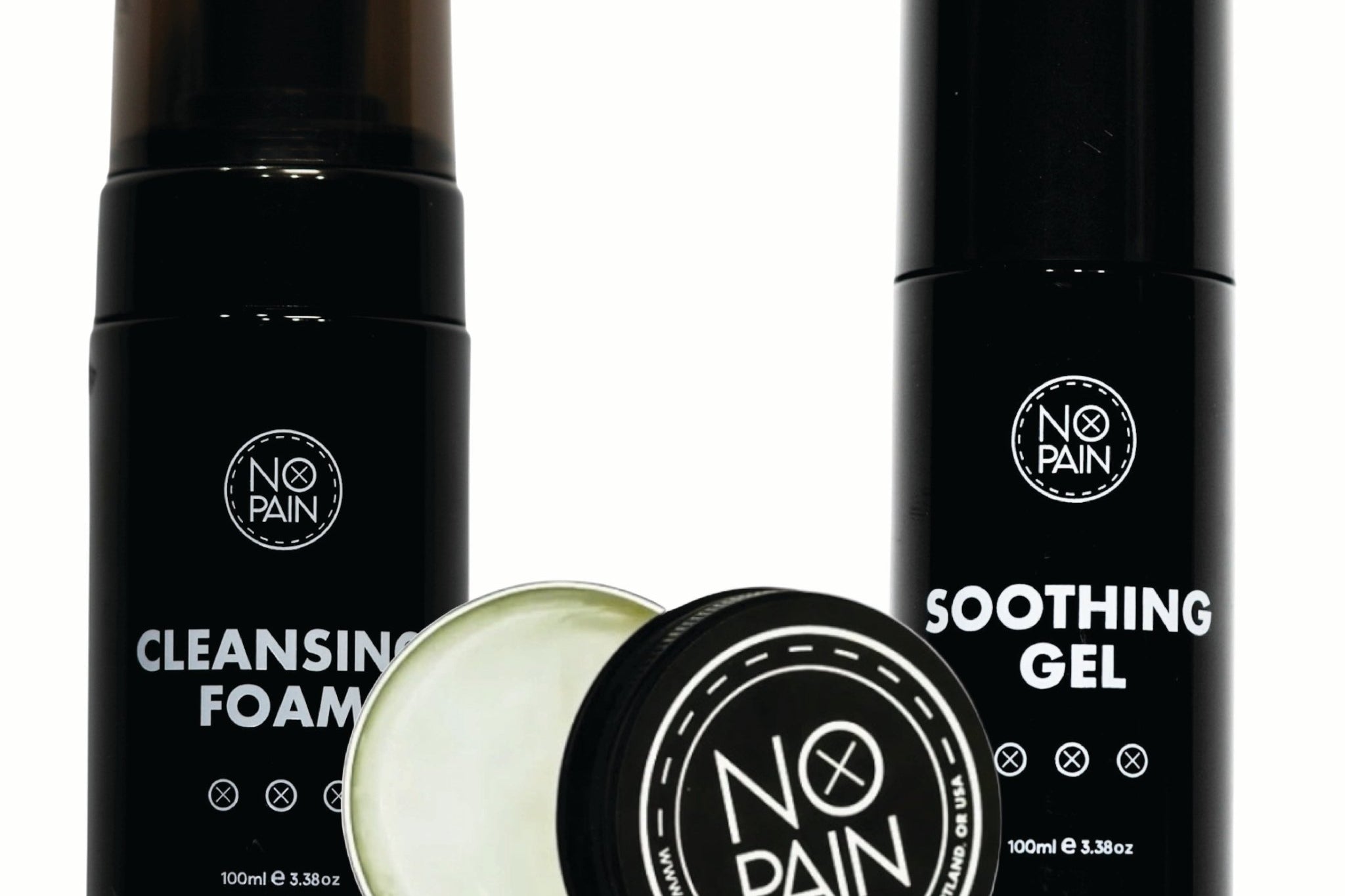
No Pain Tattoo Soothing Gel
Lightweight and breathable for the first phase of healing. Provides enough moisture to keep the skin from drying out and forming thick scabs without over-saturating. Apply a small, thin amount after each wash.
$15.00
Shop Soothing Gel →
Day 3 Onward
No Pain Tattoo Aftercare Balm
Switch to balm from day 3 as the skin moves into the peeling phase. Richer than the gel, it prevents the thick scabbing that happens when healing skin dries out, while still allowing the skin to breathe and shed normally.
from $12.00
Shop Aftercare Balm →FAQ
I forgot to moisturize for a day or two. How much damage did I do?
A day or two of skipping is unlikely to cause serious problems if your aftercare was consistent before that. The skin may be drier and itchier than it should be. Resume your normal routine immediately. If thick scabs have formed, do not try to soften and remove them. Keep them moisturized and let them shed on their own schedule.
Is dry healing ever acceptable?
Some people with highly reactive or eczema-prone skin find that any product on a fresh tattoo causes irritation, and opt to keep the tattoo clean and air-dry while watching carefully for any drying problems. In these cases, it is a medical decision made in the context of known skin sensitivity. For the majority of people with no specific skin conditions, dry healing is not recommended.
What if I already have thick scabs from dry healing?
Start moisturizing immediately. Apply balm after each wash to keep the scabs as soft and pliable as possible. This will not undo what has already formed, but it prevents them from hardening further and cracking. Do not try to peel or soften them off. Let them shed naturally, even if it takes longer than normal healing. Once fully healed, assess the tattoo for patches that need a touch-up.
Will my tattoo need a touch-up if I dry healed?
It depends on how severe the scabbing was and whether it pulled ink when it came off. Light dry healing with moderate scabbing often heals acceptably. Heavy dry healing with thick, cracked scabs that tore away prematurely frequently leaves patches that need to be corrected. Your artist can assess once the skin is fully healed at 6 to 8 weeks.
Can too much moisturizing also damage a tattoo?
Yes. Over-moisturizing creates a different set of problems: blocked pores, bacterial overgrowth under a thick product layer, extended healing time, and a condition called over-moisturizing rash (small red bumps). The goal is balanced moisture, not maximum moisture. See our guide to Over-Moisturizing for the signs that you are using too much.
How often should I moisturize during healing?
Apply a thin layer after every wash. Most people wash their tattoo 2 to 3 times per day during the first week, and once or twice daily from week 2 onward. If the skin still looks or feels dry between washes, an additional application is fine as long as you keep it thin.

No Pain Tattoo Aftercare Bundle
Soothing Gel for days 1 to 3. Aftercare Balm from day 3 onward. The two-product system that keeps the skin in the right moisture balance all the way through healing.
$33.60 Save 20%
Shop Aftercare Bundle →