


Saniderm comes off in a warm shower, with a low-and-slow peel parallel to your skin. That's the short answer. If you're staring at your bandage wondering how to get it off without hurting yourself or pulling the tattoo, this guide walks you through every step.
The most common mistake is pulling the bandage up and away from the body, the way you'd rip off a regular bandage. That's wrong. Saniderm and other adhesive tattoo films (Tegaderm, SecondSkin, DermaShield) need to be stretched back and parallel to the skin. Done right, it's painless. Done wrong, it's unnecessarily rough on fresh skin that's still healing.
When to Remove Saniderm
Most artists recommend leaving the second piece of Saniderm on for 3 to 5 days. The exact timing depends on your artist's instructions, the size of the piece, and how well the film is staying sealed.
Remove it earlier if:
- The seal breaks and the fluid underneath starts leaking out
- You develop a rash or significant redness at the adhesive edge (possible adhesive sensitivity)
- The film lifts completely from a large area and can't be re-sealed
Remove it on schedule (3–5 days) if everything looks normal, even if fluid has pooled underneath. That's expected. See the next section.
For the full guide on how long to wear Saniderm and what the different stages look like, see our Saniderm Aftercare Guide.
What You'll See Under the Bandage
Before you remove it, know what you're looking at. Fluid pooling under the bandage is normal and not a problem. It's a mix of plasma, lymph fluid, and excess surface ink. Your body is protecting an open wound. It can look alarming (dark, inky, sometimes brownish), but as long as the seal is intact, it's fine.
What's not fine:
- The fluid has a foul smell
- There's thick, colored discharge (green or yellow) under the film
- The skin surrounding the tattoo is hot to the touch and swollen beyond normal
If you're seeing any of those signs, remove the bandage and assess. A small amount of redness and warmth right at the tattoo border is normal. A spreading, intensifying redness further out is not.
How to Remove Saniderm Step by Step
Step 1: Get in a warm shower
Warm water is the key. It softens the adhesive and makes the film much easier to peel away cleanly. Let warm (not hot) water run directly over the bandage for two to three minutes before you start pulling.
Don't try to remove it dry. The adhesive is medical grade and it will pull at your skin and hair much more aggressively without water.
Step 2: Find a corner or edge
Start at a corner where the film naturally lifts a little, or at one of the shorter edges. Gently loosen a small tab with your fingernail so you have something to grip.
Step 3: Peel parallel to your skin, slowly
This is the technique that matters. Hold the skin taut just behind where you're peeling, and pull the film back toward you and flat against the skin, not up and away from your body. Think of how a 3M Command strip comes off a wall: you stretch it slowly downward, not outward.
Move an inch or two at a time. Let the warm water keep running. If you hit a stubborn spot, slow down and let the water loosen the adhesive before continuing. The entire removal should be slow and gentle. Not painful.
Step 4: Work around joints and curves
On areas like the elbow, knee ditch, or ribs, the film can bond more firmly because the skin was moving while it adhered. Go even slower in these spots. Keep the skin stretched slightly taut (but don't pull hard) as you peel, so you're not dragging at the new skin underneath.
If It's Stuck or Won't Come Off
If the bandage is really bonded in one spot, don't force it. Soak it longer. Let warm water run directly on that area for another minute or two, then try again with even more of a parallel angle. Baby oil or coconut oil applied to the edge of the adhesive (not to the tattoo itself) can help dissolve the bond on truly stubborn sections.
Some adhesive residue on your skin after removal is normal. It looks like a faint sticky film at the edges and washes off in your next shower.
The First Wash After Removal
The moment the bandage is off, your tattoo is exposed. The first wash matters. There's dried plasma and adhesive residue on the skin, and you want to clean it gently but thoroughly before you do anything else.
Use a fragrance-free, antimicrobial cleanser. Lather it gently with clean hands (no washcloth), rinse with lukewarm water, then pat dry with a clean paper towel. Don't rub.

Recommended for post-removal
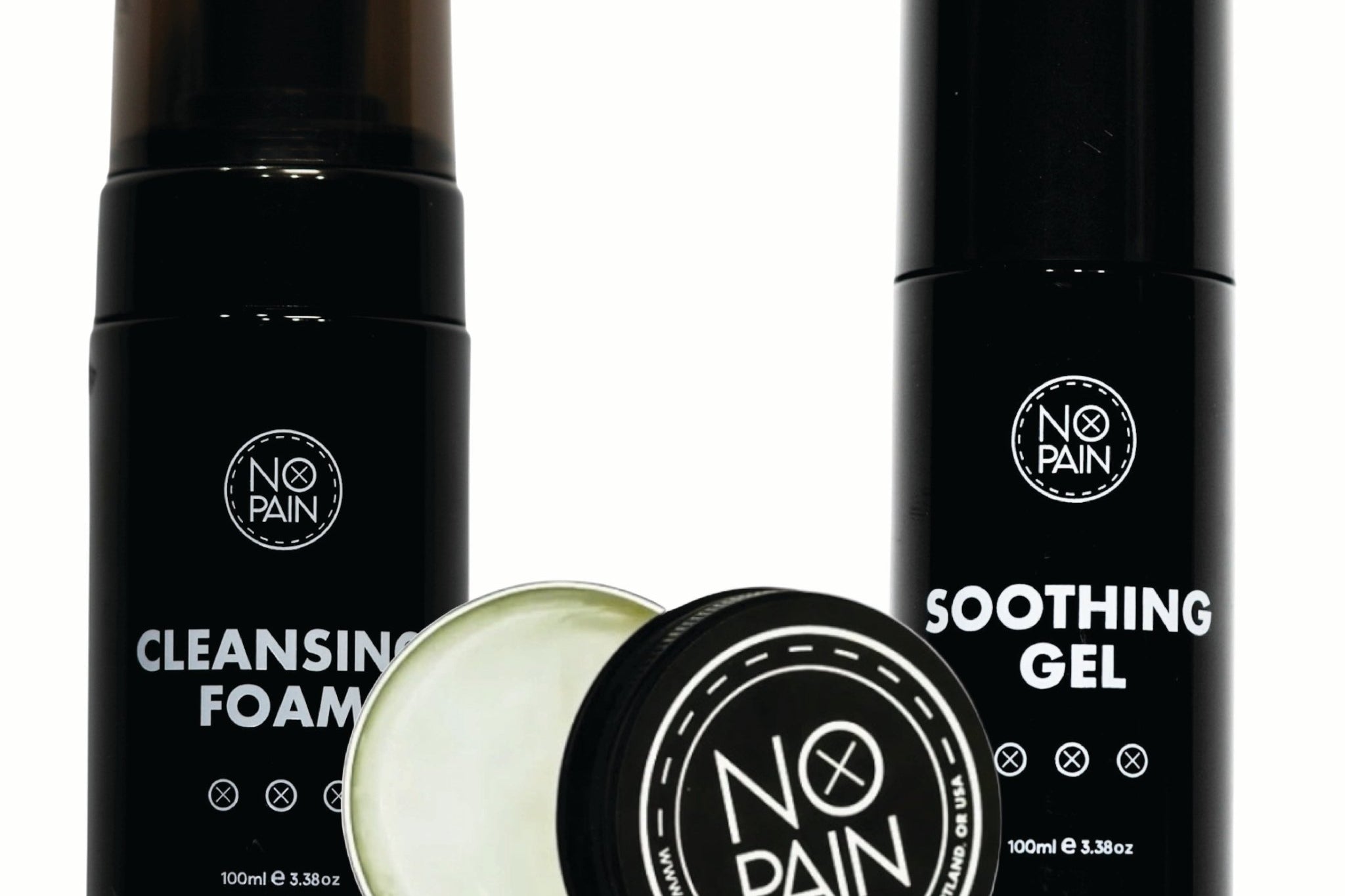
No Pain Tattoo Soothing Gel
After the bandage comes off, your skin is tender and exposed for the first time in days. Soothing Gel calms the inflammation immediately and gives the fresh skin a breathable layer of hydration while it adjusts.
$15.00
Shop Soothing GelYour Post-Removal Routine
After the first wash, your tattoo still has a few weeks to go before it's fully healed, even though the surface looks and feels much better than it did under the bandage. The outer skin has closed, but the deeper layers are still rebuilding.
For the next two to three weeks:
- Wash once or twice a day with a gentle, fragrance-free cleanser
- Apply a thin layer of breathable moisturizer after each wash: enough to stop it looking dry, not enough to sit thick on the skin
- Stay out of pools, oceans, and baths (showers are fine)
- Keep it out of direct sun, or apply SPF 30+ once the surface has fully closed
You may notice some light peeling and flaking in the days after removal. That's normal: the dead outer layer of skin is shedding. Don't pick it. Don't scratch it. Let it come off on its own.
Your tattoo might also go through a milky or cloudy phase where the colors look muted. That's also normal. The fresh skin over the ink takes time to become transparent, and the colors come back once it does.

No Pain Tattoo Aftercare Bundle
Everything you need after the bandage comes off: Soothing Gel for the first days, Aftercare Balm for the weeks that follow, and Cleansing Foam to keep every wash clean.
$33.60
Shop Aftercare BundleFAQ
How do I know when Saniderm is ready to come off?
Follow your artist's timing, usually 3 to 5 days for the second piece. Remove it early only if the seal breaks and fluid is leaking, or if you're having an adhesive reaction (a rash or intense itch at the bandage edges, not the tattoo itself). If everything looks normal, leave it until the recommended time even if fluid has pooled. That's expected.
Can I remove Saniderm without a shower?
You can, but it's harder and more uncomfortable. The adhesive bonds firmly to dry skin, especially over any body hair. If you're not near a shower, soak a clean cloth in warm water and hold it against the bandage for several minutes to soften the adhesive before peeling. The shower method is much easier.
My tattoo looks really bad after I removed the bandage. Is that normal?
Almost certainly yes. Fresh out of the bandage, the skin may look red, slightly swollen, shiny, and the colors may appear dull or faded. There's often a faint imprint of the bandage edge on the surrounding skin. Give it an hour after the first wash: much of the redness will calm down quickly. Colors take longer to come back, sometimes a few weeks, as the new skin layer over the dermis turns transparent.
There's adhesive residue stuck to my skin. How do I remove it?
Wash normally and it usually comes off within a shower or two. For stubborn residue away from the tattoo, you can use a little oil (baby oil, coconut oil) on a cotton pad and gently rub at the edges. Don't use oil directly on the fresh tattoo, and don't scrub the tattoo skin.
Does it hurt when Saniderm is removed?
Not when done correctly. The warm shower method and parallel peeling technique make removal painless for most people. The most common cause of pain during removal is pulling the bandage up and away from the body instead of stretching it back and flat. If it's pulling at your skin, slow down and let more water soak in.
What if part of the bandage lifts before the 3–5 days are up?
If just an edge lifts and the seal is otherwise intact, you can carefully trim the loose flap with clean scissors and cover the exposed edge with a small piece of medical tape. If the seal breaks completely and fluid starts leaking out, remove the bandage and switch to the open-air method: wash twice a day and apply a thin layer of moisturizer instead.