


Yes, bruising after a tattoo is normal. A tattoo needle punctures the skin thousands of times per minute, and some of those punctures nick the tiny capillaries just beneath the surface. Blood leaks into the surrounding tissue and shows up as a bruise, often appearing a day or two after the session when you were not expecting it. It is not a sign of a bad tattoo, a bad artist, or anything going wrong with the heal. It is a direct response to physical trauma, and it fades the same way any bruise does.
Here is what to know about why it happens, what normal bruising looks like, and when the picture changes.
In this article
- Why tattoos cause bruising
- What makes bruising more likely
- What normal tattoo bruising looks like
- How long does tattoo bruising last?
- How to care for a bruised tattoo
- When bruising is a warning sign
- Frequently asked questions
Why Tattoos Cause Bruising
The tattoo process creates thousands of punctures in the skin every minute. Most of those punctures go through the epidermis and into the dermis where the ink gets deposited, but the dermis is full of tiny blood vessels called capillaries. When the needle nicks one of them, a small amount of blood leaks out into the surrounding tissue. The body cannot reabsorb this leaked blood instantly, so it settles under the skin and becomes visible as a bruise.
The bruise typically does not appear immediately. In the hours after your session, the area is red, swollen, and inflamed from the normal healing response, which masks the bruising underneath. As the initial swelling starts to go down in the first day or two, the bruise color becomes visible. People who were not warned about this sometimes panic when they see it appear days after the session, but the timing is expected.
What Makes Bruising More Likely
Bruising after a tattoo is common but not universal. Several factors make it more or less likely to appear.
Heavy sessions with dense shading or solid color packing require the artist to make many passes over the same area. Each additional pass increases the chance of capillary damage, so tattoos with heavy black and grey shading or large areas of packed color are more likely to bruise than clean line work or smaller pieces.
Placement matters a great deal. Areas where the skin is thin and there is bone close to the surface, such as the shin, ankle, foot, ribs, sternum, and hand, have less tissue between the needle and the blood vessels below. The needle reaches capillaries more easily in these spots, and bruising is noticeably more common in thin-skinned bony areas than in well-padded placements like the outer arm or thigh.
Individual physiology plays a role. Some people bruise easily from minor bumps and impacts, and those same people will often bruise more visibly from a tattoo session. If you know you bruise easily in general, expect it to show up after tattooing and do not be alarmed when it does.
Blood thinners increase bruising risk significantly. Aspirin, ibuprofen, and alcohol all thin the blood and make capillary bleeding more likely and more extensive. Most artists advise avoiding these in the 24 hours before your appointment for exactly this reason. Some prescribed medications also have blood-thinning effects; if you are on them, let your artist know at the consultation.
What Normal Tattoo Bruising Looks Like
Normal tattoo bruising looks like any other bruise on the body. It appears in the skin around the tattoo, not through the tattoo itself, and it goes through the same color progression every bruise does: starting deep red or purple, shifting to blue and dark purple as the days pass, then fading through green and yellow as the body reabsorbs the pooled blood.
The bruising is typically found around the edges of the tattooed area rather than directly over it. Some tattoos, particularly ones with heavy shading or coverage, show bruising spread across a wider area. The bruise should not be sharply painful to the touch. Tenderness is normal; sharp, worsening pain is not.
How Long Does Tattoo Bruising Last?
Most tattoo bruising fades within one to two weeks, following the same timeline as a bruise from any other source. Larger bruises or ones on areas with less blood flow may take slightly longer. The bruise does not affect how the tattoo heals or how the final ink looks once everything has settled. It is entirely separate from the tattoo healing process, which happens in the dermis while the bruise is resolving in the tissue around it.
How to Care for a Bruised Tattoo
Caring for a bruised tattoo is the same as caring for any new tattoo, with one addition: addressing the inflammation directly. The bruised area around the tattoo is inflamed tissue, and calming that inflammation makes the first week more comfortable and supports the overall heal.
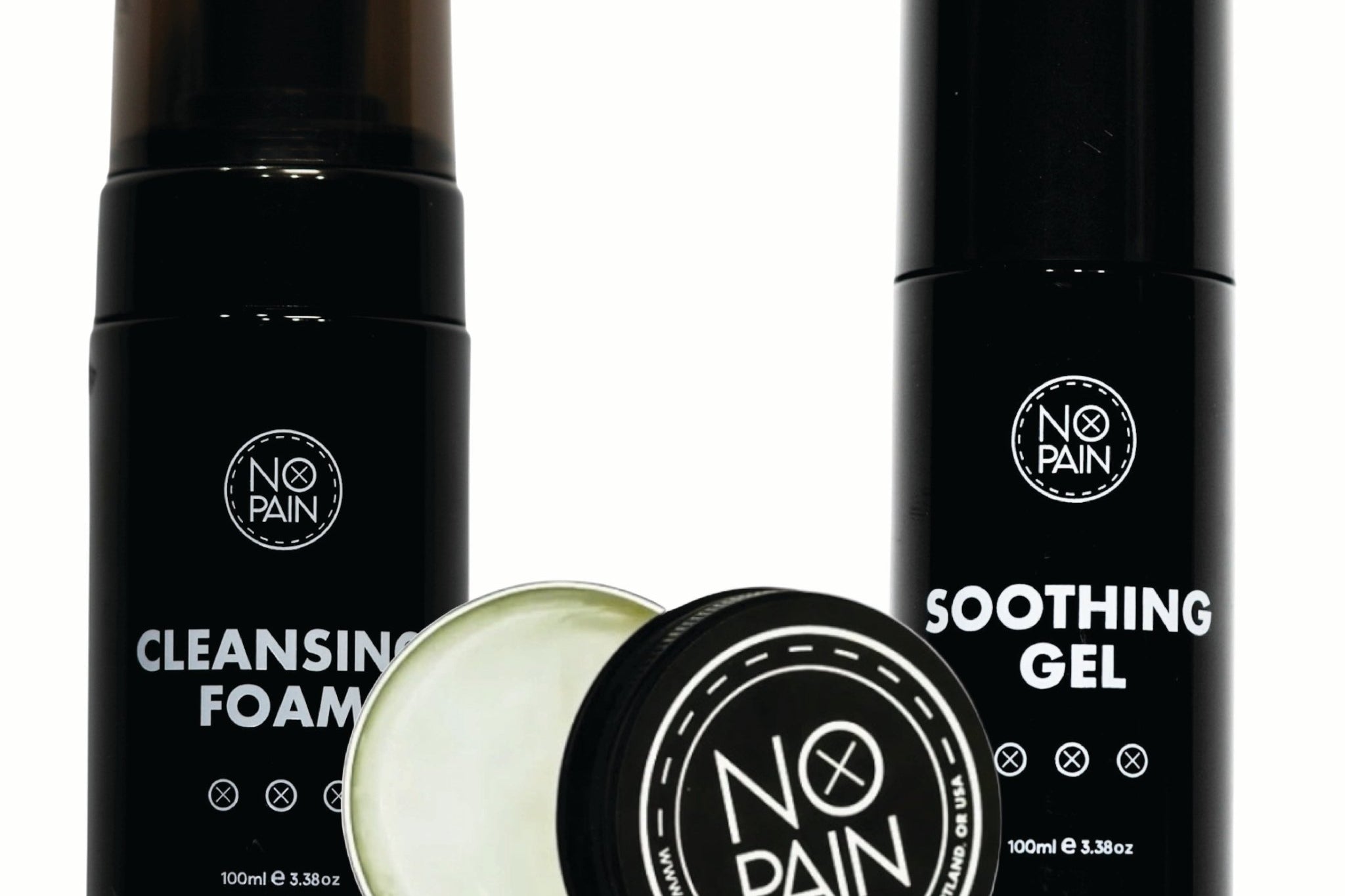
Keep the tattoo clean. Wash it gently with an antibacterial cleanser twice a day and pat dry. The bruising does not change this routine, but it does make the area more tender, so use a light touch. A soothing gel applied after washing reduces the inflammation and provides relief to the tender, swollen skin around the bruise.

Once you are through the first few days and the acute inflammation has settled, switch to a light aftercare balm to keep the healing skin moisturized through the peeling phase. The full aftercare kit covers both stages.
When Bruising Is a Warning Sign
Bruising on its own is almost always benign. The situation changes when bruising appears alongside other symptoms. The combination to watch for is bruising plus worsening pain, which together can indicate something more serious.
Normal healing follows a predictable pattern: the most intense pain, swelling, and redness happen in the first 24 to 48 hours and then steadily improve. If the pain is getting worse after the second or third day rather than better, that trajectory is wrong regardless of whether there is bruising involved.
An infected tattoo looks different from a bruised one. Infection signs include pain that increases rather than decreases over the first few days, warmth that extends well beyond the tattoo border, yellow or green discharge that is not clear, a foul or unusual odor, and red streaks radiating outward from the tattoo. Red streaks are a medical emergency and need immediate attention.
Bruising alone, without any of those accompanying signs, is not a reason to be concerned. If you are unsure which situation you are dealing with, the trajectory test is the clearest signal: a bruise from a tattoo gets better day by day. An infection gets worse.
Frequently asked questions
Is it normal for a tattoo to bruise?
Yes, bruising after a tattoo is common and normal. The needle nicks tiny capillaries in the dermis, blood leaks into the surrounding tissue, and it appears as a bruise in the skin around the tattooed area. It is more likely with heavy shading sessions, thin-skinned or bony placements, and in people who bruise easily in general. It does not affect how the tattoo heals or the final result.
How long does bruising from a tattoo last?
Most tattoo bruises fade within one to two weeks, following the same color progression as any other bruise: deep purple to blue to green to yellow. Larger bruises, or ones on areas with less circulation, may take a few days longer. The bruise is completely independent of the tattoo healing process and does not change the timeline for the ink to settle.
Why is there bruising around my tattoo?
Bruising appears around the tattoo rather than through it because the leaking blood disperses into the tissue surrounding the tattooed area. The needle works in the dermis, nicking capillaries nearby, and the blood follows the path of least resistance into the looser tissue at the edges. This is why bruising from a tattoo looks like a halo or shadow around the edges of the design rather than sitting on top of the ink.
Should I be worried about bruising after a tattoo?
In most cases, no. Bruising on its own is a normal response to the trauma of tattooing. It becomes worth paying attention to if it is accompanied by worsening pain after the second or third day, spreading warmth, colored discharge, a foul odor, or red streaks radiating outward from the tattoo. Any of those additional signs alongside bruising is a reason to see a doctor.
Does a bruised tattoo heal differently?
No. The bruise and the tattoo heal through separate processes at different layers of tissue. The bruise resolves as the body reabsorbs the pooled blood, which happens in the tissue surrounding the dermis. The tattoo heals as the dermis closes and the ink locks into place. The two timelines are independent, and a bruise does not slow down or complicate the tattoo healing process.
Can I tattoo over a bruise?
Most artists will not tattoo over active bruising. The damaged capillaries and swollen tissue make it harder to see what you are doing, the skin is more fragile and does not hold ink as cleanly, and adding more trauma to already compromised tissue increases bleeding and the risk of uneven healing. The standard advice is to wait until the bruise has fully faded before booking. For a bruise that appeared after a tattoo, let it resolve before any touch-up work in the same area.
Calm the Inflammation, Protect the Heal
Soothing gel for the first days, aftercare balm for the peeling phase. The complete routine for a clean, comfortable heal.
Shop Aftercare Kit →