



Most redness, swelling, and irritation after a tattoo is normal healing, not an allergic reaction. But true allergic reactions to tattoo ink do happen, and knowing the difference matters. Here's what a real reaction looks like, which inks are most likely to cause one, and what to actually do about it.
In this guide
- Normal healing vs. allergic reaction
- Types of tattoo ink reactions
- Which inks cause reactions
- What to do if you're reacting
- Does a patch test help?
- FAQ
Normal healing vs. allergic reaction
In the first week, a new tattoo will be red, swollen, warm to the touch, and tender. It will weep plasma and possibly some excess ink. None of that is an allergic reaction — it's the body responding to an open wound exactly as expected.
The signs that point toward a true reaction are different in timing and character. A reaction tends to:
- Appear weeks or months after the tattoo has otherwise healed
- Affect specific colors within the tattoo (often just red or black) while leaving others unaffected
- Cause raised, thickened, or intensely itchy skin within the tattooed area
- Worsen with sun exposure or return after periods of apparent calm
- Not respond to normal aftercare
If what you're seeing resolves within two weeks and tracks with the normal scabbing and peeling timeline, it's almost certainly not an allergic reaction.
Types of tattoo ink reactions
Delayed hypersensitivity. The most common type. The immune system builds a response to a component of the ink pigment over days, weeks, or even years. The tattooed area becomes raised, rough, and intensely itchy — often in just one color. Red ink is the most common trigger, but any pigment can cause this.
Photoallergic reaction. Certain red and yellow pigments react to UV light. The reaction only appears when the tattooed skin is exposed to sun, which can confuse people who assumed the tattoo was fully healed. Keeping the area covered from the sun long-term is the standard advice for anyone who's had this happen.
Lichenoid reaction. A less common but more serious reaction pattern where the skin around the ink develops a chronic inflammatory response. This requires dermatological management, not just topical cream.
Contact allergy to latex or products (not the ink itself). If you develop a reaction immediately after the session in the first 24 to 48 hours, it may be a reaction to latex gloves, the aftercare product applied in studio, or the wrap material rather than the ink. Process of elimination with your doctor can clarify this.
Which inks cause reactions most often
Red ink has by far the highest rate of reported reactions. Many red pigments historically contained mercury sulfide (cinnabar), though most modern inks use azo-dyes or cadmium-based compounds, which still carry sensitization potential for some people.
Black ink reactions are less common but do occur. Older black inks sometimes contained polycyclic aromatic hydrocarbons (PAHs). Some people also react specifically to black inks that contain iron oxides used in certain formulations.
White and yellow inks can cause photoallergic reactions in sun-exposed skin due to their titanium dioxide and yellow pigment content.
Individual sensitivity varies widely. Someone can be tattooed with the same ink multiple times without issue, then develop a sensitivity years later. Prior exposure without reaction doesn't guarantee future sessions will be fine.
What to do if you're reacting
For a mild reaction (localized itching and raised skin in the tattooed area, otherwise healing normally):
- Don't scratch or pick — this risks secondary infection
- A short course of over-the-counter 1% hydrocortisone cream can reduce itching and inflammation temporarily
- Keep the area out of the sun, particularly if the reaction worsens with UV exposure
- See a GP or dermatologist if it doesn't improve within two weeks, or if it keeps returning
For a more severe reaction involving spreading beyond the tattoo, facial swelling, difficulty breathing, or hives across multiple body areas: this is a systemic allergic response. Seek emergency care immediately.
For a chronic reaction that keeps returning months or years later: see a dermatologist. Treatment options include intralesional corticosteroid injections, topical calcineurin inhibitors, or in some cases partial laser removal of the offending ink. Do not attempt to manage a persistent lichenoid or photoallergic reaction with over-the-counter products alone.
Does a patch test help?
Patch testing detects immediate-type reactions well. It's less reliable for the delayed hypersensitivity reactions that are actually most common in tattooing — those reactions develop over days to months and don't show up in a standard 48 to 72 hour patch test window.
That said, if you have a known history of reactions to red ink, or a strong personal or family history of contact dermatitis, asking about patch testing before committing to large areas of a potentially reactive color is a reasonable step.
When You're Ready to Heal It Right
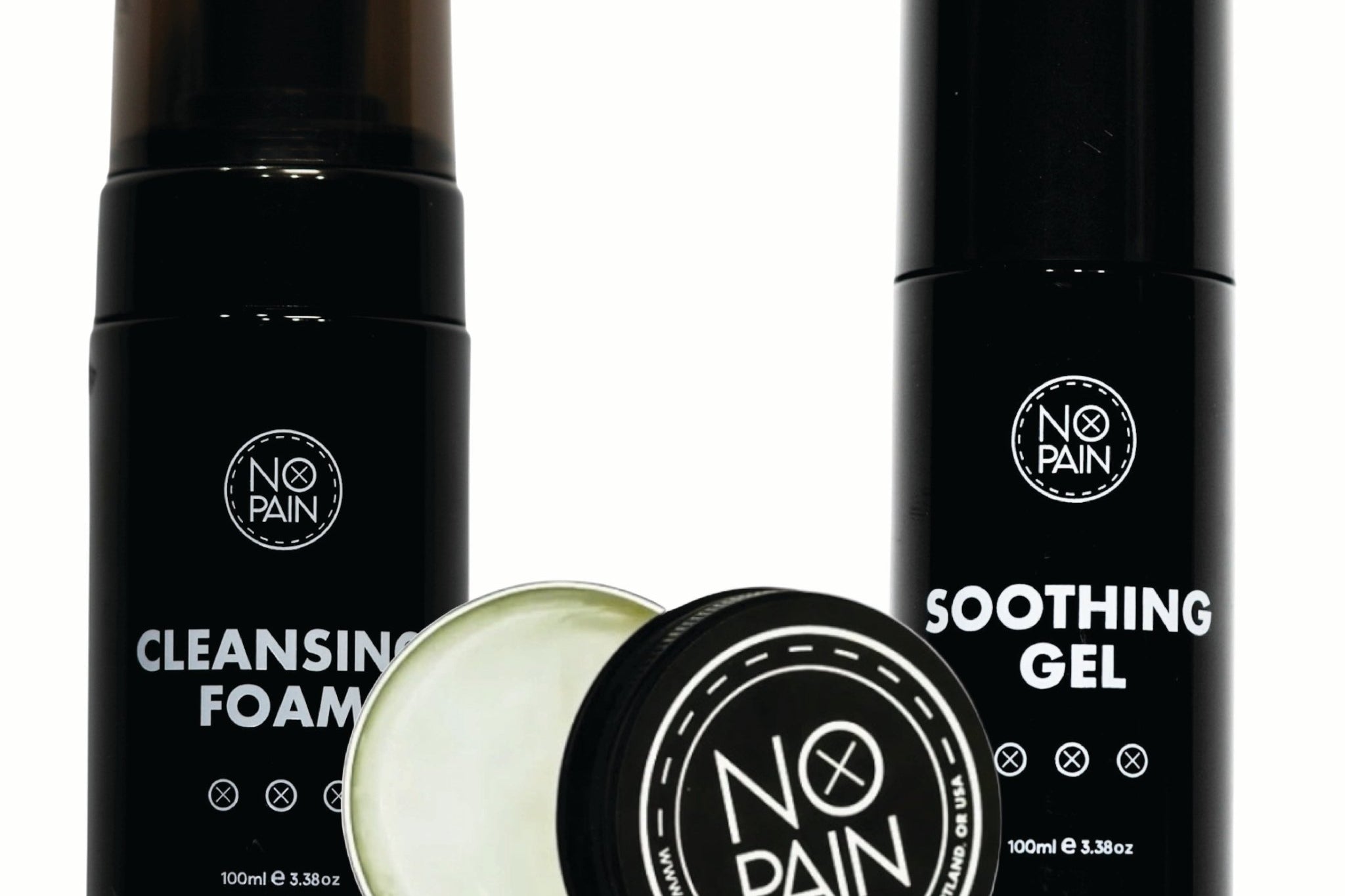
A proper two-phase aftercare routine supports healthy healing whether you're working through a reaction or starting fresh once things have settled. Soothing Gel for Days 1 to 3, Aftercare Balm from Day 3 onward, and Cleansing Foam for daily washing.
Shop the Aftercare Bundle →Formulated at Historic Tattoo in Portland, Oregon. 100% money-back guarantee.
FAQ
What does an allergic reaction to tattoo ink look like?
A true allergic reaction usually appears as raised, thickened, or intensely itchy skin within a specific color of the tattoo, often weeks to months after the tattoo has otherwise healed. It tends to affect one color while leaving adjacent colors unaffected. This is different from normal healing, which involves general redness, swelling, and scabbing that resolves within two to three weeks.
How common is a tattoo ink allergy?
Estimates vary, but studies suggest somewhere between 1% and 5% of tattoo recipients experience some form of adverse reaction to ink. Reactions that resolve quickly are more common than persistent or systemic reactions. True anaphylaxis is rare.
Can a tattoo allergy develop years later?
Yes. Delayed hypersensitivity reactions can develop months or even years after a tattoo is done. The immune system can build a response to an ink component over time, with symptoms appearing long after the initial tattoo healed without issue. A problem-free first session doesn't guarantee future sessions with the same ink will be fine.
Is red tattoo ink the most dangerous?
Red pigments have the highest reported rate of reactions among tattoo inks. Most people get red tattoos without any reaction at all. If you have a history of skin sensitivities or reactions to red dye in other contexts, mentioning this to your artist and a dermatologist before committing to large areas of red is a reasonable precaution.
Can I get a new tattoo if I've had a reaction before?
Possibly, with precautions. If your reaction was limited to a specific ink color, avoiding that pigment in future work is a practical way to reduce risk. If the reaction was systemic, a conversation with a dermatologist before getting more ink is advisable. Many people with a history of reactions to one ink go on to be extensively tattooed by identifying and avoiding the specific trigger.
What's the difference between an allergic reaction and an infected tattoo?
An infection typically develops in the first one to two weeks with increasing redness spreading beyond the tattoo border, yellow or green discharge, significant swelling, and sometimes fever. A reaction often appears after the tattoo has healed and tends to be localized to specific ink colors. Both require different treatment: infection needs antibiotics, a reaction may need topical steroids or dermatological care. If unsure which you're dealing with, see a doctor.