
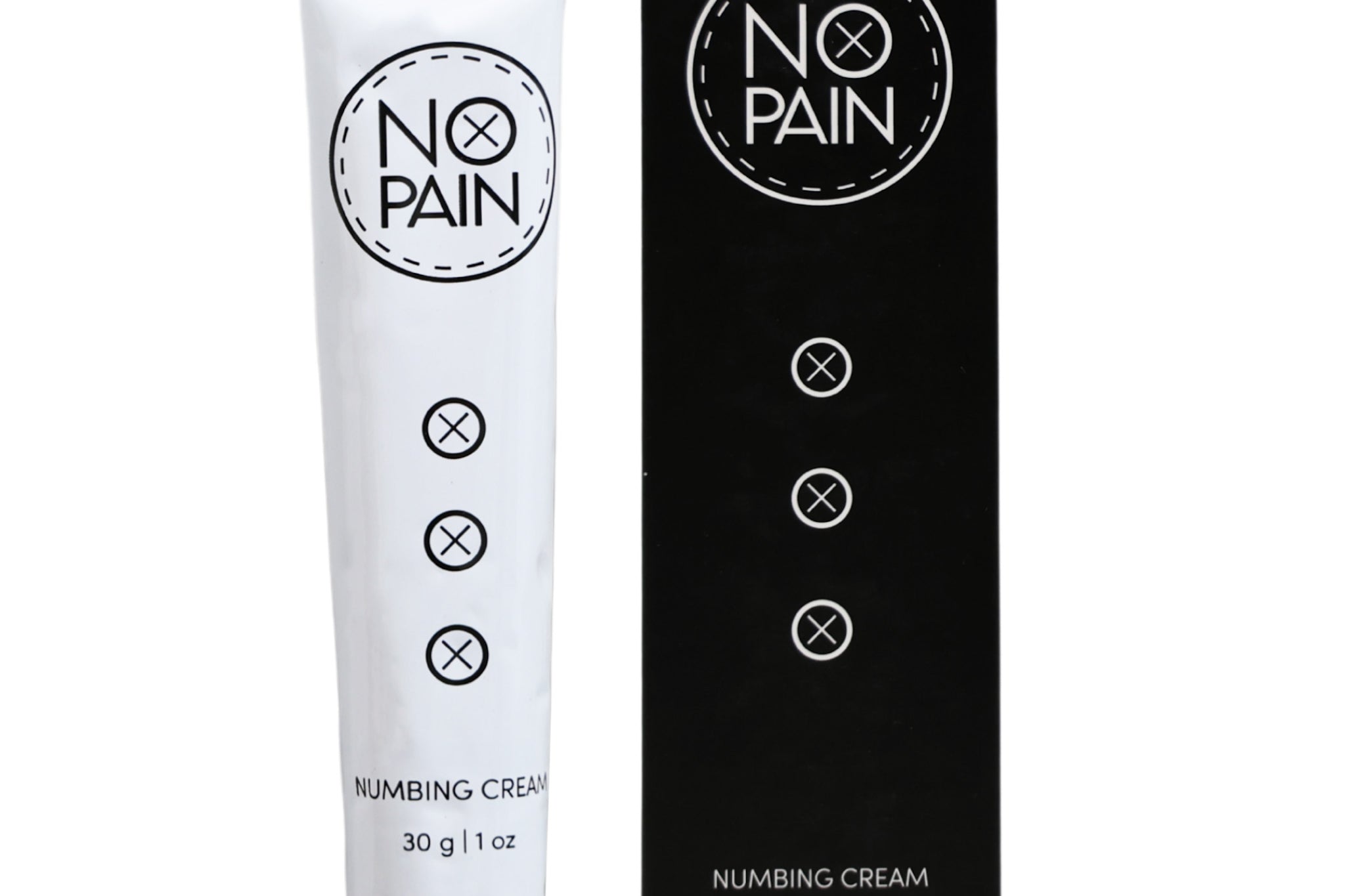

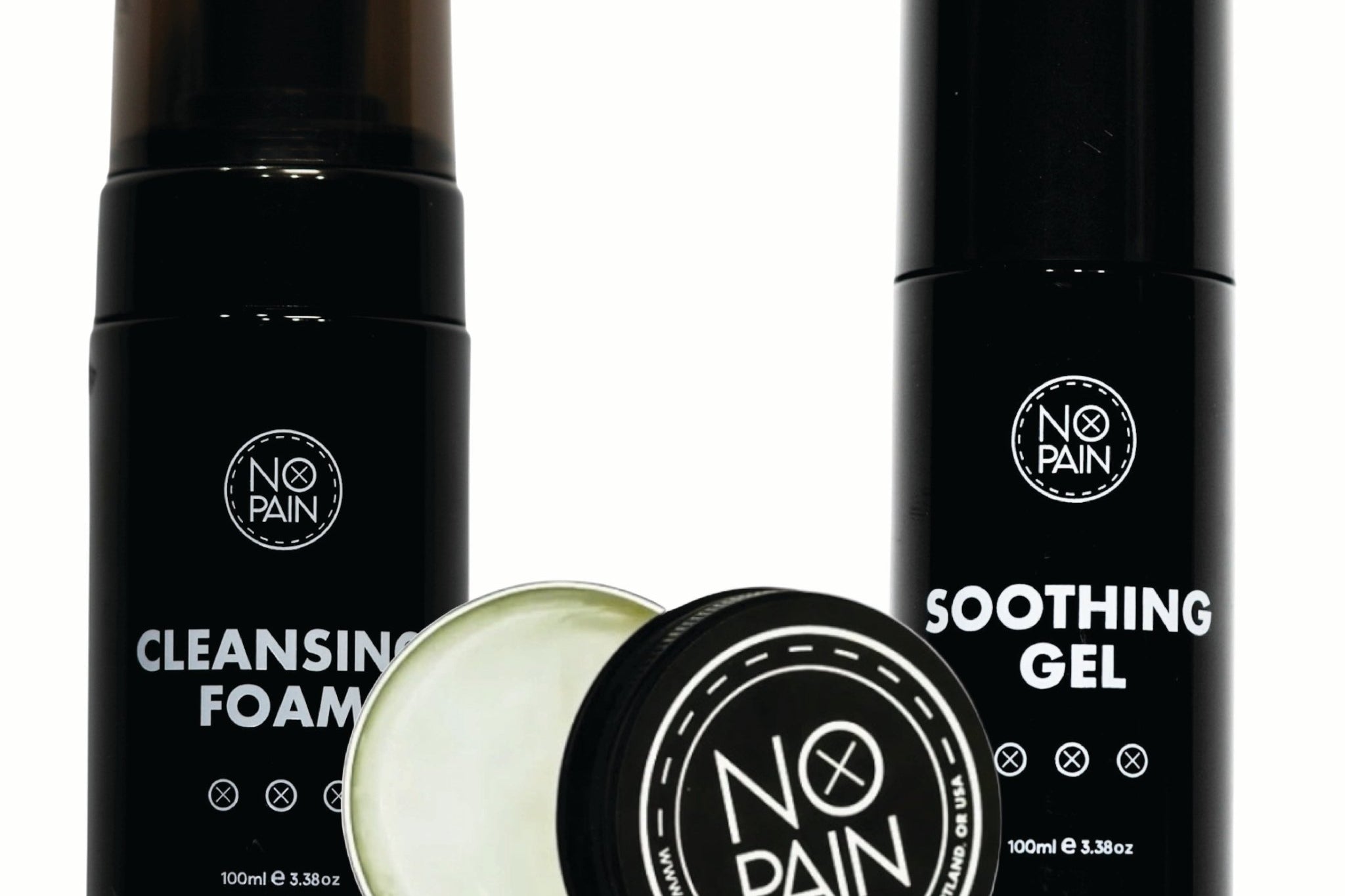


Tattoo numbing spray and numbing cream are not the same product. They work on different skin, at different points in your session, and they are not interchangeable. Used in the right order, they cover the whole sitting. Mix them up and neither performs as well as it should.
Here is a clear breakdown of how each product works, when to use it, and how to combine them for longer sessions.
In this article
- How numbing spray works
- Spray vs. cream: the core difference
- When to use spray, when to use cream
- How to use numbing spray during a session
- For longer sessions: using both together
- Frequently asked questions
How Numbing Spray Works
Numbing spray contains lidocaine, the same active anesthetic used in numbing cream. The difference is how it enters the skin. Spray is formulated for broken skin — the stage where the needle has already been through the area and the surface barrier is open. Once that barrier is open, a liquid lidocaine solution absorbs quickly and takes effect within minutes.
Many sprays also include epinephrine, a vasoconstrictor that narrows blood vessels in the applied area. This slows how fast the lidocaine is absorbed into the bloodstream, which extends the numbing effect and reduces bleeding and swelling at the site.
On intact skin, spray does not penetrate deeply enough to produce meaningful numbness. This is why it does not replace pre-session cream — and why using it before the needle starts does very little.
Spray vs. Cream: The Core Difference
The distinction comes down to one thing: intact skin vs. broken skin.
Numbing cream is designed for intact skin. It uses a thick, slow-absorbing base that holds the lidocaine against the surface of the skin over a long application window — typically 90 to 120 minutes under cling film. That extended contact time allows the anesthetic to penetrate deep enough to numb the tissue before the needle starts.
Spray is designed for broken skin. The liquid formula absorbs almost instantly through the micro-tears left by the needle. What takes 90 minutes of occlusion with cream takes about 5 minutes with spray on open skin.
The trade-off: spray wrapped for 5 minutes works well mid-session. Spray applied to intact skin before the session starts produces weak, surface-level numbness that wears off before the needle is even set up.
When to Use Spray, When to Use Cream
Use cream if you want numbness from the very first line. Apply a thick coat under cling film 90 to 120 minutes before your appointment, arrive with it already working, and your artist wipes it off with green soap before starting. The deep numbness from the cream covers the outline and the first pass of shading.
Use spray once the skin is open. After the artist completes the initial linework, they apply the spray, cover with wrap for 5 minutes, and continue working on skin that has been re-numbed. This is the right tool for refreshing comfort mid-session — not for starting one.
For short sessions under two hours, cream alone is usually enough. For longer sessions, the two products work as a team: cream before, spray during.
How to Use Numbing Spray During a Session
The application integrates into normal session workflow without requiring the artist to stop for long.
After completing the initial outline or first shading pass, the artist wipes the area clean as they normally would. Apply the spray generously over the area being worked on. Cover with plastic wrap and leave it for 5 minutes. Remove the wrap, wipe the area with green soap, and continue tattooing on the freshly numbed skin.
The effect typically lasts 30 to 60 minutes and the process can repeat as needed. After the first application, subsequent top-ups do not require the wrapping step — a quick spray during a natural break is enough to refresh the effect.
Tell your artist before the appointment that you plan to use spray mid-session. Most artists who do longer work are familiar with it and have a workflow. Springing it on them at the session can slow things down unnecessarily.
For Longer Sessions: Using Both Together
For sessions over three hours, or for particularly sensitive placements like ribs, sternum, or hands, cream and spray together cover the full sitting in a way neither can do alone.
Cream handles the first 2 to 4 hours. As its effect fades gradually toward the end of the session, spray picks up where it left off. Applied to the broken skin that has already been worked, the spray takes effect quickly and carries you through the final hours. The result is consistent comfort from the first line to the last.


Frequently asked questions
Can you use numbing spray before a tattoo?
Not effectively. Numbing spray is designed for broken skin — the kind you have mid-session after the needle has passed through the area. On intact skin before the session starts, the lidocaine cannot penetrate deeply enough to produce lasting numbness. Pre-session numbing is what cream is for, applied under cling film 90 to 120 minutes before the needle starts.
How long does tattoo numbing spray last?
The initial application, covered with wrap for 5 minutes, typically provides 30 to 60 minutes of effective numbing. After that, the effect fades gradually. It can be reapplied throughout the session — subsequent top-ups after the first application do not need the wrapping step.
Does numbing spray work as well as numbing cream?
It depends on the stage of the session. On broken skin mid-session, spray works quickly and effectively. On intact skin before the session, cream is far more effective because the slow-absorbing base allows the lidocaine to penetrate at depth over a long application window. Neither is universally better — they are each optimized for a different moment.
Can the artist apply the spray, or do I do it myself?
Artists typically apply spray themselves during the session, which is the ideal setup. It gets applied at the right moment, to exactly the area being worked, and wipes off as part of their normal cleaning process. Let your artist know before the appointment so they can integrate it into their workflow.
Is tattoo numbing spray safe?
Yes, when used as directed. The active ingredients — lidocaine and epinephrine — are widely used in professional medical and cosmetic procedures. Stay within recommended amounts, avoid contact with eyes and mucous membranes, and if you have a known lidocaine allergy or certain cardiovascular conditions, check with a doctor before using any topical anesthetic.
Do I need both numbing cream and spray?
For shorter sessions under two hours, cream alone is usually enough. For longer sessions or especially sensitive placements, the combination covers the full sitting in a way neither product can do alone. Cream handles the first few hours; spray refreshes the effect mid-session on broken skin.
Full Session Coverage
Cream before, spray during. The Comfort Bundle covers the whole sitting, start to finish.
Shop the Comfort Bundle