


Second skin tattoo bandages (Saniderm, Tegaderm, and similar transparent film dressings) are now the standard recommendation from most professional tattoo studios. They protect the fresh wound, reduce scabbing, and require less daily effort than the traditional method. Here is how second skin healing works, what traditional healing involves, and how the two approaches compare.
In this article
- What is second skin for a tattoo?
- How second skin healing works
- How traditional healing works
- Second skin vs. traditional: a direct comparison
- When second skin doesn't work well
- Saniderm, Tegaderm, and other brands
- What to use after the bandage comes off
- Frequently asked questions
What Is Second Skin for a Tattoo?
"Second skin" is the colloquial name for a category of thin, transparent, medical-grade adhesive film bandages that are breathable and waterproof. Originally developed for wound care, they have become the dominant aftercare method in professional tattoo studios over the past decade. When applied over a fresh tattoo, the dressing functions as a sealed barrier against bacteria and friction while maintaining a moist healing environment at the skin's surface.
The name comes from how the material conforms closely to the contours of the skin, becoming nearly invisible once applied. Saniderm, Tegaderm, Recovery Derm, and Dermafix are all versions of the same product. The brand your artist uses depends on what they stock; the mechanics are identical across all of them.
How Second Skin Healing Works
A second skin heal typically unfolds in two stages.
The initial studio piece. After your session, your artist cleans the tattoo and applies a piece of second skin directly over the fresh wound before you leave. This piece stays on for 24 to 48 hours. You will likely see plasma, excess ink, and some blood pool beneath the bandage during this time. This is normal: the wound is weeping fluid as it begins healing, and the bandage is capturing it rather than letting it dry on the surface into a crust.
The extended wear phase. After removing the first piece, wash the tattoo gently with a fragrance-free liquid soap, pat dry, and apply a fresh piece of second skin. This second piece stays on for three to five days, sometimes up to seven, as long as it remains sealed and well adhered. During this period the tattoo heals under protection: the tight, itchy sensation is still present, but the sealed moist environment produces less visible scabbing and peeling than the traditional method. When the final piece comes off, the tattoo looks further along than it would under a traditional method at the same number of days post-session.
How Traditional Healing Works
Traditional tattoo healing predates second skin by decades and still works reliably when done correctly.
After the session, the artist covers the tattoo with plastic wrap or a pad for the first few hours of protection. You remove it at home, wash with a fragrance-free liquid soap, pat dry, and apply a thin layer of healing ointment or fragrance-free lotion. You repeat this two to three times a day for the first week, keeping the surface clean and lightly moisturized without over-saturating it.
During this phase the tattoo will scab and peel. Those scabs need to fall off on their own; picking or scratching pulls pigment with them. The skin then moves through a milky, cloudy phase before clearing at four to six weeks post-session. Traditional healing requires more daily attention and leaves the tattoo exposed to friction, clothing, and environmental bacteria during the most vulnerable days, but it is a well-established method with a long track record.
Second Skin vs. Traditional: A Direct Comparison
Scabbing and peeling. Traditional healing almost always produces some degree of scabbing. Second skin healing typically produces much less. The moist, sealed environment changes how the surface heals: less drying out means less crust formation and a cleaner appearance during the peeling phase.
Infection risk. Second skin keeps the wound sealed against outside bacteria for the first critical days. Traditional healing leaves the tattoo exposed. Both methods are safe when executed correctly, but second skin removes several of the variables that contribute to infection under traditional care: touching the tattoo with unwashed hands, clothing rubbing against the open wound, and general environmental exposure.
Daily effort. Traditional healing requires twice-daily cleaning and moisturizing for the first week. Second skin is applied once and then largely left alone until it comes off. People who have trouble sticking to a consistent routine tend to have better outcomes with second skin because there is less to actively manage.
Comfort. The itchy tightness of a healing tattoo exists in both methods. Many people find it less distracting under second skin because the sealed environment reduces the surface drying that makes the itch feel intense.
Cost. Traditional healing requires only inexpensive ointment or lotion. Second skin bandages add a small material cost, though most studios include them in the service. If you're applying additional pieces at home after the studio wrap, a roll of Saniderm or a box of Tegaderm from a pharmacy runs between $15 and $30 and covers multiple sessions.
When Second Skin Doesn't Work Well
Second skin performs well on most placements but has consistent problem areas.
Joints and high-flex areas. The inner elbow, the back of the knee, the wrist, and the hands all involve constant bending movement. That movement lifts bandage edges over the course of hours and days. Once an edge lifts, the seal is broken and the bandage is no longer protecting the tattoo from outside exposure.
Very large pieces. A full sleeve or large back piece requires multiple strips of second skin applied carefully with overlapping edges. Any gap becomes a potential entry point. It is doable, but requires deliberate application by the artist at the end of the session.
High-friction or wet work environments. Second skin is waterproof but not indestructible. Someone who works with their hands submerged, wears thick gloves all day, or has constant rubbing against the bandage all day may not maintain the seal reliably. In those situations, transitioning to traditional care with more frequent washing may be the more practical path.
Adhesive sensitivity. Some people react to the adhesive at the bandage edges: redness and irritation at the perimeter of the bandage rather than at the tattoo itself. If that happens, the bandage needs to come off. The tattoo can then be managed with traditional aftercare for the remainder of the healing period.
Saniderm, Tegaderm, and Other Brands
Saniderm and Tegaderm are the two names you will encounter most often. Saniderm is a tattoo-specific product sold in larger rolls and sheets sized for tattoo coverage, marketed directly to studios. Tegaderm is a 3M medical product widely used in clinical wound care. Both are transparent polyurethane film dressings with a skin-safe acrylic adhesive. The healing performance between them is comparable.
The practical differences are minor. Tegaderm comes in standardized medical sizes and is available at most pharmacies. Saniderm is available in wider rolls that accommodate larger tattoos more easily and is more commonly stocked by tattoo studios. Recovery Derm, Breathe-2-Heal, and Dermafix are additional brand names for the same type of product.
If your artist uses a brand you don't recognize, ask what type of product it is. Any transparent, breathable film dressing is second skin by another name, and the same aftercare instructions apply regardless of what it says on the packaging.
What to Use After the Bandage Comes Off
When the final piece of second skin comes off (typically between day four and day seven), the tattoo will look further along than you might expect. Clean it gently with a fragrance-free liquid soap, pat completely dry, and let it breathe for a few minutes before applying anything.
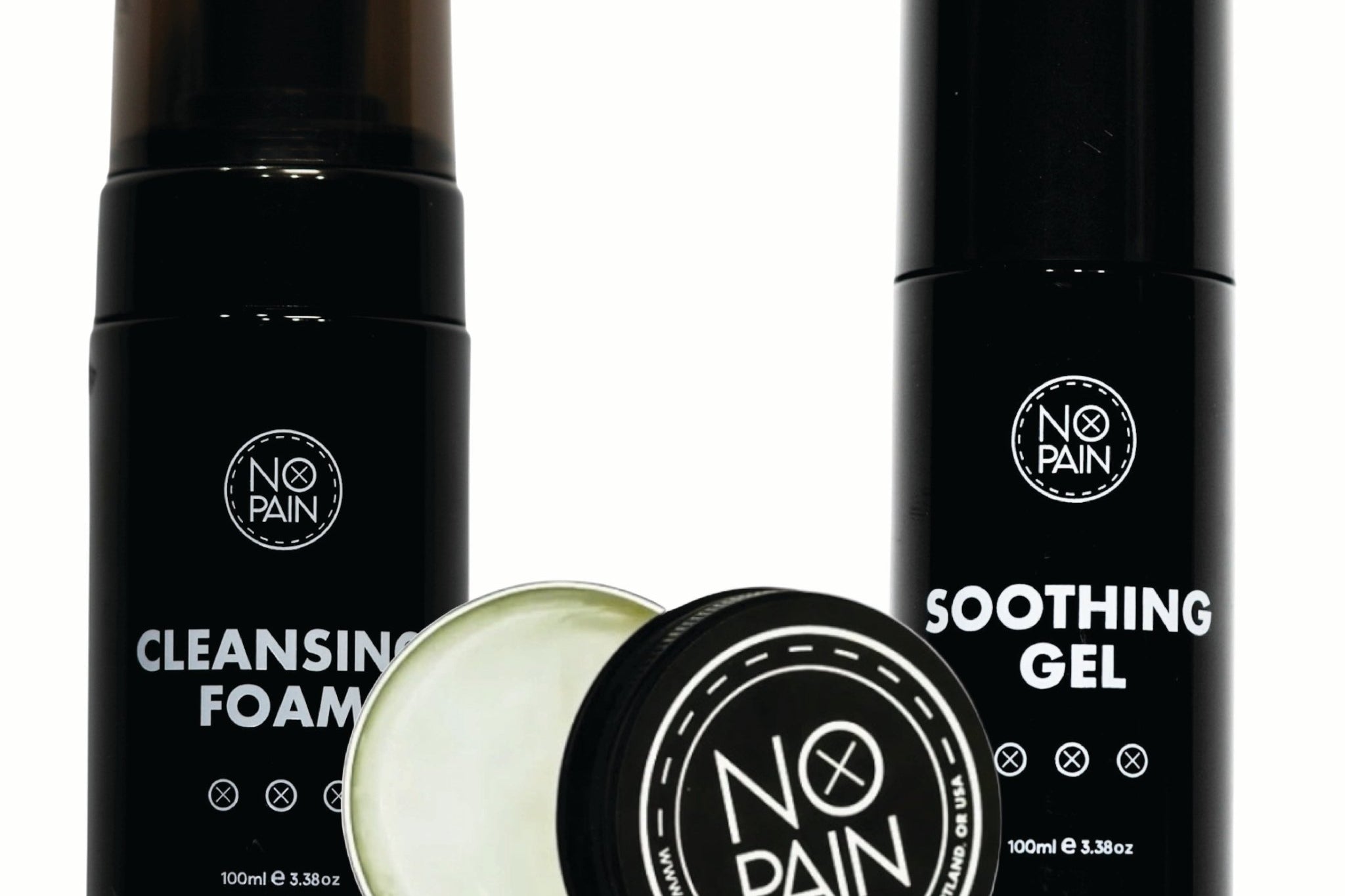
The skin at this stage is still healing below the surface even though the surface looks settled. For the first few days after the bandage comes off, a lightweight soothing gel applied after washing calms residual inflammation and keeps the surface from drying out and cracking. Avoid thick ointments at this stage, which can sit heavily on skin that still needs to breathe.
From day three onward, a nourishing balm supports the skin through the deeper healing phase as the tattoo completes its settling process. The surface may still look slightly hazy during this stretch; that is the epidermis finishing its recovery, not a permanent result.

A lightweight, fragrance-free gel that calms inflammation and keeps the surface moisturized during the first few days after your second skin bandage comes off. Apply a thin layer after each gentle wash. Light enough to let recovering skin breathe without occluding it.
Frequently asked questions
What is second skin for a tattoo?
Second skin is a transparent, breathable, waterproof film bandage applied over a fresh tattoo to protect it during the initial healing phase. The term describes a category of medical-grade film dressings. Saniderm, Tegaderm, Recovery Derm, and similar products are all versions of the same material. They work by sealing the wound against bacteria and friction while keeping the surface moist, which reduces scabbing and supports faster surface healing compared to traditional open-air methods.
How long do you leave second skin on a tattoo?
The first piece, applied by your artist in the studio, stays on for 24 to 48 hours. After removing it, clean the tattoo, apply a fresh piece, and leave that on for three to five days, up to seven if it stays fully sealed. Total time under second skin is typically four to eight days depending on placement, tattoo size, and how well the bandage adheres to your skin.
What happens if the second skin bandage falls off early?
If the bandage has lifted at an edge but the bulk of it is still sealed, you can press it back down with clean hands. If it has peeled or lifted to the point where outside air is consistently reaching the tattoo, remove it completely. Switch to traditional aftercare from that point: wash twice daily with a fragrance-free liquid soap, pat dry, and apply a thin layer of fragrance-free lotion or healing ointment until the tattoo finishes healing on its own.
What's the difference between Saniderm and Tegaderm for tattoos?
They are the same type of product. Saniderm is a tattoo-industry brand sold in rolls and sheets sized for tattoo coverage. Tegaderm is a 3M medical brand used in clinical wound care. Both are transparent polyurethane film dressings with a skin-safe adhesive, and healing performance between them is comparable. Saniderm is more commonly stocked by tattoo studios; Tegaderm is more widely available at pharmacies. Either works.
Can you shower with second skin on a tattoo?
Yes. Second skin is waterproof and designed to stay on through normal showers. Ordinary water contact will not lift the bandage or compromise the seal. Avoid prolonged soaking in a bath or hot tub, which can loosen the adhesive at the edges over time. Keep shower duration reasonable, avoid directing a strong stream directly at the bandage, and pat dry rather than rub after washing.
What do you put on a tattoo after second skin comes off?
Wash gently with a fragrance-free liquid soap, pat dry, and apply a lightweight fragrance-free gel for the first few days. Avoid thick ointments that sit heavily on skin that is still recovering. From day three onward, a nourishing fragrance-free balm supports the deeper layers through the remainder of the healing process. Keep the area out of direct sun and stay well hydrated; both support faster recovery and better color retention long-term.
Cover Both Phases of Healing
The Aftercare Bundle pairs a lightweight soothing gel for the first few days after the bandage comes off with a nourishing balm from day three onward. Everything you need from the moment the second skin comes off through full recovery.
Shop the Aftercare Bundle →Formulated at Historic Tattoo in Portland, Oregon. 100% money-back guarantee.