

Tattoo balm is the right product for most of your tattoo's healing window. You can start using it from day one, though the best results come from using a lightweight gel for the first two to three days and then switching to balm once the initial weeping phase settles. From that point, balm is what keeps the deeper layers nourished as the skin closes, settles, and reaches its final appearance. Here is how tattoo balm works, when to use it, and why it is a better choice than Aquaphor.
In this article
- What tattoo balm is
- What tattoo balm does
- When to start using it
- Why Aquaphor falls short
- What to look for in a tattoo balm
- No Pain Tattoo Aftercare Balm
- The two-phase healing routine
- Frequently asked questions
What Tattoo Balm Is
Tattoo balm is a thick, oil-and-butter-based moisturizer formulated for healing and healed tattoo skin. Unlike lotions, which are water-heavy emulsions that evaporate quickly, a proper balm contains no water at all. The base is a blend of natural butters, waxes, and oils that sit on the surface of the skin longer, forming a breathable barrier that slows moisture loss without sealing the skin off completely.
The "no water" aspect matters for healing skin. Water-heavy products evaporate off the surface and take some of your skin's own moisture with them as they go. A balm stays put, delivers the moisture it contains, and lets the skin underneath breathe. For a tattoo in its second and third weeks of healing, where the surface has closed but the dermis is still remodeling, that combination of lasting protection and breathability is what the skin needs.
What Tattoo Balm Does
A tattoo balm works in three ways during the healing period.
It slows moisture loss. Healing skin loses water faster than normal skin. The disrupted epidermis is not yet fully reformed, and transepidermal water loss runs high for weeks after a tattoo session. A balm applied twice daily forms a light occlusive layer that sharply reduces that loss and keeps the skin pliable rather than tight and cracked.
It supports the healing layers. A quality tattoo balm includes ingredients (typically fatty-acid-rich butters like shea or mango butter) that nourish the keratinocytes rebuilding the epidermis. This is different from Aquaphor, which is a passive barrier. A balm can deliver nutrients to the skin as well as seal in the ones already there.
It protects the surface from friction and environmental damage. During weeks two through four, the tattoo looks close to healed but the skin is still thinner and more vulnerable than normal. A balm layer absorbs minor friction from clothing without disrupting the new skin underneath. It also reduces the chance of the tight, dry feeling that makes people pick or scratch at a nearly healed tattoo.
When to Start Using It
You can start using balm as early as day one, but the best results come from using a lightweight soothing gel for the first two to three days and then switching to balm. In those first days the wound is still weeping plasma and beginning to close, and a gel keeps things clean and hydrated without sitting too heavily on tissue that is still draining. Once that initial weeping phase settles, balm is the better long-term product.
For most tattoos, day two or three is a natural transition point. The surface is no longer actively weeping, the skin is starting to tighten, and a richer product is what it needs. Large pieces or high-friction placements may need an extra day before the balm feels right, but there is no reason to wait a full week.
From that point, apply balm twice daily after washing with a fragrance-free liquid soap. Continue through the first month and beyond as part of a general moisturizing routine. A healed tattoo benefits from regular balm indefinitely, since hydrated skin holds color better over time.
Why Aquaphor Falls Short
Aquaphor has been the default tattoo aftercare product in some circles for decades, but it was not designed for healing tattooed skin. Understanding why it falls short makes it easier to choose the right product.
It is too occlusive for healing skin. Aquaphor's primary active ingredient is petrolatum at 41% concentration. Petrolatum is an excellent wound sealant for severely dry or cracked skin, but for a tattoo in active healing it can create a seal that traps heat and moisture against the wound. That environment raises the risk of maceration, bacterial overgrowth, and the bubbling effect that comes from skin that can't breathe.
It tends to clog pores. The heavy petroleum and lanolin combination in Aquaphor is comedogenic for many people. On healing tattoo skin, this can produce milia (small, whitehead-like bumps) on and around the tattoo. This is not universal, but it is common enough to be a consistent complaint among people who heal their tattoos with Aquaphor. Our founder dealt with this exact issue for years using petroleum-based products on his own tattoos, which is what led to the development of a non-comedogenic alternative.
It provides no active nourishment. Aquaphor is a barrier product. It sits on the surface and prevents water loss, but it does not contain ingredients that support skin regeneration. A tattoo balm formulated with skin-compatible butters and oils does both: it protects and nourishes.
Aquaphor is not a dangerous product. It will not ruin a tattoo. But it is a generic ointment applied to a specific job it was not designed for, and there are better tools available.
What to Look for in a Tattoo Balm
The most important things to check when choosing a tattoo balm:
No petroleum or mineral oil. Both are heavy occlusive ingredients that increase the risk of pore-clogging and can inhibit the skin's natural repair process when used in the early healing window. A quality tattoo balm uses plant-based oils and butters instead.
No fragrance. Healing skin is sensitized skin. Fragrance is the most common cause of contact dermatitis and irritation on new tattoos. Any balm marketed for tattoo healing that lists "fragrance" or "parfum" in its ingredients is not a good choice.
Non-comedogenic formula. The balm should not clog pores. Look for products that specifically state this, and check the ingredients against known comedogenic oils (coconut oil is a common offender in tattoo products).
Breathable consistency. A good tattoo balm should feel like a light-to-medium salve, not a thick paste. When you apply it, the skin beneath should still be able to exchange air. If it feels like it's smothering the surface, it is probably too heavy for a tattoo in active healing.
No Pain Tattoo Aftercare Balm

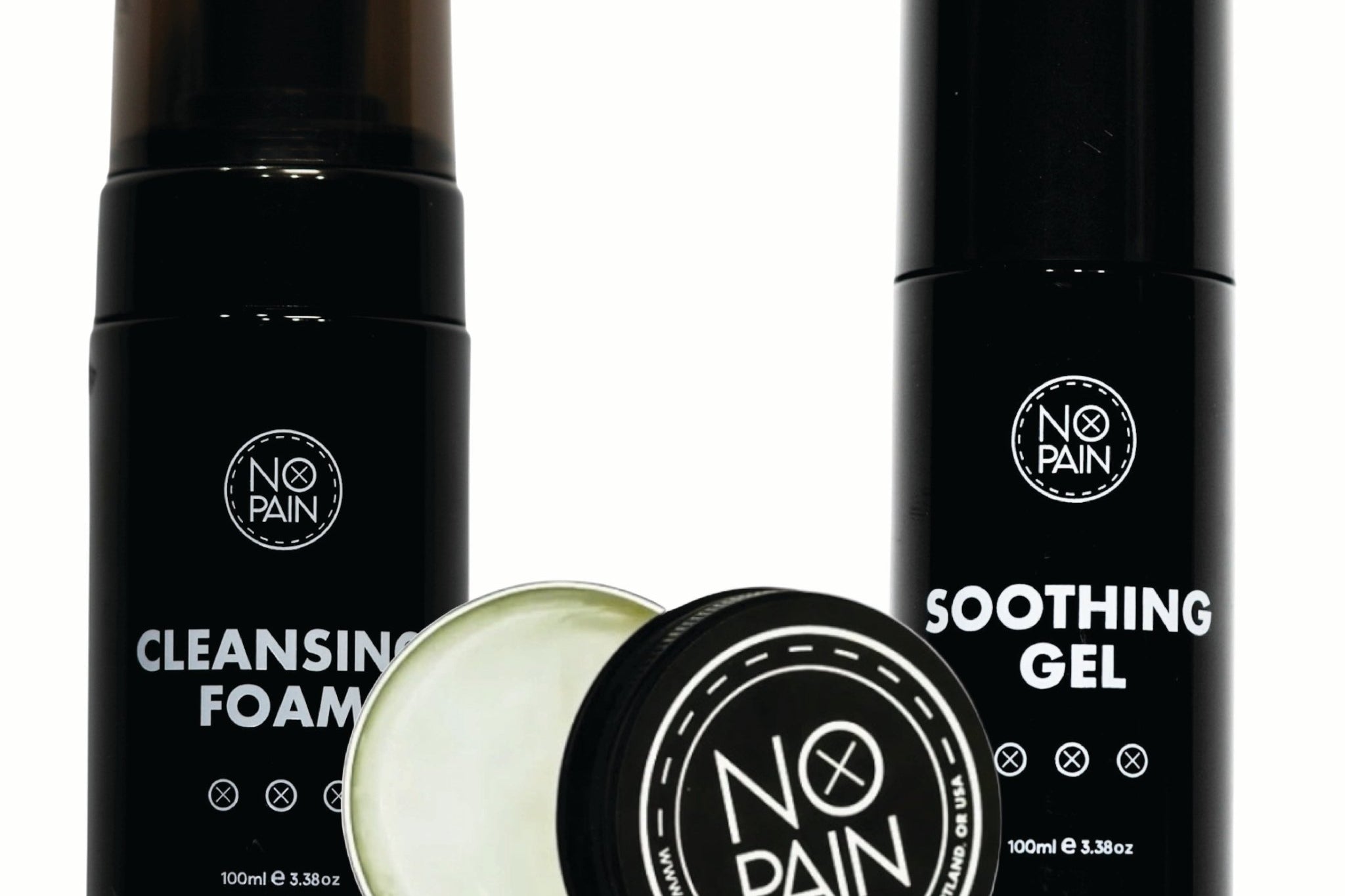
A petroleum-free, non-comedogenic balm formulated for the deeper healing phase of a tattoo. No fragrance, no pore-clogging oils, no unnecessary additives. Just the nourishing barrier your skin needs from week two through full recovery and long-term maintenance.
The Two-Phase Healing Routine
The most effective tattoo aftercare approach treats the early days and the longer healing stretch differently, because the skin's needs change quickly.
For the first two to three days, use a lightweight soothing gel after each wash. The skin is still weeping and closing during this phase, and a gel keeps the surface hydrated without sitting too heavily on tissue that is still draining. Apply a thin layer after every wash, let it absorb, and leave it uncovered.
From around day two or three onward, switch to balm. You can start balm as early as day one if that is what you have on hand (it will not cause problems), but the gel-first approach gives the wound a cleaner start. Once you have made the switch, apply balm twice daily after washing. The skin is closing and entering the remodeling phase, where the dermis is rebuilding and the surface is settling into its final texture and color. The balm keeps that process running smoothly by preventing the surface dryness that causes cracking, itching, and uneven settling.
Continue using balm for as long as the tattoo area feels dry or tight. For most people this runs four to six weeks from the session date. After that, any good fragrance-free moisturizer works for ongoing maintenance, though a dedicated balm applied a few times a week is still beneficial for long-term color retention.
Frequently asked questions
What is tattoo balm and how does it work?
Tattoo balm is a thick, oil-and-butter-based moisturizer for healing and healed tattoo skin. It forms a breathable barrier on the surface of the skin that slows moisture loss, protects against friction, and nourishes the healing layers beneath. Unlike Aquaphor, which uses petroleum as its primary ingredient, a quality tattoo balm uses plant-based butters and oils that allow the skin to breathe while delivering active nourishment. It is the right product for the second and third weeks of healing, once the wound has closed and the peeling phase is done.
When should you start using tattoo balm after getting a tattoo?
You can start using balm from day one, but the best approach is to use a lightweight soothing gel for the first two to three days and then switch to balm. In those first days the wound is still weeping plasma and beginning to close, and gel handles that phase better than a richer balm. Once the initial weeping settles, typically around day two or three, balm is the better product for everything that follows. Large pieces or high-friction placements may take an extra day before the transition feels right.
Can you use Aquaphor on a tattoo instead of a balm?
You can, but it is not the best choice for healing skin. Aquaphor's primary ingredient is petrolatum at 41%, which is highly occlusive. For tattoo healing, that level of occlusion can trap heat and moisture against the wound and increase the risk of maceration and bacterial overgrowth. Aquaphor is also comedogenic for many people, producing milia (small whitehead-like bumps) on and around the healing tattoo. A tattoo balm formulated with plant-based butters and oils provides a breathable barrier without those risks. If Aquaphor is the only option available, use only a very thin layer.
What's the difference between tattoo balm and tattoo lotion?
The base ingredient is the key difference. Tattoo lotion is an emulsion: it contains water mixed with oil, which means a large portion of it evaporates off the skin. Tattoo balm contains no water. It is made from butters, waxes, and oils that stay on the skin longer and provide a more lasting moisture barrier. Both can work on healing tattoos, but balm is more effective during weeks two through four when the skin needs extended hydration rather than the lighter touch a lotion delivers.
How often should you apply tattoo balm?
Twice daily is the standard cadence during active healing. Apply after each wash with a fragrance-free liquid soap, once in the morning and once at night. Let the balm absorb for a few minutes before getting dressed to avoid it rubbing off on clothing. If the area feels particularly dry or tight mid-day, a small additional application is fine. Use a light layer rather than a thick coat; more product does not mean better healing, and over-application can slow moisture exchange with the air.
How long should you use tattoo balm after getting a tattoo?
Continue using balm for four to six weeks after getting tattooed, or until the area no longer feels dry or tight. For most tattoos the surface looks healed by weeks three to four, but the dermis continues remodeling for two to three months. Keeping the area moisturized during this window supports better color retention and a smoother final result. After the active healing period, applying balm a few times a week as part of a general skincare routine helps maintain the tattoo's appearance long-term.
Everything You Need to Heal Right
The Aftercare Bundle includes a lightweight soothing gel for the first two to three days and the Aftercare Balm for everything that follows. Both phases of healing, covered in one order.
Shop the Aftercare Bundle →Formulated at Historic Tattoo in Portland, Oregon. 100% money-back guarantee.